Hand Serum: What It Does for Aging Hands That Cream Cannot
The back of the hand ages fast and gets washed all day. Which serum ingredients have evidence, how a serum differs from a hand cream, and when to apply it
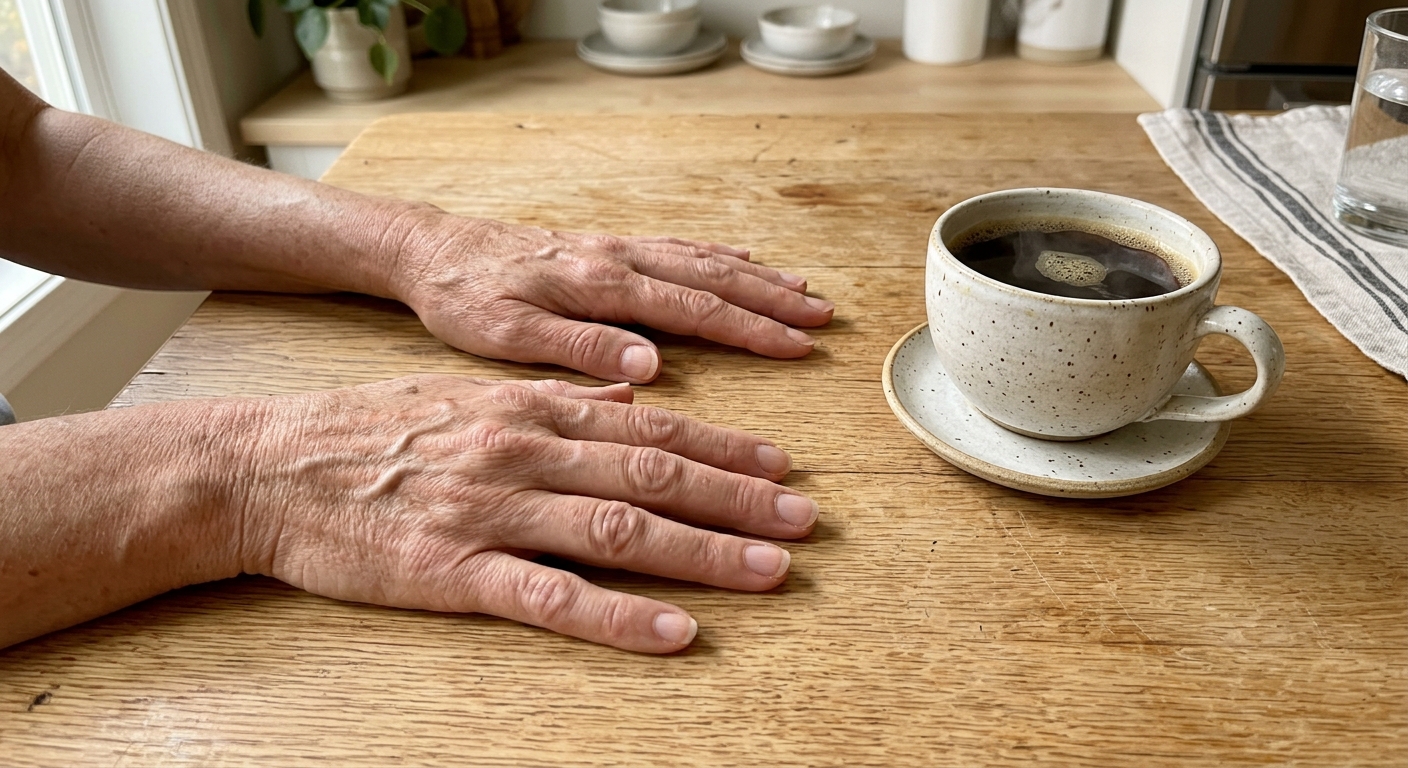
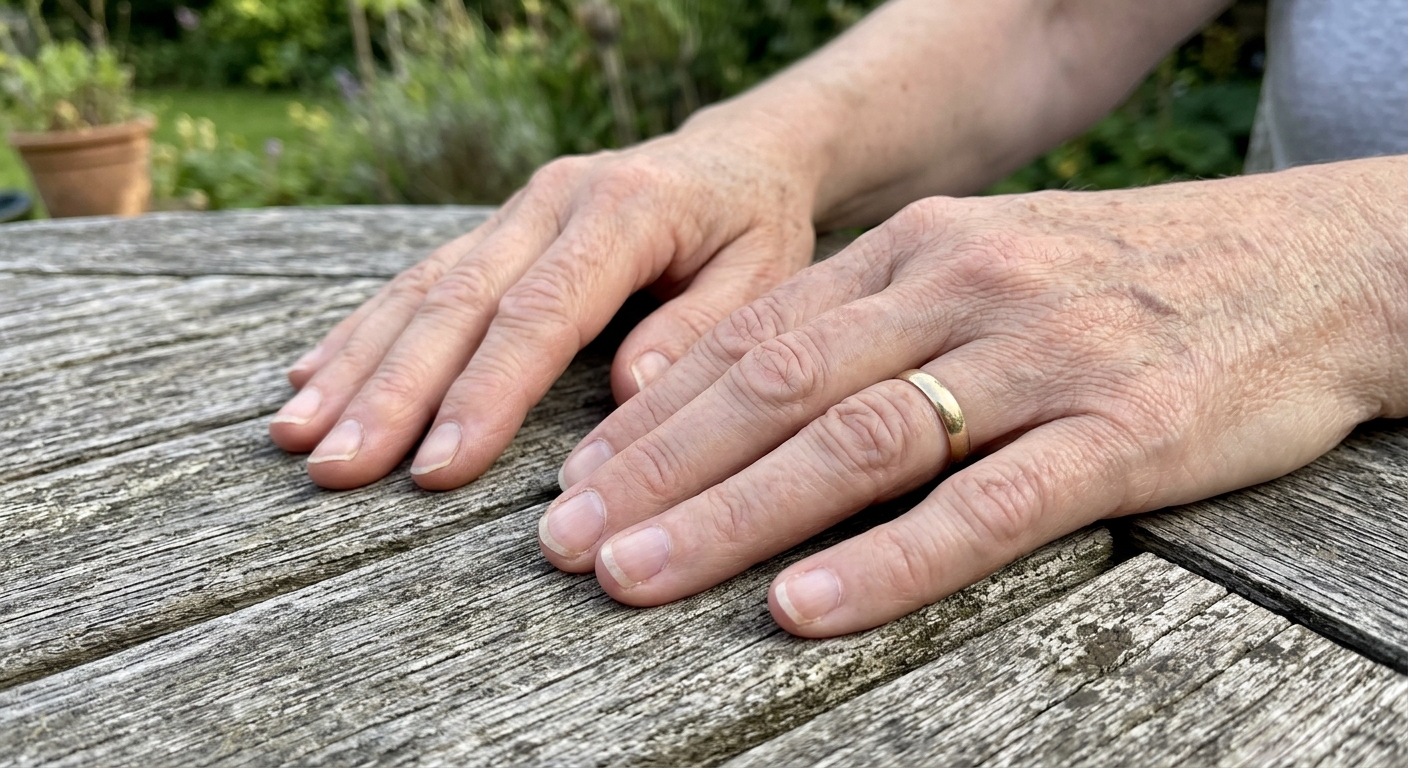
Most people notice their hands after their face. One day the skin over the knuckles looks thinner, the veins stand out more, and a few flat brown spots have appeared that were not there a few summers ago. A hand cream makes that skin feel better, but it rarely changes how the hands look.
A hand serum is meant to fill that gap. It is a light, concentrated formula built around one or two active ingredients, the same kind of product many people already use on their face. This guide explains why hands age the way they do, which serum ingredients have real evidence, and how to use one on skin that gets washed ten times a day.
Why hands give away age
Three things happen to the back of the hand over the decades.
First, the padding goes. An ultrasound study of 105 adults measured the fat layers that sit between the skin and the tendons on the back of the hand. All three layers thinned with age, and the middle layer lost about 64% of its thickness between people in their 20s and those over 60 [1]. With less cushion underneath, the skin drapes over veins and tendons instead of smoothing them out.
Your skin on the back of the hands can lose almost two thirds of the padding beneath it by your 60s, which is why veins look bolder than they did at 30.
Second, the sun. The backs of the hands sit in daylight on every drive and every walk, and they rarely get sunscreen. Years of ultraviolet exposure break down collagen and elastin and leave the flat brown marks known as solar lentigines, which our guide to age spots on hands covers in detail.
Your skin on the back of the hands can lose almost two thirds of the padding beneath it by your 60s, which is why veins look bolder than they did at 30.
Third, washing. Soap and water strip the fats that keep the outer layer of skin sealed. Sore, irritated hands in healthcare workers are usually traced to water and detergents, and studies show that soap-based washing irritates the skin far more than an alcohol hand rub does [2]. Skin that is stripped over and over loses water faster and looks crepey sooner.
A serum cannot replace lost fat; only injected fillers do that. It can work on the other two problems: sun damage within the skin and a weakened surface.
Hand serum vs hand cream
The difference comes down to what each product is designed to do.
A hand cream is built to protect. It is rich in emollients and occlusives such as shea butter, glycerin and dimethicone that sit on the surface, slow water loss and make hands feel soft. Many contain little or no active ingredient, and the ones that do often use low doses so the cream stays pleasant to reapply all day.
A hand serum is built to treat. It has a lighter, water-based or gel texture with a higher share of active ingredients and fewer heavy oils, so it absorbs quickly and does not leave greasy prints on a phone or keyboard.
That also means a serum protects very little on its own. The best routine uses both: serum first, then a cream to seal it in. If you have not yet found a cream you like, our comparison of the best hand cream for aging hands is a good place to start.
Your skin needs 12 weeks or more of steady use before a serum shows fewer fine lines than at the start, so judge a hand serum by the season and not by the week.
Hand serum ingredients with evidence
Very few trials test serums on hands alone, so most of the evidence comes from the face and arms, where skin ages in the same way.
- Retinol: the best-studied anti-aging ingredient you can buy without a prescription. In a 24-week trial in older adults, 0.4% retinol applied to one arm improved fine wrinkling and increased collagen production compared with the plain base applied to the other arm [3]. The forearm is a close stand-in for the back of the hand: sun-exposed and slow to repair.
- Niacinamide: in a 12-week split-face trial, 5% niacinamide reduced fine lines, brown spots, red blotchiness and yellowing, and improved elasticity [4]. It is gentle and pairs well with almost anything, which makes it a sensible first choice for spotty hands.
- Multi-ingredient anti-aging formulas: in a trial of an over-the-counter anti-aging product applied once a day to the face and hands, wrist biopsies after six months showed more fibrillin-1, a protein that helps skin spring back, than skin treated with the plain base, and after a year more users had improved than expected on the base alone [5].
- Hyaluronic acid: a humectant that draws water into the skin. In a 60-day trial, 0.1% hyaluronic acid creams improved hydration and elasticity, and the low-molecular-weight versions reduced wrinkle depth [6]. On hands it mostly makes crepey skin look plumper for a few hours.
Vitamin C and tranexamic acid also appear in hand serums aimed at brown spots. Both have evidence for facial pigment, though far less that is specific to hands. Whatever the active, look for a short ingredient list without added fragrance, since fragrance is one of the most common causes of irritation on hands that are already dry.
Your skin needs 12 weeks or more of steady use before a serum shows fewer fine lines than at the start, so judge a hand serum by the season and not by the week.
How to use a hand serum around washing
Timing is the hard part, because a serum rinsed off after ten minutes does very little.
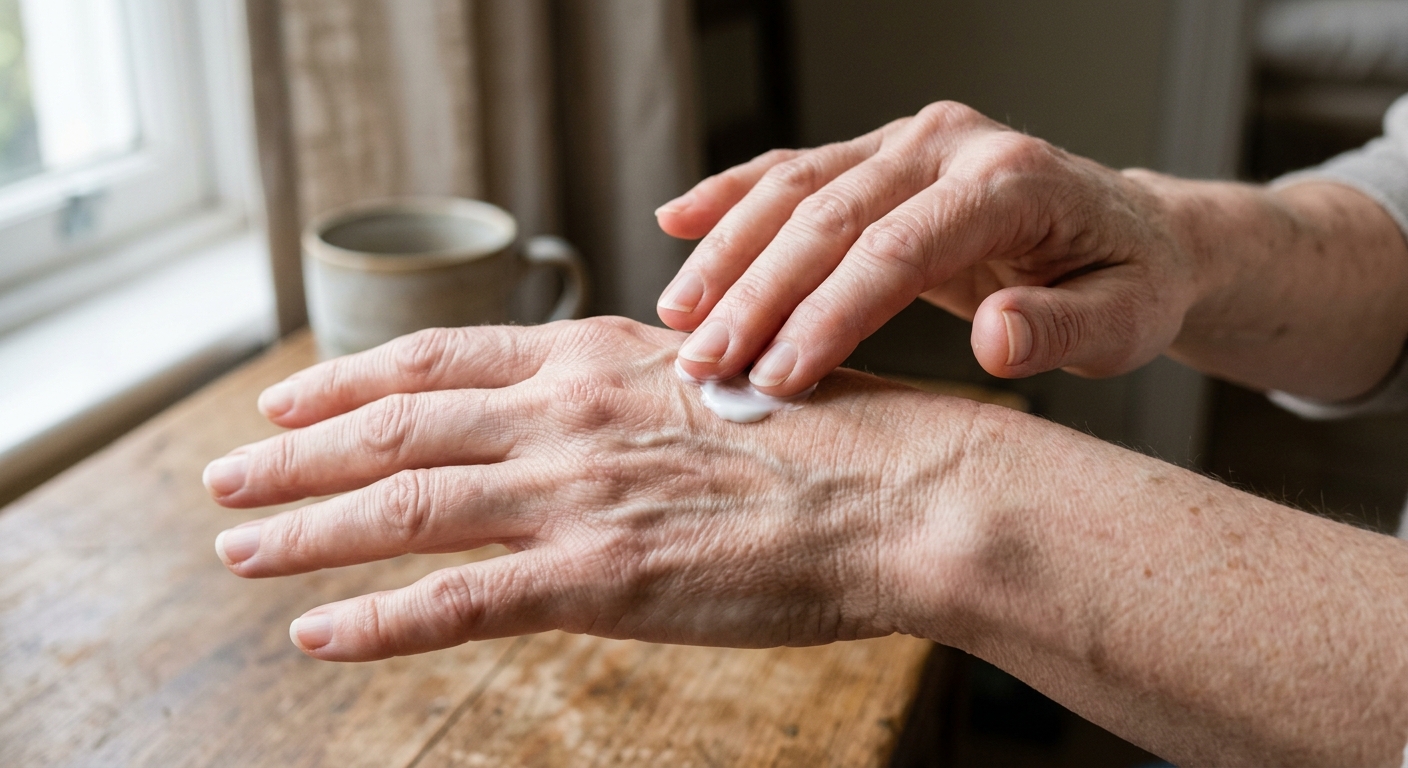
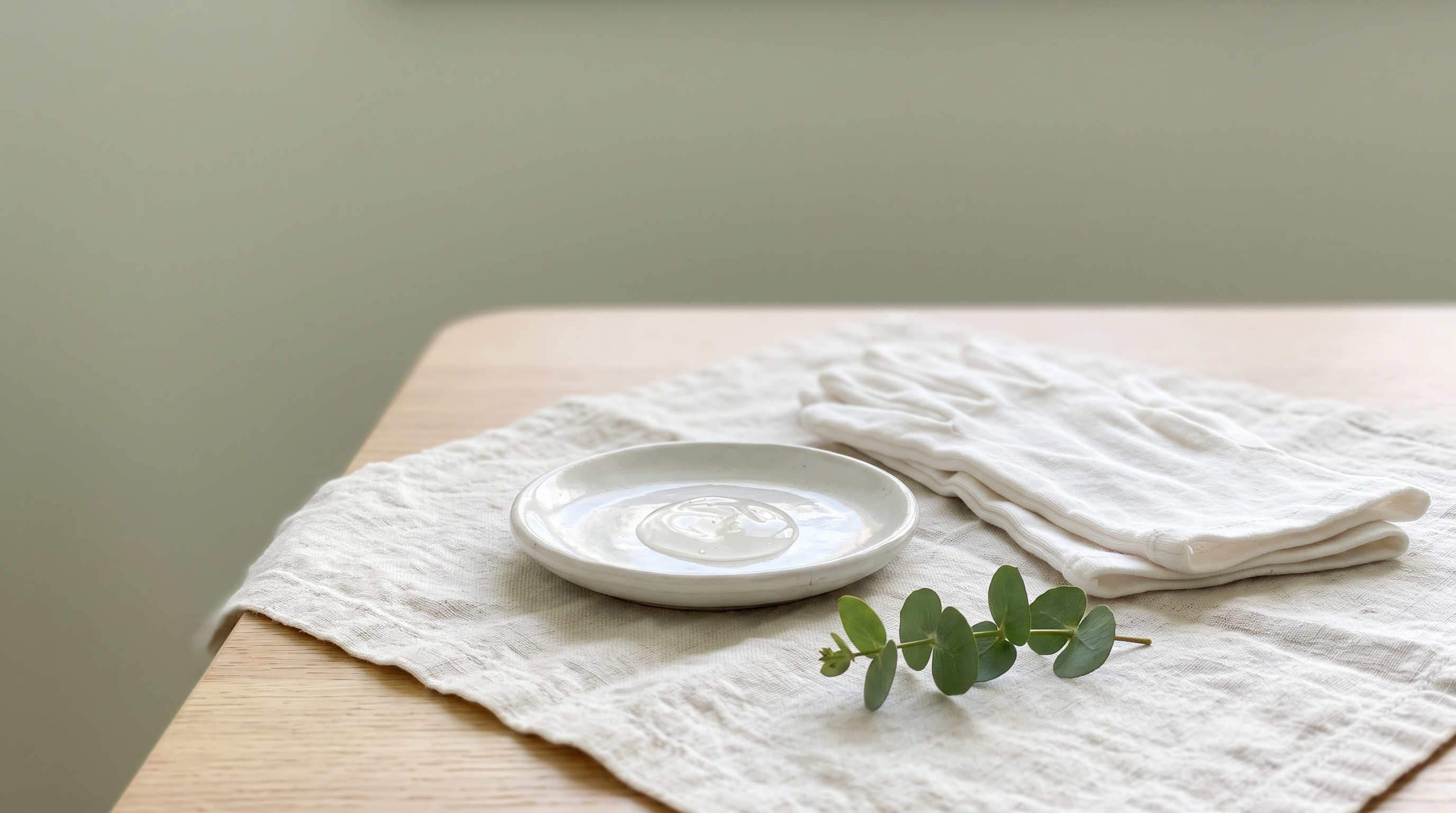
- Apply it at night. Bedtime is the longest stretch your hands go without a wash. Smooth a pea-sized amount over the backs of both hands, between the fingers and over the knuckles, after the last wash of the day.
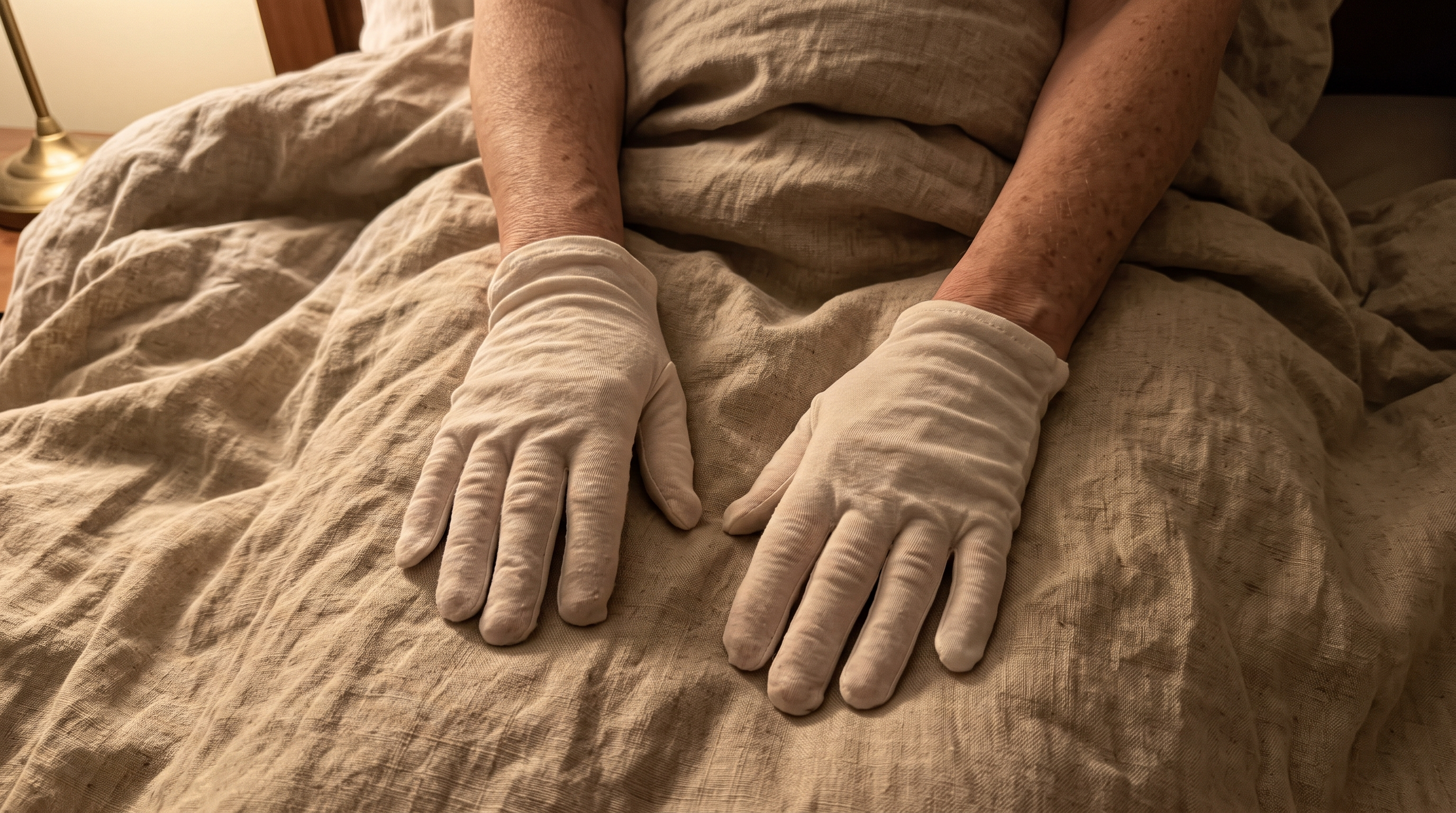
- Seal it with cream. Follow with a hand cream about a minute later, once the serum has absorbed. For very dry or crepey skin, cotton gloves overnight or a weekly hand mask help both layers soak in.
- Protect during the day. Sunscreen on the backs of the hands is the most useful daytime step. In a trial that ran for four and a half years, adults who applied sunscreen every day showed no detectable increase in skin aging, and their skin aged 24% less than that of adults who used it only when they chose to [7]. Reapply after washing.
- Wash gently. Lukewarm water, a mild cleanser and patting dry rather than rubbing keep the surface intact so the serum has something to work with.
If your main concern is thin, wrinkled, tissue-paper skin rather than spots, our guide to crepey hands goes further on texture and the habits that make it worse.
Where Nanoretinol fits
Retinol is the active most worth putting on aging hands, and it is also the one most likely to cause trouble. Conventional formulas rely on chemicals and petroleum derivatives that loosen the skin barrier to push retinol through. On hands that are already stripped by washing, that often means stinging, redness and peeling, and many people give up within weeks.
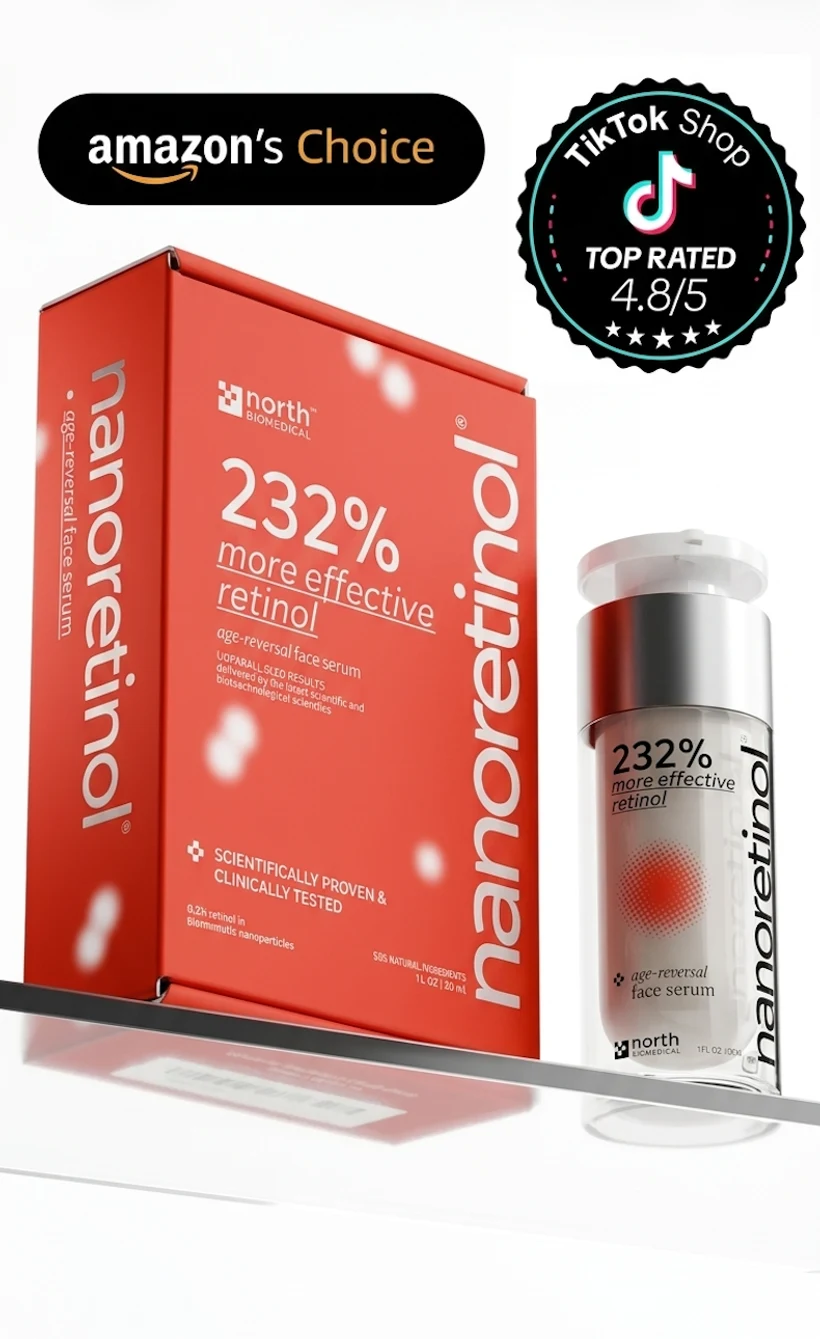
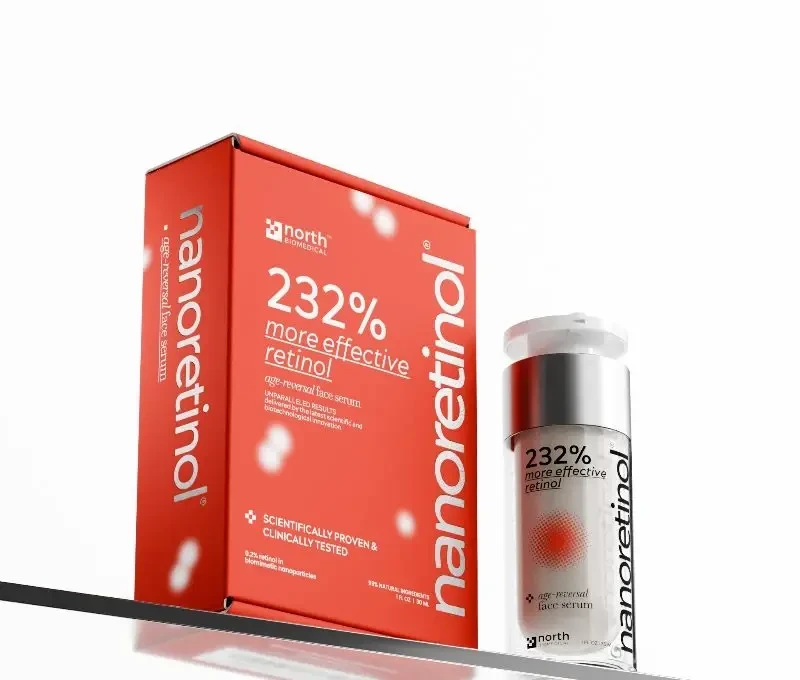
Nanoretinol works differently. It holds 0.2% retinol inside biomimetic lipid nanoparticles that the skin recognises as its own, so the retinol passes the barrier without damaging it. The formula is a light, water-based gel with 99% natural ingredients and a smooth matte finish, which suits hands that will touch a pillowcase or a book minutes later. In North Biomedical’s clinical study it was 232% more effective in collagen recovery and 73% more effective in elastin recovery than conventional retinol, and users saw a 61% increase in firmness and a 56% increase in elasticity after 56 days, with milder side effects than conventional retinol [8].
A simple evening hand routine looks like this: wash, pat dry, smooth a small amount of Nanoretinol over the backs of the hands, then add a ceramide hand cream on top. In the morning, finish with sunscreen. It is the same science you use on your face, applied to the skin that most often gives away your age.
References
- Hung YT, Cheng CY, Chen CB, Huang YL. “Ultrasound Analyses of the Dorsal Hands for Volumetric Rejuvenation.” Aesthetic Surgery Journal. 2022;42(10):1119-1126. doi:10.1093/asj/sjac035
- Löffler H, Kampf G. “Hand Disinfection: How Irritant Are Alcohols?” Journal of Hospital Infection. 2008;70(Suppl 1):44-48. PubMed: 18994681
- Kafi R, Kwak HS, Schumacher WE, Cho S, Hanft VN, Hamilton TA, et al. “Improvement of Naturally Aged Skin with Vitamin A (Retinol).” Archives of Dermatology. 2007;143(5):606-612. doi:10.1001/archderm.143.5.606
- Bissett DL, Oblong JE, Berge CA. “Niacinamide: A B Vitamin That Improves Aging Facial Skin Appearance.” Dermatologic Surgery. 2005;31(7 Pt 2):860-865. doi:10.1111/j.1524-4725.2005.31732
- Watson RE, Ogden S, Cotterell LF, Bowden JJ, Bastrilles JY, Long SP, Griffiths CE. “Effects of a Cosmetic ‘Anti-Ageing’ Product Improves Photoaged Skin.” British Journal of Dermatology. 2009;161(2):419-426. doi:10.1111/j.1365-2133.2009.09216.x
- Pavicic T, Gauglitz GG, Lersch P, Schwach-Abdellaoui K, Malle B, Korting HC, Farwick M. “Efficacy of Cream-Based Novel Formulations of Hyaluronic Acid of Different Molecular Weights in Anti-Wrinkle Treatment.” Journal of Drugs in Dermatology. 2011;10(9):990-1000. PubMed: 22052267
- Hughes MC, Williams GM, Baker P, Green AC. “Sunscreen and Prevention of Skin Aging: A Randomized Trial.” Annals of Internal Medicine. 2013;158(11):781-790. doi:10.7326/0003-4819-158-11-201306040-00002
- North Biomedical LLC. “Nanoretinol vs. Conventional Retinol: Efficacy in Collagen and Elastin Recovery.” Clinical Study Summary, 2024. Study summary