Hand Mask: What 20 Minutes Inside a Glove Actually Changes
The occlusion physiology is real and well documented, which is also why the format has a ceiling it cannot cross
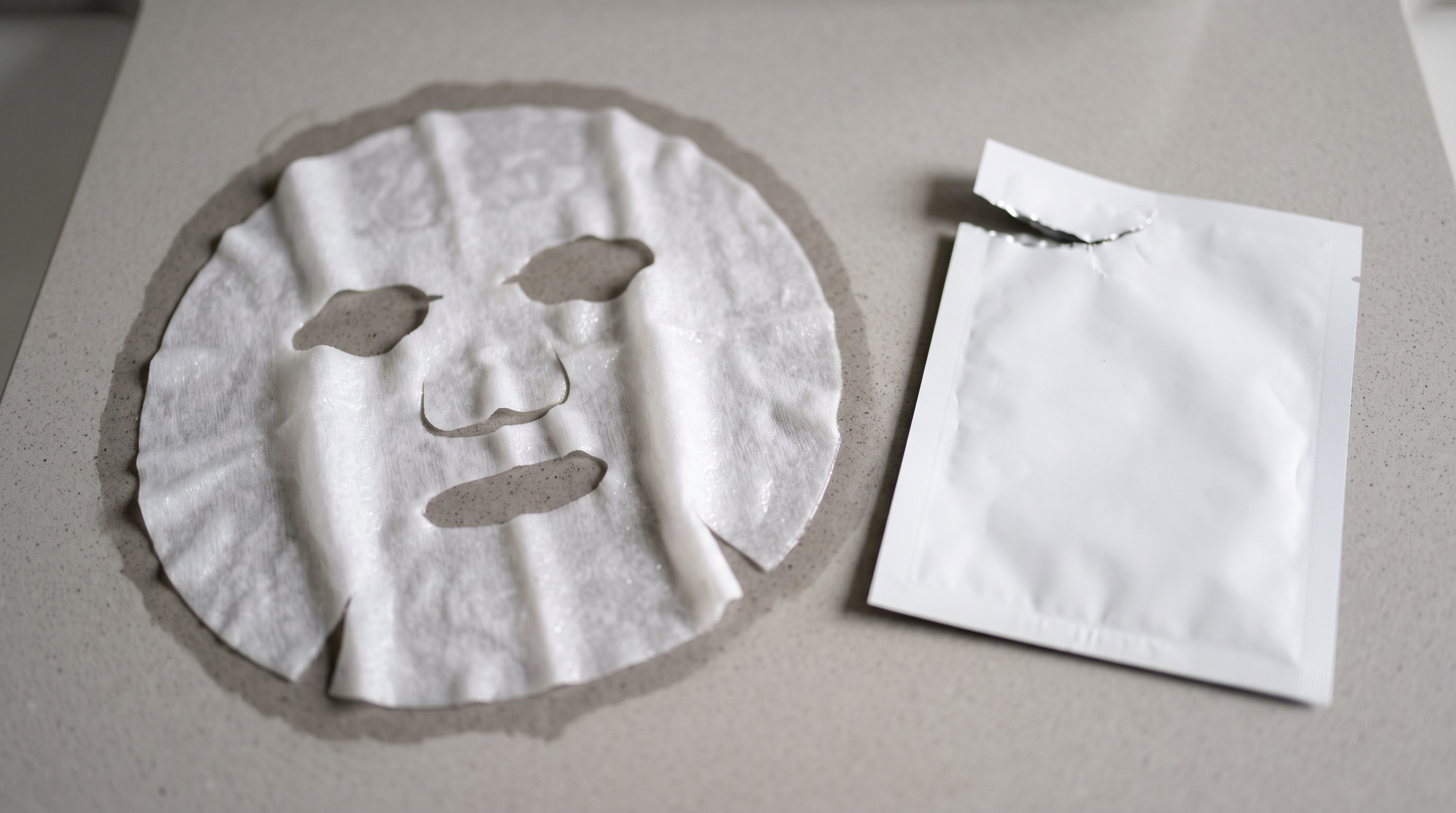
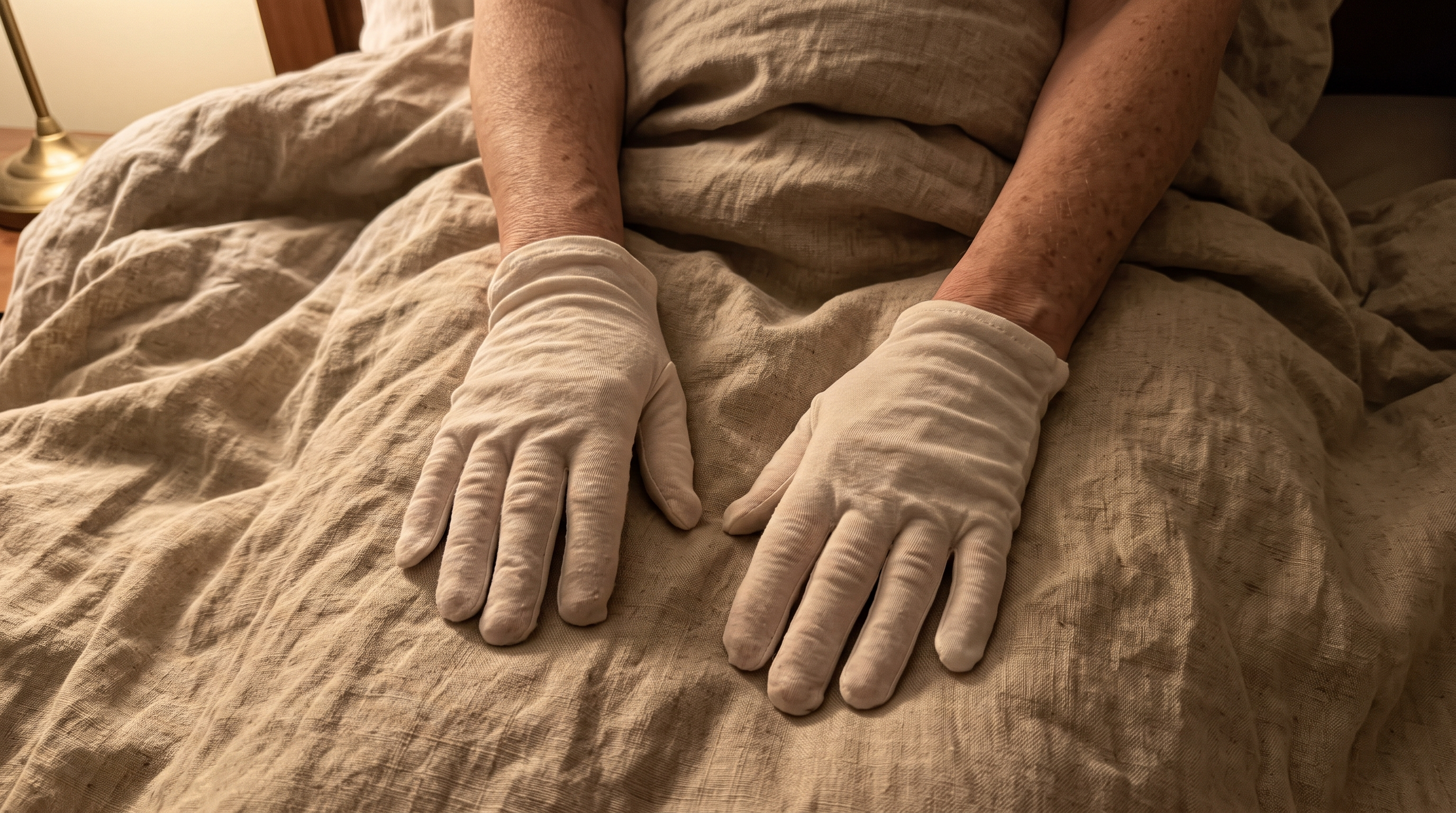
A hand mask is a glove filled with serum. You put it on, wait 15 or 20 minutes, peel it off, and your hands feel remarkable. The question worth asking is whether anything happened besides the feeling, and the answer is more specific than either the marketing or the skeptics suggest.
Occlusion is one of the better studied variables in skin physiology. Putting an impermeable layer over skin changes hydration, permeability, lipid processing and cell behaviour, and all of those changes have been measured. A hand mask is a consumer product built on top of laboratory findings that are entirely real, which is why it works, and also why it stops where it does.
Why hands need their own plan
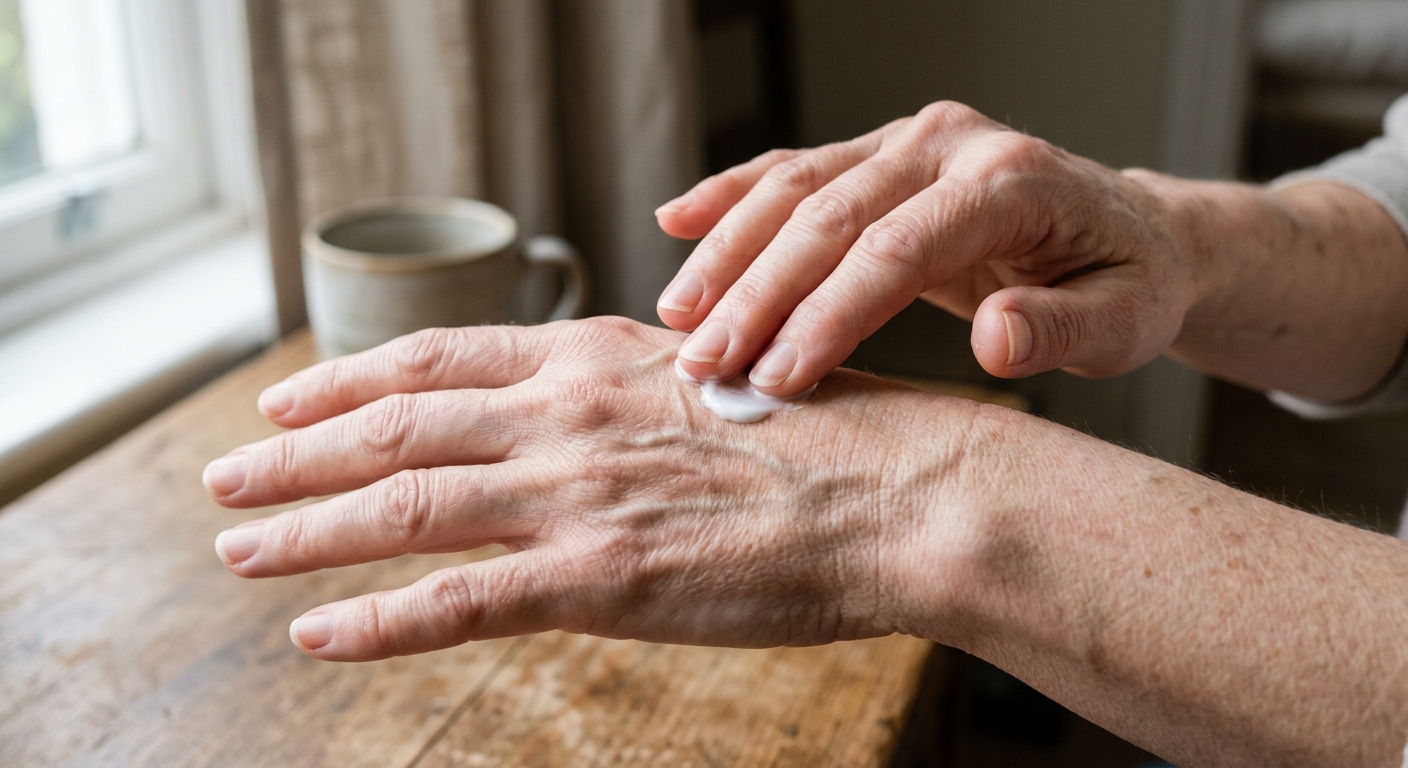
Hands age on a visible schedule. A study of 143 volunteers photographed and graded both hands for wrinkling pattern, visibility of subcutaneous structures and trophic changes, and found a distinct progression in both sexes: dorsal veins became more prominent with age, age spots increased, and the distance between wrinkles decreased [1]. The aging hand loses volume and skin quality at the same time, which is why hands often read older than the face above them.
The skin itself is working with less. Dorsal hand skin is thin, carries little subcutaneous fat, gets washed several times a day and receives sun exposure almost every day of the year while sitting on a steering wheel or a keyboard.
Hands get more sun than almost any other skin on your body and less care than any of it.
What occlusion measurably does
Sealing skin under an impermeable layer produces a set of changes that reviews of the literature describe consistently: altered hydration status, altered barrier permeability, changes to epidermal lipids and DNA synthesis, shifts in microbial flora, and generally increased percutaneous absorption of whatever was applied underneath [2].
The hydration side has been imaged directly. When water patches were applied to forearm skin for three hours, Raman spectroscopy showed notable increases in water content throughout the stratum corneum, and multiphoton microscopy found morphological changes in the intercellular space, with pools of water appearing between corneocytes [3]. Skin under occlusion is not simply damp on the surface. Its internal structure changes, spaces open, and molecules that would otherwise sit on top start moving through.
That is the whole mechanism of a hand mask in one sentence. The same emollient smeared on bare hands would mostly be rubbed onto a doorknob within ten minutes. Under a glove it stays in contact, the stratum corneum swells with water, and absorption rises. Twenty minutes of occlusion genuinely outperforms twenty minutes of lotion.
The same mechanism, pointed the other way
Occlusion increases penetration indiscriminately. Reviews of occlusion and contact dermatitis make exactly that point: because occlusion enhances penetration of drugs, it also enhances penetration of other chemicals and antigens, and can therefore aggravate both irritant and allergic contact dermatitis [4].
The glove that pushes glycerin deeper into your skin pushes fragrance and preservatives just as deep, which is why a hand mask is the worst place to tolerate a scented formula.
If you have reacted to a scented product before, or your hands are already cracked or eczema-prone, read the sachet ingredients before opening it. A fragranced hand mask on compromised skin is a patch test you did not agree to. Broken skin should be repaired with a plain occlusive first, using the approach in our guide to crepey hands.
What the format delivers, and what it does not
Be clear about the categories. Hand masks deliver hydration, softening and a temporary improvement in the appearance of fine lines, and they do it better than an unoccluded product with the same ingredients. For dry, rough, winter-damaged hands, that is a genuinely useful 20 minutes.
What they do not deliver is anything structural. Comprehensive reviews of hand rejuvenation divide the problem into skin quality, pigmentation and volume loss, and address them with distinct interventions, since lost dorsal volume and accumulated sun spots respond to their own treatments rather than to hydration [5]. No mask reverses solar lentigines, and no mask restores fat that has gone. Expecting otherwise is how a decent product ends up judged a failure. Our fuller discussion of aging hands covers what each visible change actually responds to.
Reading the sachet
The serum in the glove follows the same rules as any moisturizer, and only three things matter.
A humectant near the top of the list, which in practice means glycerin. Its role in the skin runs past simple water attraction into stratum corneum hydration, barrier repair and the desquamation process itself [6], and it is the workhorse of every good formula at every price.
An occlusive or physiological lipid, because the humectant needs something holding the water it gathers. Petrolatum is the best studied of these and behaves better than its reputation: rather than sitting on the surface as an impermeable film, it permeates the interstices at all levels of the stratum corneum and accelerates barrier recovery after damage [7].
And no fragrance, for the reason above.
That list also describes a good hand cream, which is the honest framing: the mask is a delivery upgrade for ingredients you should be using daily anyway. Our best hand cream for aging hands guide covers the daily half of the routine.
Making the 20 minutes count
Use a mask at night, on clean, slightly damp hands, and follow it with your regular cream rather than nothing, since the water you just drove into the stratum corneum will leave again if you give it a free surface.
Once a week is a reasonable cadence for most people, twice in winter. The daily work matters more than the weekly treatment: reduce hot water exposure where you can, apply cream after every wash, and wear sunscreen on the backs of your hands, because they are collecting UV every day and photoaging is what makes them look older than they are.
Where Nanoretinol fits
If you want hands to look younger rather than feel softer, the active has to change the matrix. That is achievable on hand skin, and it has been tested there. A 12-month randomized controlled trial of a topical anti-ageing product applied to face and hands assessed fibrillin-1 in biopsies taken from the dorsal wrist and found significant deposition in treated skin, with 70% of subjects showing clinical improvement at 12 months against a projected 33% on vehicle [8]. Hand skin remodels when you treat it properly and give it long enough.
Retinoids are the best evidenced way to do that, and hands are the hardest place to tolerate them, because thin dorsal skin plus daily washing plus daily sun leaves very little margin for the irritation conventional formulations bring. Those products depend on solvents and petroleum-derived penetration enhancers that get retinol through the barrier by breaking it down. Nanoretinol carries stabilized 0.2% retinol inside biomimetic lipid nanoparticles the skin recognizes as self and admits intact, so penetration does not require barrier damage. North Biomedical’s clinical study summary reports 232% greater effectiveness in collagen recovery and 73% greater effectiveness in elastin recovery than conventional retinol, with drastically reduced cytotoxicity, in a water-based gel light enough for daily use. The mask handles the week. The retinoid handles the year. For extending that logic past the hands, see our guide to retinol for the body.
References
- Jakubietz RG, Kloss DF, Gruenert JG, Jakubietz MG. “The ageing hand. A study to evaluate the chronological ageing process of the hand.” Journal of Plastic, Reconstructive & Aesthetic Surgery. 2008;61(6):681-686. doi:10.1016/j.bjps.2007.12.028
- Zhai H, Maibach HI. “Effects of skin occlusion on percutaneous absorption: an overview.” Skin Pharmacology and Applied Skin Physiology. 2001;14(1):1-10. doi:10.1159/000056328
- Ogawa-Fuse C, Morisaki N, Shima K, et al. “Impact of water exposure on skin barrier permeability and ultrastructure.” Contact Dermatitis. 2019;80(4):228-233. doi:10.1111/cod.13174
- Zhai H, Maibach HI. “Skin occlusion and irritant and allergic contact dermatitis: an overview.” Contact Dermatitis. 2001;44(4):201-206. doi:10.1034/j.1600-0536.2001.044004201.x
- Har-Shai L, Ofek SE, Lagziel T, Pikkel YY, Duek OS, Ad-El DD. “Revitalizing Hands: A Comprehensive Review of Anatomy and Treatment Options for Hand Rejuvenation.” Cureus. 2023;15(2):e35573. doi:10.7759/cureus.35573
- Fluhr JW, Darlenski R, Surber C. “Glycerol and the skin: holistic approach to its origin and functions.” British Journal of Dermatology. 2008;159(1):23-34. doi:10.1111/j.1365-2133.2008.08643.x
- Ghadially R, Halkier-Sorensen L, Elias PM. “Effects of petrolatum on stratum corneum structure and function.” Journal of the American Academy of Dermatology. 1992;26(3 Pt 2):387-396. doi:10.1016/0190-9622(92)70060-s
- Watson REB, Ogden S, Cotterell LF, et al. “A cosmetic ‘anti-ageing’ product improves photoaged skin: a double-blind, randomized controlled trial.” British Journal of Dermatology. 2009;161(2):419-426. doi:10.1111/j.1365-2133.2009.09216.x