Hand Cream Gift Set: How to Choose One That Actually Helps Dry Hands
What separates a useful hand cream set from a pretty box of fragrance, which ingredients to look for, and how to match the set to the person you are buying for
A box of hand creams is one of the most popular stocking fillers there is. It feels thoughtful, fits any budget, and suits almost anyone on your list. It is also one of the easiest gifts to get slightly wrong. Many sets are designed around scent and packaging, with three or four tiny tubes that smell lovely and do little for hands that are genuinely dry, cracked or starting to look older.
The good news is that a set that actually helps costs no more than one that does not. It comes down to reading the label for a few key ingredients, thinking about fragrance, and matching the textures to how the person uses their hands.
Why Hands Need More Than a Pretty Scent
Your skin on your hands may be washed 10 times a day, far more often than your face, and each wash rinses away a little of the oil that keeps it supple.
That constant washing has a cost. A large analysis of 66 studies covering more than 568,000 people estimated that about 14.5% of people have hand eczema at some point in their lives, and 9.1% in any given year. It was 1.5 to 2 times more common in women than in men [1]. Water temperature makes it worse. In one study of 50 volunteers, hot water more than doubled the skin’s water loss and raised its redness, while lukewarm water was far gentler [2].
Dermatologists agree on the simplest fix. A review written during the pandemic, when hand washing soared, called applying a moisturizer right after washing or using sanitizer the cornerstone of preventing hand dermatitis [3]. A good gift set makes that habit easy, with a tube in every place the person washes their hands.
The Fragrance Question
Scent is the main selling point of most hand cream sets, and for many people it is harmless and part of the pleasure. But fragrance is also one of the most common causes of skin allergy. In a study that patch-tested more than 3,000 adults from the general population in five European countries, 27% reacted to at least one common allergen, and two standard fragrance mixes were among the most frequent after metals and a preservative [4].
Your skin on your hands may be washed 10 times a day, far more often than your face, and each wash rinses away a little of the oil that keeps it supple.
Hand creams are leave-on products, applied many times a day to skin that is often already cracked, which is exactly the pattern linked to developing a fragrance allergy. A study from the same group found that women and people with sensitive skin were more likely to be exposed to scented products and more likely to have a fragrance allergy [5].
The practical rule is simple. If the person has sensitive skin, eczema, cracked hands, or works in a job with lots of hand washing, choose a fragrance-free set. If they love scent and have healthy skin, a mixed set with one scented tube for the handbag and a fragrance-free one by the sink is a good compromise.
What to Look For on the Label
- Humectants pull water into the skin. Glycerin is the workhorse; urea is a stronger choice for rough, thickened skin, because it also loosens hard, dry cells. At around 10% it softens, and at higher strengths it exfoliates [6].
- Occlusives and emollients seal the water in. Look for petrolatum, shea butter, dimethicone, lanolin or plant oils high on the ingredient list. A cream that disappears instantly usually has little of these.
- Barrier lipids such as ceramides help repair skin that is already damaged.
- SPF for daytime. The backs of the hands get as much sun as the face and show age spots early. A set with one SPF 30 hand cream is a quietly useful gift.
Check the ingredient order, too. If fragrance, alcohol or colorants appear near the top and the humectants and oils appear near the bottom, the set is mostly about the experience.
Matching the Set to the Person
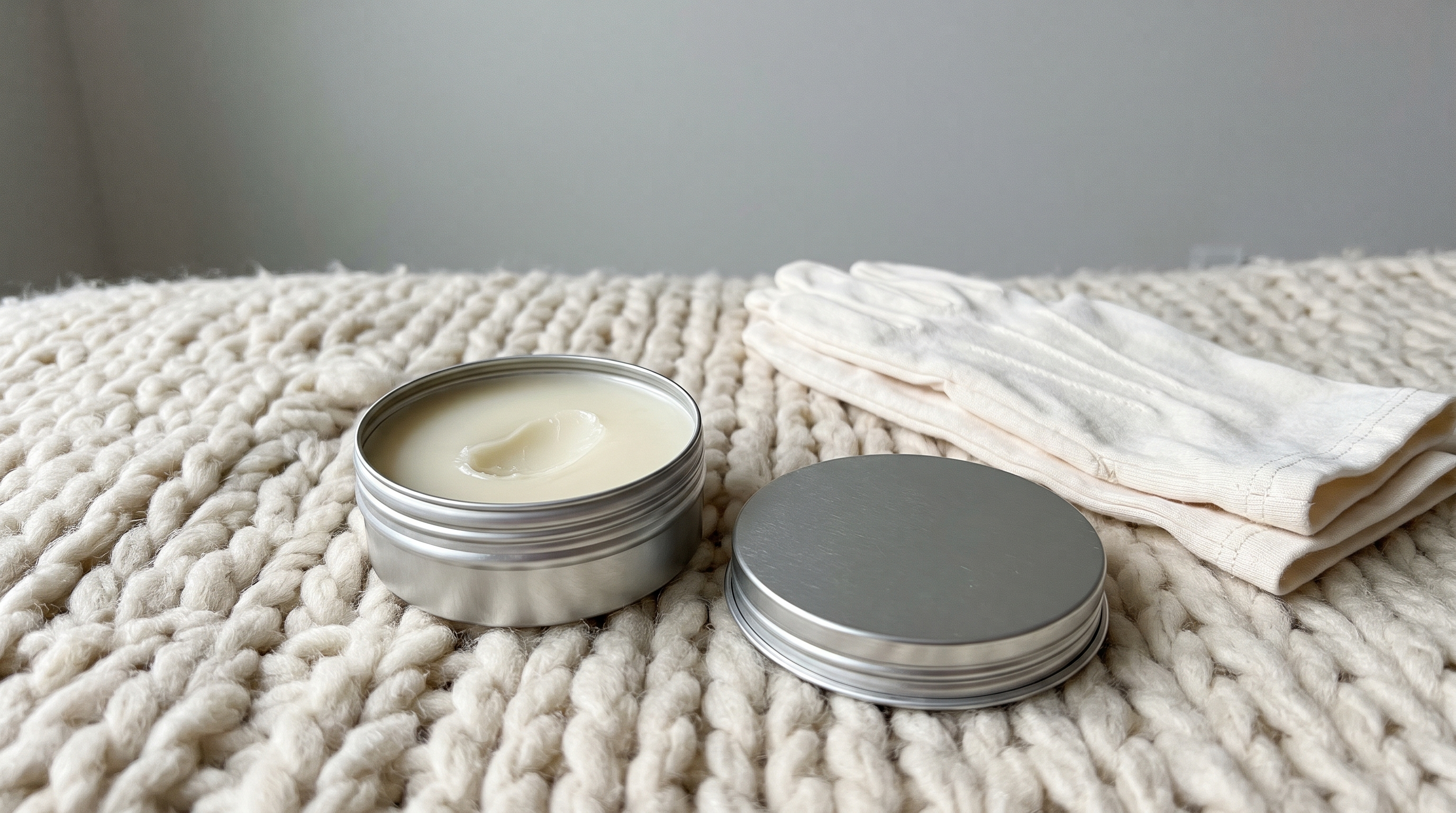
For cracked, working hands. Gardeners, cooks, nurses and anyone who works with their hands need richness over elegance. Choose a set with a thick urea or glycerin cream and a solid hand balm for the worst cracks at night.
Your skin responds to habit more than brand: in a 12-month hospital trial, hand eczema scores fell 56% among staff given easy access to moisturizer, against 44% in the usual-care group.
For frequent washers. Fragrance-free creams that absorb quickly win here, because people will only use what does not leave their hands slippery. Your skin responds to habit more than brand: in a 12-month hospital trial, hand eczema scores fell 56% among staff given easy access to moisturizer, against 44% in the usual-care group.
That trial put cream dispensers on hospital wards and regularly told staff how much they were using. The main measures did not differ significantly, but the relative improvement in eczema scores did, and among staff with mild eczema the dispenser wards did clearly better [7]. The lesson for a gift is to choose small tubes that will actually live in a coat pocket, a desk drawer and next to the kitchen sink.
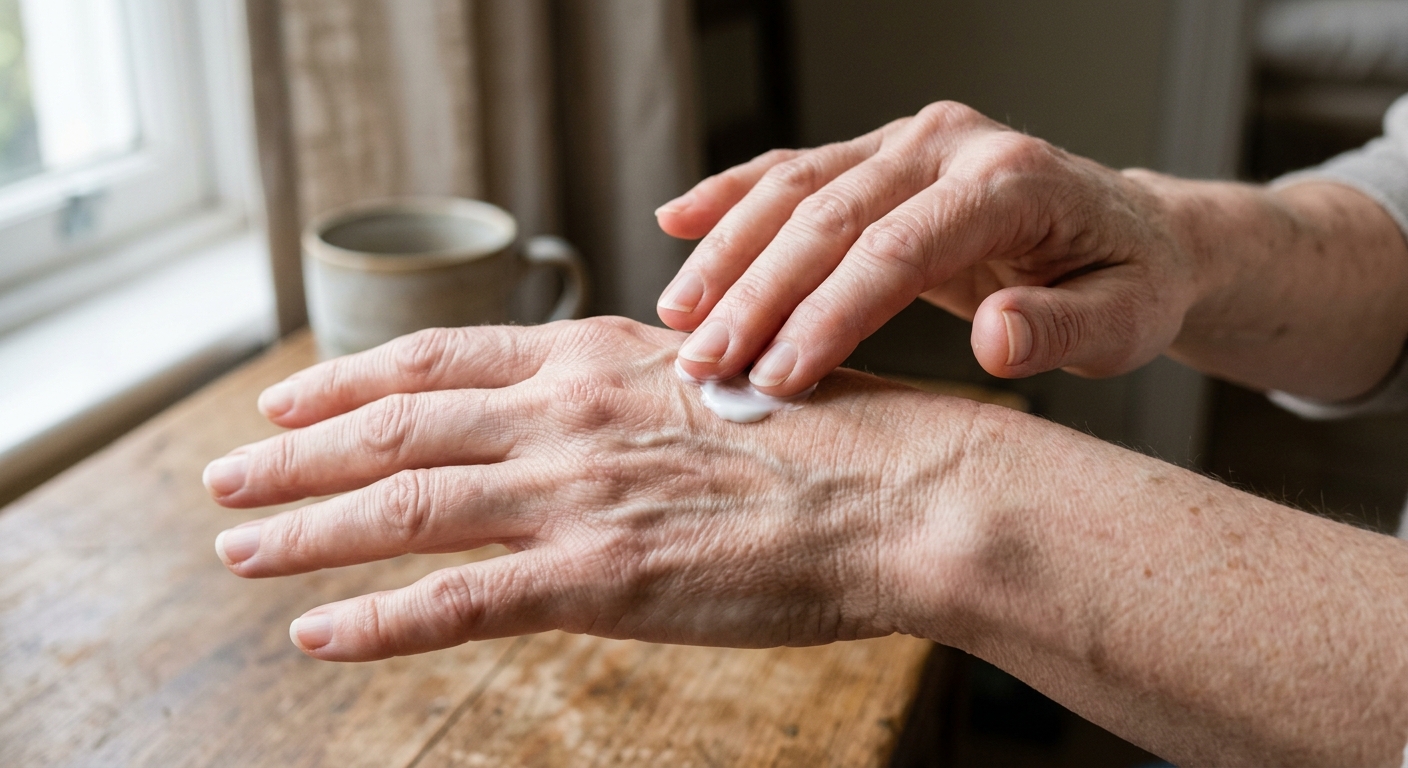
For aging hands. Thinning skin, visible veins and age spots on the backs of the hands respond to sun protection and to ingredients that work deeper than a moisturizer. Pair a rich cream with an SPF hand cream, and see our guide to crepey hands for what helps the skin look firmer.
For the scent lover. Go with their favorite fragrance family, but check that the creams themselves are rich enough to be worth using. A set where every tube is a thin lotion will be used once and forgotten.
How to Spot a Set That Is Mostly Packaging
Compare the price per milliliter, not per box. Many gift sets contain three 30 ml tubes, which is less cream than one standard 100 ml tube, sold at a premium for the presentation. Tubes are also more hygienic than jars, which collect fingers dipping in every day. And if every tube in a set has the same base formula with a different scent, you are buying one cream in several colors.
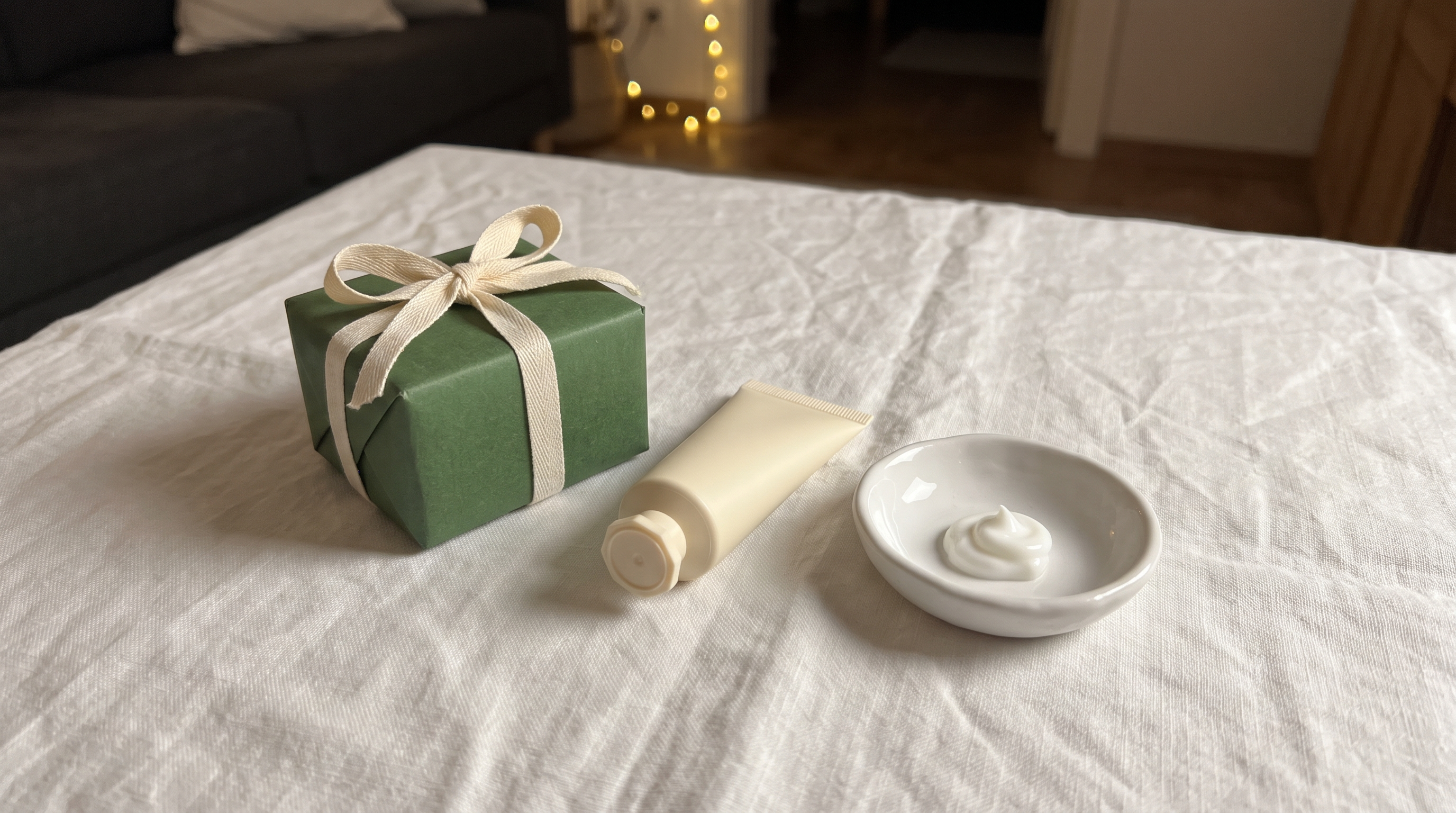
A thoughtful alternative is to build your own: one rich hand cream, one fragrance-free cream, one SPF hand cream and a pair of cotton gloves for overnight treatments, all in a small pouch. Our guide to the best hand cream for aging hands is a good place to choose the main tube, and our skincare gift set guide covers wider options for the person on your list.
The Gift Hands Cannot Get From Cream
A good hand cream fixes dryness and cracking, and an SPF hand cream slows new sun damage. Neither can rebuild the collagen and elastin that keep the backs of the hands smooth and firm. Those changes respond to retinoids, which many people already use at night on the face and extend to the backs of the hands.
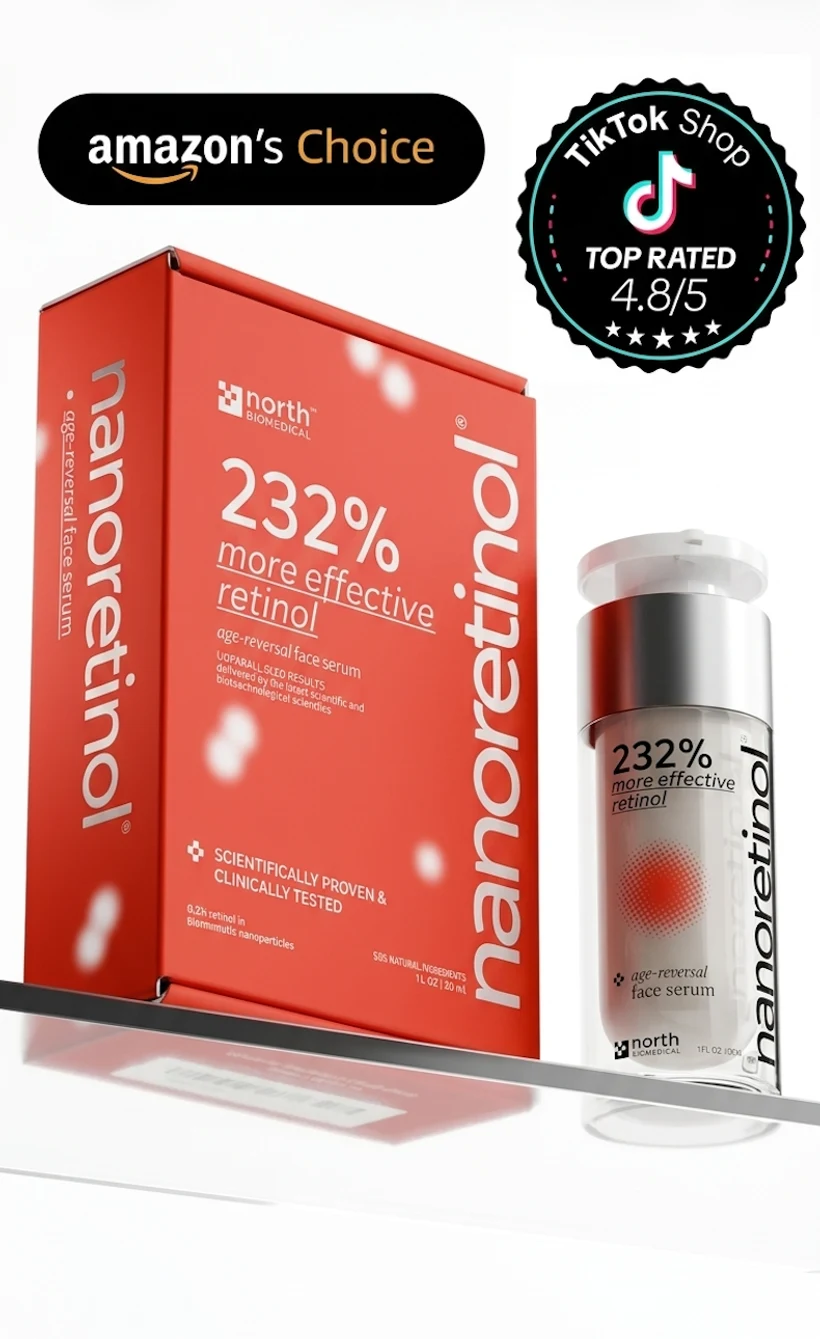
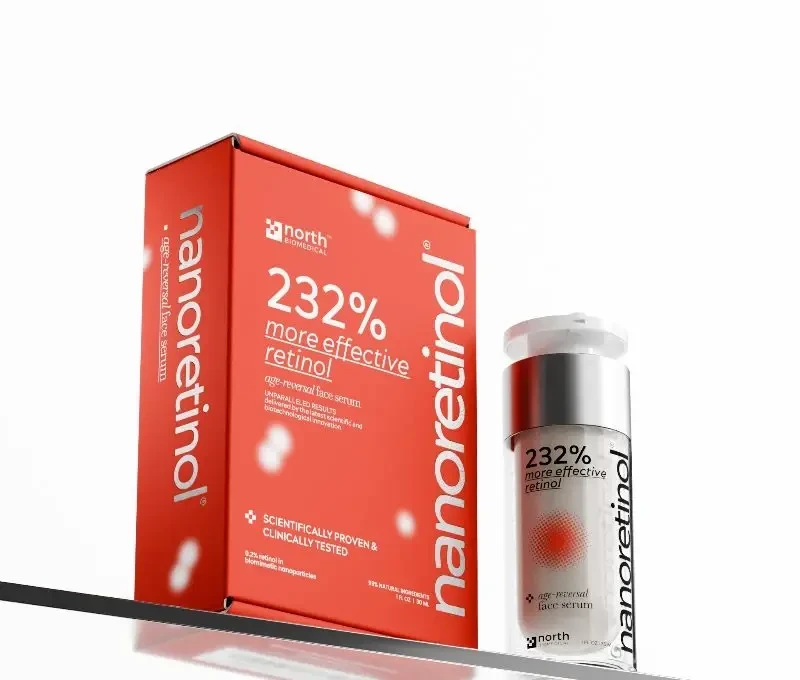
Conventional retinol can be harsh, especially on dry skin, because many formulas use solvents that loosen the skin barrier to push the retinol in. Nanoretinol takes a different route. Its retinol is carried in biomimetic lipid nanoparticles that pass through the barrier without breaking it down, in a light, water-based gel with 99% natural ingredients. In North Biomedical’s clinical study, it was 232% more effective than conventional retinol in collagen recovery and 73% more effective in elastin recovery, and 56 days of use brought a 61% increase in skin firmness and a 56% increase in elasticity [8]. Side effects were minimal and milder than with conventional retinol.
For someone who cares about how their hands look, a hand cream set covers the daytime, and a gentle nightly retinol covers the deeper work. Together they make a gift that keeps working long after the wrapping paper is gone.
References
- Quaade AS, Simonsen AB, Halling AS, Thyssen JP, Johansen JD. “Prevalence, incidence, and severity of hand eczema in the general population - A systematic review and meta-analysis.” Contact Dermatitis. 2021;84(6):361-374. doi:10.1111/cod.13804
- Herrero-Fernandez M, Montero-Vilchez T, Diaz-Calvillo P, Romera-Vilchez M, Buendia-Eisman A, Arias-Santiago S. “Impact of Water Exposure and Temperature Changes on Skin Barrier Function.” Journal of Clinical Medicine. 2022;11(2):298. doi:10.3390/jcm11020298
- Beiu C, Mihai M, Popa L, Cima L, Popescu MN. “Frequent Hand Washing for COVID-19 Prevention Can Cause Hand Dermatitis: Management Tips.” Cureus. 2020;12(4):e7506. doi:10.7759/cureus.7506
- Diepgen TL, Ofenloch RF, Bruze M, Bertuccio P, Cazzaniga S, Coenraads PJ, et al. “Prevalence of contact allergy in the general population in different European regions.” British Journal of Dermatology. 2016;174(2):319-329. doi:10.1111/bjd.14167
- van Amerongen CCA, Ofenloch RF, Cazzaniga S, Elsner P, Gonçalo M, Naldi L, et al. “Skin exposure to scented products used in daily life and fragrance contact allergy in the European general population - The EDEN Fragrance Study.” Contact Dermatitis. 2021;84(6):385-394. doi:10.1111/cod.13807
- Pan M, Heinecke G, Bernardo S, Tsui C, Levitt J. “Urea: a comprehensive review of the clinical literature.” Dermatology Online Journal. 2013;19(11):20392. PubMed 24314769
- Soltanipoor M, Kezic S, Sluiter JK, de Wit F, Bosma AL, van Asperen R, Rustemeyer T. “Effectiveness of a skin care programme for the prevention of contact dermatitis in healthcare workers (the Healthy Hands Project): A single-centre, cluster randomized controlled trial.” Contact Dermatitis. 2019;80(6):365-373. doi:10.1111/cod.13214
- North Biomedical LLC. “Nanoretinol vs. Conventional Retinol: Efficacy in Collagen and Elastin Recovery.” Clinical Study Summary, 2024. Study summary