Skincare Gift Set: How to Choose One That Actually Works
Most gift sets are padded with minis and fragrance. How to read the box, which ingredients matter for aging skin, and how to build a better gift from two or three proven products
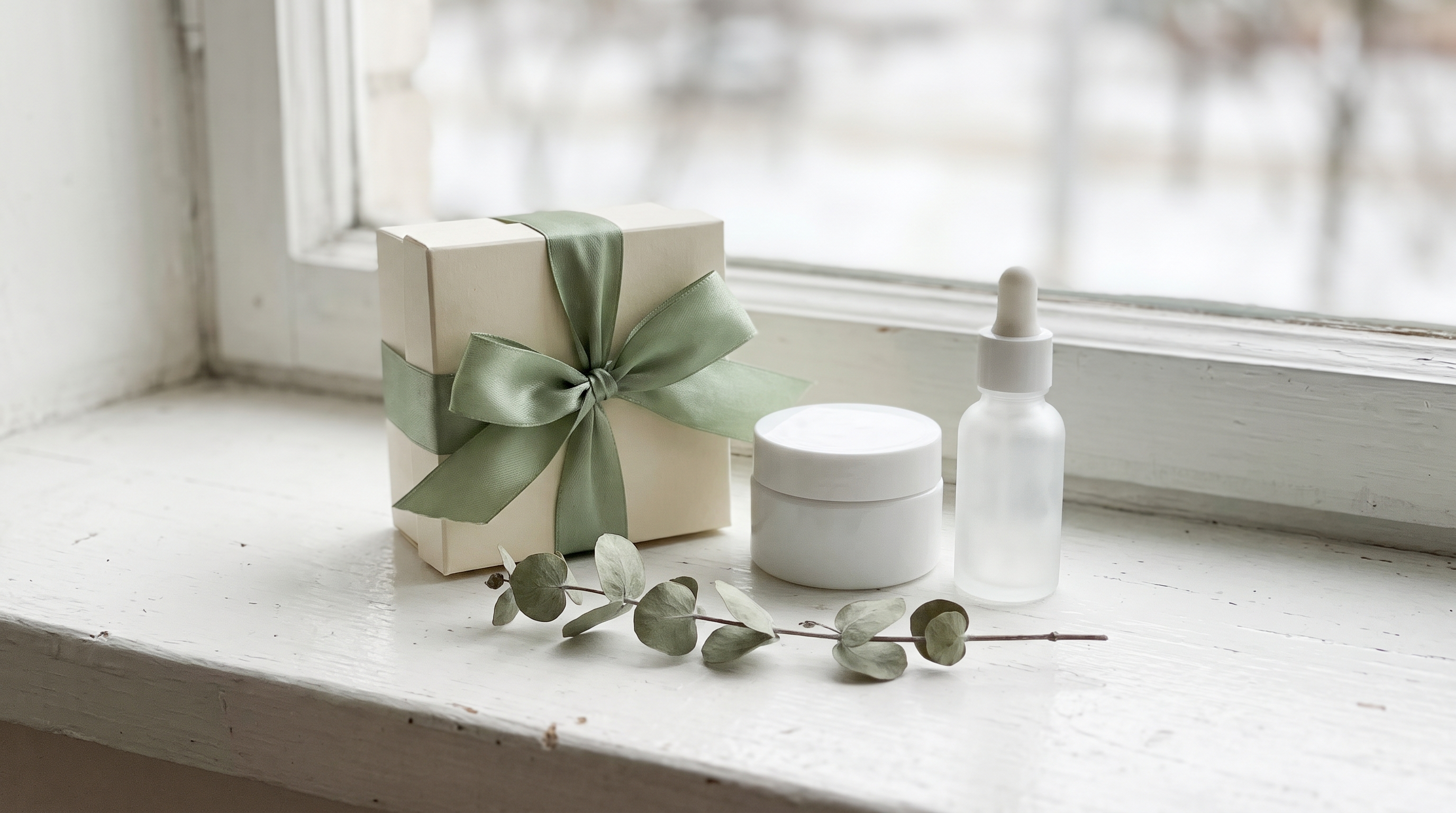
Every November the shelves fill with skincare gift sets: a ribboned box, five tiny tubes, a cotton headband and a price that looks generous next to the full-size products. They are easy to buy and pleasant to open. Whether they do anything for the person who receives them is a different question.
A good skincare gift is not the one with the most items. It is the one built around an ingredient with real evidence behind it, in a format the recipient will actually use, without the extras that irritate sensitive skin. That takes about two minutes of label reading, and this guide shows you what to look for.
Why most gift sets disappoint
Gift sets are designed to look abundant. The economics push in one direction: many small items, attractive packaging and a headline product that is often a cleanser or a body lotion, the cheapest things to make. A few patterns show up again and again.
The minis are too small to matter. A 5 ml eye cream or a 10 ml serum lasts a week or two. Visible change from most active ingredients takes months, so a sample-size tube is a trial, not a treatment.
The hero is a rinse-off product. Cleansers, scrubs and masks spend a minute or two on the skin before going down the drain. They can feel lovely, but they are rarely what changes how skin looks.
Fragrance is everywhere. Scent sells gifts, and it is also the most common reason a skincare product causes a reaction. Up to 4.5% of adults may be allergic to fragrance ingredients, and among people being patch tested for a suspected skin allergy that figure reaches 20% to 25% [4].
Steps that fight each other. A set that pairs a strong exfoliating acid with a retinoid and a scented toner can leave a new user red and peeling within a week, and the whole box ends up in a drawer.
Your skin can age 24% less over 4.5 years with daily sunscreen than with occasional use, far more than any boxed cream can claim.
The few ingredients worth paying for
If you strip a skincare routine back to what has held up in clinical trials, the list is short.
Sunscreen. The strongest anti-aging evidence of any product belongs to plain daily sunscreen. In a four-year randomized trial in Australia, adults who applied broad-spectrum sunscreen every day showed no detectable increase in skin aging, while the comparison group, who used it at their own discretion, kept aging [2]. Your skin can age 24% less over 4.5 years with daily sunscreen than with occasional use, far more than any boxed cream can claim.
A retinoid. Retinol is the over-the-counter member of the vitamin A family, and it has controlled trial evidence for genuine change. In a 24-week study of adults in their eighties, retinol lotion on one arm significantly improved fine wrinkling compared with the plain lotion on the other arm, and biopsies showed more new collagen [1]. Retinol and retinaldehyde are also considerably less irritating than prescription tretinoin [6], which makes retinol the sensible choice for a gift.
Vitamin C. A well-formulated vitamin C serum works as an antioxidant, supports collagen production and can soften uneven pigment. The evidence is promising but thinner than for sunscreen or retinoids, and vitamin C is notoriously unstable, so a serum that has turned dark orange in the bottle has lost much of its value [3].
A good moisturizer. It sounds unexciting, but moisturizers repair a dry, leaky skin barrier and are a mainstay of dermatology for that reason [5]. For anyone over 50, a rich, fragrance-free cream is a genuinely useful gift.
Your skin can show smoother fine lines after 24 weeks of retinol than with a plain lotion, which is why one proven active outweighs a box of extras.
Your skin can show smoother fine lines after 24 weeks of retinol than with a plain lotion, which is why one proven active outweighs a box of extras.
Match the set to the person
The right gift depends on who will open it.
For your mother, aunt or anyone over 50. Skin at this age is drier, thinner and slower to repair. Look for a set with a gentle retinol, a rich moisturizer and a daily sunscreen, and skip anything with strong acids or heavy fragrance. Our guide to the best skin care for women over 60 covers which products earn a place at that age.
For someone new to skincare. Three steps is plenty: a gentle cleanser, a moisturizer and a sunscreen. Adding a retinoid is fine as long as it is gentle and comes with instructions to start slowly. If the set has more than four steps, include a note on the order to use them in; our explainer on skincare routine order is a good one to share.
For men. Many men use nothing beyond soap and an aftershave. A simple set, cleanser, moisturizer with sunscreen and perhaps an eye cream, is more likely to be used than a ten-step collection. Our skin care routine for men shows a realistic starting point.
For sensitive or reactive skin. Choose fragrance-free products with short ingredient lists, avoid scrubs with gritty particles, and leave out strong acids altogether.
How to read the box before you buy
A quick check in the store or online separates a good set from a pretty one.
- Find the hero product. Is it a leave-on product with a proven active, such as a retinol serum or a sunscreen, or is it a cleanser?
- Check the sizes. Full-size or near full-size products give the recipient enough to see results. A box of five 7 ml tubes rarely does.
- Work out the real value. Compare the price per millilitre of the hero product with buying it on its own. Sets are often only good value if you would have bought every item anyway.
- Scan for fragrance. “Parfum” or “fragrance” near the top of the list, or a long run of essential oils, is a warning sign for sensitive skin.
- Look at the packaging. Retinol and vitamin C break down in light and air, so opaque bottles, airless pumps and tubes protect them far better than clear jars.
The better gift: build your own
Often the most useful gift is not a set at all. Pick two or three full-size products that cover the essentials and put them together yourself: a gentle retinol for the evening, a fragrance-free moisturizer and a daily sunscreen. That combination covers repair, barrier and protection, the three things that matter most for aging skin, and it is still something the person can open and enjoy.
Add a short handwritten note on how to use each product. A retinoid in particular should come with simple instructions: a pea-sized amount at night, two or three nights a week at first, then more often as the skin adjusts. Our guide on how to use retinol explains the method in full if they want more detail.
Building a gift around Nanoretinol
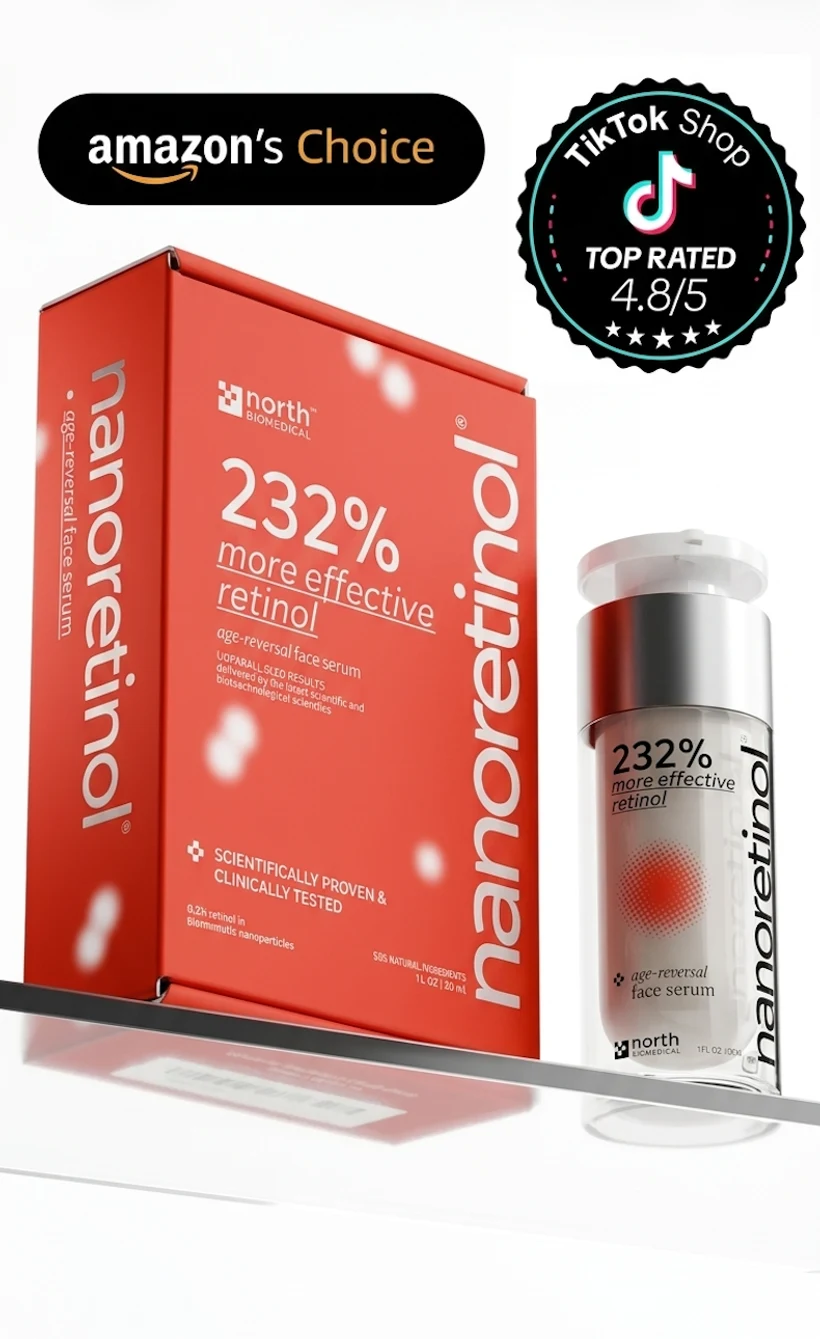
If you build a gift around one proven active, retinol is the strongest candidate, and the formula matters as much as the ingredient. Many conventional retinol products rely on solvents that loosen the skin barrier to push the retinol in, which is why new users so often give up after a week of redness and peeling.
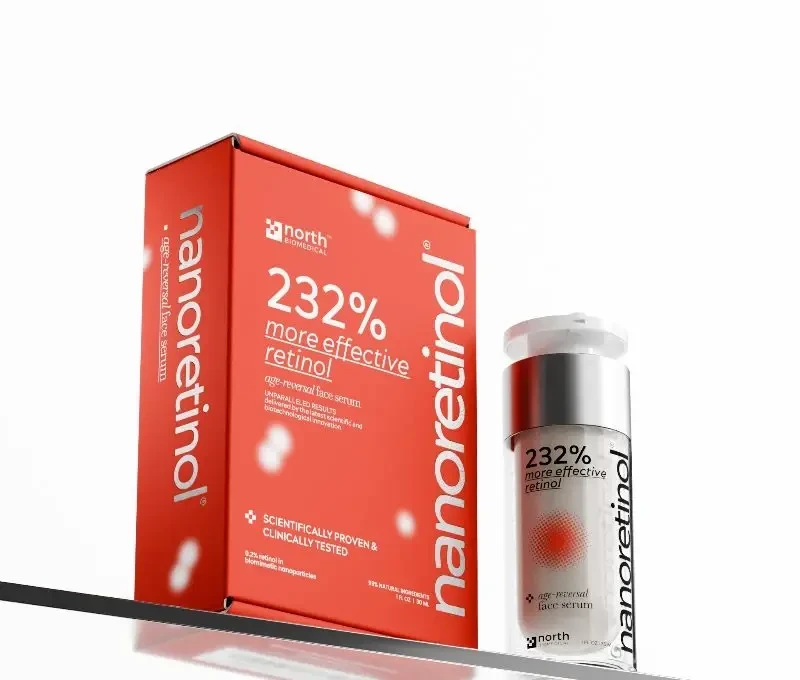
Nanoretinol delivers 0.2% retinol inside biomimetic lipid nanoparticles in a light, water-based gel that is suitable for sensitive skin and the eye contour. In North Biomedical’s study it was 232% more effective in collagen recovery and 73% more effective in elastin recovery than conventional retinol, and clinical testing showed a 61% increase in skin firmness after 56 days [7]. Paired with a good moisturizer and a daily sunscreen, it makes a three-piece gift that does more than most boxed sets, and it comes with a 30-day money-back guarantee if it is not the right fit.
References
- Kafi R, Kwak HS, Schumacher WE, Cho S, Hanft VN, Hamilton TA, et al. “Improvement of naturally aged skin with vitamin A (retinol).” Archives of Dermatology. 2007;143(5):606-612. doi:10.1001/archderm.143.5.606
- Hughes MC, Williams GM, Baker P, Green AC. “Sunscreen and prevention of skin aging: a randomized trial.” Annals of Internal Medicine. 2013;158(11):781-790. doi:10.7326/0003-4819-158-11-201306040-00002
- Al-Niaimi F, Chiang NYZ. “Topical Vitamin C and the Skin: Mechanisms of Action and Clinical Applications.” Journal of Clinical and Aesthetic Dermatology. 2017;10(7):14-17. PubMed 29104718
- de Groot AC. “Fragrances: Contact Allergy and Other Adverse Effects.” Dermatitis. 2020;31(1):13-35. doi:10.1097/DER.0000000000000463
- Purnamawati S, Indrastuti N, Danarti R, Saefudin T. “The Role of Moisturizers in Addressing Various Kinds of Dermatitis: A Review.” Clinical Medicine & Research. 2017;15(3-4):75-87. doi:10.3121/cmr.2017.1363
- Mukherjee S, Date A, Patravale V, Korting HC, Roeder A, Weindl G. “Retinoids in the treatment of skin aging: an overview of clinical efficacy and safety.” Clinical Interventions in Aging. 2006;1(4):327-348. doi:10.2147/ciia.2006.1.4.327
- North Biomedical LLC. “Nanoretinol vs. Conventional Retinol: Efficacy in Collagen and Elastin Recovery.” Clinical Study Summary, 2024. Study summary