Hard Water and Your Skin: Why Your Face Feels Tight After Every Wash
The mineral content of your tap water changes how your cleanser behaves, and the fix is usually not the one people reach for first
The Tightness That Follows You Home
Some people discover this after moving house. The routine has not changed, the cleanser is the same bottle, but suddenly the face feels tight and squeaky within seconds of rinsing, and stays that way until moisturizer goes on. Others notice it in reverse, on holiday, when skin that is normally difficult behaves beautifully for a week in a different city.
The variable is the water. Specifically, its mineral content: dissolved calcium and magnesium salts, which is what “hard” water means. According to United States Geological Survey data, roughly 85% of American homes receive water with some degree of hardness, so this is not a niche problem.
What hardness actually does is change the behavior of whatever you wash with, and that distinction determines what solves the problem.
The Mechanism Is Residue, Not Minerals
The reflexive assumption is that calcium is somehow abrasive or drying to skin. The research says otherwise, and the specific study that settles it is worth understanding.
Investigators washed skin with sodium lauryl sulfate, a common anionic surfactant, in both hard and soft water, then measured what was left behind. Skin washed in hard water retained significantly more surfactant residue than skin washed in soft water, and that retained residue raised transepidermal water loss and produced visible irritation [2]. The calcium was not the irritant. The calcium made the detergent stick.
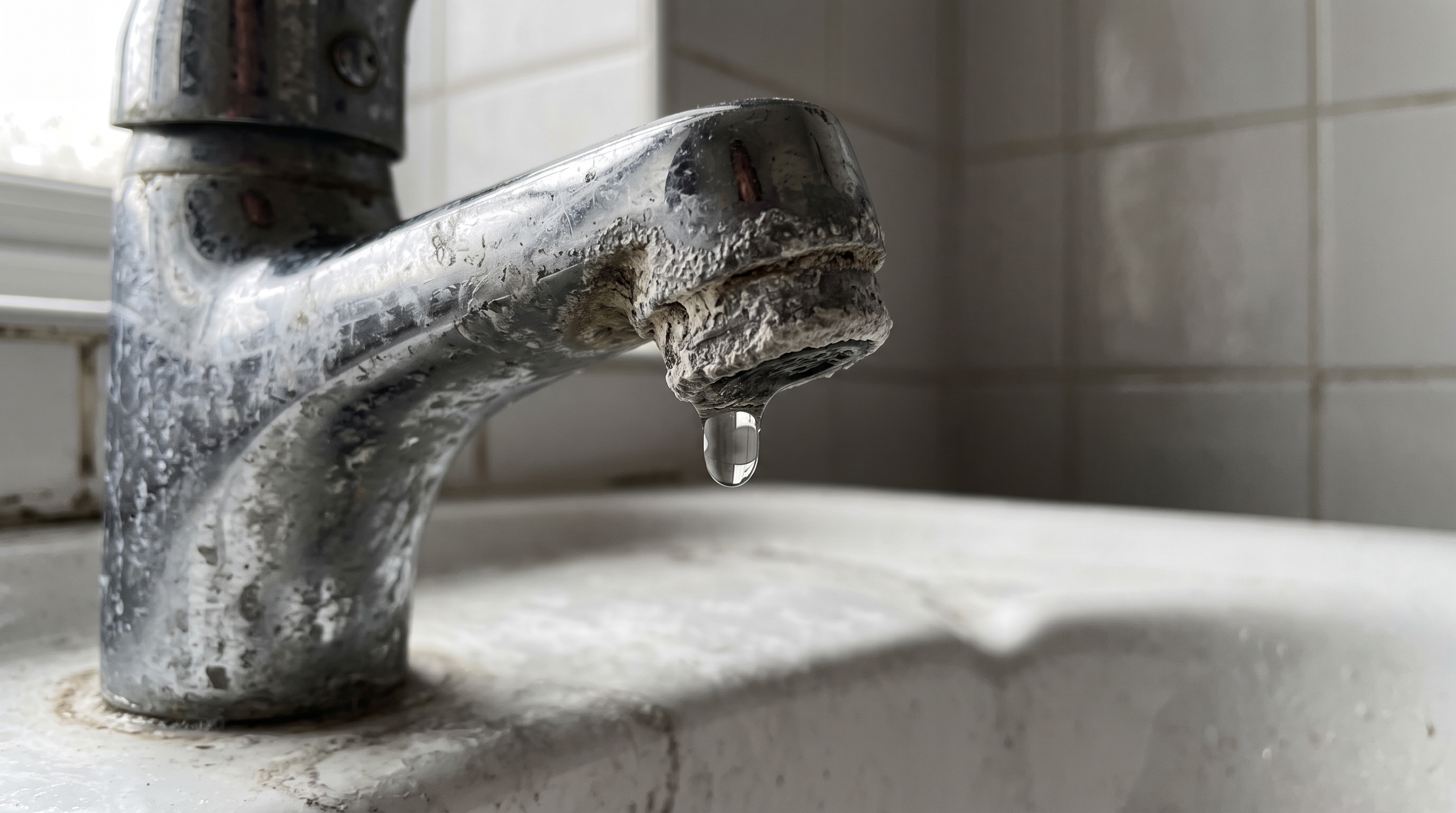
The chemistry is the same reaction that leaves a ring in your bathtub. Calcium ions react with anionic surfactants to form insoluble compounds, the scum that will not rinse away. On a bathtub it is cosmetic. On your face it is a film of detergent left in contact with the stratum corneum long after you have dried off, continuing to strip lipids and provoke inflammation.
That study also found the effect was amplified in people carrying filaggrin gene mutations, who have a structurally weaker barrier to begin with [2]. It is a good explanation for why two people in the same household can have completely different experiences of the same tap.
According to United States Geological Survey data, roughly 85% of American homes receive water with some degree of hardness, so this is not a niche problem.
Population data lines up with the mechanism. A study of UK schoolchildren found eczema prevalence of 17.3% in the highest water hardness quartile against 12.0% in the lowest, a dose-response gradient tracking calcium content [1]. That is an association in a clinical population rather than proof about cosmetic dryness, but it points the same direction as the laboratory work.
The pH Problem Sitting Underneath
There is a second effect running in parallel, and for anyone concerned with aging skin it may matter more.
Healthy skin surface is acidic, generally cited in the range of roughly 4.1 to 5.8 [4]. That acidity is not incidental. The acid mantle is required for the lipid-processing enzymes that build the barrier to function, for corneocyte cohesion, and for antimicrobial defense [4]. Push the surface pH up and those processes degrade.
Traditional soap is strongly alkaline. Testing across cleanser categories found that all soap bars examined were highly alkaline, while synthetic detergent bars clustered near neutral to mildly acidic, and that sustained use of high-pH cleansers is linked to disrupted stratum corneum lipid organization and impaired barrier repair [5]. A classic clinical study in older adults with dry skin showed the practical consequence directly: alkaline soap raised skin surface pH and transepidermal water loss and reduced surface lipids more than a syndet bar did, with high water loss correlating with high pH and low lipid content [6]. Our guide to skin pH covers why this measurement drives so much else.
Hard water compounds this. It is typically alkaline itself, and it makes soap deposit rather than rinse. You get the pH insult and the residue insult from the same wash.
Why This Matters More With Age
A barrier under this kind of chronic low-grade assault does not simply feel uncomfortable. It behaves differently.
Elevated and abnormal water loss is measurably present in people who report sensitive skin, confirmed through modeling of transepidermal water loss desorption curves against controls [7]. Tightness, stinging and reactivity are not imagination. They correspond to a real physical state.
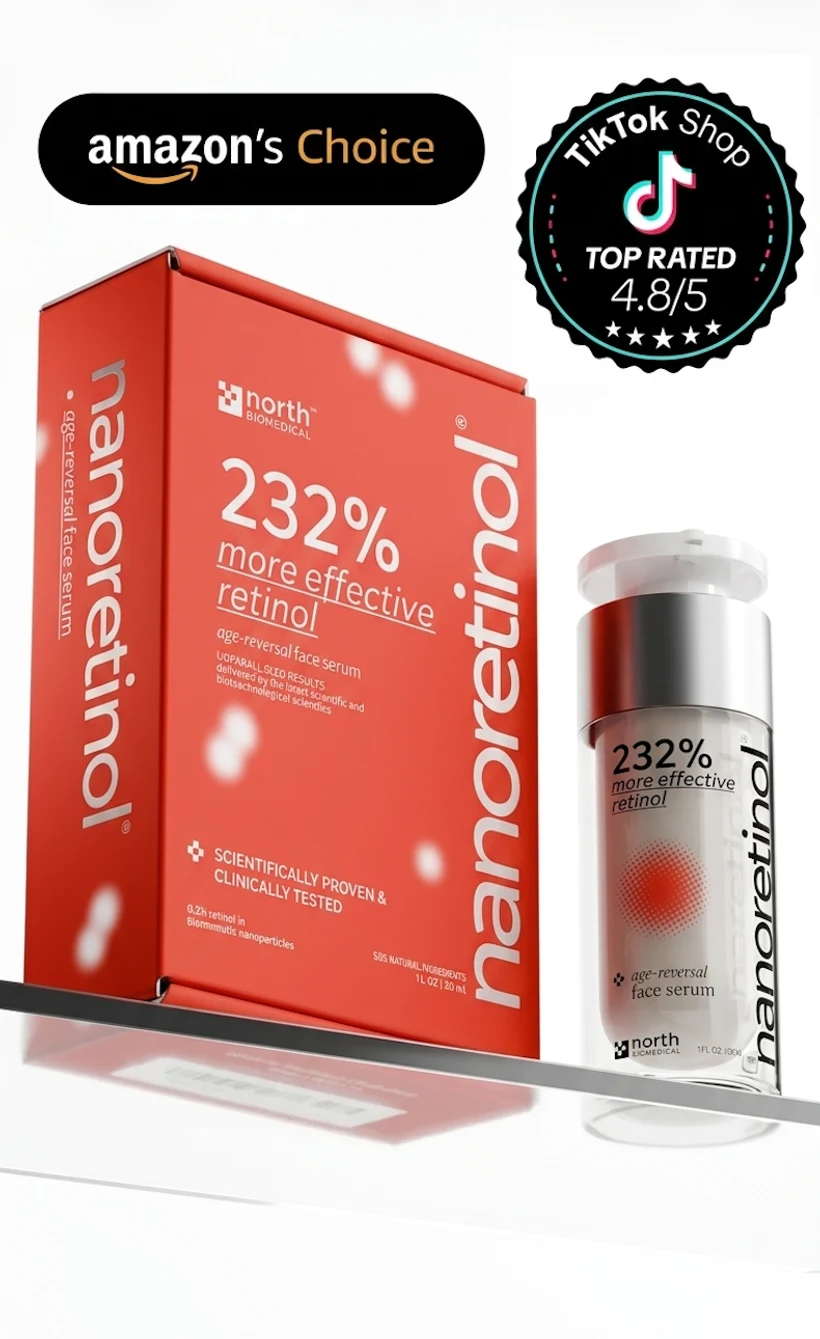
Its 0.2% retinol is carried inside biomimetic lipid nanoparticles that the skin recognizes as self and allows through the epithelial barrier, so no barrier disruption is required for delivery.
Aging skin starts from a weaker position. Lipid production declines, the barrier repairs more slowly, and surface pH tends to drift upward with age anyway. Layer daily hard-water washing on top of that and you get skin that reads as dull, rough and perpetually dehydrated, and that reacts badly to the retinoids and acids that would otherwise be doing useful anti-aging work. Our article on dry skin on the face covers the wider picture.
What Actually Works
The evidence supports a clear order of operations, and it is not the order most people follow.
Change the cleanser first. This is the highest-leverage move, because the residue problem requires a surfactant to exist at all. Switching from a true soap or a foaming anionic cleanser to a low-pH syndet, a cream cleanser or a non-foaming formulation removes most of what hard water is acting on [5][6]. Nothing to react with means nothing to deposit.
Do not lead with a water softener. This is the counterintuitive part. A randomized controlled trial installed ion-exchange water softeners for 336 children with moderate to severe eczema and found no statistically significant difference in severity against usual care after 12 weeks [3]. Softening the water without changing what you wash with did not deliver the expected benefit. Softeners are not useless, but they are a poor first purchase.
Rebuild the barrier deliberately. A ceramide-dominant moisturizing regimen significantly improved transepidermal water loss and hydration over 28 days in a randomized trial, while the placebo group stayed flat or worsened [8]. This is the repair half of the equation, and our guide to ceramides for skin explains why that ingredient class specifically. For a structured recovery approach, see skin barrier repair.
Lower the water temperature and shorten the contact. Hot water increases lipid extraction independently of hardness. Rinsing the face with lukewarm water, briefly, costs nothing.
Getting Anti-Aging Actives to Work in Hard-Water Skin
Here is the practical bind. The people most affected by hard water are usually the ones with the most compromised barriers, and a compromised barrier is exactly the condition under which conventional retinol becomes intolerable.
Conventional retinol formulations work by disrupting the skin barrier to push the molecule through it. Applied to skin that is already losing water at an elevated rate and carrying surfactant residue, the result is stinging, peeling and abandonment of the routine within weeks. The advice to “fix your barrier first, then add retinol” is sound but frustrating, because it postpones the anti-aging work indefinitely for anyone whose tap water keeps undoing the repair.
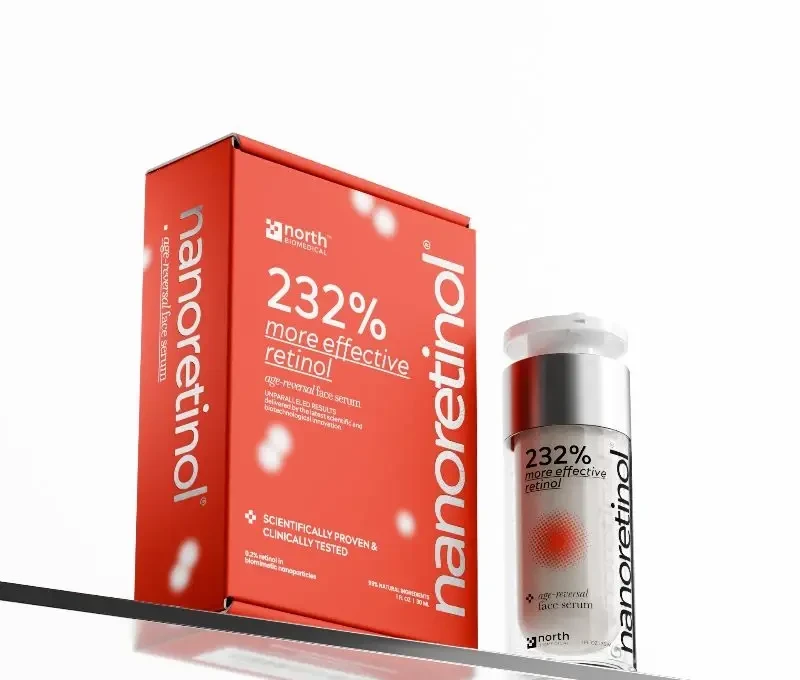
Nanoretinol resolves the conflict differently. Its 0.2% retinol is carried inside biomimetic lipid nanoparticles that the skin recognizes as self and allows through the epithelial barrier, so no barrier disruption is required for delivery. It is water-based, 99% natural, and formulated to suit sensitive skin. In North Biomedical’s clinical study, it proved 232% more effective than conventional retinol in collagen recovery and 73% more effective in elastin recovery, with drastically reduced cytotoxicity. Skin firmness increased 61% and elasticity 56% over 56 days of use.
For skin already dealing with daily surfactant residue, an active that does not add its own barrier damage is the difference between a routine you keep and one you quit.
Start at the Tap, Then the Bottle
Hard water is a real and under-recognized influence on how skin looks and feels, but the mechanism is not the one most people assume. The minerals are not attacking your face. They are converting your cleanser into something that will not fully rinse off, while nudging your surface pH in the wrong direction.
That means the cheapest intervention is also the most effective one: change what you wash with before you change the water, then rebuild the barrier with ceramides and keep the actives gentle enough that your skin can actually tolerate them.
References
- McNally NJ, Williams HC, Phillips DR, Smallman-Raynor M, Lewis S, Venn A, Britton J. “Atopic Eczema and Domestic Water Hardness.” The Lancet. 1998;352(9127):527-531. doi:10.1016/S0140-6736(98)01402-0
- Danby SG, Brown K, Wigley AM, Chittock J, Pyae PK, Flohr C, Cork MJ. “The Effect of Water Hardness on Surfactant Deposition After Washing and Subsequent Skin Irritation in Atopic Dermatitis Patients and Healthy Control Subjects.” Journal of Investigative Dermatology. 2018;138(1):68-77. doi:10.1016/j.jid.2017.08.037
- Thomas KS, Dean T, O’Leary C, Sach TH, Koller K, Frost A, Williams HC. “A Randomised Controlled Trial of Ion-Exchange Water Softeners for the Treatment of Eczema in Children.” PLoS Medicine. 2011;8(2):e1000395. doi:10.1371/journal.pmed.1000395
- Brooks SG, Mahmoud RH, Lin RR, Fluhr JW, Yosipovitch G. “The Skin Acid Mantle: An Update on Skin pH.” Journal of Investigative Dermatology. 2025;145(3):509-521. doi:10.1016/j.jid.2024.07.009
- Hawkins S, Dasgupta BR, Ananthapadmanabhan KP. “Role of pH in Skin Cleansing.” International Journal of Cosmetic Science. 2021;43(4):474-483. doi:10.1111/ics.12721
- Thune P, Nilsen T, Hanstad IK, Gustavsen T, Lövig Dahl H. “The Water Barrier Function of the Skin in Relation to the Water Content of Stratum Corneum, pH and Skin Lipids. The Effect of Alkaline Soap and Syndet on Dry Skin in Elderly, Non-Atopic Patients.” Acta Dermato-Venereologica. 1988;68(4):277-283. PMID: 2459871
- Pinto P, Rosado C, Parreirão C, Rodrigues LM. “Is There Any Barrier Impairment in Sensitive Skin? A Quantitative Analysis of Sensitive Skin by Mathematical Modeling of Transepidermal Water Loss Desorption Curves.” Skin Research and Technology. 2011;17(2):181-185. doi:10.1111/j.1600-0846.2010.00478.x
- Spada F, Harrison IP, Barnes TM, Greive KA, Daniels D, Townley JP, Mostafa N, Fong AT, Tong PL, Shumack S. “A Daily Regimen of a Ceramide-Dominant Moisturizing Cream and Cleanser Restores the Skin Permeability Barrier in Adults With Moderate Eczema: A Randomized Trial.” Dermatologic Therapy. 2021;34(4):e14970. doi:10.1111/dth.14970