Jade Roller: What Facial Rolling Actually Does to Your Skin
The de-puffing is measurable and real. The collagen promise is where the evidence runs out.
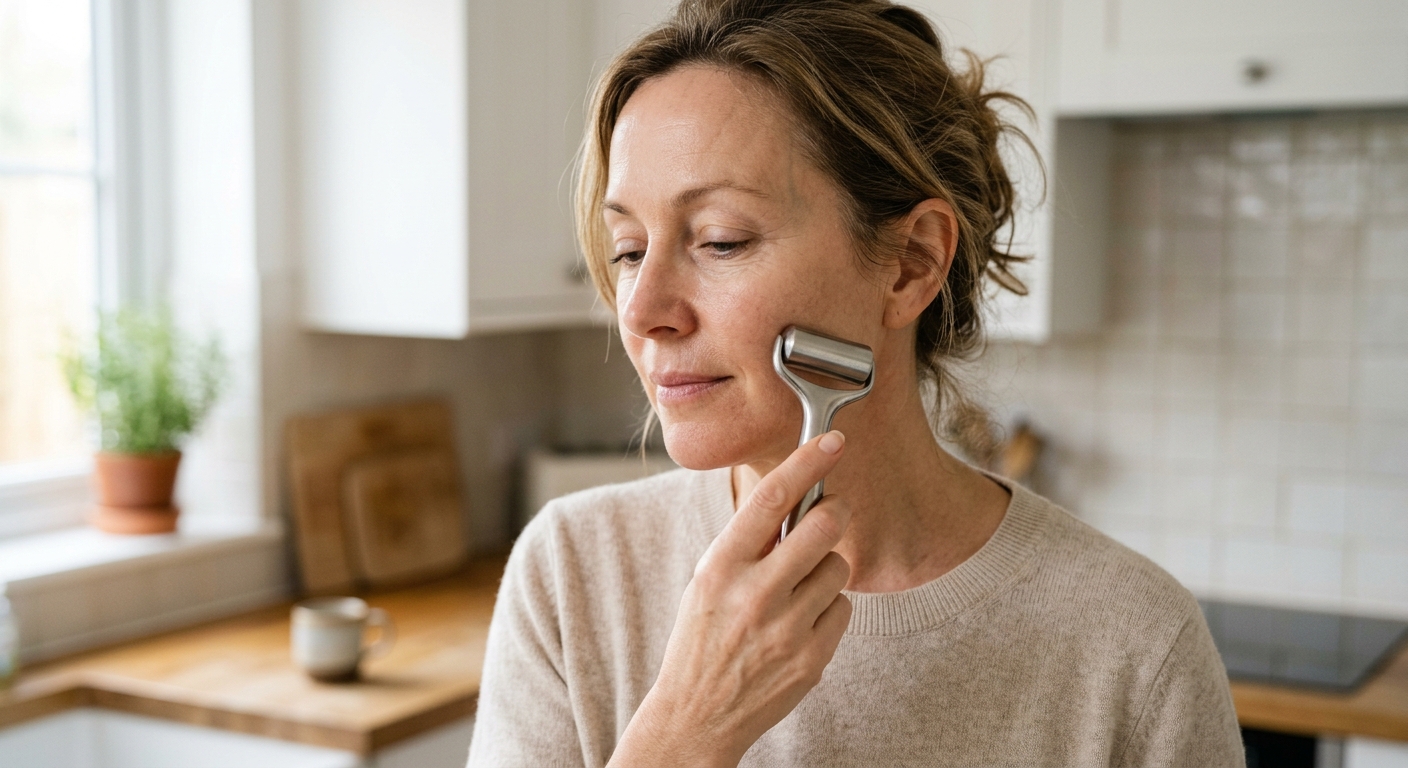
A jade roller costs about twelve dollars, lives in the refrigerator door, and has quietly become one of the most-owned objects in modern skincare. The appeal is obvious the first time you use one. Five minutes of cool stone gliding along the jaw and under the eyes, and the face in the mirror looks less swollen, more defined, somehow more awake than it was when you woke up.
That result is real. It is also frequently oversold. Product pages routinely promise that rolling “boosts collagen,” “lifts sagging skin,” or “erases fine lines,” and those are claims of a completely different order than “reduces morning puffiness.” One of them has evidence behind it. The other has a marketing department.
The Stone Matters Less Than the Motion
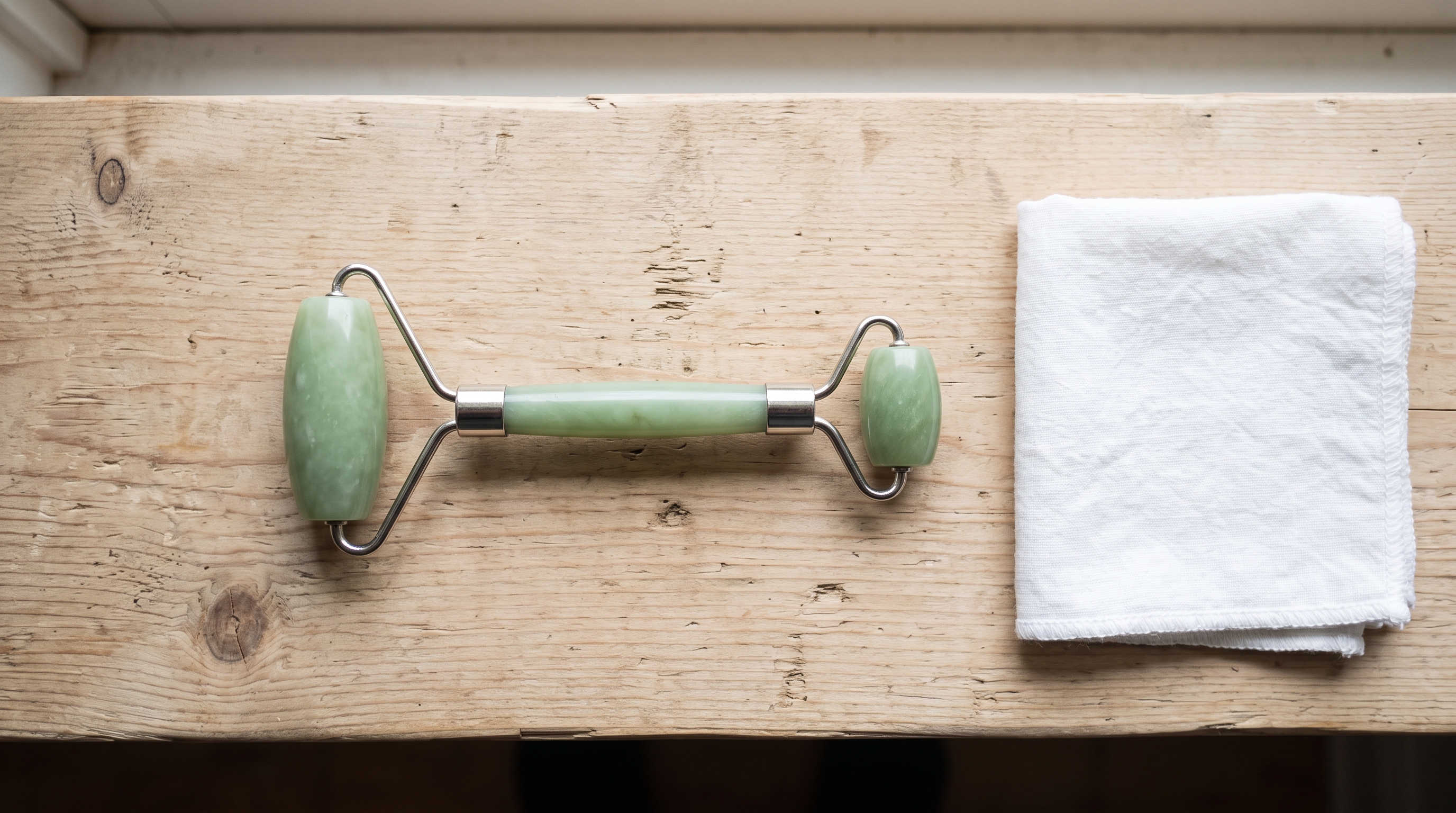
Nephrite jade is dense, non-porous, and slow to warm, which is why a roller left in the fridge stays cold against skin for several minutes. Beyond that, the mineralogy is beside the point. Rose quartz, stainless steel, and plain glass all do the same job, because the two variables actually acting on your face are temperature and pressure.
The temperature half is well described. Cooling skin triggers rapid vasoconstriction, and research measuring cutaneous blood flow during and after cold application found the reduction is pronounced and lingers well past the point when the cold source is removed [1]. Less blood and fluid at the surface reads visually as tighter, calmer skin. If that is mainly what you are after, a dedicated cold tool does it more efficiently than jade.
The pressure half is more interesting, and it is where most of the visible payoff comes from.
Your face carries a dense superficial lymphatic network draining toward nodes near the ears, jaw, and neck.
What Rolling Actually Moves
Your face carries a dense superficial lymphatic network draining toward nodes near the ears, jaw, and neck. Lymph has no pump of its own. It depends on tissue movement, muscle activity, and external pressure to keep going, which is precisely why a night spent lying flat leaves fluid pooled in the eyelids and midface.
Manual lymphatic drainage was built around that anatomy: light, directional strokes that encourage lymph vessels to fill and empty. Reviews of the clinical literature describe it as an established technique for reducing tissue swelling, while being candid that the quality of the evidence is mixed and the effect sizes are modest [2]. A jade roller is a crude, pleasant instrument for approximating that motion at home, and moving fluid out of a puffy face genuinely works.
Notice what that mechanism implies, though. Fluid you displace in the morning returns. Lymphatic drainage changes the distribution of water in your tissue for a few hours. It does not change the tissue.
Does Massage Ever Reach the Dermis?
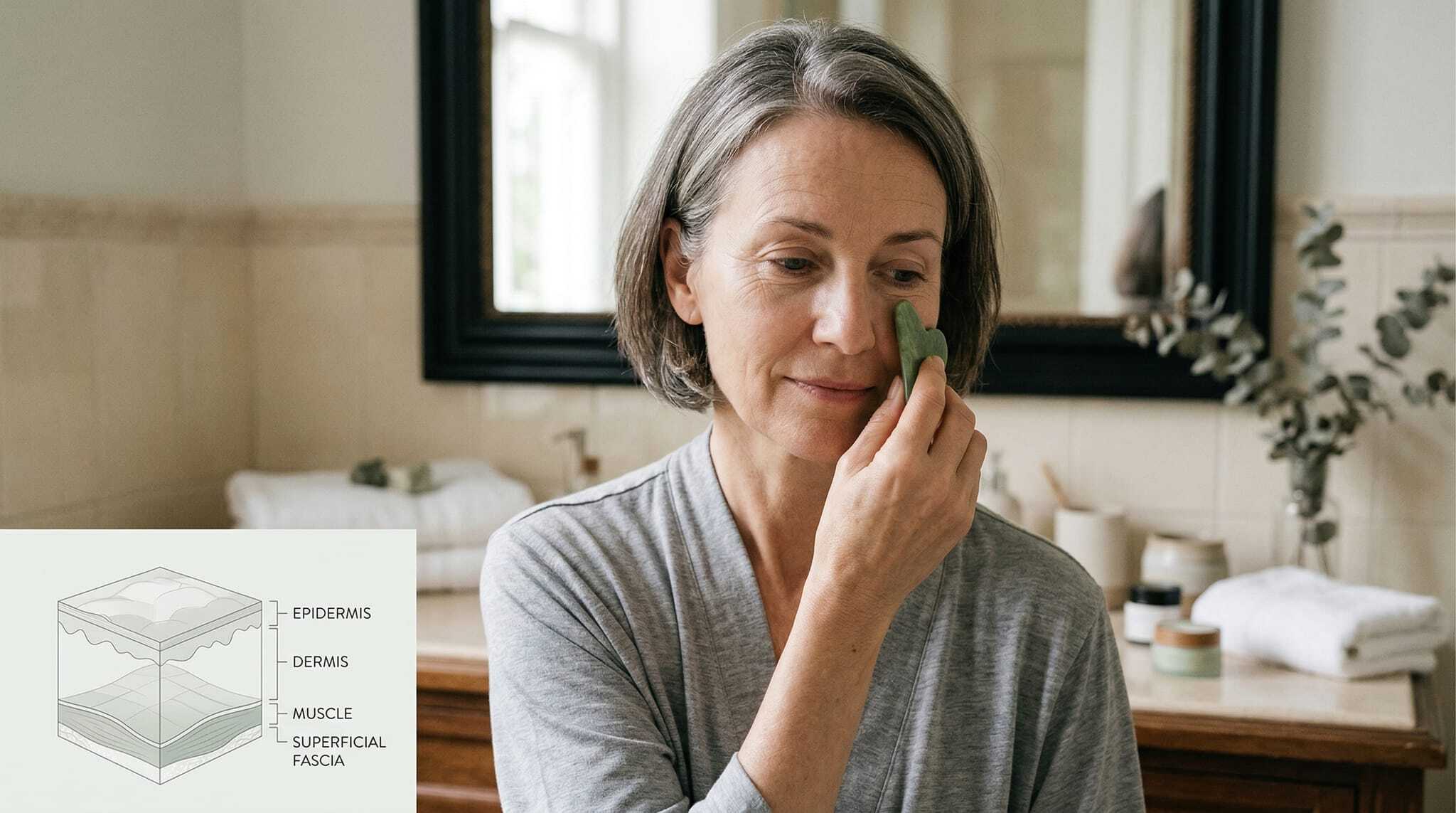
There is a serious version of the collagen argument, and it deserves a fair hearing. Skin fibroblasts are mechanosensitive cells: they detect physical loading and adjust their behavior accordingly. When researchers applied controlled mechanical stimulation to human dermal fibroblasts, the cells measurably changed their pro-inflammatory cytokine expression [3]. Mechanotransduction in skin is a real phenomenon, not a spa invention.
The gap is between “cells respond to force” and “rolling your face builds collagen.” The most favorable published data comes from a powered massaging device rather than a hand-held stone. In that work, repeated mechanical treatment altered the expression of several dermis proteins in ex-vivo skin and produced modest improvement in facial wrinkles in vivo [4]. It is a legitimate signal. It also involved sustained, machine-delivered kneading at pressures and frequencies a hand-rolled cylinder does not reproduce.
It is water-based, 99% natural, and mild enough for nightly use, which is what actually improves skin elasticity over a span of months.
The Trial That Tested the Roller Itself
In 2025, a randomized controlled trial finally put the tool on the table directly, comparing an eight-week facial roller protocol against gua sha massage and measuring facial contour, muscle tone, and skin elasticity [5]. The honest reading of the result is that manual facial massage produces small measurable changes in contour and tone without demonstrating durable dermal remodeling. Rolling appears to do something to the tissue’s water content and muscular resting state. Nothing in the data supports the claim that it rebuilds the collagen scaffold underneath. If you want the full comparison, the case for scraping tools runs along similar lines.
The Layer Where Aging Actually Happens
The reason this distinction matters is that facial aging is a structural problem. Morphometric studies tracking dermal collagen across the human lifespan show progressive decline in collagen content and a disorganization of the fiber network as skin ages [6]. Lines deepen and skin slackens because the load-bearing mesh in the dermis is thinning and fragmenting, not because fluid is sitting in the wrong place.
That is a matter of protein synthesis, and the only topical category with a serious body of controlled evidence behind it is the retinoid family. A recent systematic review and meta-analysis of randomized trials found that topical tretinoin significantly increases type I procollagen synthesis and improves clinical measures of photodamage [7]. Months of daily use, measured against a vehicle control, producing new collagen. That is the standard against which a five-minute massage should be judged, and it is a standard the massage was never designed to meet.
Where Nanoretinol Fits
Retinoids have always carried a delivery problem. The skin barrier is built to keep molecules out, so much of a conventional retinol never reaches the cells that would act on it, and the formulations that push harder tend to bring the redness and peeling that make people abandon the bottle by week three.
Nanoretinol was engineered around that bottleneck. It encapsulates retinol in biomimetic lipid nanoparticles that the skin reads as “self” and admits through the barrier intact, so delivery does not depend on disrupting the barrier chemically. That is why a gentle 0.2% concentration outperforms harsher conventional formulas: in North Biomedical’s clinical testing it delivered 232% more collagen recovery and 73% more elastin recovery than conventional retinol, with users gaining a 61% increase in firmness and a 56% increase in elasticity across 56 days. It is water-based, 99% natural, and mild enough for nightly use, which is what actually improves skin elasticity over a span of months.
Getting Your Twelve Dollars’ Worth
Keep the roller. Just aim it at the job it is good at. Chill it, work on clean damp skin over a serum so the stone glides instead of dragging, and use light pressure, always directing strokes outward toward the ears and then down the neck, which is where the lymph is trying to go. Morning is the right time, because that is when the fluid you want to move is actually there. Five minutes is plenty.
What you will get is a face that looks less puffy and more defined for the next several hours. What you will not get is a different face in six months. For that, put something on the skin that rebuilds it while you sleep, and let the roller handle the morning.
References
- Christmas KM, Patik JC, Khoshnevis S, Diller KR, Brothers RM. “Pronounced and Sustained Cutaneous Vasoconstriction during and Following Cryotherapy Treatment: Role of Neurotransmitters Released from Sympathetic Nerves.” Microvascular Research. 2017;115:52-57. doi:10.1016/j.mvr.2017.08.005
- Ramadan F. “Manual Lymphatic Drainage: The Evidence Behind the Efficacy.” British Journal of Community Nursing. 2024;29(2):83-84. PMID: 38300246
- Anloague A, Mahoney A, Ogunbekun O, et al. “Mechanical Stimulation of Human Dermal Fibroblasts Regulates Pro-Inflammatory Cytokines: Potential Insight into Soft Tissue Manual Therapies.” BMC Research Notes. 2020;13:400. doi:10.1186/s13104-020-05249-1
- Caberlotto E, Ruiz L, Miller Z, Poletti M, Tadlock L. “Effects of a Skin-Massaging Device on the Ex-Vivo Expression of Human Dermis Proteins and In-Vivo Facial Wrinkles.” PLOS ONE. 2017;12(3):e0172624. doi:10.1371/journal.pone.0172624
- Ahn SH, Hwang UJ, Han HS, et al. “Comparative Effects of Facial Roller and Gua Sha Massage on Facial Contour, Muscle Tone, and Skin Elasticity: Randomized Controlled Trial.” Journal of Cosmetic Dermatology. 2025;24(6):e70236. doi:10.1111/jocd.70236
- Marcos-Garcés V, Molina Aguilar P, Bea Serrano C, et al. “Age-Related Dermal Collagen Changes during Development, Maturation and Ageing: A Morphometric and Comparative Study.” Journal of Anatomy. 2014;225(1):98-108. doi:10.1111/joa.12186
- Huang HY, Lee LTJ. “Tretinoin for Photodamaged Facial Skin: Systematic Review and Meta-Analysis of Randomized Controlled Trials.” Dermatology Practical & Conceptual. 2025;15(4):e20255172. doi:10.5826/dpc.1504a5172