Do Ice Rollers Actually Work? The Science of Cold on Your Face
What a 30-second cold roll really does — and what it can never do
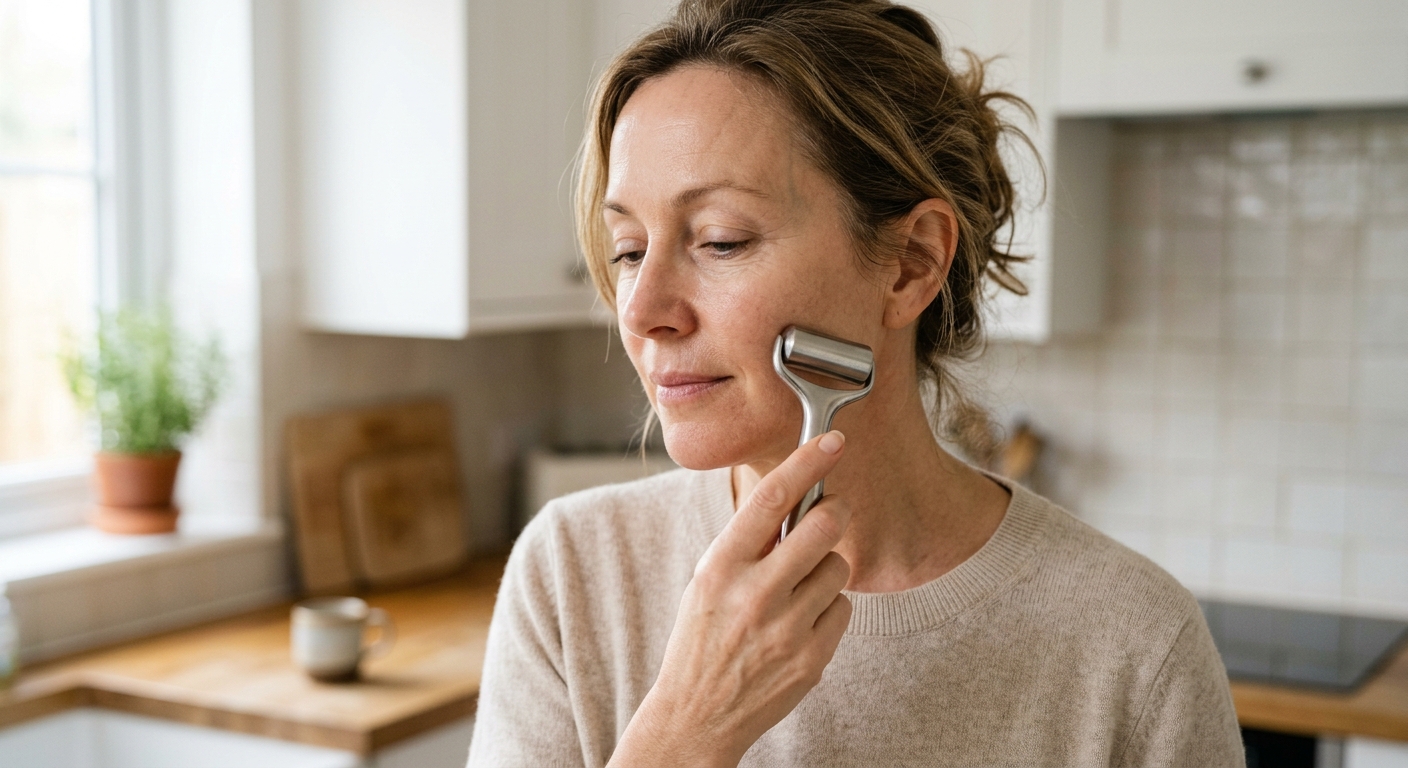
Somewhere between the alarm and the first coffee, a whole generation now runs a cold metal roller across their cheeks. It feels incredible — bracing, calming, and weirdly satisfying — and the face that emerges looks tighter, less puffy, more awake. Ice rolling has exploded from a spa afterthought into a daily ritual, with a matching promise attached: that a few seconds of cold can be part of your anti-aging routine.
Half of that is true. The cold is doing something real to your skin. The question worth asking — before you count it as anti-aging — is what, exactly, and for how long.
What Cold Actually Does to Your Skin
Drop the temperature on a patch of skin and your blood vessels respond instantly. They constrict, narrowing to preserve core heat and pushing blood away from the surface. This vasoconstriction is powerful and surprisingly stubborn: research on skin cooling shows the reduction in blood flow can persist well after the cold source is gone [1]. That is the mechanism behind the immediate “tightening” — less blood and fluid in the surface tissue means a temporarily firmer, less swollen look.
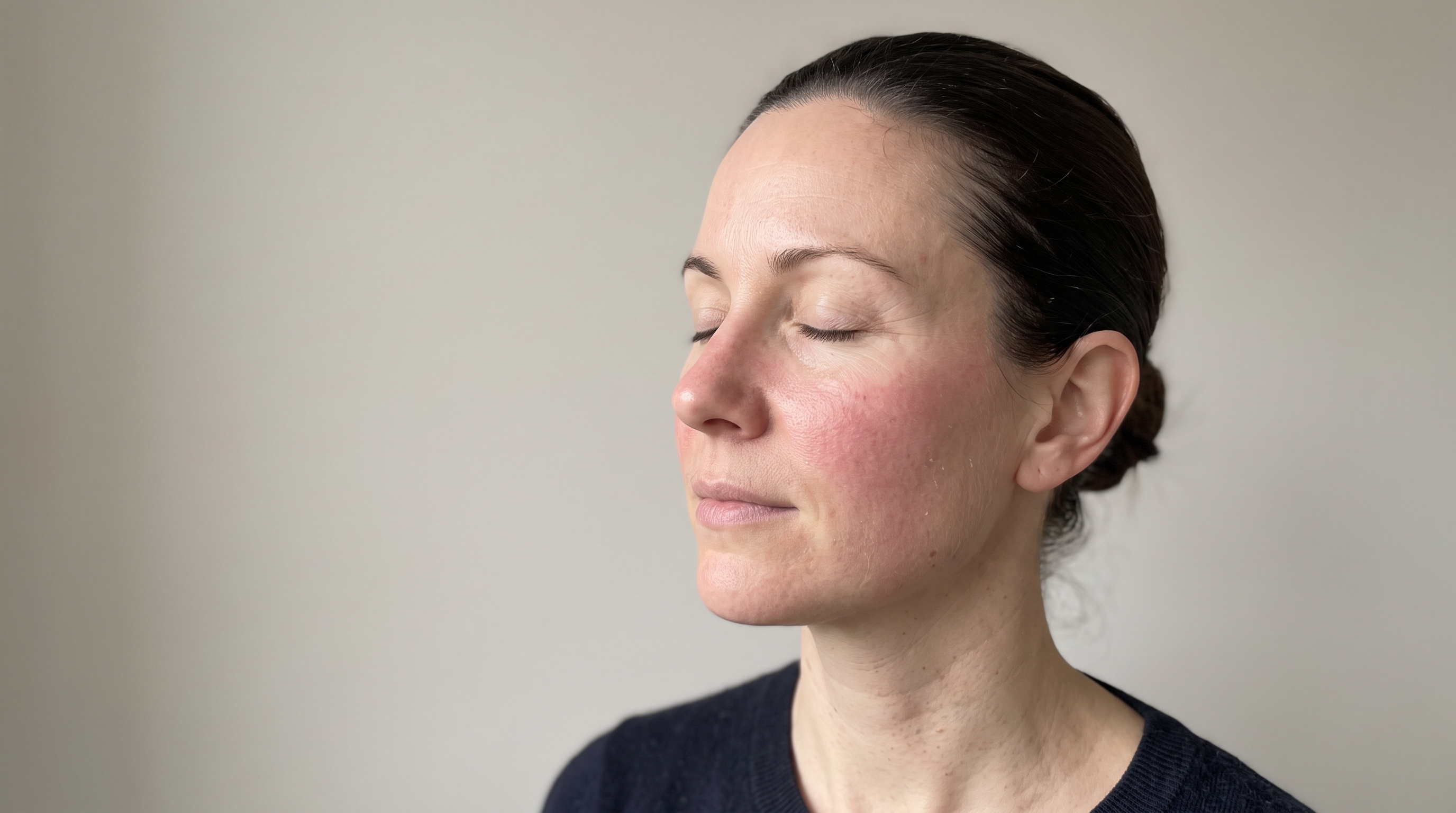
Then something interesting happens as your skin warms back up. Precisely because cold is a mild stress, the body overcorrects: vessels that clamped down swing open again in a rebound flush known as cold-induced vasodilation [2]. That surge of fresh blood is what gives skin its rosy, lit-from-within glow ten minutes after you put the roller down. The whole cycle — clamp, then flush — is why a cold roll leaves you looking both calmer and brighter at once.
The recovery is not instant, either. When scientists tracked skin after cooling, they found blood perfusion lagged well behind temperature: the skin warmed back toward normal while blood flow was still only partly restored [3]. Your face keeps “cashing in” the cold effect for a little while after you stop — which is exactly why the results feel more than momentary, even though they are.
Your face keeps “cashing in” the cold effect for a little while after you stop — which is exactly why the results feel more than momentary, even though they are.
The De-Puffing and Calming Payoff
Beyond the visual, cold has a genuine anti-inflammatory effect. In controlled research, cryotherapy measurably lowered inflammatory signaling — reducing markers like TNF-alpha and inflammatory enzymes — without derailing the tissue’s normal repair [4]. On your face, that translates to real, if short-lived, benefits: calmer redness, reduced morning puffiness, a soothed feeling after a flare or a bad night’s sleep.
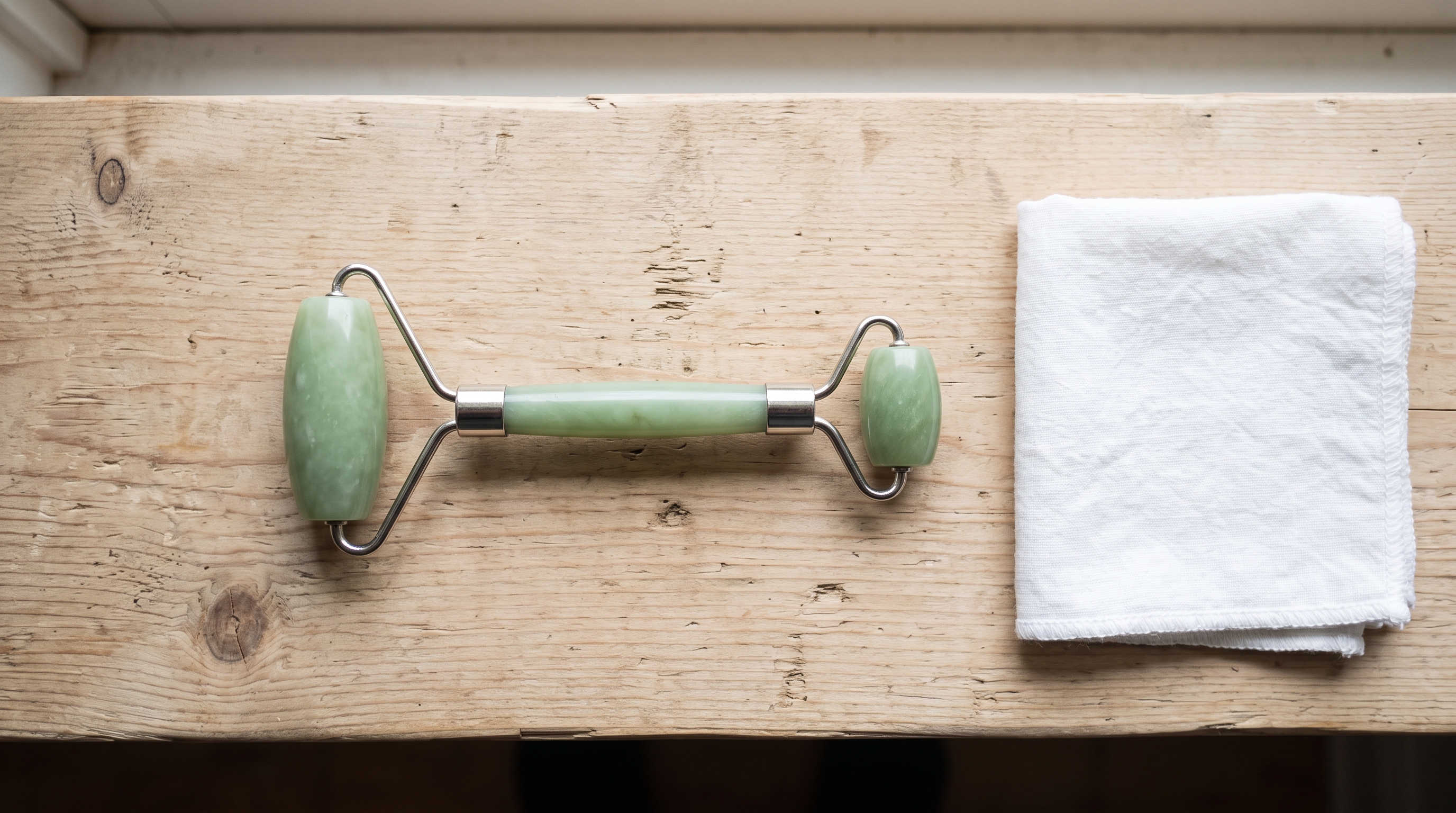
This is where ice rolling earns its keep. It is a superb symptom-manager. If you wake up swollen, if your skin is hot and irritated, if you need to look less tired in a hurry, a cold roller is one of the fastest, cheapest tools available — and it pairs naturally with a gentle de-puffing routine or a session addressing facial redness, and a jade roller attacks the same fluid problem with pressure instead of cold. There is nothing wrong with using it, and every reason to enjoy it.
The Catch: Every Bit of It Is Temporary
Here is the part the “anti-aging” framing skips. Everything cold does — the constriction, the flush, the de-puffing, the calm — is transient. Vessels re-dilate. Fluid returns. Inflammation markers drift back to baseline. By afternoon, your skin is chemically and structurally identical to how it started. A cold roller manages how your skin looks this morning; it does not change how your skin ages.
And skin aging is not driven by the kind of acute, on-and-off inflammation that ice can quiet. It is driven by something slower and more relentless.
Water-based, 99% natural, and gentle enough for nightly use, it does the structural work the cold roller never could.
Why Your Skin Ages Anyway
Dermatologists increasingly describe skin aging as a process of “inflammaging” — a chronic, low-grade inflammation that simmers in the tissue for years. Reviews of the science link this persistent inflammatory state, along with accumulating senescent cells and rising enzyme activity that degrades collagen, to the visible signs of aging skin [5]. The key word is chronic. Inflammaging is not a morning of puffiness you can roll away; it is a years-long background process eroding the skin’s structure from within.
A thirty-second cold treatment cannot touch that. Quieting a moment of acute inflammation does nothing to reverse the slow structural loss underneath — the thinning collagen, the slackening elastin, the deepening lines. To address those, you need a tool that actively rebuilds, not one that briefly numbs.
What Actually Turns Back the Clock
The most rigorously proven way to rebuild aging skin is a retinoid. In a landmark controlled trial, photodamaged skin held 56% less type I collagen than protected skin — and 10 to 12 months of topical tretinoin produced an 80% increase in new collagen formation, while untreated skin kept losing it [6]. That is genuine structural change: not a look that fades by lunch, but a foundation rebuilt over months.
Conventional retinol, though, has always fought its own delivery problem. The skin barrier turns away much of what you apply, and the fraction that gets through often brings the redness and peeling that make people quit — ironically sending them back to soothing tricks like the ice roller.
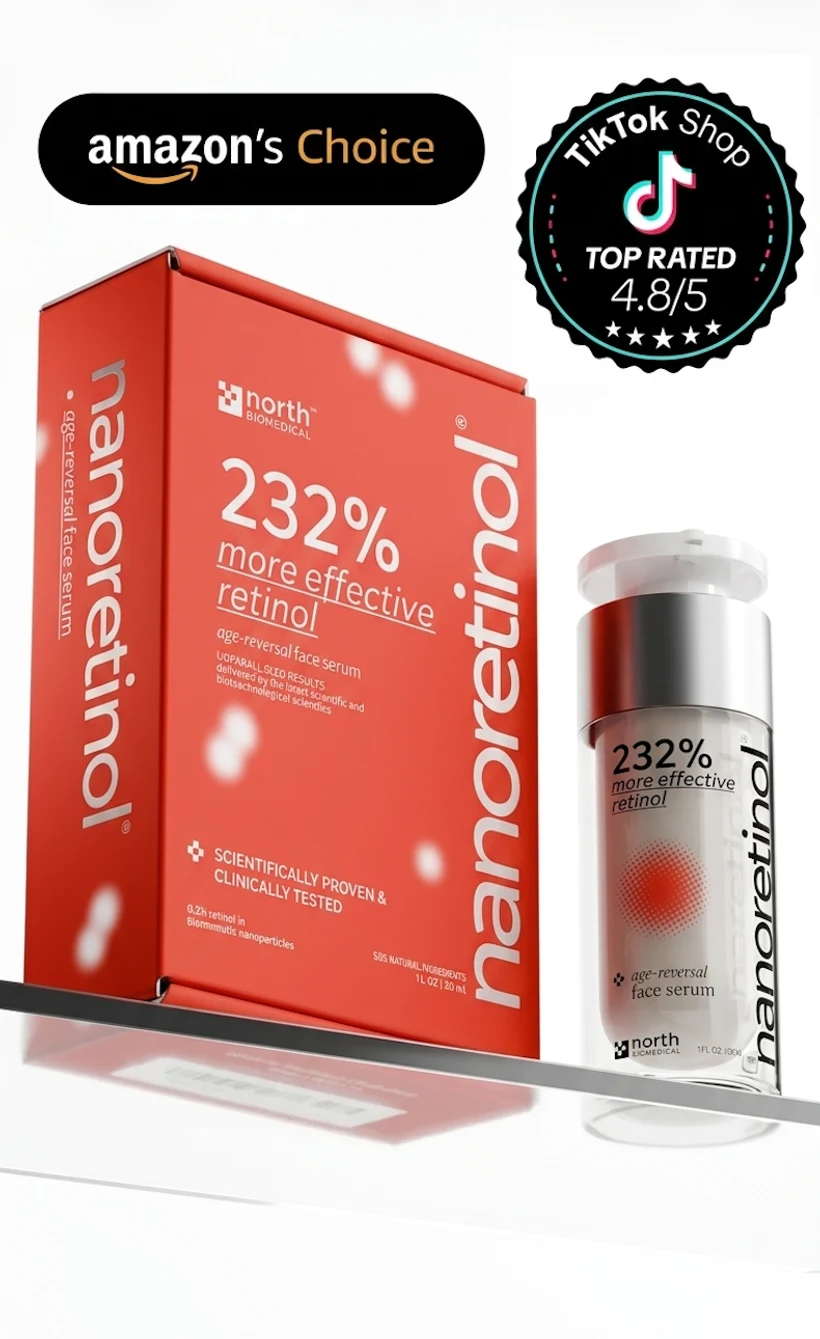
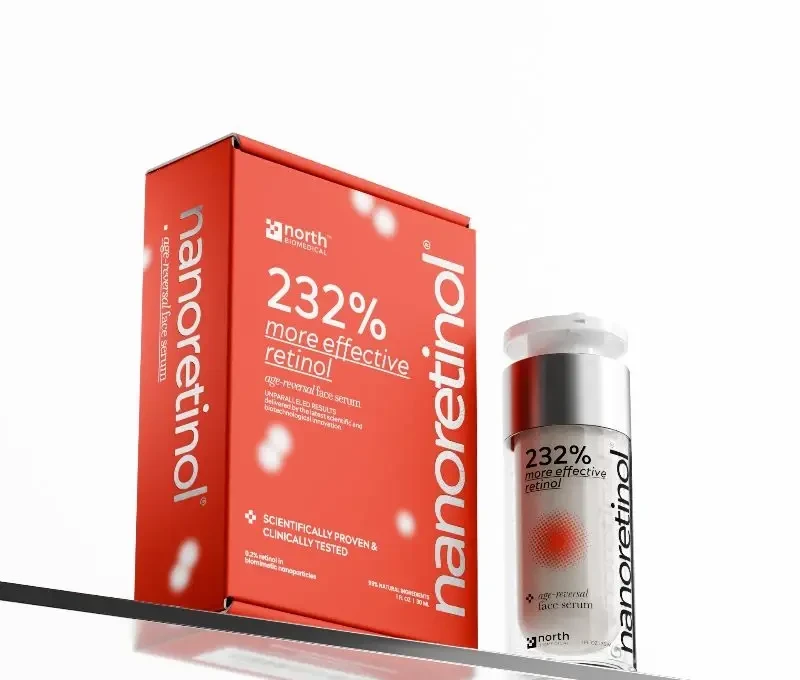
Nanoretinol was designed to close that gap. It wraps retinol in biomimetic lipid nanoparticles that the skin recognizes as “self” and lets through the barrier intact — efficient delivery without the chemical disruption, burning, or barrier damage. That is why a mild 0.2% concentration can outperform harsher formulas: in North Biomedical’s clinical testing it delivered 232% more collagen recovery and 73% more elastin recovery than conventional retinol, with users gaining a 61% increase in firmness and a 56% increase in elasticity over 56 days. Water-based, 99% natural, and gentle enough for nightly use, it does the structural work the cold roller never could.
Roll On — Just Know Its Job
Keep the ice roller. It is a delightful, effective way to de-puff, calm redness, and wake your face up, and it makes a great companion to your real routine — a quick reset that leaves skin looking less dull and more alive in seconds. Just don’t mistake the reset for the repair. Let cold handle the surface and the moment; let a proven active like Nanoretinol handle the aging you actually want to slow. Use each for what it does, and you stop wasting the morning ritual on a job it was never built to do.
References
- Khoshnevis S, Craik NK, Diller KR. “Cold-induced vasoconstriction may persist long after cooling ends: an evaluation of multiple cryotherapy units.” Knee Surgery, Sports Traumatology, Arthroscopy. 2015;23(9):2475-2483. doi:10.1007/s00167-014-2911-y
- Daanen HAM. “Finger cold-induced vasodilation: a review.” European Journal of Applied Physiology. 2003;89(5):411-426. doi:10.1007/s00421-003-0818-2
- Khoshnevis S, Craik NK, Brothers RM, Diller KR. “Cryotherapy-Induced Persistent Vasoconstriction After Cutaneous Cooling: Hysteresis Between Skin Temperature and Blood Perfusion.” Journal of Biomechanical Engineering. 2016;138(3):031004. doi:10.1115/1.4032126
- Ramos GV, Pinheiro CM, Messa SP, et al. “Cryotherapy Reduces Inflammatory Response Without Altering Muscle Regeneration Process and Extracellular Matrix Remodeling of Rat Muscle.” Scientific Reports. 2016;6:18525. doi:10.1038/srep18525
- Pająk J, Nowicka D, Szepietowski JC. “Inflammaging and Immunosenescence as Part of Skin Aging—A Narrative Review.” International Journal of Molecular Sciences. 2023;24(9):7784. doi:10.3390/ijms24097784
- Griffiths CEM, Russman AN, Majmudar G, Singer RS, Hamilton TA, Voorhees JJ. “Restoration of Collagen Formation in Photodamaged Human Skin by Tretinoin (Retinoic Acid).” New England Journal of Medicine. 1993;329(8):530-535. doi:10.1056/NEJM199308193290803