Kojic Acid Lotion: How to Use It on Body Dark Spots Safely
A kojic acid lotion spreads a proven pigment blocker across large areas like arms, legs and underarms. Here is what it can fade, what strength is safe, how long it takes and who should skip it
Most kojic acid products are made for the face. Serums come in tiny bottles, creams in small jars, and soaps rinse away within a minute. None of that is practical if your dark spots are on your arms, legs, back, underarms or inner thighs.
A kojic acid lotion fills that gap. It spreads a thin layer of a well-studied pigment blocker across large areas of skin and leaves it there. This guide explains how kojic acid works, what a lotion can realistically fade, what strength is considered safe, how long results take and who should avoid it.
How kojic acid fades dark spots
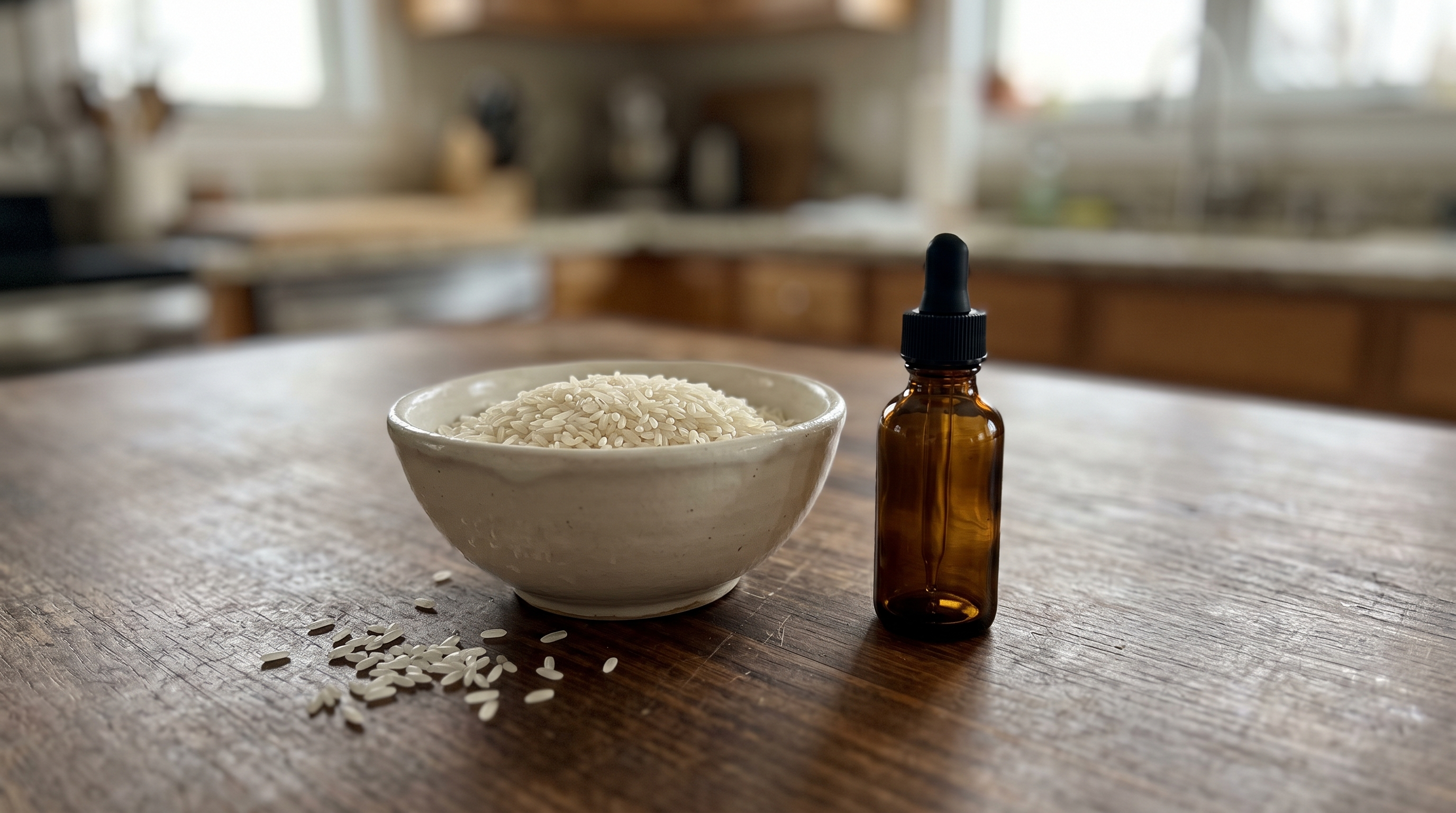
Kojic acid is a natural compound produced by fungi during the fermentation of rice, the same process used to make sake and soy sauce. Its value in skincare comes from one action: it inhibits tyrosinase, the enzyme that skin cells need to make melanin [1].
That means kojic acid does not bleach existing pigment. It slows the production of new pigment, so as your skin sheds its older, darker cells over the following weeks, the cells that replace them carry less color. The process is gradual by design.
Your skin keeps making new pigment every day, so a body lotion only works if you apply it as faithfully as you would a moisturizer.
Why a lotion suits the body better than other formats
The body has three practical problems that a lotion solves. The areas are large, the skin is often dry, and the product needs to stay on long enough to work.
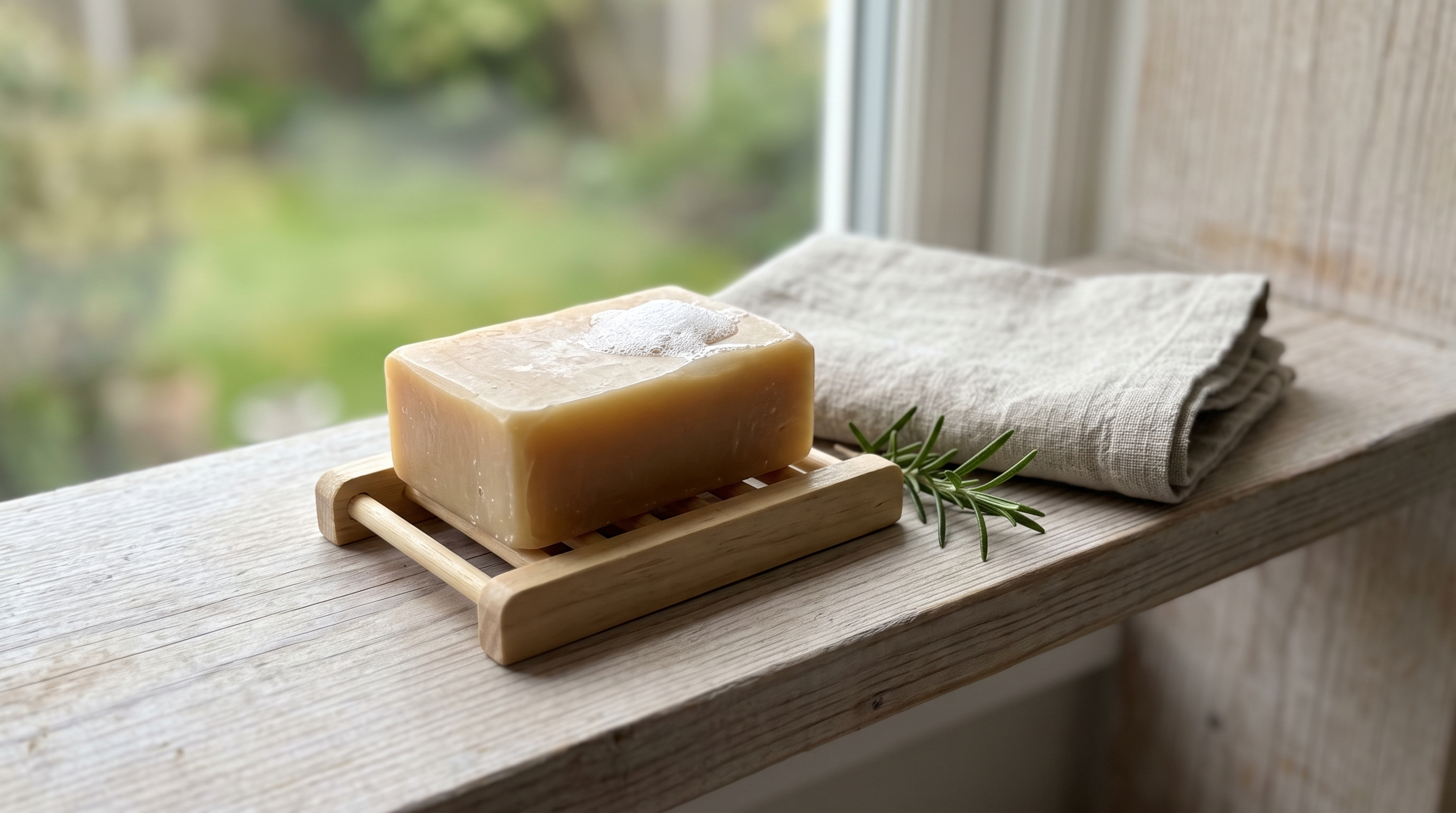
A kojic acid soap is convenient in the shower, but its contact time is short, and our guide to kojic acid soap explains why rinse-off bars are best treated as a supporting step rather than the main treatment. A rich face cream works on small areas, and our guide to kojic acid cream covers when a thicker, more concentrated formula makes sense for stubborn spots on the face and hands.
Your skin keeps making new pigment every day, so a body lotion only works if you apply it as faithfully as you would a moisturizer.
A lotion sits between the two. It is light enough to spread over a whole arm or leg, hydrating enough for body skin that tends to be drier than the face, and it stays on for hours. The kojic acid review literature lists lotions alongside creams and soaps as one of the standard ways the ingredient is delivered [1].
What the research shows
Most kojic acid trials were run on facial melasma, a stubborn form of pigmentation, so they are a demanding test of the ingredient.
- Kojic acid vs hydroquinone: in a split-face study of 39 patients, a glycolic acid gel with kojic acid was compared with the same gel containing hydroquinone. Half the patients responded equally to both, 28% did better on the kojic acid side and 21% on the hydroquinone side, a difference that was not statistically significant. The kojic acid formula was more irritating [2].
- Kojic acid as an add-on: in a 12-week split-face study of 40 Chinese women with melasma, adding 2% kojic acid to a gel with 10% glycolic acid and 2% hydroquinone helped more patients clear more than half of their melasma, 60% compared with 47.5% without it [3].
- Kojic acid alone or combined: a randomized study of 80 patients using once-nightly creams for 12 weeks found that 1% kojic acid worked on its own, but the combination of 1% kojic acid with 2% hydroquinone was the most effective [4].
The pattern across these trials is consistent. Kojic acid works, it works best as part of a combination, and it takes about three months to show clearly.
Your skin can take 12 weeks of nightly use before dark spots look clearly lighter, which is far longer than most people expect from a lotion.
What strength is safe
The Cosmetic Ingredient Review Expert Panel, which assesses cosmetic ingredient safety in the US, reviewed kojic acid in detail. It found that kojic acid is absorbed only slowly through human skin and was not toxic in acute, chronic, reproductive or genetic studies. The panel concluded that the two effects of concern, skin allergy and unwanted lightening, would not be expected below 1%, and that kojic acid is safe in cosmetics at concentrations up to 1% [5].
Your skin can take 12 weeks of nightly use before dark spots look clearly lighter, which is far longer than most people expect from a lotion.
For a body lotion, which you spread over far more skin than a face serum, that 1% ceiling is a sensible upper limit. Higher-strength products sold online do not come with the same safety assessment.
The allergy risk is real
Kojic acid is not the gentlest brightener. In a Japanese patch-test study of women with suspected cosmetic reactions, 5 of the 8 who had used kojic acid products had become allergic to it, while none of the 212 who had never used it reacted [6]. Their facial rashes appeared between one and twelve months after they started.
That is a small and selected group, so it does not mean most users will react. It does mean you should patch test a kojic acid lotion on a small area of your inner arm for a week before spreading it widely, and stop if you notice persistent itching, redness or a rash.
Skip it entirely on broken, freshly shaved or irritated skin, and talk to a doctor first if you are pregnant or breastfeeding.
How to use a kojic acid lotion
- Apply once daily to clean, dry skin, usually at night after a shower.
- Start every other day for the first two weeks if your skin is sensitive.
- Use sunscreen on exposed areas every morning. Sunlight restarts the pigment process kojic acid is slowing down.
- Add gentle exfoliation once or twice a week to help pigmented cells shed, but not on the same night if your skin stings.
- Give it 12 weeks before judging results, and take photos in the same light to track progress.
If your dark patches are widespread, our guide to dark spots on the body explains the different causes, from sun damage to friction and post-inflammatory marks, and which ones respond to brightening lotions and which need a dermatologist to take a look.
Kojic acid also pairs well with niacinamide, which works by a different route, blocking the transfer of pigment into skin cells rather than its production, and our guide to niacinamide body lotion covers how to use the two together without overloading sensitive skin.
Where Nanoretinol fits
A kojic acid lotion is a good tool for body pigment, but it only slows new melanin. It does nothing for the thinning, crepey texture and lost firmness that usually accompany sun damage, especially on the face, neck and chest.
Retinol is the ingredient that addresses both. It speeds the turnover that clears pigmented cells and stimulates new collagen. The catch is that many conventional retinol formulas use chemicals that break down the skin’s protective lipids to push retinol in, which causes the redness and peeling that make people stop.
Nanoretinol is designed to avoid that. Its 0.2% stabilized retinol is carried in biomimetic lipid nanoparticles that the skin recognizes as its own, so it passes the barrier without damaging it. In North Biomedical’s study summary, Nanoretinol was 232% more effective in collagen recovery and 73% more effective in elastin recovery than conventional retinol, and over 56 days of clinical use, skin firmness increased by 61% and elasticity by 56% [7].
Use your kojic acid lotion on the body, Nanoretinol at night on the face and neck, and sunscreen every morning.
References
- Saeedi M, Eslamifar M, Khezri K. “Kojic acid applications in cosmetic and pharmaceutical preparations.” Biomedicine & Pharmacotherapy. 2019;110:582-593. doi:10.1016/j.biopha.2018.12.006
- Garcia A, Fulton JE Jr. “The combination of glycolic acid and hydroquinone or kojic acid for the treatment of melasma and related conditions.” Dermatologic Surgery. 1996;22(5):443-447. doi:10.1111/j.1524-4725.1996.tb00345.x
- Lim JT. “Treatment of melasma using kojic acid in a gel containing hydroquinone and glycolic acid.” Dermatologic Surgery. 1999;25(4):282-284. doi:10.1046/j.1524-4725.1999.08236.x
- Deo KS, Dash KN, Sharma YK, et al. “Kojic Acid vis-a-vis its Combinations with Hydroquinone and Betamethasone Valerate in Melasma: A Randomized, Single Blind, Comparative Study of Efficacy and Safety.” Indian Journal of Dermatology. 2013;58(4):281-285. doi:10.4103/0019-5154.113940
- Burnett CL, Bergfeld WF, Belsito DV, et al. “Final report of the safety assessment of Kojic acid as used in cosmetics.” International Journal of Toxicology. 2010;29(6 Suppl):244S-273S. doi:10.1177/1091581810385956
- Nakagawa M, Kawai K, Kawai K. “Contact allergy to kojic acid in skin care products.” Contact Dermatitis. 1995;32(1):9-13. doi:10.1111/j.1600-0536.1995.tb00832.x
- North Biomedical LLC. “Nanoretinol vs. Conventional Retinol: Efficacy in Collagen and Elastin Recovery.” Clinical Study Summary, 2024. Study summary