Niacinamide Body Lotion: What It Does for Dry, Uneven Body Skin
Niacinamide is one of the few actives with trials in body moisturizers. Here is what it does for dryness and tone, what strength to look for, and how to pair it with retinol
Most skincare actives were built for faces and later squeezed into body lotions. Niacinamide is an exception. It is one of the few ingredients that has been tested in body moisturizers, on arms and legs, against ordinary lotions.
That makes a niacinamide body lotion an easy recommendation for dry, rough or blotchy body skin. It is also easy to overestimate, because niacinamide is sold as a fix for almost everything. This guide covers what it does in skin, what the body trials found, what strength to look for and how it fits with retinol.
What niacinamide does in skin
Niacinamide is a form of vitamin B3. Skin cells use it to make energy and to build the fats that hold the outer layer together.
The most useful finding for body skin is about ceramides, the fats that seal moisture into the outer layer and that decline with age. In cultured skin cells, niacinamide raised ceramide production four- to fivefold, and it raised the other barrier fats as well. Applied to dry skin, it increased ceramide levels in the outer layer and reduced the water escaping through it [1].
That is the mechanism that matters on the arms, legs and back. Body skin has far fewer oil glands than the face, so it relies heavily on these barrier fats to stay comfortable.
Your skin on the forearms lost less water after 4 to 8 weeks of a 2% niacinamide cream than with plain petroleum jelly in one trial.
What the body trials found
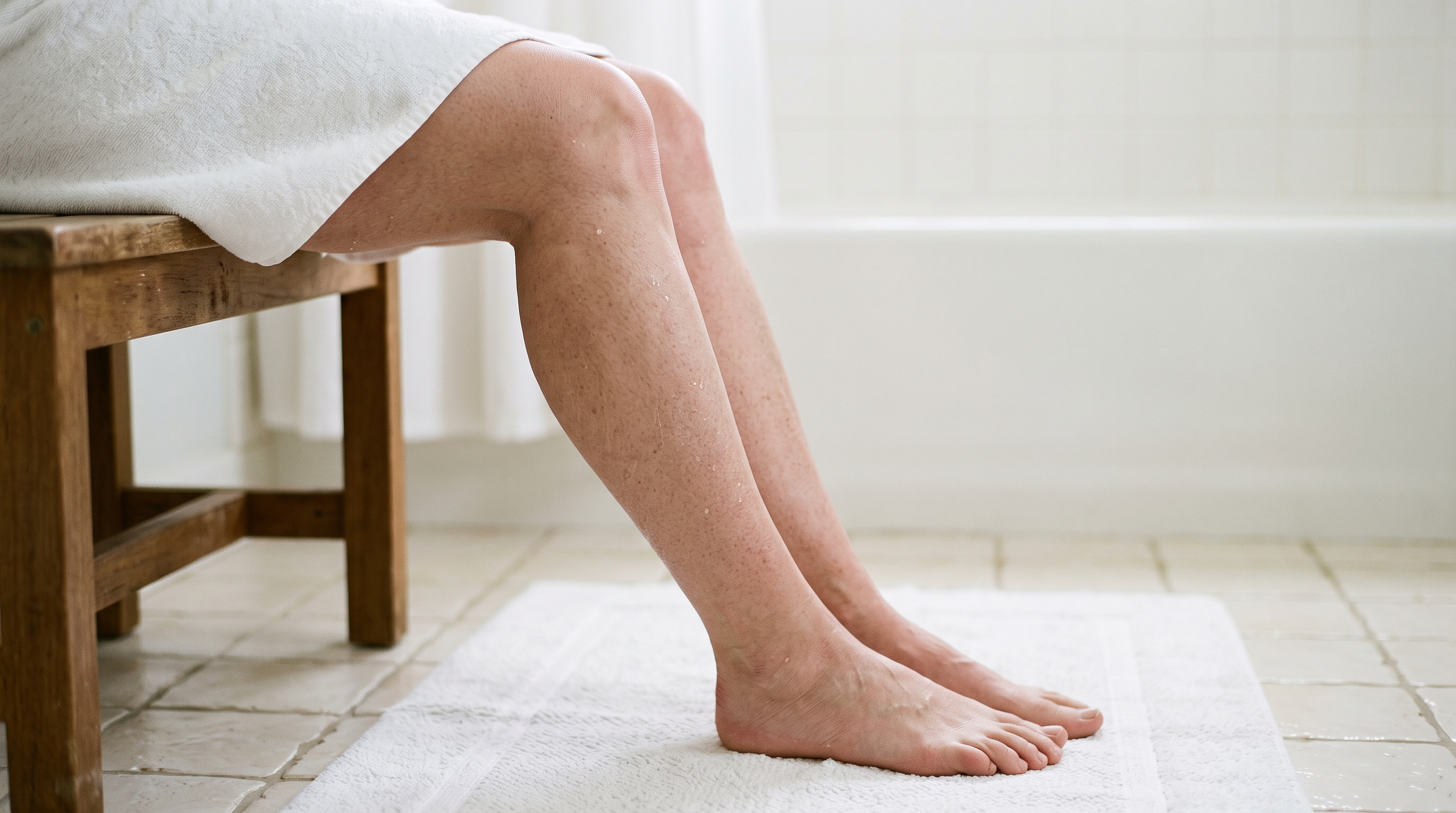
In that trial, people with very dry skin on both forearms applied a 2% niacinamide cream to one arm and white petroleum jelly to the other, twice daily. Niacinamide significantly reduced water loss through the skin, while petroleum jelly did not. Both made the skin more hydrated, but niacinamide did so significantly more [2].
Your skin on the forearms lost less water after 4 to 8 weeks of a 2% niacinamide cream than with plain petroleum jelly in one trial.
Two larger studies tested finished body moisturizers. Over 35 days, groups of 63 and 58 women each tried six of nine products, including two niacinamide and glycerin body lotions, ordinary moisturizers and no treatment. The niacinamide lotions gave faster and longer-lasting improvement in dryness, because they improved the barrier itself rather than only adding surface moisture [3].
The practical takeaway is that niacinamide helps a body lotion keep working after it has soaked in. A plain lotion feels good for a few hours; a barrier-repairing one changes how your skin holds water over weeks.
Can it even out body tone?
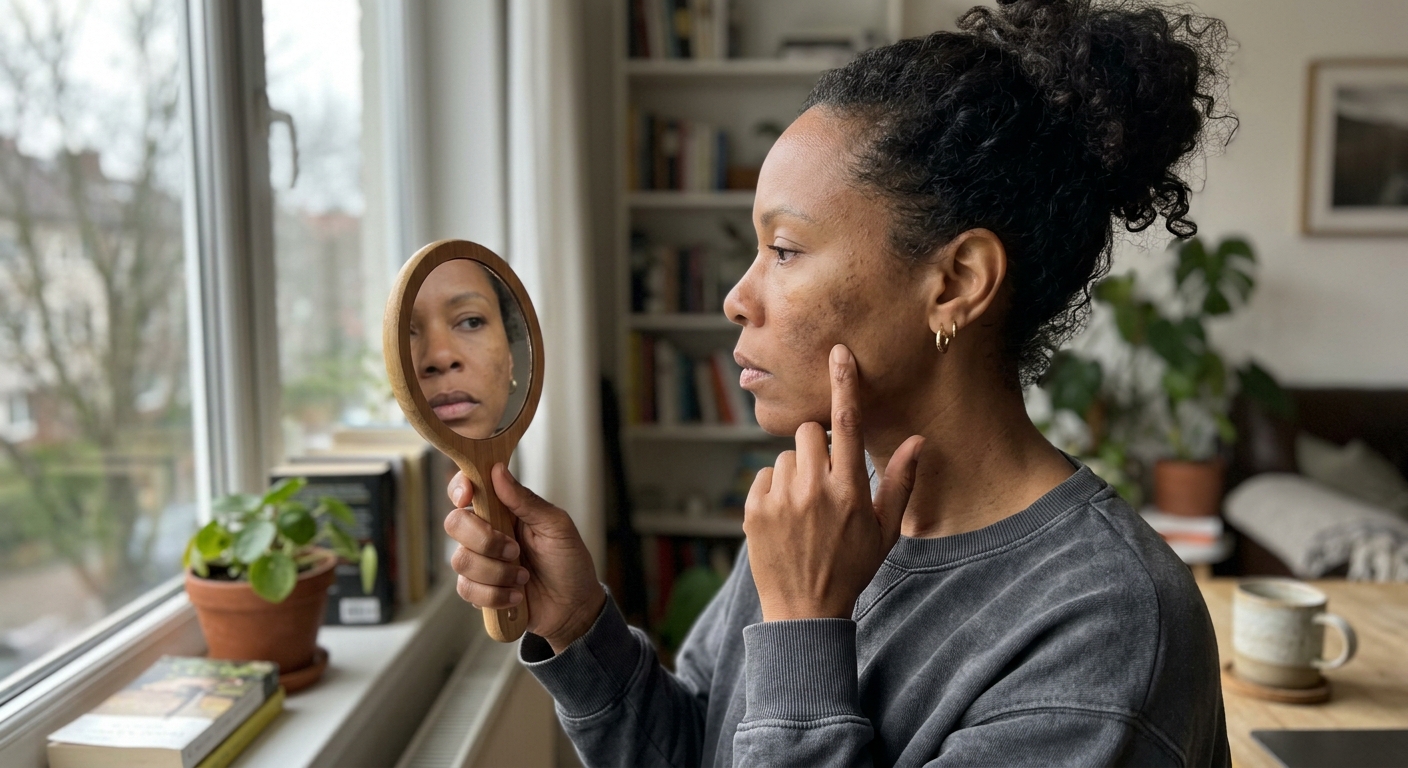
Niacinamide also works on pigment, though in a different way from most brighteners. It does not block melanin production. Instead, it slows the transfer of pigment packets from the cells that make melanin to the surrounding skin cells. In laboratory models it reduced that transfer by 35% to 68% [4].
In the same research, a 5% niacinamide moisturizer reduced hyperpigmentation and made skin lighter compared with the plain moisturizer after 4 weeks [4]. A separate 12-week trial found that 5% niacinamide reduced fine lines, spots, red blotchiness and sallowness [5].
Your skin showed less hyperpigmentation after just 4 weeks of 5% niacinamide in one trial, though that was on the face rather than the body.
Body results tend to be slower and smaller. A lotion spread over both legs puts less product on each patch of skin than a serum on the face, and body spots are often older and deeper. Niacinamide is a good supporting player for blotchy tone, but defined brown spots usually need more. Our guide to dark spots on the body covers the stronger options.
Your skin showed less hyperpigmentation after just 4 weeks of 5% niacinamide in one trial, though that was on the face rather than the body.
What strength to look for
The trials used 2% to 5% niacinamide, and that range is a sensible target for a body lotion:
- 2% to 5%: the range with clinical support for barrier and tone benefits [2, 4, 5].
- Higher percentages: more is not clearly better, and very high levels may cause flushing or itching in some people.
- Unlisted percentage: if niacinamide sits near the end of the ingredient list, after fragrance and preservatives, it is likely well below the useful range.
Look for supporting barrier ingredients too. Glycerin appeared alongside niacinamide in the body lotion studies [3], and ceramides, cholesterol or fatty acids make sense in the same formula. Fragrance-free is the safer choice if your skin itches easily.
How to use a niacinamide body lotion
Apply it once or twice a day to damp skin after bathing, when it helps lock in the water already there. Give it at least 4 weeks for dryness and 12 weeks for tone before you judge it.
Niacinamide combines well with most other actives. It can sit alongside a vitamin C body lotion in a morning routine, and it can calm the dryness that exfoliating acids sometimes cause. If you want the same benefits on your face, where a lighter texture suits, our guide to niacinamide moisturizer covers that format. Finish any morning routine with sunscreen on skin that will see daylight, because sun exposure keeps making new pigment and can quickly undo slow tone improvements.
Adding retinol for crepey body skin
Niacinamide repairs the barrier and evens tone, but it is not the strongest option for crepey, thinning body skin. Retinol has better evidence for rebuilding. In a 24-week trial in elderly volunteers, 0.4% retinol lotion applied to one arm reduced fine wrinkling and increased collagen production compared with the plain lotion base on the other arm [6].
The two work well together. Niacinamide helps offset the dryness that retinol can cause, and retinol does the structural work niacinamide cannot. A simple plan is niacinamide lotion in the morning and retinol at night on the arms, chest or legs. Our guide to the best retinol body lotion explains how to choose that evening product.
A gentler retinol for the evening
Retinol’s main drawback is irritation. Conventional formulas often push retinol into the skin by loosening its protective lipids, the same barrier niacinamide is trying to rebuild. That conflict is why so many people give up on retinol after a few weeks of redness and flaking.
Nanoretinol avoids it. It delivers 0.2% stabilized retinol inside biomimetic lipid nanoparticles that the skin recognizes as its own, so retinol reaches skin cells without breaking down the barrier first. In North Biomedical’s study summary, Nanoretinol was 232% more effective in collagen recovery and 73% more effective in elastin recovery than conventional retinol, and clinical testing found minimal side effects that were milder than those of conventional retinol [7].
Its light, water-based gel absorbs fully, so it works on the neck, chest and hands as well as the face. Pair it at night with your niacinamide lotion in the morning, and your skin gets barrier repair and collagen support from two products that work in the same direction.
References
- Tanno O, Ota Y, Kitamura N, Katsube T, Inoue S. “Nicotinamide increases biosynthesis of ceramides as well as other stratum corneum lipids to improve the epidermal permeability barrier.” British Journal of Dermatology. 2000;143(3):524-531. doi:10.1111/j.1365-2133.2000.03705.x
- Soma Y, Kashima M, Imaizumi A, et al. “Moisturizing effects of topical nicotinamide on atopic dry skin.” International Journal of Dermatology. 2005;44(3):197-202. doi:10.1111/j.1365-4632.2004.02375.x
- Christman JC, Fix DK, Lucus SC, et al. “Two randomized, controlled, comparative studies of the stratum corneum integrity benefits of two cosmetic niacinamide/glycerin body moisturizers vs. conventional body moisturizers.” Journal of Drugs in Dermatology. 2012;11(1):22-29. PubMed:22206073
- Hakozaki T, Minwalla L, Zhuang J, et al. “The effect of niacinamide on reducing cutaneous pigmentation and suppression of melanosome transfer.” British Journal of Dermatology. 2002;147(1):20-31. doi:10.1046/j.1365-2133.2002.04834.x
- Bissett DL, Oblong JE, Berge CA. “Niacinamide: A B vitamin that improves aging facial skin appearance.” Dermatologic Surgery. 2005;31(7 Pt 2):860-865. doi:10.1111/j.1524-4725.2005.31732
- Kafi R, Kwak HS, Schumacher WE, et al. “Improvement of naturally aged skin with vitamin A (retinol).” Archives of Dermatology. 2007;143(5):606-612. doi:10.1001/archderm.143.5.606
- North Biomedical LLC. “Nanoretinol vs. Conventional Retinol: Efficacy in Collagen and Elastin Recovery.” Clinical Study Summary, 2024. Study summary