Leathery Skin: Why It Happens and How to Soften Sun-Damaged Skin
The science of how decades of sun turn skin tough and weathered — and what actually reverses it
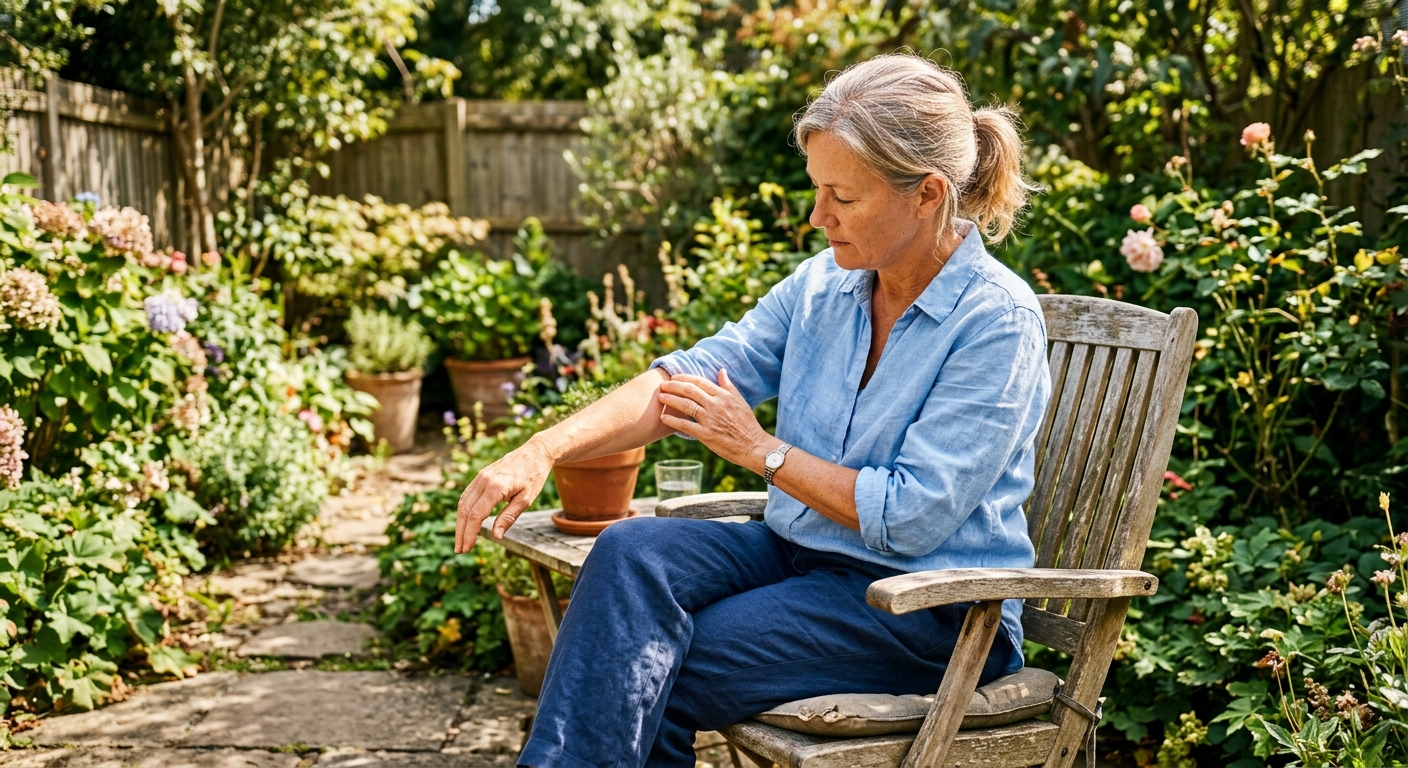
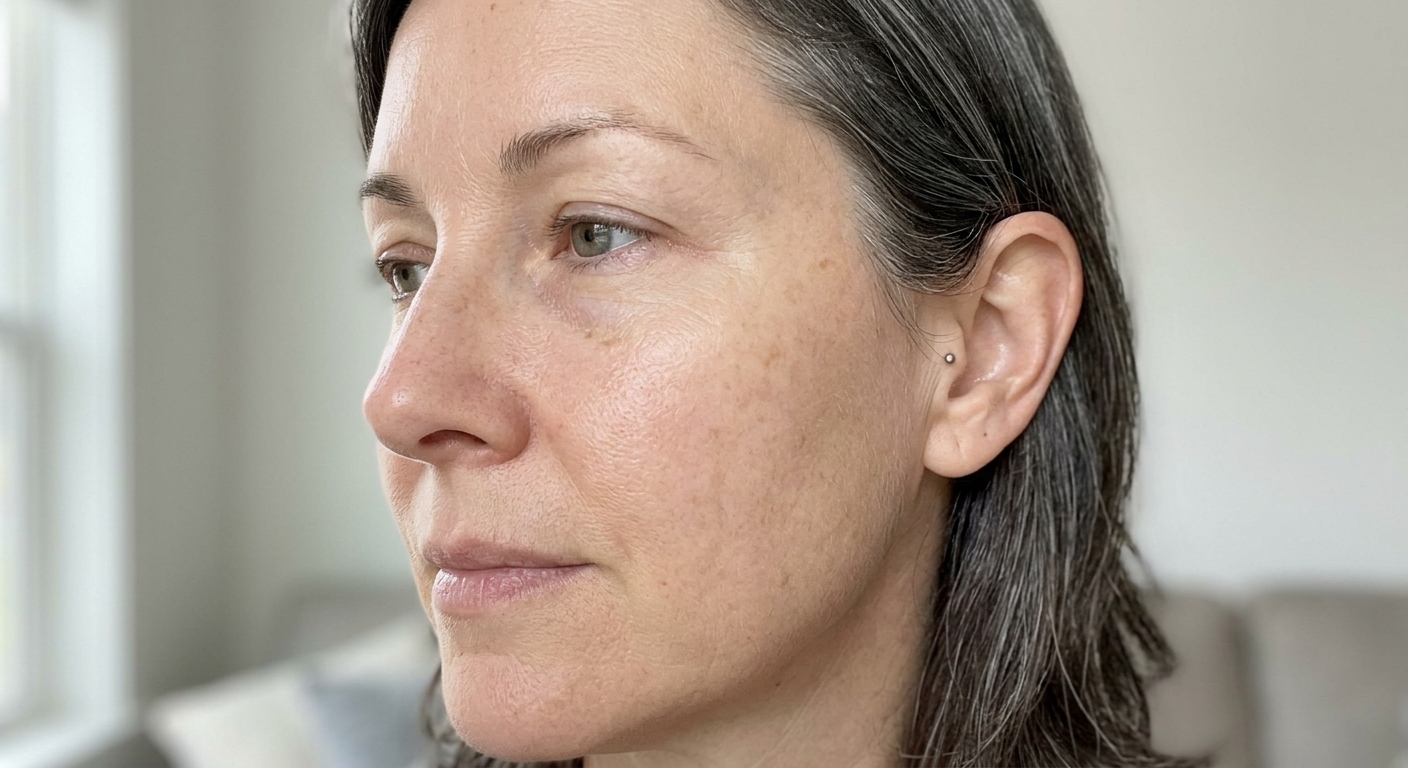
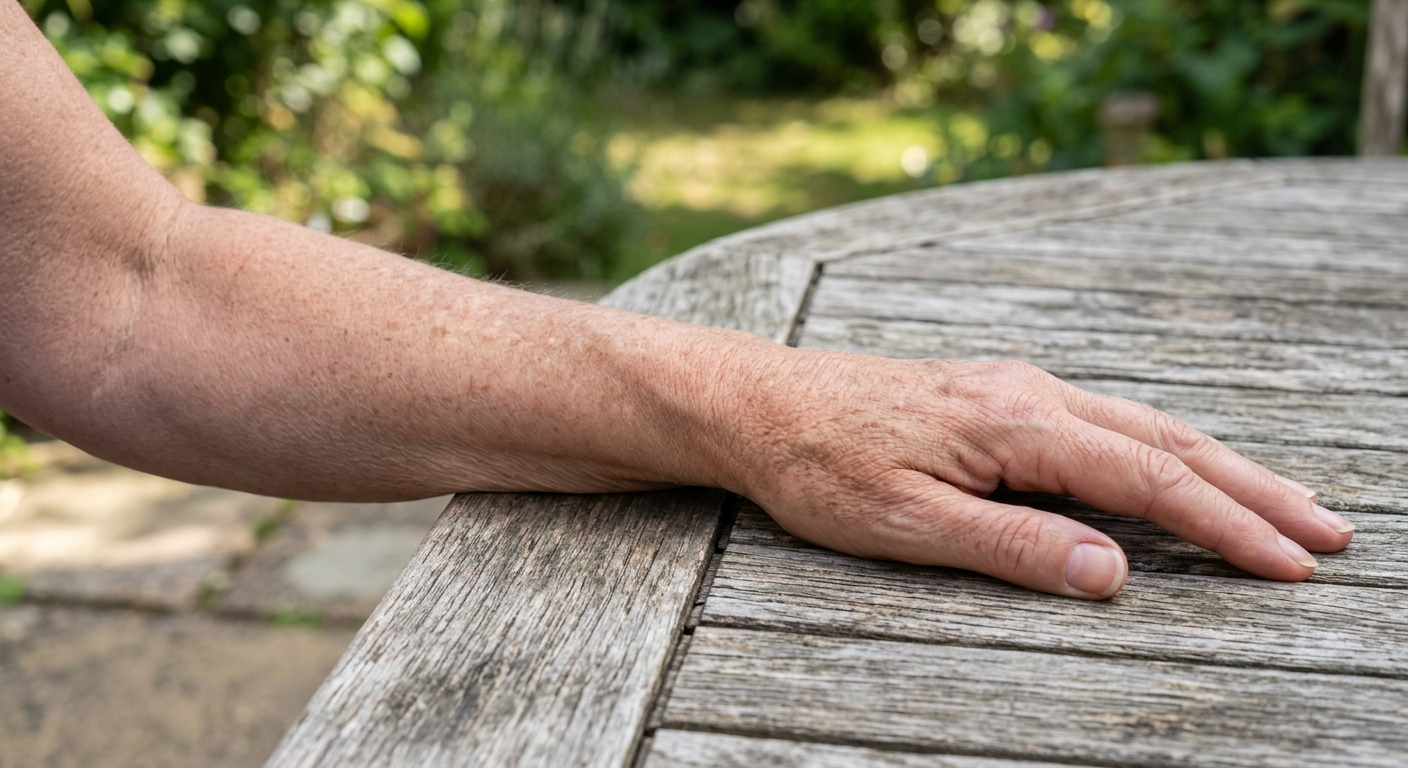
You can usually feel leathery skin before you can name it. It happens when you rest a hand on your cheek, or pinch the skin on the back of your forearm, and instead of springing back the way it used to, it feels thick, stiff, and oddly coarse — more like a worn baseball glove than skin. The areas that get the most sun are usually the worst: the face, the neck, the chest, the backs of the hands.
Leathery skin is not a moisturizing problem, and it is not something you did wrong. It is the visible record of decades of ultraviolet light, written into the deepest structural layers of your skin. The good news is that the same biology that created it can be partly rewound — but only with the right approach.
What “Leathery” Skin Actually Is
Healthy skin owes its suppleness to two proteins woven through the dermis: collagen, which provides structural strength, and elastin, which lets skin stretch and snap back. In young, sun-protected skin these fibers are organized, springy, and abundant.
Ultraviolet radiation dismantles that architecture. When UV light penetrates the dermis, it triggers a cascade of enzymes called matrix metalloproteinases (MMPs) that chew through collagen faster than the body can rebuild it [1]. Over years, healthy collagen is steadily degraded and replaced with disorganized, clumped material.
At the same time, elastin fibers don’t simply disappear — they pile up in a tangled, dysfunctional mass deep in the dermis. Dermatologists call this solar elastosis, and it is the defining feature of severely sun-damaged skin. Under a microscope, the upper dermis of weathered skin looks like a thicket of broken, fragmented fibers. That accumulation is exactly what gives leathery skin its characteristic thickened, yellowish, coarse quality. (We cover this process in more depth in our guide to solar elastosis.)
The result is a paradox: the skin is technically thicker, yet weaker. It has lost the springy elastin network that let it recover its shape, so it stays creased, sags into deep furrows, and feels tough to the touch.
Leathery skin is not a moisturizing problem, and it is not something you did wrong.
Why Sun Is the Driver — Not Age Alone
It’s tempting to file leathery skin under “getting older,” but the evidence points overwhelmingly at sunlight. Compare the skin on your inner upper arm or buttock — areas almost never exposed to sun — with the skin on your face and hands. The difference in texture at the same age is dramatic. That contrast is the cleanest demonstration of what scientists call photoaging: aging driven by light rather than time.
This is why leathery skin shows up earliest and worst in people with high lifetime sun exposure: outdoor workers, sun-worshippers, smokers, and anyone who spent summers without sunscreen. UV exposure accounts for the overwhelming majority of the visible changes we associate with “old” skin, including the deep wrinkling, the mottled pigment, and that tough, weathered texture.
The single most important thing you can do is stop adding to the damage. Daily broad-spectrum sunscreen is non-negotiable — it won’t soften existing leather overnight, but it halts the enzyme cascade that keeps degrading your collagen every time you step outside. For more on how UV writes itself into your face over time, see our breakdown of sun damage on the face.
Can Leathery Skin Actually Be Reversed?
Partly, yes — and this is where the science gets genuinely encouraging. The dermis is living tissue. Give the right signal, and it will build new collagen.
The most rigorously studied signal is the retinoid family — vitamin A derivatives. In a landmark controlled study, researchers found that photodamaged skin produced 56% less new collagen than sun-protected skin, but applying a retinoid drove an 80% increase in new collagen formation, compared with a 14% decrease under a placebo cream [2]. In other words, the treatment didn’t just slow the decline; it reversed the direction.
Your skin recognizes them as “self” and allows them through the barrier intact, with no need to damage it.
Decades of follow-up research have reinforced this. A systematic review of randomized controlled trials concluded that topical retinoids consistently improve wrinkling, mottled pigmentation, sallowness, and the overall roughness of photoaged skin — in large part by switching off those collagen-destroying MMPs while stimulating fresh collagen production [3]. Histology studies show the dermis literally reorganizing, with new, better-formed collagen appearing beneath the old elastotic tangle [4].
Retinoids won’t transform leathery skin into baby skin, and results take months, not days. But meaningful softening — smoother texture, more even tone, skin that feels less like cardboard — is a realistic outcome backed by strong evidence.
The Catch: Sun-Damaged Skin Is Often Sensitive Skin
Here is the practical problem. Traditional retinol and prescription retinoids are effective, but they earn their reputation for irritation honestly. They tend to cause redness, flaking, and stinging — especially in the first weeks. And leathery, weathered skin frequently sits alongside a compromised barrier that tolerates harsh actives poorly. Many people start a retinoid, feel their already-rough skin turn red and peel, and quit before they ever see the benefit.
The reason comes down to delivery. Conventional retinol formulations often rely on chemicals and solvents that push the ingredient through the skin by partially breaking down the barrier — the very mechanism that produces burning and peeling. A potent ingredient is only useful if your skin can actually tolerate it long enough to work.
This is the problem Nanoretinol was engineered to solve. Instead of forcing retinol through the skin, Nanoretinol encapsulates it inside biomimetic lipid nanoparticles — particles whose outer surface mimics your own skin cells. Your skin recognizes them as “self” and allows them through the barrier intact, with no need to damage it. In comparative testing, this delivery system proved +232% more effective at collagen recovery and +73% more effective at elastin recovery than conventional retinol — and that elastin figure matters enormously for leathery skin, because elastin breakdown is the heart of solar elastosis.
Just as importantly, Nanoretinol is dramatically gentler. Laboratory assays found markedly reduced cytotoxicity compared with conventional retinol, and clinical trials reported minimal, milder side effects. In 56 days of use, participants saw a 61% increase in skin firmness and a 56% increase in elasticity — exactly the qualities leathery skin has lost. For weathered, intolerant skin that has flunked harsher retinoids before, a gentle-but-potent delivery system is often the difference between giving up and finally seeing change. If your texture leans toward thin and fragile rather than thick and tough, our guide on improving skin elasticity covers complementary strategies.
A Realistic Plan for Softer Skin
Softening leathery skin is a long game measured in months. The plan that works is unglamorous but reliable: protect, rebuild, and be patient.
- Protect daily. Broad-spectrum SPF every morning, reapplied outdoors. This stops new damage and lets repair get ahead.
- Rebuild with a retinoid you can tolerate. Start a few nights a week and build up. A gentle, well-delivered retinol like Nanoretinol gives weathered skin the collagen-and-elastin signal it needs without the flare-ups that derail most people.
- Support the barrier. Pair your retinoid with a simple, fragrance-free moisturizer so the skin stays comfortable while it remodels.
- Give it time. Collagen remodeling unfolds over three to six months. The smoothness creeps up gradually — most people notice their skin “feels different” before it looks different.
Leathery skin is the sum of every sunny day you never thought about. It took years to build, and it won’t vanish in a weekend. But the dermis is more responsive than most people assume, and with consistent protection and the right retinoid, weathered skin can become genuinely softer, smoother, and more resilient than it is today.
References
- Fisher GJ, Wang ZQ, Datta SC, Varani J, Kang S, Voorhees JJ. “Pathophysiology of Premature Skin Aging Induced by Ultraviolet Light.” New England Journal of Medicine. 1997;337(20):1419-1428. doi:10.1056/NEJM199711133372003
- Griffiths CEM, Russman AN, Majmudar G, Singer RS, Hamilton TA, Voorhees JJ. “Restoration of Collagen Formation in Photodamaged Human Skin by Tretinoin (Retinoic Acid).” New England Journal of Medicine. 1993;329(8):530-535. doi:10.1056/NEJM199308193290803
- Sitohang IBS, Makes WI, Sandora N, Suryanegara J. “Topical Tretinoin for Treating Photoaging: A Systematic Review of Randomized Controlled Trials.” International Journal of Women’s Dermatology. 2022;8(1):e003. doi:10.1097/JW9.0000000000000003
- Kligman AM, Grove GL, Hirose R, Leyden JJ. “Topical Tretinoin for Photoaged Skin.” Journal of the American Academy of Dermatology. 1986;15(4 Pt 2):836-859. doi:10.1016/S0190-9622(86)70242-9