Mandelic Acid Serum: What the Gentle AHA Can Do, and How to Choose One
Mandelic acid is the exfoliating acid most often recommended for sensitive, acne-prone or pigment-prone skin. Here is what the evidence supports, how to read a label, and how to fit a serum around retinol
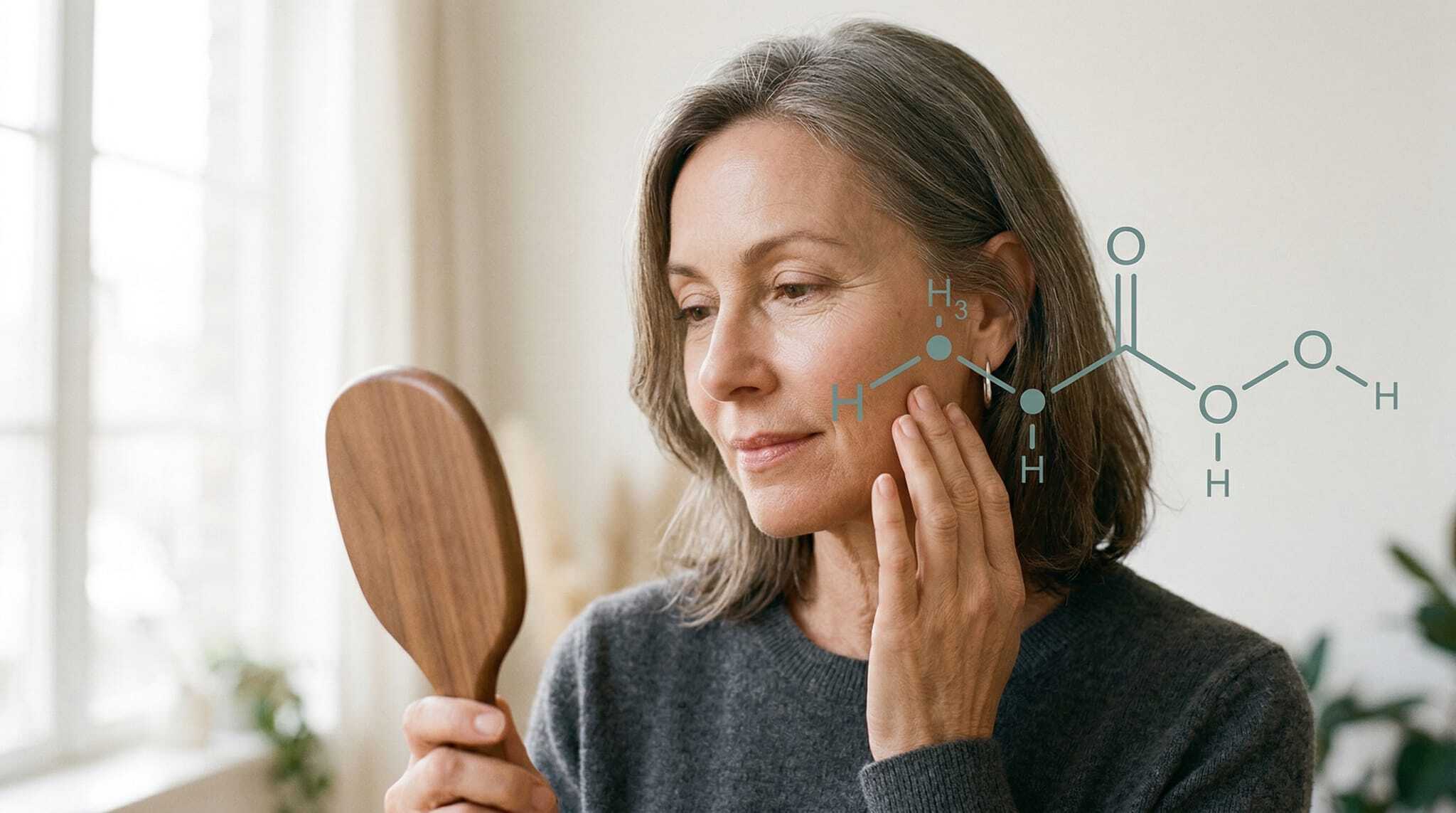
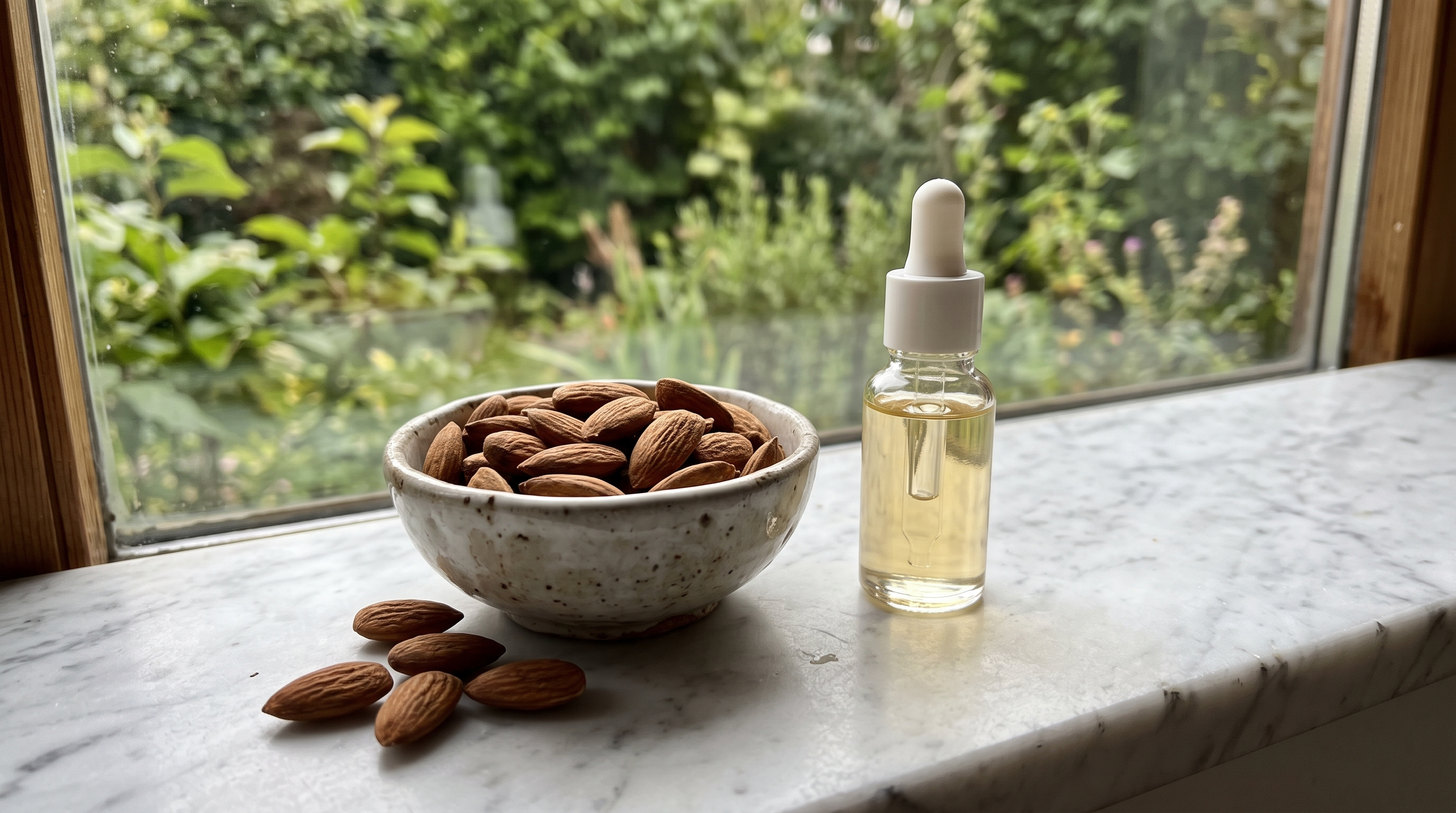
Mandelic acid has become the exfoliating acid people are told to try when glycolic acid burns. It is an alpha hydroxy acid (AHA), first isolated from bitter almonds, and it is now sold mostly as a leave-on serum promising smoother texture, fewer breakouts and a more even tone without the sting.
Some of that reputation is earned and some of it is borrowed. Most of the strongest mandelic acid research involves in-clinic peels at several times the strength of anything you can buy, so knowing what those studies did and did not test is the key to buying a serum that fits your skin.
Why mandelic acid behaves differently
All AHAs work the same basic way. They loosen the bonds that hold dead cells together at the skin’s surface, so those cells shed evenly instead of piling up into rough, dull patches [1]. What changes between acids is how fast and how hard that happens.
Mandelic acid’s molecule weighs about 152 grams per mole, roughly twice the size of glycolic acid’s. The usual explanation for its gentleness is that a bigger molecule moves into the skin more slowly, which spreads the exfoliating effect out over time instead of delivering it in one sharp wave. Your skin feels that difference as a mild tingle rather than a burn, which is the main reason people with reactive skin can often keep using it.
Gentler does not mean weaker in every way. Mandelic acid also has antibacterial and anti-inflammatory properties, which is why dermatologists have tested it for acne [3]. If you want the wider background on the ingredient itself, our guide to mandelic acid for anti-aging covers its mechanism and history in more depth.
What the research actually tested
Here is the honest picture. The best comparative trials used peels applied in a clinic, not serums used at home.
- Acne. In a randomized study of 50 patients with mild to moderate acne, six sessions of a 45% mandelic acid peel worked about as well as a 30% salicylic acid peel over 12 weeks. Salicylic acid did better on blackheads and whiteheads, mandelic acid did better on red, inflamed spots, and mandelic acid caused fewer side effects [3].
- Melasma. In a randomized trial of 90 patients with melasma, a combined 20% salicylic and 10% mandelic acid peel cut pigment scores by about 61% after 12 weeks, almost exactly matching a 35% glycolic acid peel at 62%, and it was better tolerated [4].
- Maintenance. In a clinic series of 35 patients treated for melasma and post-inflammatory dark marks, a daily mandelic and malic acid skincare regimen, combined with strict sun protection, appeared to help maintain improvement for months after the initial treatment [5].
Your skin may get almost the same pigment-fading result from a mandelic combination peel as from a 35% glycolic peel, with less irritation than the stronger acid.
Your skin may get almost the same pigment-fading result from a mandelic combination peel as from a 35% glycolic peel, with less irritation than the stronger acid. The maintenance study is the closest to how most people use a serum, and it is a supporting role rather than a starring one. A daily mandelic serum is best thought of as a gentle, steady exfoliant that helps other pigment and acne strategies work, not a peel in a bottle.
Reading a mandelic acid serum label
Consumer serums usually sit between 5% and 12%. That is far below the 30% to 45% peels in the trials above, which is exactly why a serum can be used at home without supervision.
The percentage is only half the story. An AHA’s effect depends on concentration, pH, contact time and how much of the acid is in its free, active form [1]. Mandelic acid’s pKa is about 3.4, so a serum formulated close to that pH has a large share of active acid. At pH 4.5 or above, much of it is neutralized, and the product behaves more like a mild moisturizer.
US safety guidance for AHAs in consumer products was built mainly on glycolic and lactic acid: 10% or less, a final pH of 3.5 or higher, and directions to use sun protection [2]. That is a reasonable yardstick for mandelic acid too.
When you shop, look for:
- A stated percentage. Brands that hide the number usually have a reason.
- Supportive ingredients such as glycerin, panthenol or hyaluronic acid to offset dryness.
- No added fragrance, especially if sensitivity is why you chose mandelic acid in the first place.
- Caution with “cocktail” serums that blend mandelic acid with glycolic, salicylic or lactic acids. They can be far less gentle than the front label suggests.
If you are weighing mandelic against a stronger acid, our guide to glycolic acid serums explains what the faster acid offers and costs, and our breakdown of AHA vs BHA helps if breakouts are your main concern.
In a six-month study of older adults, a 0.4% retinol lotion softened fine wrinkles and helped skin make new collagen.
Who a mandelic acid serum suits
Mandelic acid makes the most sense for three groups. The first is people whose skin flares with glycolic acid but who still want regular exfoliation. The second is people with acne-prone skin who also get red, inflamed spots, where the trial data are most encouraging [3]. The third is people with medium to deep skin tones who are prone to dark marks, because aggressive exfoliation can itself trigger new pigment, and the better-tolerated peels in the melasma trial were the mandelic combination [4].
If your goal is mainly deep lines or loss of firmness, an exfoliating acid alone will disappoint you. Surface smoothing is real, but rebuilding the collagen underneath is a different job.
How to start
Use your serum at night on clean, dry skin, two or three nights a week for the first two weeks. If your skin stays calm, move to every other night. Many people with resilient skin end up using mandelic acid most nights; others do best staying at three.
Back off if you notice stinging from your normal moisturizer, a tight, shiny look, flaking or new patches of redness. Stop for a week, then restart at a lower frequency.
Sunscreen is part of the deal
Any AHA can make skin more vulnerable to the sun. In a double-blind study, four weeks of 10% glycolic acid increased UV damage in the skin and lowered the dose needed to cause redness, and the effect faded within a week of stopping [6]. Mandelic acid has not been tested the same way, so the sensible assumption is that the same rule applies.
You need a broad-spectrum sunscreen every morning while you use a mandelic serum and for a week after you stop. Skipping it can darken the very spots you are trying to fade.
Mandelic acid and retinol: take turns
Mandelic acid works from the surface down. Retinol works from the inside out, signaling skin cells to renew and fibroblasts to rebuild collagen. In a six-month study of older adults, a 0.4% retinol lotion softened fine wrinkles and helped skin make new collagen [7]. The two are complementary, but stacking them on the same night is a common route to irritation, especially for the sensitive skin types drawn to mandelic acid in the first place.
The simplest rhythm is to alternate: mandelic serum one night, retinol the next. Our guide to retinol for sensitive skin explains how to build up tolerance gradually.
That alternating routine is easier to keep with a retinol that adds as little irritation as possible. Nanoretinol delivers a stabilized 0.2% retinol inside biomimetic lipid nanoparticles, which pass into the skin without breaking down the barrier the way conventional retinol formulations can. In North Biomedical’s study summary, Nanoretinol was 232% more effective in collagen recovery and 73% more effective in elastin recovery than conventional retinol, with a 61% increase in skin firmness after 56 days [8]. Pairing it with a mandelic serum on alternate nights, plus sunscreen every morning, covers both the surface and the structure underneath.
Getting the most from a gentle acid
A mandelic acid serum is a good choice when your skin needs exfoliation but cannot tolerate the stronger acids. Choose a clearly labeled 5% to 10% formula without fragrance, start slowly, wear sunscreen every day, and give it eight to twelve weeks before you judge the results. For deeper changes in firmness and lines, add a retinoid on the nights in between.
References
- Tang SC, Yang JH. “Dual Effects of Alpha-Hydroxy Acids on the Skin.” Molecules. 2018;23(4):863. doi:10.3390/molecules23040863
- Kornhauser A, Coelho SG, Hearing VJ. “Applications of hydroxy acids: classification, mechanisms, and photoactivity.” Clinical, Cosmetic and Investigational Dermatology. 2010;3:135-142. doi:10.2147/CCID.S9042
- Dayal S, Kalra KD, Sahu P. “Comparative study of efficacy and safety of 45% mandelic acid versus 30% salicylic acid peels in mild-to-moderate acne vulgaris.” Journal of Cosmetic Dermatology. 2020;19(2):393-399. doi:10.1111/jocd.13168
- Sarkar R, Garg V, Bansal S, Sethi S, Gupta C. “Comparative Evaluation of Efficacy and Tolerability of Glycolic Acid, Salicylic Mandelic Acid, and Phytic Acid Combination Peels in Melasma.” Dermatologic Surgery. 2016;42(3):384-391. doi:10.1097/DSS.0000000000000642
- Taylor MB, Yanaki JS, Draper DO, Shurtz JC, Coglianese M. “Successful short-term and long-term treatment of melasma and postinflammatory hyperpigmentation using vitamin C with a full-face iontophoresis mask and a mandelic/malic acid skin care regimen.” Journal of Drugs in Dermatology. 2013;12(1):45-50. PubMed: 23377327
- Kaidbey K, Sutherland B, Bennett P, et al. “Topical glycolic acid enhances photodamage by ultraviolet light.” Photodermatology, Photoimmunology & Photomedicine. 2003;19(1):21-27. doi:10.1034/j.1600-0781.2003.00013.x
- Kafi R, Kwak HS, Schumacher WE, et al. “Improvement of naturally aged skin with vitamin A (retinol).” Archives of Dermatology. 2007;143(5):606-612. doi:10.1001/archderm.143.5.606
- North Biomedical LLC. “Nanoretinol vs. Conventional Retinol: Efficacy in Collagen and Elastin Recovery.” Clinical Study Summary, 2024. Study summary