Milk Bath: What a Milk Soak Can and Can't Do for Your Skin
Why a cup of milk in a full tub delivers almost no lactic acid, what milk fat and a warm soak can still do for dry skin, and how to take one without drying out
The milk bath has one of the best origin stories in beauty. Cleopatra is said to have soaked in donkey’s milk to keep her skin soft and luminous, and two thousand years later, milk bath powders, goat milk soaks and coconut milk bath bombs fill whole shelves. The modern sales pitch adds a scientific note: milk contains lactic acid, the same exfoliating acid found in smoothing lotions and peels.
That claim is where the story needs some care. A milk bath can be a pleasant, softening soak for dry skin, but the lactic acid part does not survive the trip into a full tub. Understanding why will help you get more out of the bath and know where to look for the results it cannot give.
The Lactic Acid Promise
Lactic acid is a genuinely useful skincare ingredient. It belongs to the alpha hydroxy acid family, which loosens the bonds between dead surface cells so they shed more evenly, and at higher strengths it reaches deeper into the skin [1]. Products like a 12% ammonium lactate lotion are prescribed for rough, scaly skin for exactly this reason.
Your skin would need a lotion with 12% lactic acid, used twice a day for about 12 weeks, to show the firmer, smoother changes researchers measured, far more than any bath delivers.
In that study, people applied either 5% or 12% lactic acid twice daily for three months. Both strengths smoothed the surface and improved the look of lines, but only 12% also thickened and firmed the deeper skin [2]. Two things made it work: a high concentration and an acidic formula left on the skin for hours.
Why a Milk Bath Barely Exfoliates
Fresh milk is mostly water, fat, protein and lactose, a sugar. It contains only traces of free lactic acid, which is why it tastes sweet rather than sour. Even sour milk or buttermilk, which carry more, are a long way from a cosmetic acid.
Your skin would need a lotion with 12% lactic acid, used twice a day for about 12 weeks, to show the firmer, smoother changes researchers measured, far more than any bath delivers.
Then comes the dilution. A typical recipe adds one or two cups of milk, or a few scoops of milk powder, to a bath of roughly 150 liters. That divides whatever lactic acid there is by several hundred. The pH matters too. Acid exfoliants work because they are formulated well below the skin’s own surface pH, which a large study measured at just under 5 on average [3]. A tub of tap water with a little milk sits close to neutral, so there is almost no free acid left to act.
So a milk bath will not resurface your skin or fade spots. If smoother texture is your goal, our guide to lactic acid for skin explains how leave-on products deliver the acid at a strength and pH that can make a difference.
What Milk Can Do for Dry Skin
Milk does bring something to the bath. Whole milk, cream and coconut milk add fats that leave a thin, soft film on the skin, a little like a bath oil, and milk proteins help that film feel silky rather than greasy. Many people with dry skin find that their skin feels less tight after a milk soak than after plain water.
That comfort is real but short-lived. A large trial in 483 children with eczema tested whether emollient bath additives helped on top of normal moisturizer use. After a year, the bath additives gave no clinical benefit beyond leave-on moisturizers [4]. Milk is not an emollient bath oil, but the lesson carries over: whatever you add to bath water is mostly rinsed or towelled away.
Your skin’s own moisture depends more on what it holds than on what it soaks in. The outer layer keeps its water with the help of natural moisturizing factor, a mix of small water-attracting molecules made inside the skin cells (lactate is one of them), together with the fats packed between them [5]. A bath can top up the water briefly, but only a leave-on moisturizer helps the skin hold on to it.
The Water Matters More Than the Milk
Your skin lost more than twice as much water through its surface after hot-water exposure in one study, which can easily cancel out anything a cup of milk adds.
Your skin lost more than twice as much water through its surface after hot-water exposure in one study, which can easily cancel out anything a cup of milk adds.
In that experiment, 50 healthy volunteers had their skin measured before and after immersion in hot and cold water. Hot water more than doubled transepidermal water loss, a marker of a leaky barrier, raised the skin’s pH and increased redness. Cold water raised water loss too, but much less [6]. The authors’ advice was to use lukewarm water.
Soaking time matters as well. When researchers kept skin under a water patch for three hours, the outer layer swelled and pools of water opened between its cells, making it more permeable to irritants [7]. A short, warm soak is soothing; a long, hot one leaves skin drier once you get out.
Goat, Oat and Coconut Milk Soaks
- Cow’s or goat’s milk. Similar in what they bring to a bath: fat, protein, lactose and traces of lactic acid. Goat milk has a gentler marketing image, but there is no good evidence that it is better for skin in a soak.
- Oat milk soaks. Most contain colloidal oatmeal rather than drinkable oat milk. Colloidal oat is the one bath additive with an established soothing role, so it is the best choice for itchy skin. Our guide to the oatmeal bath explains how to make one that works.
- Coconut milk. Rich in fat, so it leaves the softest film. It can also make the tub slippery.
- Milk bath powders and bombs. Check the label. Many are mainly sodium bicarbonate, citric acid, salts and fragrance, with milk powder near the end of the ingredient list. Fragrance is a common cause of skin allergy, so choose unscented versions if your skin reacts easily.
How to Take a Milk Bath That Helps
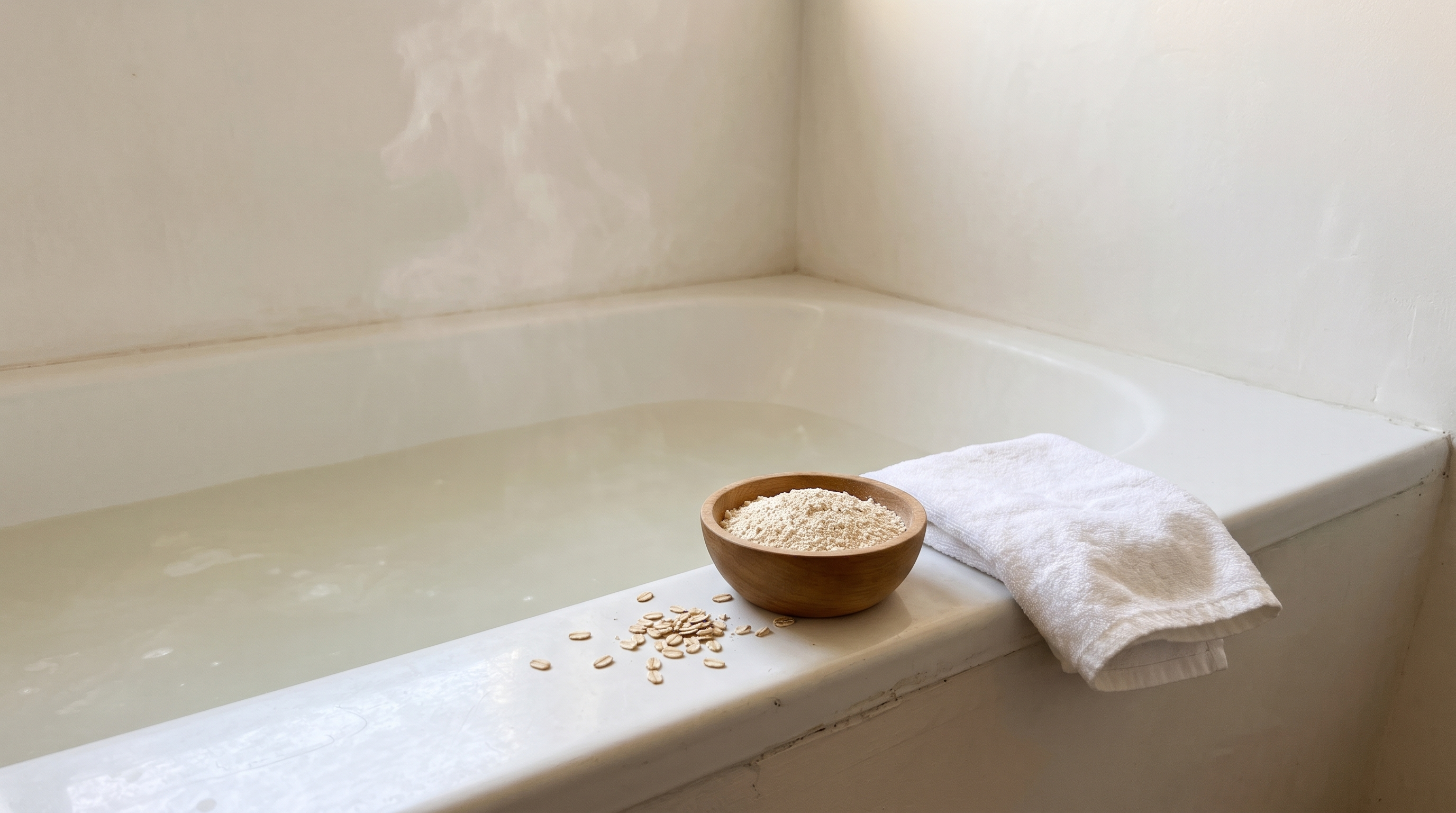
- Run a lukewarm bath that feels comfortably warm on the inside of your wrist, not hot.
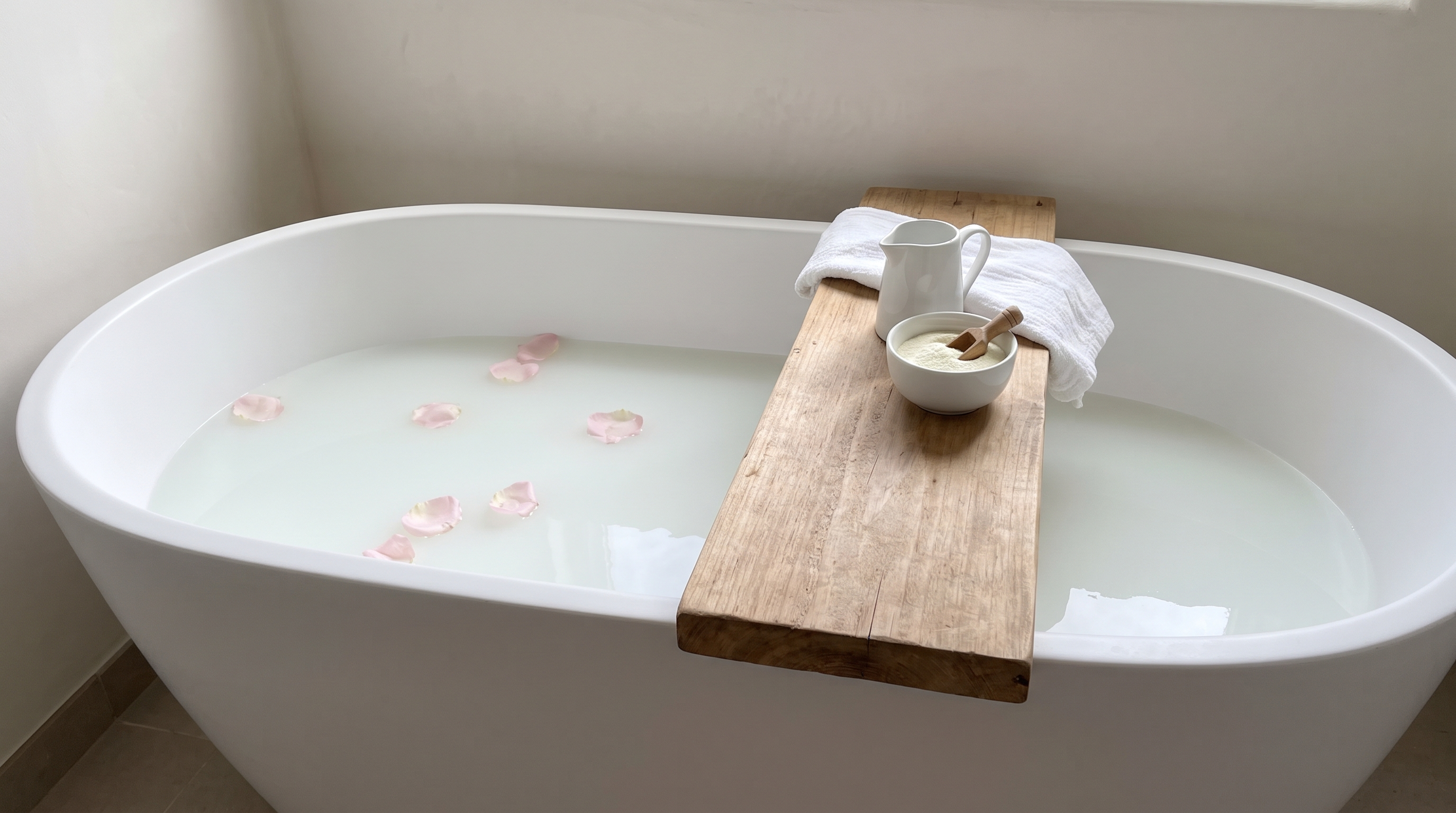
- Add one to two cups of whole milk or a few scoops of full-fat milk powder, plus a tablespoon of honey if you like the feel. Stir well.
- Soak for 10 to 15 minutes. That is enough time to relax and soften the skin without swelling it.
- Rinse briefly with lukewarm water to remove milk residue, which can smell sour as it dries.
- Pat dry and moisturize within three minutes, while the skin is still slightly damp.
On days without a bath, a shower oil gives a similar soft finish in a fraction of the time.
Who Should Skip It
- Anyone with a milk allergy. Milk proteins can cause hives on contact in sensitive people.
- People with broken, cracked or freshly shaved skin, where any additive can sting.
- Anyone with eczema that is flaring. Plain lukewarm water and a moisturizer, or a colloidal oatmeal bath, are safer bets.
- Anyone unsteady on their feet. Milk and coconut fat make the tub slippery, so use a bath mat and rinse the tub afterwards.
For Renewal, Look Beyond the Tub
A milk bath is a lovely ritual and a gentle softener, and that is enough reason to enjoy one. What it cannot do is renew the skin. The smoother texture, faded spots and firmer feel that people hope for come from ingredients left on the skin to work over weeks, and the best studied of them is retinol.
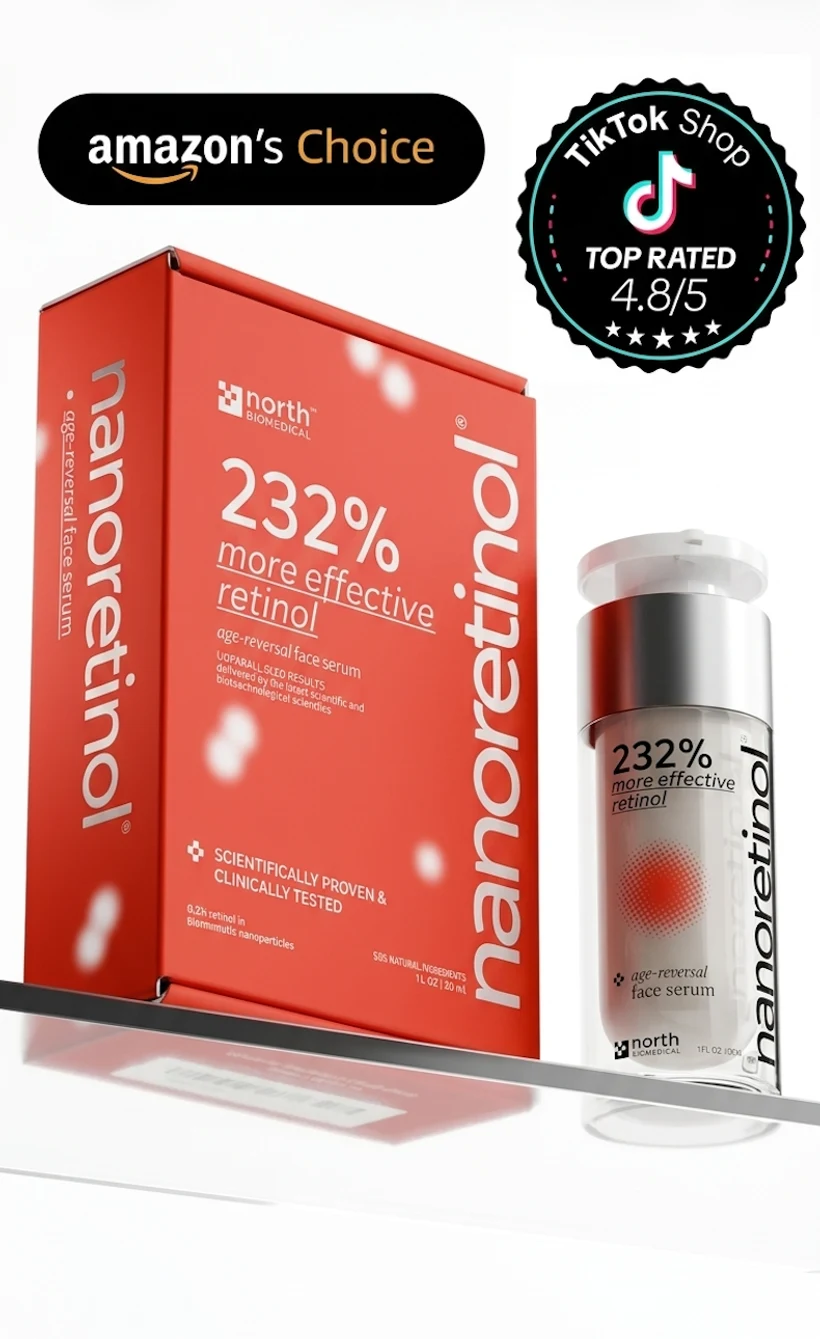
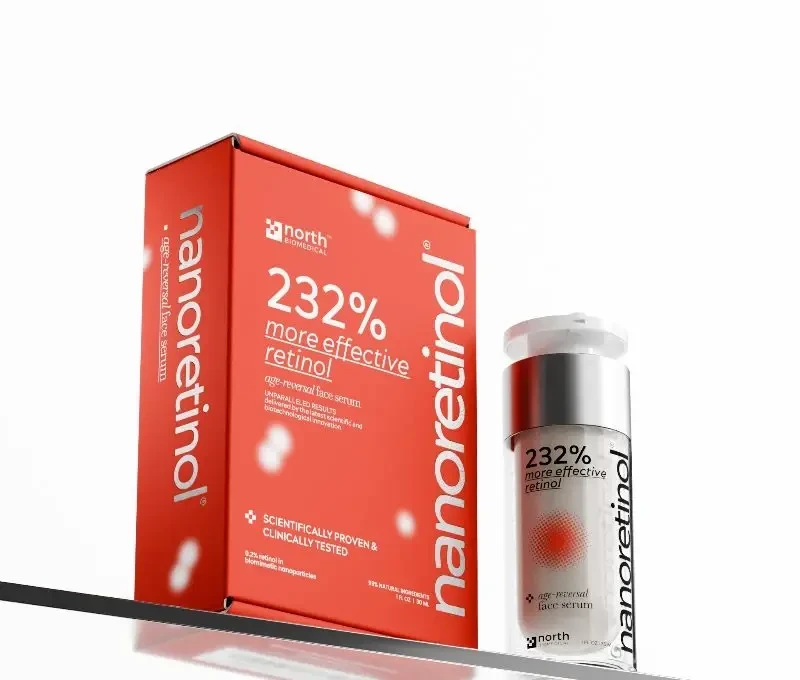
Conventional retinol has a reputation for redness and peeling, partly because many formulas use solvents that loosen the skin barrier to push the retinol in. Nanoretinol takes a different route. Its retinol is carried in biomimetic lipid nanoparticles that pass through the barrier without breaking it down, in a light, water-based gel with 99% natural ingredients. In North Biomedical’s clinical study, it was 232% more effective than conventional retinol in collagen recovery and 73% more effective in elastin recovery, and 56 days of use brought a 61% increase in skin firmness and a 56% increase in elasticity [8]. Side effects were minimal and milder than with conventional retinol.
Keep the milk bath for comfort and calm. Then let a gentle nightly retinol do the slow work of renewal that no soak can reach.
References
- Kornhauser A, Coelho SG, Hearing VJ. “Applications of hydroxy acids: classification, mechanisms, and photoactivity.” Clinical, Cosmetic and Investigational Dermatology. 2010;3:135-142. doi:10.2147/CCID.S9042
- Smith WP. “Epidermal and dermal effects of topical lactic acid.” Journal of the American Academy of Dermatology. 1996;35(3 Pt 1):388-391. PubMed 8784274
- Lambers H, Piessens S, Bloem A, Pronk H, Finkel P. “Natural skin surface pH is on average below 5, which is beneficial for its resident flora.” International Journal of Cosmetic Science. 2006;28(5):359-370. doi:10.1111/j.1467-2494.2006.00344.x
- Santer M, Ridd MJ, Francis NA, Stuart B, Rumsby K, Chorozoglou M, et al. “Emollient bath additives for the treatment of childhood eczema (BATHE): multicentre pragmatic parallel group randomised controlled trial of clinical and cost effectiveness.” BMJ. 2018;361:k1332. doi:10.1136/bmj.k1332
- Rawlings AV, Harding CR. “Moisturization and skin barrier function.” Dermatologic Therapy. 2004;17 Suppl 1:43-48. doi:10.1111/j.1396-0296.2004.04s1005.x
- Herrero-Fernandez M, Montero-Vilchez T, Diaz-Calvillo P, Romera-Vilchez M, Buendia-Eisman A, Arias-Santiago S. “Impact of Water Exposure and Temperature Changes on Skin Barrier Function.” Journal of Clinical Medicine. 2022;11(2):298. doi:10.3390/jcm11020298
- Ogawa-Fuse C, Morisaki N, Shima K, Hotta M, Sugata K, Ichihashi T, Oguri M, Yoshida O, Fujimura T. “Impact of water exposure on skin barrier permeability and ultrastructure.” Contact Dermatitis. 2019;80(4):228-233. doi:10.1111/cod.13174
- North Biomedical LLC. “Nanoretinol vs. Conventional Retinol: Efficacy in Collagen and Elastin Recovery.” Clinical Study Summary, 2024. Study summary