Turmeric Face Mask: What It Can Do for Dull Skin, and How to Avoid the Yellow Stain
Turmeric is a well-studied spice with a weak delivery problem. Here is what a mask can realistically do, how to make one that rinses clean, and who should skip it
Turmeric has a long history as a beauty ritual. In South India, putting turmeric on the skin is part of daily life and of auspicious occasions such as weddings [5], and online recipes now promise that a turmeric face mask will brighten dull skin, fade dark spots and calm breakouts. The spice is genuinely interesting to scientists. The harder question is how much of it a ten-minute mask can actually get into your skin.
This guide covers what is in turmeric, what the studies show, why a mask is a weak delivery system, how to make one that does not leave you yellow, and who should avoid it.
What is in turmeric
Turmeric is the dried root of Curcuma longa. Its most studied compound is curcumin, the bright yellow pigment that gives the spice its colour. In laboratory research, curcumin dampens inflammation and oxidative stress, the two processes that drive sun damage in skin, which is why researchers have proposed it as a possible aid against photoaging [3].
Curcumin has a well-known weakness. It is poorly absorbed and quickly broken down, so very little of it reaches the tissues where it would need to work. Researchers who want to use it as a medicine have turned to liposomes, nanoparticles and phospholipid complexes to carry it further [2]. A spoonful of kitchen turmeric stirred into yogurt has none of that help.
What the studies show
A systematic review of turmeric and skin health found 18 human studies that met its criteria. Eight tested turmeric or curcumin applied to the skin, nine tested it taken by mouth and one tested both. Ten of the studies reported a significant improvement over the control group, across conditions that ranged from acne to facial photoaging [1]. The authors called this early evidence and noted that the published studies were limited, so more research is needed [1].
Those results come from treatments used repeatedly in clinical studies of skin conditions, which tells you little about a ten-minute paste on healthy skin.
Your skin gets about 15 minutes of turmeric from a mask, far less exposure than the 8 weeks of daily turmeric extract that volunteers swallowed in a Japanese skin trial.
One of the more careful trials did not involve a mask at all. In a Japanese study, 47 healthy adults took a hot-water extract of turmeric by mouth every day. After 8 weeks, the water content of their facial skin had risen more than in the placebo group, although water loss through the skin did not change [4].
Your skin gets about 15 minutes of turmeric from a mask, far less exposure than the 8 weeks of daily turmeric extract that volunteers swallowed in a Japanese skin trial.
The honest summary is that turmeric is a promising ingredient with no direct evidence behind the face mask itself. A mask can feel soothing and leave a fresh, slightly warm glow, but there is no trial showing that one fades dark spots or reduces wrinkles. Our guide to turmeric for skin covers the curcumin research in more depth.
The yellow stain, and how to avoid it
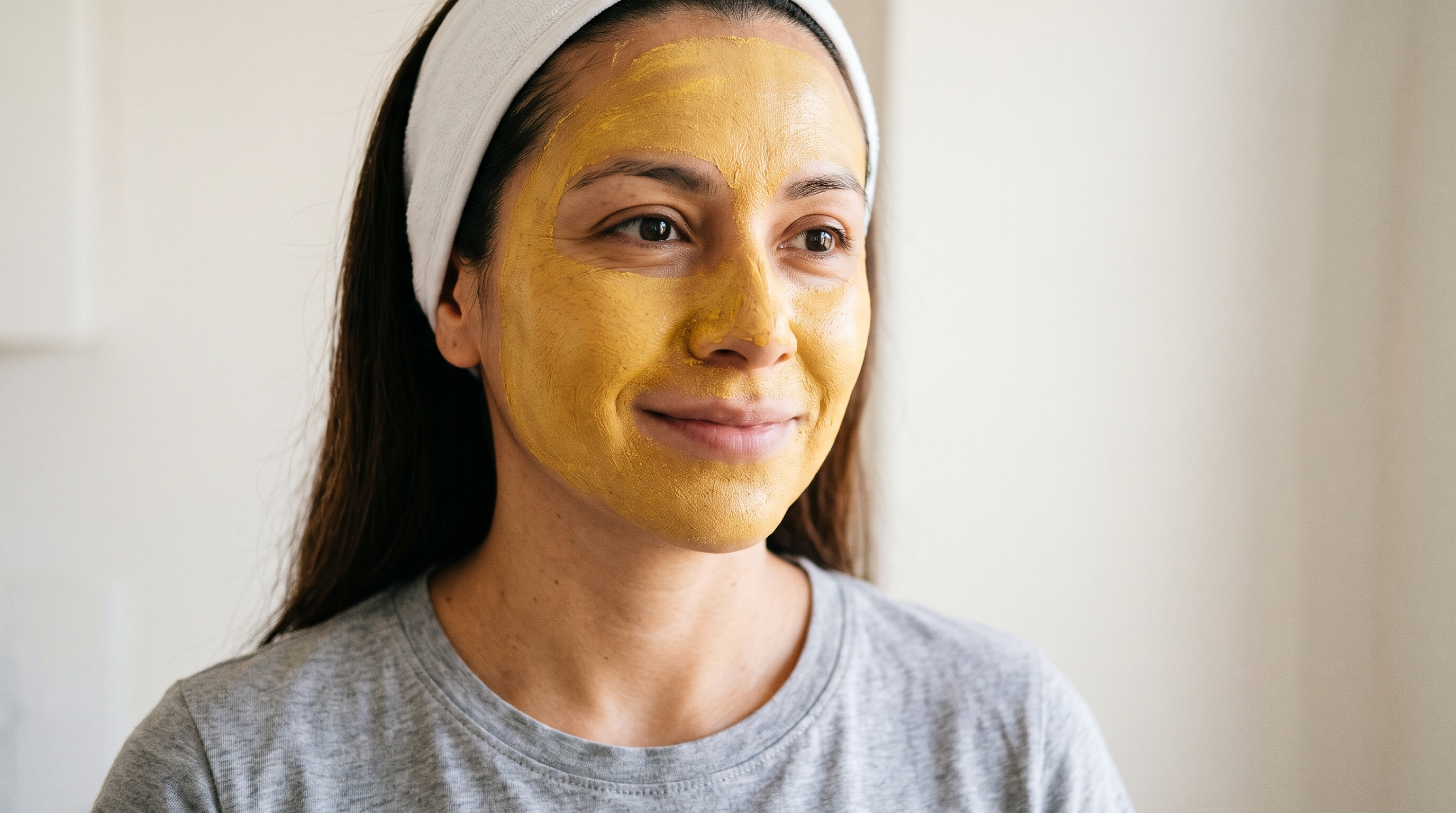
The most common complaint about turmeric masks is not irritation. It is the yellow tint that stays on the skin, the nails and the towel. Curcumin dissolves far better in oil than in water, which is why a splash of water does little to lift it.
A few habits keep the colour off:
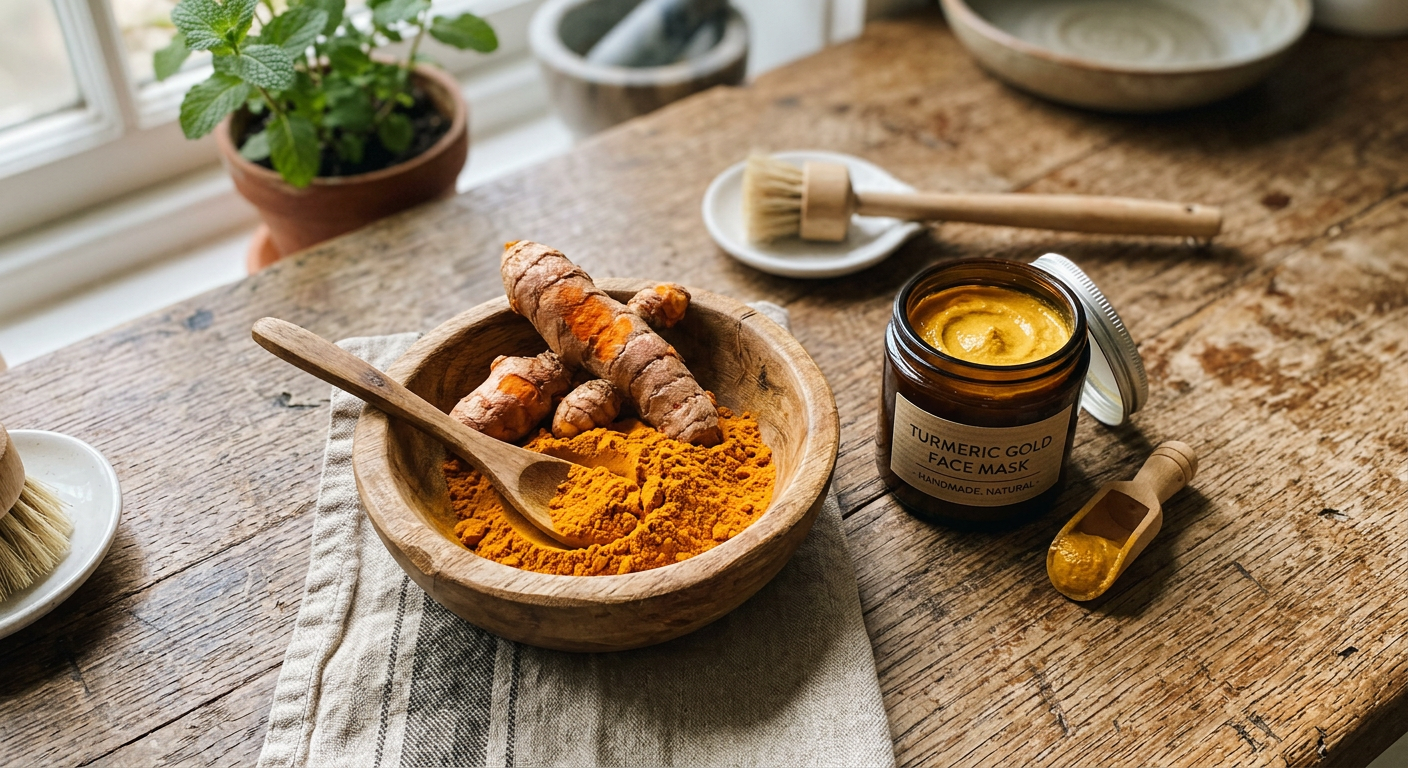
- Use very little. A quarter of a teaspoon of turmeric is plenty for a whole face. More powder adds stain, not benefit.
- Mix it into a smooth base. Plain yogurt or a spoonful of honey spreads the powder evenly and keeps it from clumping.
- Keep the time short. Ten minutes is enough. Longer contact deepens the tint.
- Remove it with a cleanser, not just water. A gentle oil cleanser or cleansing balm lifts curcumin far better than a water rinse, followed by your usual face wash.
- Protect fabric. Use an old towel and keep the paste away from your hairline if your hair is light.
If you prefer a sweeter base, our guide to the honey face mask explains why honey is one of the gentler things to put on the face, and it pairs well with a small pinch of turmeric.
Your skin sits at a pH just below 5, so a baking soda paste near pH 8 is more than a thousand times less acidic than the surface it touches.
The add-ins to leave out
Many turmeric recipes add ingredients that cause more trouble than the spice.
- Lemon juice. Citrus juice contains plant compounds that react with sunlight and can leave burns and dark patches on the skin, a reaction called phytophotodermatitis [8]. For a mask meant to even out skin tone, that is the worst possible result.
- Baking soda. Healthy skin is slightly acidic, with a surface pH that averages below 5 [7]. Baking soda is alkaline, and scrubbing it into the face pushes the surface in the wrong direction.
- Raw gram flour scrubbed hard. Chickpea flour is a traditional base and is fine as a paste, but rubbing it vigorously to “exfoliate” can leave delicate skin red and sore.
Your skin sits at a pH just below 5, so a baking soda paste near pH 8 is more than a thousand times less acidic than the surface it touches.
Who should skip a turmeric mask
Turmeric is a food, so many people assume it is harmless on the skin. Dermatologists see it differently. A review titled “Turmeric: The Yellow Allergen” gathered case reports and studies of allergic reactions to turmeric applied to the skin, and urged both doctors and patients to be aware of them [5]. Doctors have also reported contact dermatitis from turmeric in a massage oil [6].
Patch-test a small amount on the inner arm and wait a day before using a turmeric mask on your face, and skip it altogether if you have a known spice allergy, eczema or very reactive skin, or if the skin is broken.
Bought turmeric masks
Many bought turmeric masks are clay masks with a small amount of turmeric extract added. The clay does most of the work, absorbing oil and leaving the surface matte, while the turmeric adds colour and a selling point. They usually stain less than a kitchen paste because they contain less pigment. Our guide to the best clay mask explains how to pick a clay that suits your skin type, which matters more than the extract on the front of the pack.
A glow that lasts longer than a mask
Dullness has several causes. Dead cells build up on the surface, cell turnover slows with age, and the collagen underneath thins, so the skin reflects light less evenly. Our guide to dull skin walks through each one. A turmeric mask touches only the surface, and only for a few minutes.
Retinoids work on the deeper causes. In a controlled trial in older adults, a 0.4% retinol lotion applied up to three times a week for 24 weeks reduced fine wrinkling and increased collagen production compared with the lotion without retinol [9]. Faster cell turnover is also what gives retinol users the brighter, smoother surface that a mask promises.
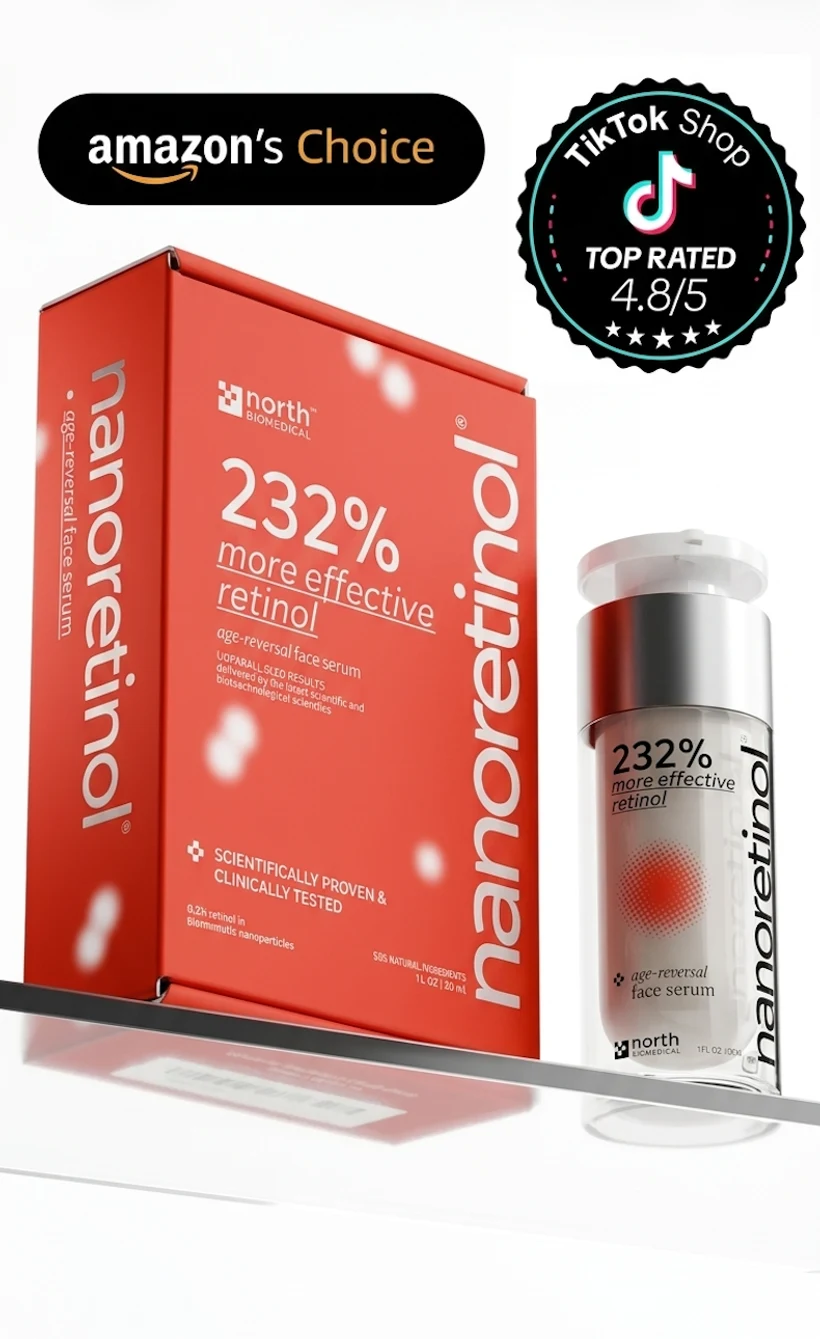
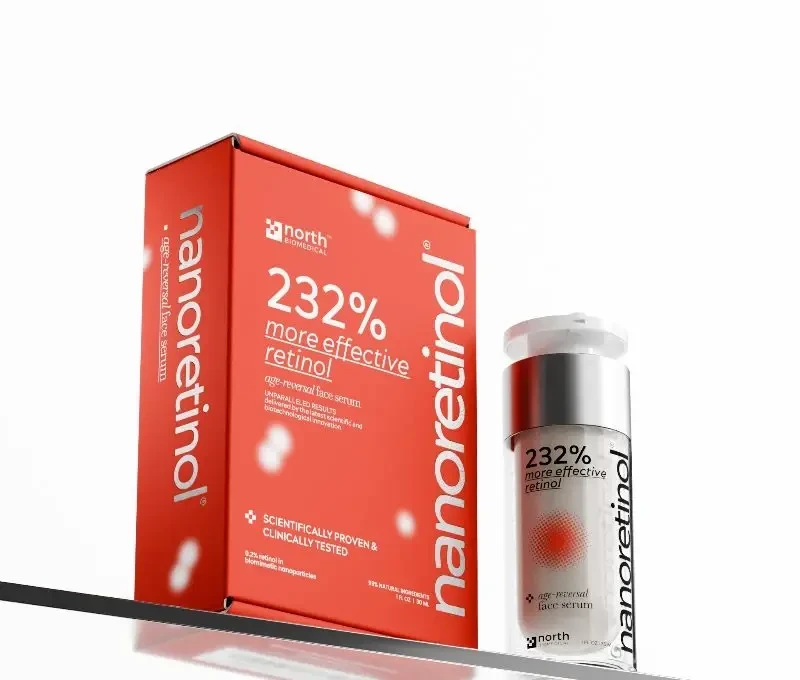
Conventional retinol has its own delivery problem, and many people quit it because it dries and irritates the skin. Nanoretinol was built around that problem. It carries 0.2% retinol inside biomimetic lipid nanoparticles that the skin recognizes as its own, so the retinol passes the barrier without damaging it, in a light water-based gel. In North Biomedical’s study, it was 232% more effective in collagen recovery and 73% more effective in elastin recovery than conventional retinol, and users saw a 61% increase in skin firmness after 56 days [10].
A turmeric mask can still have a place. Use it on one evening a week if you enjoy it, apply Nanoretinol on the other nights, and wear broad-spectrum sunscreen the next morning.
References
- Vaughn AR, Branum A, Sivamani RK. “Effects of Turmeric (Curcuma longa) on Skin Health: A Systematic Review of the Clinical Evidence.” Phytotherapy Research. 2016;30(8):1243-1264. doi:10.1002/ptr.5640
- Anand P, Kunnumakkara AB, Newman RA, Aggarwal BB. “Bioavailability of curcumin: problems and promises.” Molecular Pharmaceutics. 2007;4(6):807-818. doi:10.1021/mp700113r
- Heng MC. “Curcumin targeted signaling pathways: basis for anti-photoaging and anti-carcinogenic therapy.” International Journal of Dermatology. 2010;49(6):608-622. doi:10.1111/j.1365-4632.2010.04468.x
- Asada K, Ohara T, Muroyama K, Yamamoto Y, Murosaki S. “Effects of hot water extract of Curcuma longa on human epidermal keratinocytes in vitro and skin conditions in healthy participants: A randomized, double-blind, placebo-controlled trial.” Journal of Cosmetic Dermatology. 2019;18(6):1866-1874. doi:10.1111/jocd.12890
- Palaniappan V, Karthikeyan K. “Turmeric: The Yellow Allergen.” Indian Dermatology Online Journal. 2023;14(4):459-464. doi:10.4103/idoj.idoj_340_22
- Lopez-Villafuerte L, Clores KH. “Contact dermatitis caused by turmeric in a massage oil.” Contact Dermatitis. 2016;75(1):52-53. doi:10.1111/cod.12549
- Lambers H, Piessens S, Bloem A, Pronk H, Finkel P. “Natural skin surface pH is on average below 5, which is beneficial for its resident flora.” International Journal of Cosmetic Science. 2006;28(5):359-370. doi:10.1111/j.1467-2494.2006.00344.x
- Sarhane KA, Ibrahim A, Fagan SP, Goverman J. “Phytophotodermatitis.” Eplasty. 2013;13:ic57. PubMed:24106566
- Kafi R, Kwak HS, Schumacher WE, Cho S, Hanft VN, Hamilton TA, et al. “Improvement of naturally aged skin with vitamin A (retinol).” Archives of Dermatology. 2007;143(5):606-612. doi:10.1001/archderm.143.5.606
- North Biomedical LLC. “Nanoretinol vs. Conventional Retinol: Efficacy in Collagen and Elastin Recovery.” Clinical Study Summary, 2024. Study summary