Oatmeal Bath: How to Make One That Actually Soothes Itchy Skin
Why finely milled colloidal oatmeal beats a sock full of breakfast oats, and the soak, temperature and moisturizing steps that decide whether it works
When the heating comes on and your shins start to itch through your jeans, an oatmeal bath is one of the oldest remedies people reach for. It is also one of the few home remedies with real chemistry behind it. Oats contain starches that hold water, polyphenols that quiet inflammation, and natural cleansers that lift grime without stripping skin.
But there is a big difference between a bath that soothes and one that leaves you with a tub full of soggy flakes and skin that feels tight an hour later. The difference comes down to the type of oat, the water, and what you do in the five minutes after you get out. Your skin can be drier 90 minutes after a bath than it was before you got in, unless you moisturize while it is still damp.
Why Oats Calm Itchy Skin
Oat is not one active ingredient but a small toolkit. A review of colloidal oatmeal’s chemistry describes starches and beta-glucan that form a protective, water-holding film, phenolic compounds with antioxidant and anti-inflammatory activity, and saponins that cleanse gently [1]. The same review notes that oat buffers the pH of the water, which matters because skin’s surface is naturally slightly acidic.
The phenols include a family unique to oats called avenanthramides. In laboratory work, they blocked a key inflammatory signal in skin cells and reduced scratching in an animal itch model [2]. Oats contain them at only about 300 parts per million, yet they were active at far lower doses.
Colloidal Oatmeal vs Breakfast Oats
Colloidal oatmeal is whole oat ground so finely that it stays suspended in water instead of sinking. In the United States it is regulated as an over-the-counter skin protectant under a 2003 FDA monograph, and its preparation is standardized by the United States Pharmacopeia [1]. When you pour a packet into running water, it turns the bath milky, which is what you want: the soothing compounds are spread through the water and touch every part of your skin.
Your skin can be drier 90 minutes after a bath than it was before you got in, unless you moisturize while it is still damp.
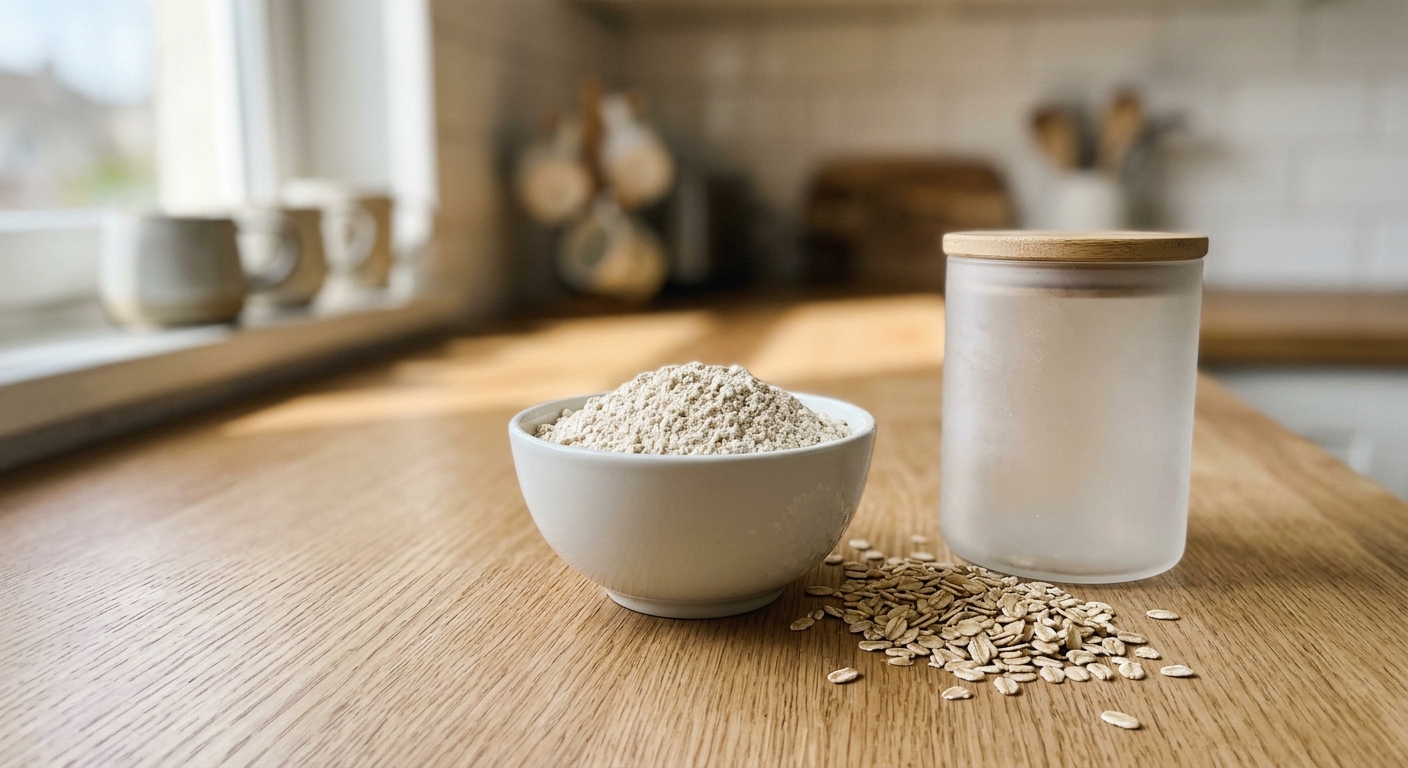
Rolled oats behave differently. The flakes are large, most of their contents stay locked inside, and they clog drains. If you want to use pantry oats, blend plain unflavored oats into a powder fine enough that a spoonful turns a glass of warm water cloudy. Anything gritty will settle on the bottom of the tub and do little.
Skip instant oatmeal sachets with sugar, flavorings or dried fruit. Sugar does nothing for itch and can leave a sticky film.
What the Evidence Shows
Most of the clinical research on oat uses leave-on lotions rather than baths, so it is worth being honest about what is proven. In a study of 29 women with itchy, dry lower legs, a colloidal oatmeal lotion significantly improved dryness, scaling, roughness and itch intensity [3]. A larger study of 50 women with moderate to severe dry legs found improvements in moisturization and barrier function, and lab tests showed oat extracts switching on genes involved in the skin barrier [4].
Oat is also remarkably well tolerated. In safety testing of oat-containing products across more than 2,000 people, the irritation and allergy potential was very low, and no allergies were reported among consumers of about 445,000 products over three years [5]. Your skin cells responded to oat compounds at just 1 part per billion in lab tests, which helps explain why a thin milky bath can calm itch.
A bath delivers a much lower dose of oat than a lotion and rinses most of it away, so think of it as a soothing reset rather than a treatment. For lasting results, pair it with a leave-on product, such as a colloidal oatmeal lotion, and our guide to colloidal oatmeal for skin explains how the ingredient works in creams and cleansers as well.
Your skin cells responded to oat compounds at just 1 part per billion in lab tests, which helps explain why a thin milky bath can calm itch.
How to Take an Oatmeal Bath
- Run lukewarm water. Hot water feels wonderful on itchy skin but dissolves the surface lipids that keep it supple, so the itch often returns worse. Aim for water that feels comfortably warm on the inside of your wrist.
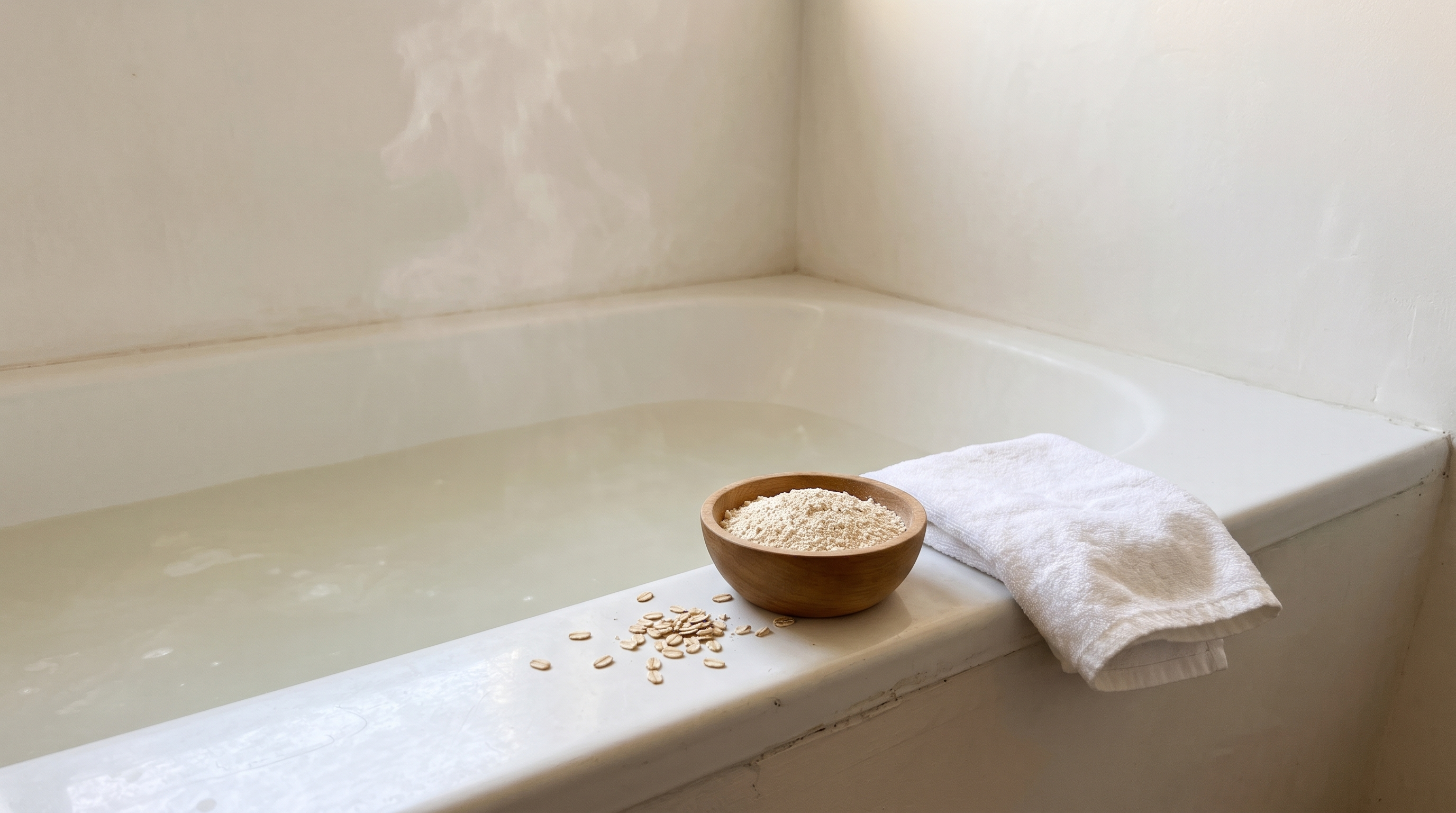
- Add the oat while the tap runs. Sprinkle one packet of colloidal oatmeal, or about a cup of home-blended oat powder, under the running water and swirl until the bath looks milky.
- Soak for 10 to 15 minutes. Longer is not better. Skin soaked too long swells, and as the water evaporates afterwards it can leave the surface drier.
- Rinse briefly or not at all. A quick lukewarm rinse removes any grit; otherwise, leave the fine oat film on your skin.
- Pat, do not rub. Blot with a soft towel so your skin stays slightly damp.
- Moisturize within three minutes. This step matters more than the bath itself.
The reason for step six comes from a small crossover study that measured hydration after different bathing routines. Bathing without moisturizer left skin no better hydrated than before, and in people with eczema it was slightly drier after 90 minutes. Applying moisturizer after the bath gave a modest boost, and moisturizer alone gave the biggest one [6]. The water is the vehicle, but the moisturizer is what holds the benefit in place. If the itch keeps you awake, our guide to the best moisturizer for itchy skin compares the textures that work best after a soak.
Two or three oat baths a week is plenty during a dry spell. On other days, a short lukewarm shower followed by moisturizer does the same barrier-protecting job.
Who Should Be Careful
- Anyone with an oat or cereal allergy. Oat proteins can sensitize skin. In a French study of 302 children with eczema referred for allergy testing, about 15% had positive oat patch tests, and the rate was higher among those who already used oat creams [7]. If oat products have ever made you itch more or break out in hives, skip the bath.
- Infants with eczema. The same researchers suggested avoiding oat protein products on infants with damaged skin. Ask a pediatrician first.
- Anyone unsteady on their feet. Oat makes a tub surprisingly slippery. Use a bath mat, and rinse the tub afterwards.
- Itch that does not settle. Itch that lasts more than two weeks, wakes you at night, or comes with a rash or other symptoms deserves a visit to a doctor rather than another bath.
Where an Oat Soak Stops
An oatmeal bath calms itch and helps a stressed barrier recover. It does not rebuild collagen, smooth crepey skin on the legs, or fade sun spots. Those changes come from years of sun exposure and natural aging, and they respond to ingredients that work inside the skin, mainly retinoids. Our winter dry skin guide covers the wider seasonal routine.
The catch is that dry, itchy skin is exactly the skin that tends to sting when a conventional retinol goes on. Many traditional formulas rely on solvents that loosen the skin barrier to push retinol in, which is why redness and peeling are so common.
A Calmer Barrier, Then the Right Night Step
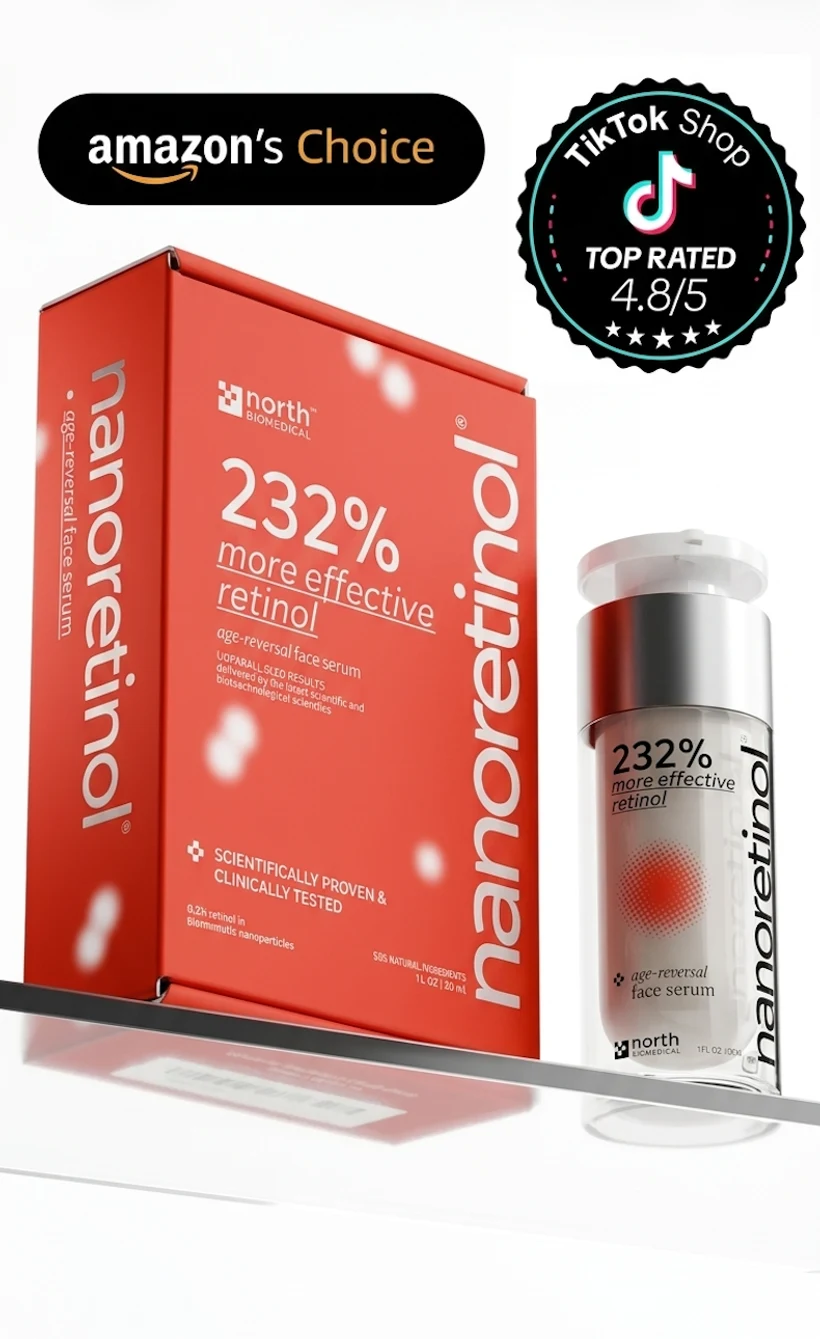
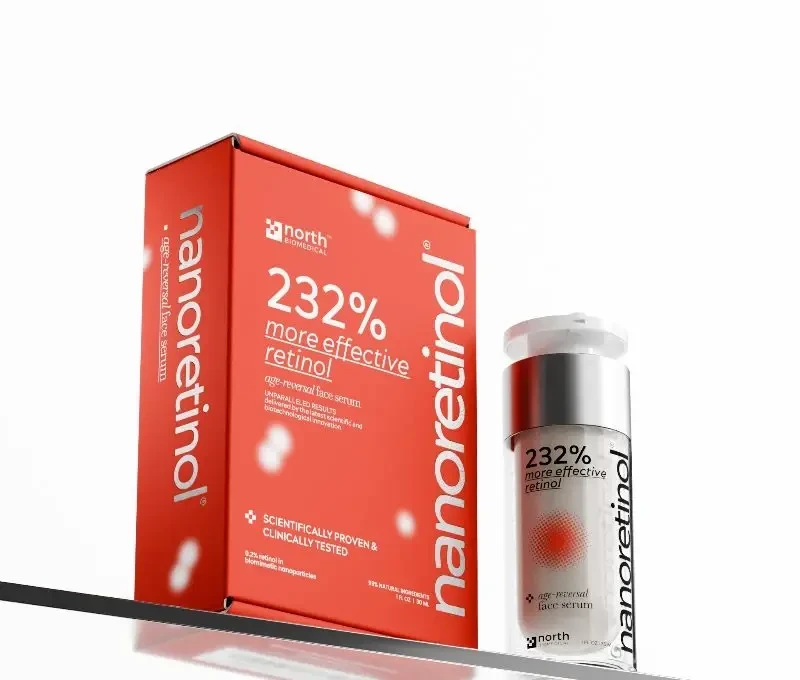
That is where Nanoretinol fits in. It uses biomimetic lipid nanoparticles that carry retinol through the skin’s barrier without breaking it down, in a water-based gel with 99% natural ingredients. In North Biomedical’s clinical study, it was 232% more effective than conventional retinol in collagen recovery and 73% more effective in elastin recovery, and 56 days of use brought a 61% increase in skin firmness [8]. Side effects were minimal and milder than with conventional retinol.
Let the oat bath settle the itch first. Once your skin feels comfortable again, a gentle nightly retinol can work on the deeper signs of aging that no bath can reach.
References
- Kurtz ES, Wallo W. “Colloidal oatmeal: history, chemistry and clinical properties.” Journal of Drugs in Dermatology. 2007;6(2):167-170. PubMed 17373175
- Sur R, Nigam A, Grote D, Liebel F, Southall MD. “Avenanthramides, polyphenols from oats, exhibit anti-inflammatory and anti-itch activity.” Archives of Dermatological Research. 2008;300(10):569-574. doi:10.1007/s00403-008-0858-x
- Reynertson KA, Garay M, Nebus J, Chon S, Kaur S, Mahmood K, Kizoulis M, Southall MD. “Anti-inflammatory activities of colloidal oatmeal (Avena sativa) contribute to the effectiveness of oats in treatment of itch associated with dry, irritated skin.” Journal of Drugs in Dermatology. 2015;14(1):43-48. PubMed 25607907
- Ilnytska O, Kaur S, Chon S, Reynertson KA, Nebus J, Garay M, Mahmood K, Southall MD. “Colloidal Oatmeal (Avena Sativa) Improves Skin Barrier Through Multi-Therapy Activity.” Journal of Drugs in Dermatology. 2016;15(6):684-690. PubMed 27272074
- Criquet M, Roure R, Dayan L, Nollent V, Bertin C. “Safety and efficacy of personal care products containing colloidal oatmeal.” Clinical, Cosmetic and Investigational Dermatology. 2012;5:183-193. doi:10.2147/CCID.S31375
- Chiang C, Eichenfield LF. “Quantitative assessment of combination bathing and moisturizing regimens on skin hydration in atopic dermatitis.” Pediatric Dermatology. 2009;26(3):273-278. doi:10.1111/j.1525-1470.2009.00911.x
- Boussault P, Léauté-Labrèze C, Saubusse E, Maurice-Tison S, Perromat M, Roul S, Sarrat A, Taïeb A, Boralevi F. “Oat sensitization in children with atopic dermatitis: prevalence, risks and associated factors.” Allergy. 2007;62(11):1251-1256. doi:10.1111/j.1398-9995.2007.01527.x
- North Biomedical LLC. “Nanoretinol vs. Conventional Retinol: Efficacy in Collagen and Elastin Recovery.” Clinical Study Summary, 2024. Study summary