Shower Oil: Does It Really Help Dry Skin? What Trials Show
How a shower oil differs from body wash, body oil and bath oil, what the studies on oil-based washing found, and how to pick one that will not leave you slipping
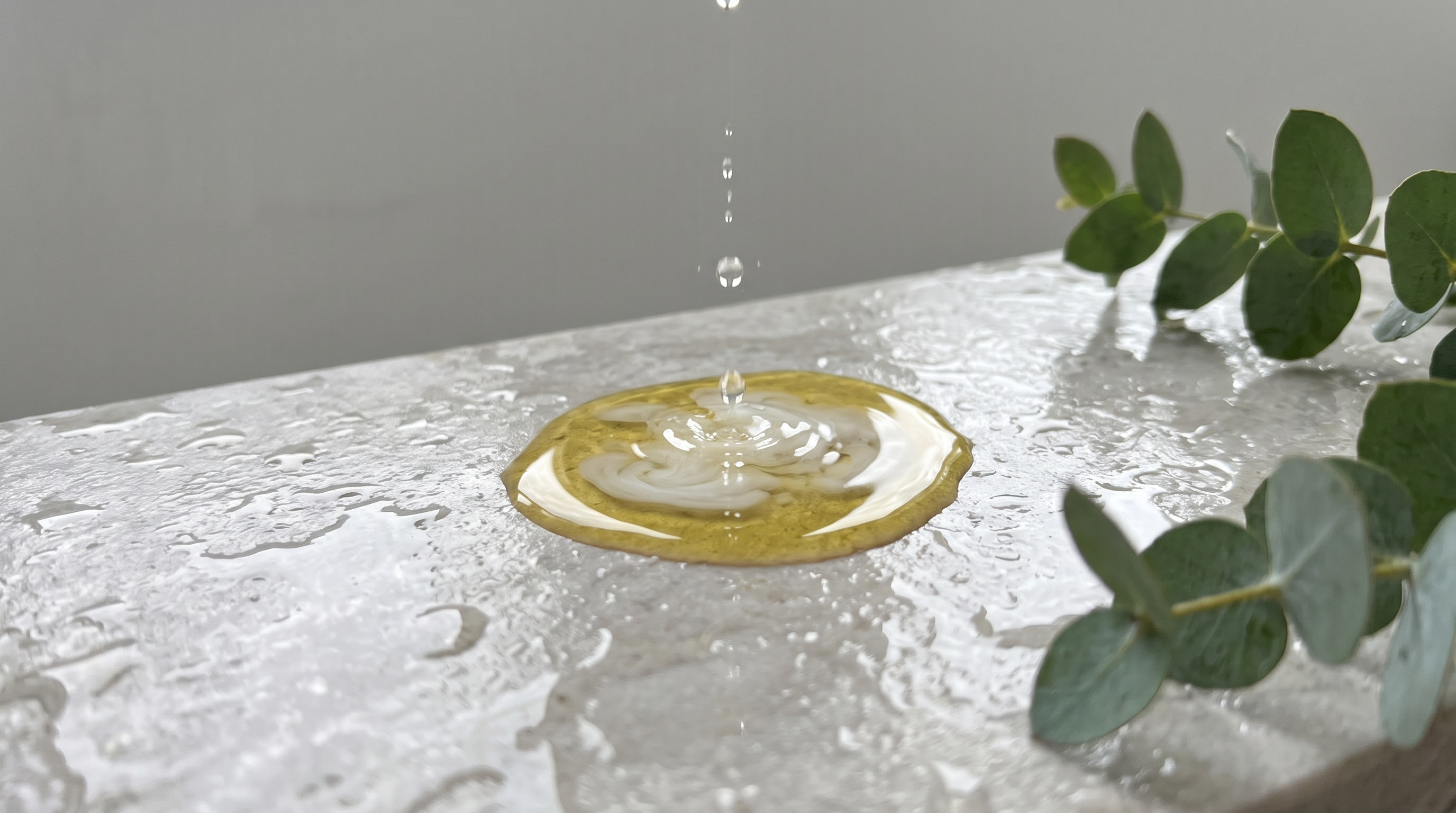
Shower oils have moved from French pharmacy shelves into almost every body care aisle, usually with a promise that sounds too good: wash and moisturize in one step. Squeeze one into your palm and it looks like a light oil. Add water and it turns milky, foams a little, and rinses off leaving skin soft rather than squeaky.
How long the soft feeling lasts depends on the formula and on what else you do after showering. Here is what a shower oil is, what the research says, and how to decide whether it earns a place in your routine.
What a Shower Oil Actually Is
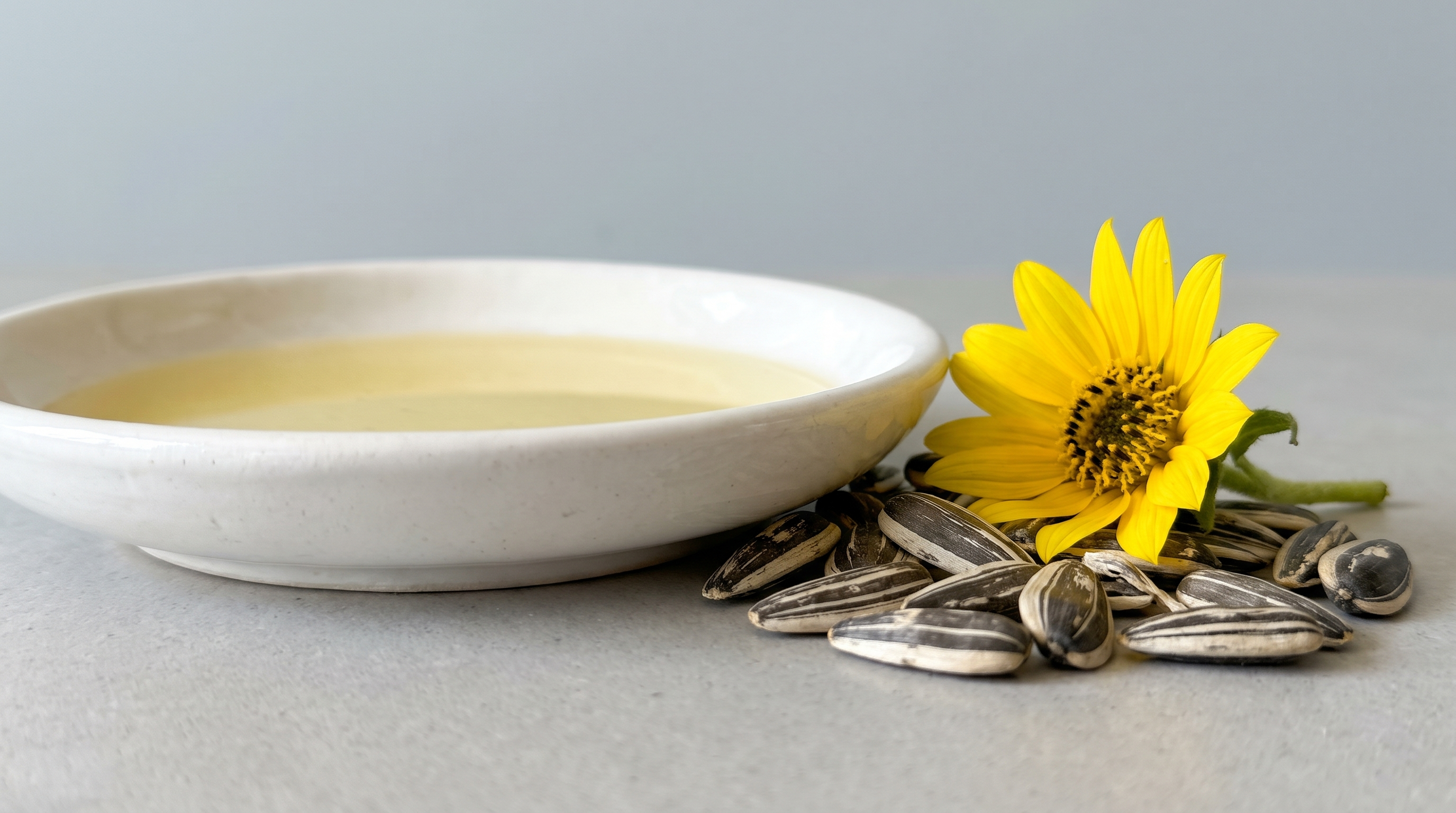
A shower oil is mostly oil, often sunflower, soybean, almond or mineral oil, blended with a small amount of mild surfactant. The surfactant is what makes it turn milky when it meets water: it breaks the oil into tiny droplets that can lift away sweat and grime, then rinse off. Part of the oil stays behind on the skin.
That makes it different from three products it often gets confused with:
- Body wash is mostly water and surfactant, with any oils as a minor ingredient.
- Body oil is a leave-on product you apply after showering. Our guide to body oils for dry skin covers those.
- Bath oil is poured into a tub and disperses through the water, coating skin as you soak.
Shower oil sits between a cleanser and a body oil. It cleans, but it is designed to strip as little as possible.
Your skin lost less water after 28 days of bath oil than with a regular cleanser in one Berlin study of volunteers with mildly dry skin.
Why Ordinary Washing Can Leave Skin Tight
The tight, dry feeling after a shower is not just in your head. A review of cleanser science explains that harsh surfactants bind to skin proteins and dissolve the lipids that hold the outer layer together, which leads to tightness, dryness, barrier damage, irritation and even itch [1]. A high pH makes it worse: the same authors found that alkaline solutions, even without any surfactant, made the outer skin layer swell and changed how its lipids behave.
Mild cleansers reduce that damage in two ways. They use gentler surfactants, and they include lipids and occlusives that replace some of what washing removes [1]. A shower oil pushes the second strategy as far as it will go. Your skin lost less water after 28 days of bath oil than with a regular cleanser in one Berlin study of volunteers with mildly dry skin.
What the Trials Found
There are few studies of shower oils by name, but bath oil trials test the same idea: wash with oil instead of a regular cleanser and see whether the skin barrier improves.
Adults and children with mild dry skin: a measurable benefit. In a Berlin trial, 60 volunteers with mild to moderate dry skin either washed with a commercial bath oil every other day or kept using their usual oil-free cleansers for 28 days. The oil group ended with significantly lower water loss through the skin, and their outer skin layer held more moisture. Roughness and skin pH did not change, and visible dryness showed a trend toward improvement in both groups [2].
Children with eczema already using moisturizer: no added benefit. The large BATHE trial in the UK gave 483 children with eczema either emollient bath additives or no bath additives for 12 months, while both groups kept using their usual leave-on moisturizers. Eczema control was essentially the same in both groups, well below the difference that would matter to patients [3]. The bath additive did not add anything on top of a good leave-on routine.
Your skin may gain little from a shower oil if you already moisturize after every shower, which is what a 12-month study of 483 children found.
Healthy babies bathed in oil four times a week: mixed results. In the Scandinavian PreventADALL study, infants given frequent oil baths looked less dry at 3 and 6 months, yet their skin lost slightly more water at 3 months than babies who had no oil baths [4]. Looking soft and functioning better are not always the same thing.
Put together, the evidence suggests a shower oil is most useful for people with mildly dry skin who do not reliably moisturize afterwards. Your skin may gain little from a shower oil if you already moisturize after every shower, which is what a 12-month study of 483 children found. For daily lotion users, a shower oil is a comfort upgrade rather than a necessity.
How to Choose a Shower Oil
- Fragrance-free or lightly scented. Fragrance is one of the most common causes of contact allergy from cosmetics. A European study of more than 3,000 randomly selected adults linked fragrance allergy to sensitive skin and to regular use of scented products, especially leave-on ones [5]. A shower oil leaves a film behind, so it behaves partly like a leave-on.
- A plain oil near the top of the list. Sunflower, soybean, almond, jojoba or mineral oil are all reasonable. Avoid products where the oil is near the bottom of the list, which means you are really buying a body wash.
- Mild surfactants. Look for gentle cleansers such as glucosides or sulfosuccinates rather than a high amount of sodium lauryl sulfate. If you would rather have a creamier, lathering product that still leaves some lipids behind on dry legs and arms, our guide to body washes for dry skin compares the main options side by side.
- For reactive skin, keep it short. A long list of botanical extracts adds more chances of irritation. Our sensitive skin body wash guide explains which ingredients to avoid.
How to Use It Without Slipping
- Wet your skin with lukewarm water, not hot.
- Pour a small amount into your palm, add a little water so it turns milky, and massage it over damp skin.
- Rinse briefly. You want to remove the dirt, not every trace of oil.
- Pat dry gently. Skip a body oil, since the shower oil already left a thin layer, but use a lotion or cream on very dry areas such as shins and elbows.
- Rinse the shower floor afterwards. Oil and tile are a slippery combination, especially for older adults.
Keep shower oil away from your face unless the label says it is suitable. Body formulas can be heavier than facial skin needs.
What It Will Not Do
A shower oil can make washing gentler and leave skin more comfortable, but it sits on the surface for a few hours at most. It does not change the collagen and elastin loss behind crepey skin on the arms and legs, or the fine lines on the neck and chest. Those changes respond to retinoids, which work deeper in the skin.
That creates a familiar conflict. People with dry skin often avoid retinol because conventional formulas sting, peel and redden. Many rely on solvents and penetration enhancers that loosen the skin barrier to push retinol in, which is the opposite of what a shower oil is trying to do.
Gentle Washing, Gentle Retinol
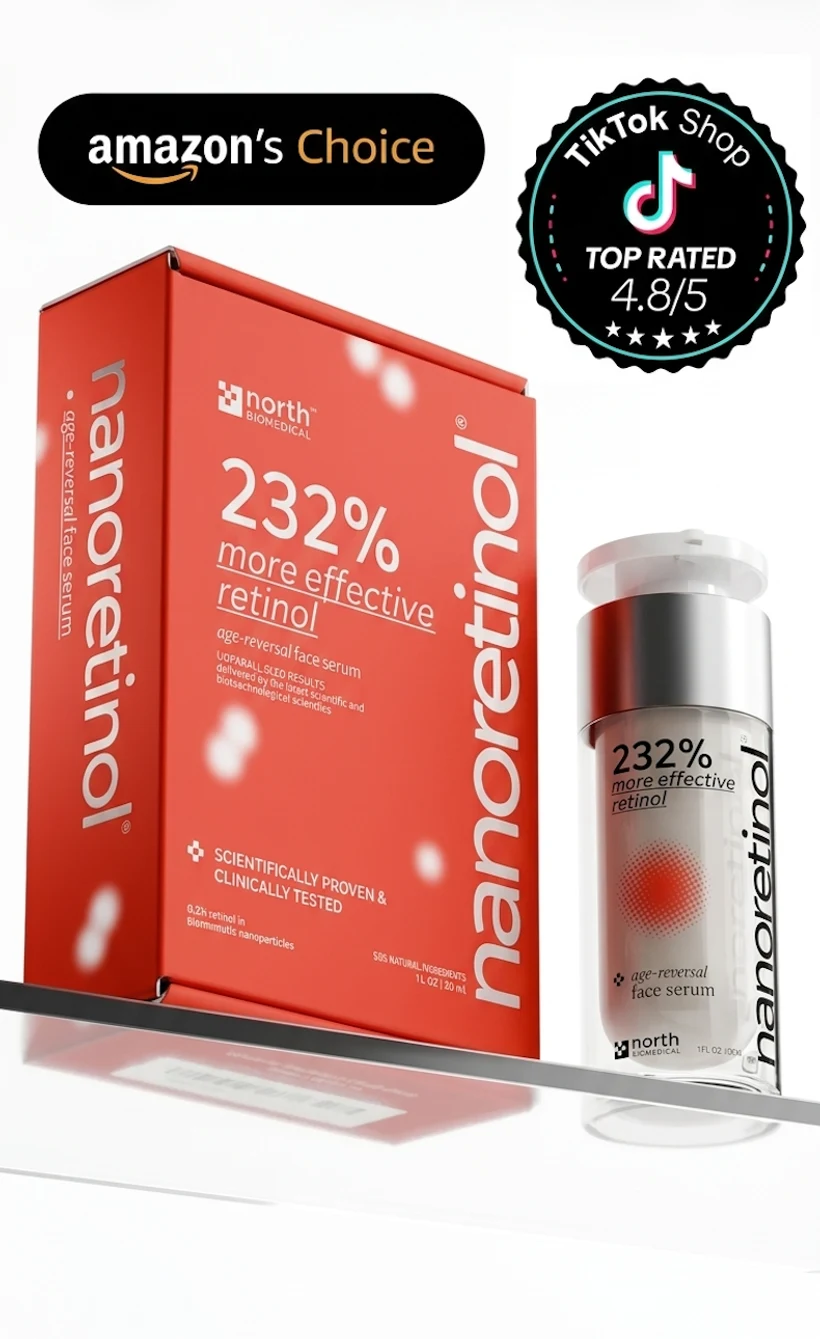
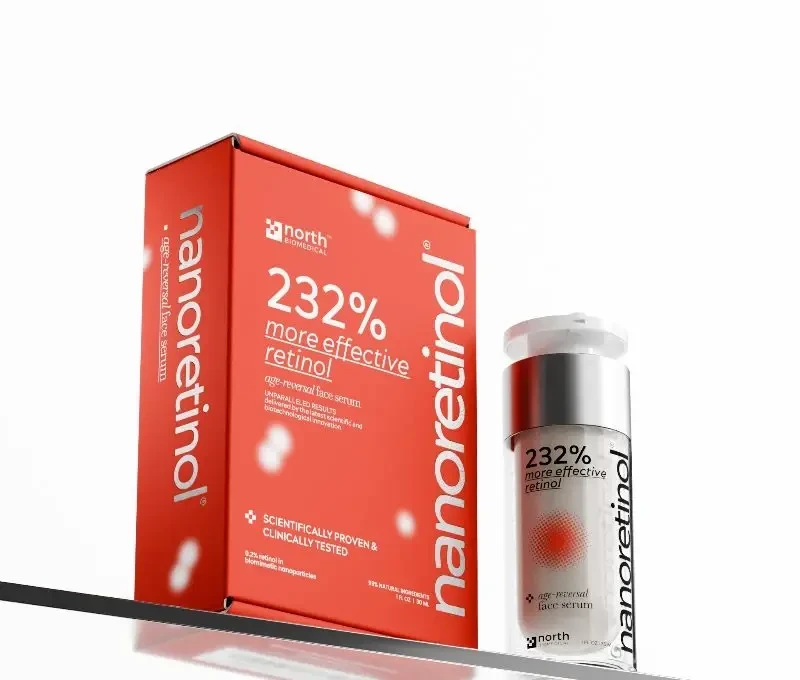
Nanoretinol takes a different route. Its retinol is carried in biomimetic lipid nanoparticles that pass through the skin barrier without breaking it down, in a light, water-based gel with 99% natural ingredients. In North Biomedical’s clinical study, it was 232% more effective than conventional retinol in collagen recovery, and 56 days of use brought a 61% increase in firmness and a 56% increase in elasticity [6]. Side effects were minimal and milder than with conventional retinol.
So keep the washing gentle, moisturize where you need it, and let a retinol that respects your barrier handle the aging changes no cleanser can reach. Use it at night, and wear sunscreen during the day.
References
- Ananthapadmanabhan KP, Moore DJ, Subramanyan K, Misra M, Meyer F. “Cleansing without compromise: the impact of cleansers on the skin barrier and the technology of mild cleansing.” Dermatologic Therapy. 2004;17(Suppl 1):16-25. doi:10.1111/j.1396-0296.2004.04s1002.x
- Kottner J, Kanti V, Dobos G, Hahnel E, Lichterfeld-Kottner A, Richter C, Hillmann K, Vogt A, Blume-Peytavi U. “The effectiveness of using a bath oil to reduce signs of dry skin: A randomized controlled pragmatic study.” International Journal of Nursing Studies. 2017;65:17-24. doi:10.1016/j.ijnurstu.2016.10.010
- Santer M, Ridd MJ, Francis NA, Stuart B, Rumsby K, Chorozoglou M, Becque T, Roberts A, Liddiard L, Nollett C, Hooper J, Prude M, Wood W, Thomas KS, Thomas-Jones E, Williams HC, Little P. “Emollient bath additives for the treatment of childhood eczema (BATHE): multicentre pragmatic parallel group randomised controlled trial of clinical and cost effectiveness.” BMJ. 2018;361:k1332. doi:10.1136/bmj.k1332
- Rehbinder EM, Wärnberg Gerdin S, Hoyer A, Bradley M, Lødrup Carlsen KC, Granum B, Hedlin G, Jonassen CM, Leblanc M, Nordlund B, Rudi K, Skjerven HO, Staff AC, Vettukattil R, Söderhäll C. “Frequent oil baths and skin barrier during infancy in the PreventADALL study.” British Journal of Dermatology. 2024;191(1):49-57. doi:10.1093/bjd/ljae091
- van Amerongen CCA, Ofenloch RF, Cazzaniga S, Elsner P, Gonçalo M, Naldi L, Svensson Å, Bruze M, Schuttelaar MLA. “Skin exposure to scented products used in daily life and fragrance contact allergy in the European general population - The EDEN Fragrance Study.” Contact Dermatitis. 2021;84(6):385-394. doi:10.1111/cod.13807
- North Biomedical LLC. “Nanoretinol vs. Conventional Retinol: Efficacy in Collagen and Elastin Recovery.” Clinical Study Summary, 2024. Study summary