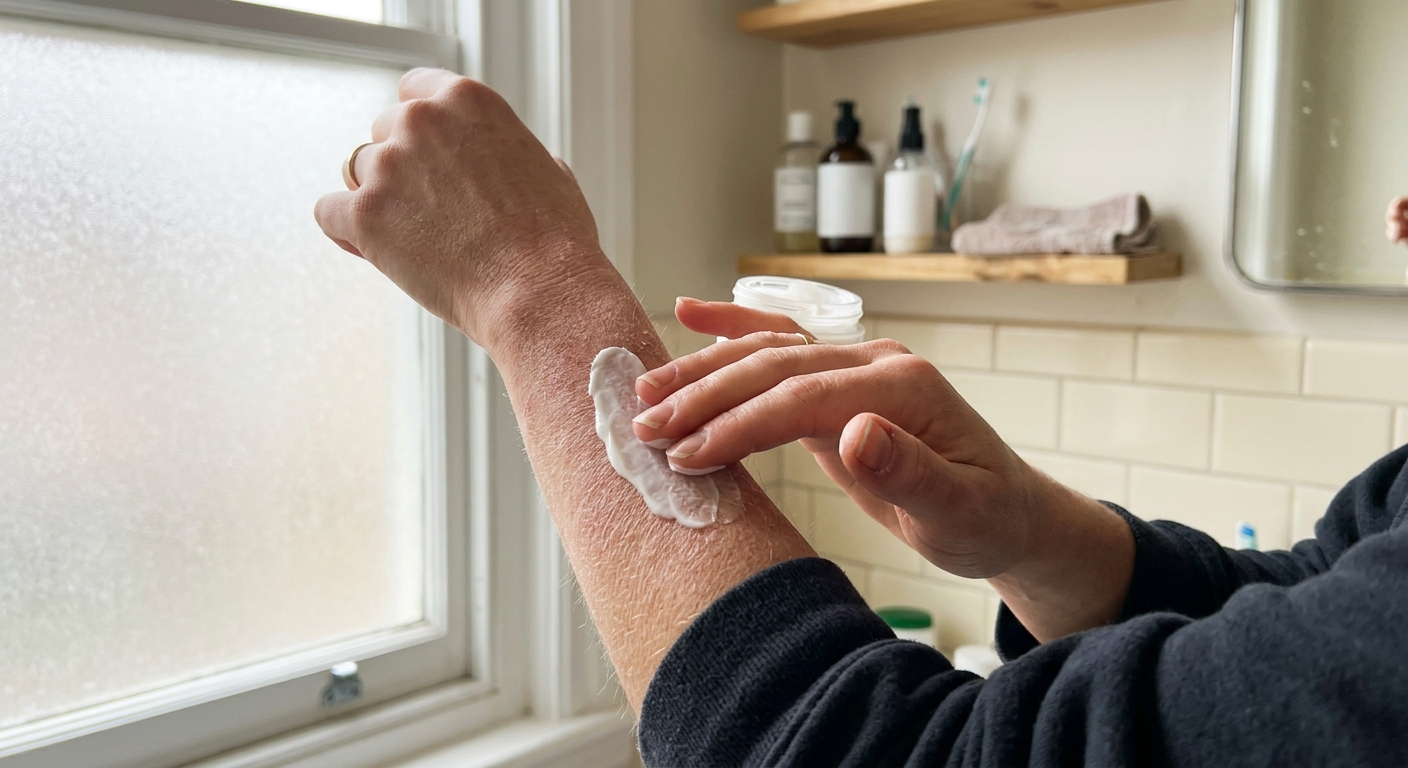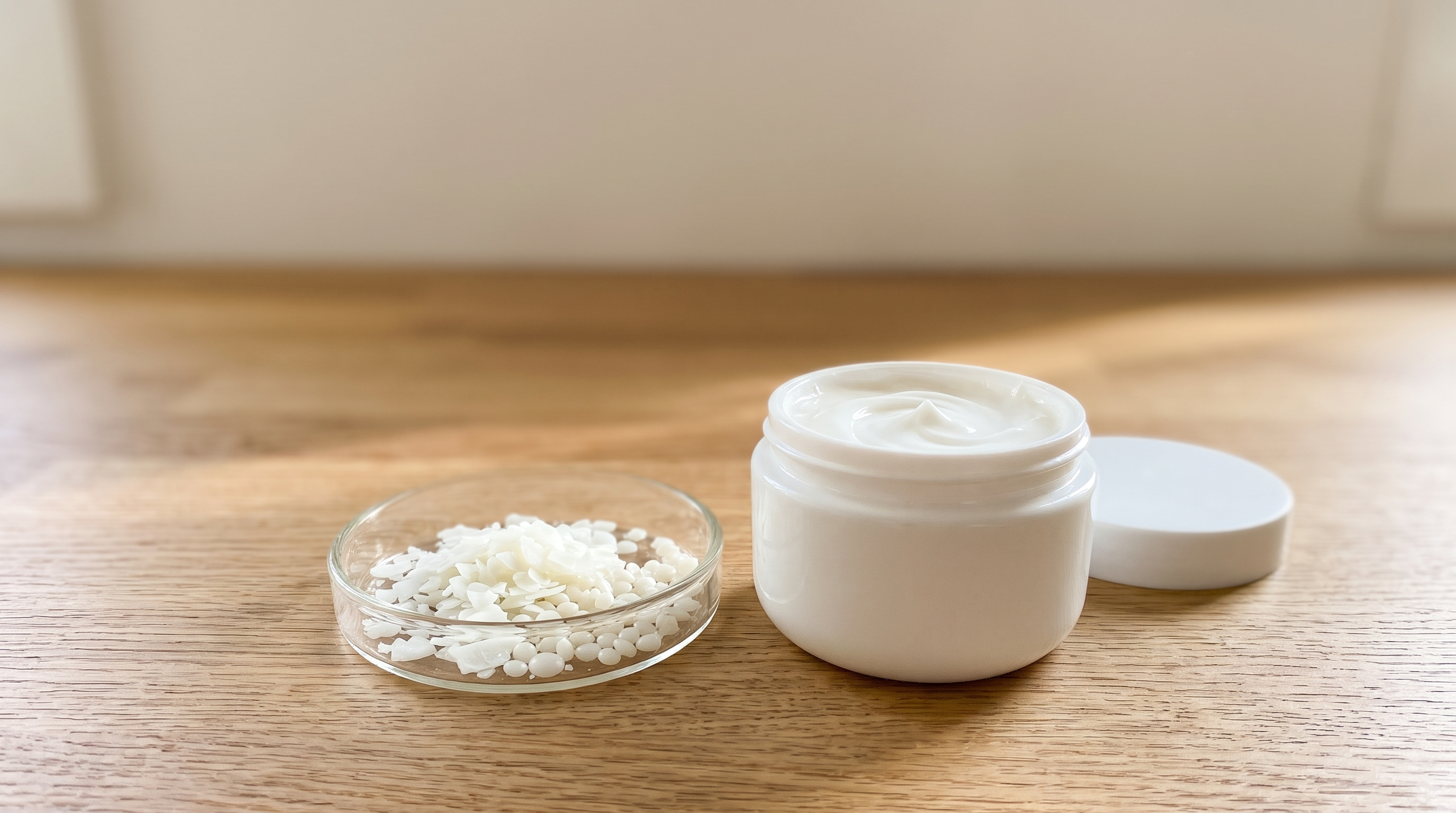
Mineral Oil for Skin: Pore-Clogger or Underrated Moisturizer?
What cosmetic-grade mineral oil is, what the studies show about clogged pores, safety and dry skin, and how to use it without the greasy aftermath
Few skincare ingredients have a worse reputation than mineral oil. It comes from petroleum, it sounds industrial, and for years it has topped “ingredients to avoid” lists that warn it clogs pores, suffocates the skin and seeps into the body. Many brands now advertise themselves as mineral-oil-free as if that were a health claim.
The research tells a calmer story. Cosmetic-grade mineral oil is one of the most tested and best tolerated moisturizing ingredients there is, and for very dry skin it often does as well as the plant oils that replaced it on the shelf. It is not perfect for everyone, though. Here is what the evidence shows and how to use it.
What Mineral Oil Actually Is
Mineral oil, listed on labels as paraffinum liquidum, liquid paraffin or simply mineral oil, is a clear, odorless mixture of saturated hydrocarbons refined from petroleum. Baby oil is mostly mineral oil with a little fragrance. Petrolatum, the base of petroleum jelly, is its semi-solid cousin.
The grade matters. The oils used in skincare and medicine are highly refined to remove the impurities found in crude and industrial oils, which is why the safety concerns that apply to engine oil do not carry over to a bottle of baby oil. Cosmetic mineral oils are made of long hydrocarbon chains, more than sixteen carbons each [1].
Because it does not react with oxygen the way many plant oils do, mineral oil does not turn rancid, carries almost no fragrance and rarely triggers allergies. Those qualities are why it has stayed in moisturizers for well over a century [2].
How It Moisturizes
Mineral oil works mainly as an emollient and a light occlusive. It softens rough skin and forms a thin layer that slows the water escaping through the surface. Reviews of the evidence describe it improving skin softness and barrier function better than some other emollients in standard tests, and comparing favorably with many vegetable oils on how well the outer layer swells with water [2].
Your skin can get the same hydration boost from plain mineral oil after 2 weeks as from virgin coconut oil, which costs far more.
It is lighter than petroleum jelly, though. When researchers used a laser technique to look inside the skin after applying different oils, mineral oil and two plant oils sank into the top layers of the stratum corneum in the same way and produced a modest 10 to 20 percent swelling of that layer. Petrolatum produced 40 to 60 percent [3]. In practice, mineral oil sits between a light lotion and a true ointment for dry skin: richer than a cream, less sealing than a jelly.
Mineral Oil Versus Plant Oils
The popular assumption is that a natural oil must be gentler. The trials do not back that up.
In a randomized trial of 34 people with dry, scaly skin on their legs, virgin coconut oil and mineral oil applied twice a day for two weeks worked about equally well. Both raised skin hydration and surface lipids, neither damaged the barrier, and no one had a reaction [4]. Your skin can get the same hydration boost from plain mineral oil after 2 weeks as from virgin coconut oil, which costs far more.
Some plant oils do worse. Olive oil is rich in oleic acid, which can loosen the lipid layers between skin cells. In one study, adults who put olive oil on one forearm twice a day saw their skin barrier weaken and mild redness develop within four weeks, while sunflower seed oil left the barrier intact and improved hydration [5]. Mineral oil does not contain these fatty acids, so it does not loosen the barrier the same way.
That does not make plant oils bad. Sunflower, jojoba and squalane are excellent. It means “natural” is not a safety rating, and mineral oil deserves a fair hearing.
Does Mineral Oil Clog Pores?
This is the claim that drives most of the fear. It comes largely from older tests on rabbit ears, which form blackheads far more easily than human skin, using raw ingredients at full strength. Some early lists flagged lower grades of mineral oil, and the warning stuck.
Your skin keeps cosmetic mineral oil in its top layers, which means far less of it gets into your body than the warning lists claim.
Later reviews concluded that highly refined, cosmetic-grade mineral oil is not comedogenic [6]. When researchers tested finished products directly on the backs of people prone to blackheads, products containing ingredients from those old lists were often not pore-clogging at all [7]. What matters is the whole formula.
Anyone with oily, acne-prone skin may still dislike a heavy oil on the face, simply because it adds shine and slip they do not need. But there is no good evidence that cosmetic mineral oil in a well-made product causes breakouts on its own.
Is It Safe?
The most persistent worry is that mineral oil soaks through the skin and builds up in the body. A review of 13 human, animal and lab studies found that cosmetic mineral oils and waxes stay mostly in the outer skin layer, with only a small fraction reaching deeper, and no evidence that they become available throughout the body [1]. Your skin keeps cosmetic mineral oil in its top layers, which means far less of it gets into your body than the warning lists claim.
It is also gentle enough that doctors have long used it on infant skin and for very dry, eczema-prone skin. The main practical drawback is its feel: too much leaves a greasy film on clothes and pillowcases.
How to Use Mineral Oil Well
- Apply to damp skin. Mineral oil adds no water of its own. Smoothed over skin that is still damp from the shower, it seals that water in.
- Use a few drops. A thin layer is enough. If skin still looks shiny after five minutes, you used too much.
- Pair it with a humectant. On very dry skin, put on a glycerin or hyaluronic acid product first, or choose an emollient cream that already blends mineral oil with humectants.
- Try it as a makeup remover. Mineral oil dissolves makeup and sunscreen well. Massage it in, then wash it off with a gentle cleanser, the same principle as the products in our best cleansing oil guide.
- Save the heaviest use for body, hands and heels. These areas tolerate rich oils far better than an oily T-zone.
Mineral Oil and Retinol
Many people first reach for a rich oil when retinol leaves their skin tight and flaky. A few drops of mineral oil or a simple occlusive moisturizer can make that phase more comfortable, especially in winter. Apply your retinol first, wait a minute, and seal it in.
But burying irritation under heavy layers treats the symptom, not the cause. Much of the redness and peeling people blame on retinol comes from how it is delivered. Many conventional formulas use solvents and petroleum derivatives that loosen the skin barrier so the retinol can get through, and that is the damage the oil is then asked to fix. Our guide to retinol for sensitive skin explains the other ways to soften that adjustment.
Nanoretinol avoids the problem at the source. Its 0.2 percent retinol is carried inside biomimetic lipid nanoparticles that the skin recognizes as its own, so the retinol crosses the barrier without breaking it down. It is a light, water-based gel that leaves a matte finish, and in North Biomedical’s study it was 232 percent more effective in collagen recovery and 73 percent more effective in elastin recovery than conventional retinol, with minimal side effects that were milder than those of regular retinol [8]. Use it at night, add a few drops of oil afterwards only if your skin still feels dry, and wear sunscreen the next day.
A Fair Verdict
Cosmetic-grade mineral oil is not a villain. It is a cheap, stable, low-allergy moisturizer that performs as well as many trendier oils on dry skin and is well studied for safety. If you have very oily skin or simply dislike the feel, skip it. If your skin is dry, flaky or irritated this winter, a few drops on damp skin may be the least glamorous fix that actually works.
References
- Petry T, Bury D, Fautz R, et al. “Review of data on the dermal penetration of mineral oils and waxes used in cosmetic applications.” Toxicology Letters. 2017;280:70-78. doi:10.1016/j.toxlet.2017.07.899
- Rawlings AV, Lombard KJ. “A review on the extensive skin benefits of mineral oil.” International Journal of Cosmetic Science. 2012;34(6):511-518. doi:10.1111/j.1468-2494.2012.00752.x
- Stamatas GN, de Sterke J, Hauser M, von Stetten O, van der Pol A. “Lipid uptake and skin occlusion following topical application of oils on adult and infant skin.” Journal of Dermatological Science. 2008;50(2):135-142. doi:10.1016/j.jdermsci.2007.11.006
- Agero AL, Verallo-Rowell VM. “A randomized double-blind controlled trial comparing extra virgin coconut oil with mineral oil as a moisturizer for mild to moderate xerosis.” Dermatitis. 2004;15(3):109-116. doi:10.2310/6620.2004.04006
- Danby SG, AlEnezi T, Sultan A, et al. “Effect of olive and sunflower seed oil on the adult skin barrier: implications for neonatal skin care.” Pediatric Dermatology. 2013;30(1):42-50. doi:10.1111/j.1525-1470.2012.01865.x
- DiNardo JC. “Is mineral oil comedogenic?” Journal of Cosmetic Dermatology. 2005;4(1):2-3. doi:10.1111/j.1473-2165.2005.00150.x
- Draelos ZD, DiNardo JC. “A re-evaluation of the comedogenicity concept.” Journal of the American Academy of Dermatology. 2006;54(3):507-512. doi:10.1016/j.jaad.2005.11.1058
- North Biomedical LLC. “Nanoretinol vs. Conventional Retinol: Efficacy in Collagen and Elastin Recovery.” Clinical Study Summary, 2024. Study summary