Best Products for Large Pores: What Actually Changes How a Pore Looks
Three different things make a pore read as large, and most products only touch one of them
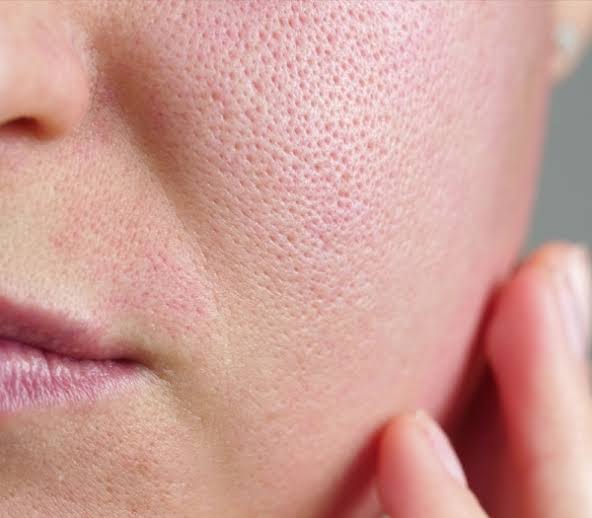
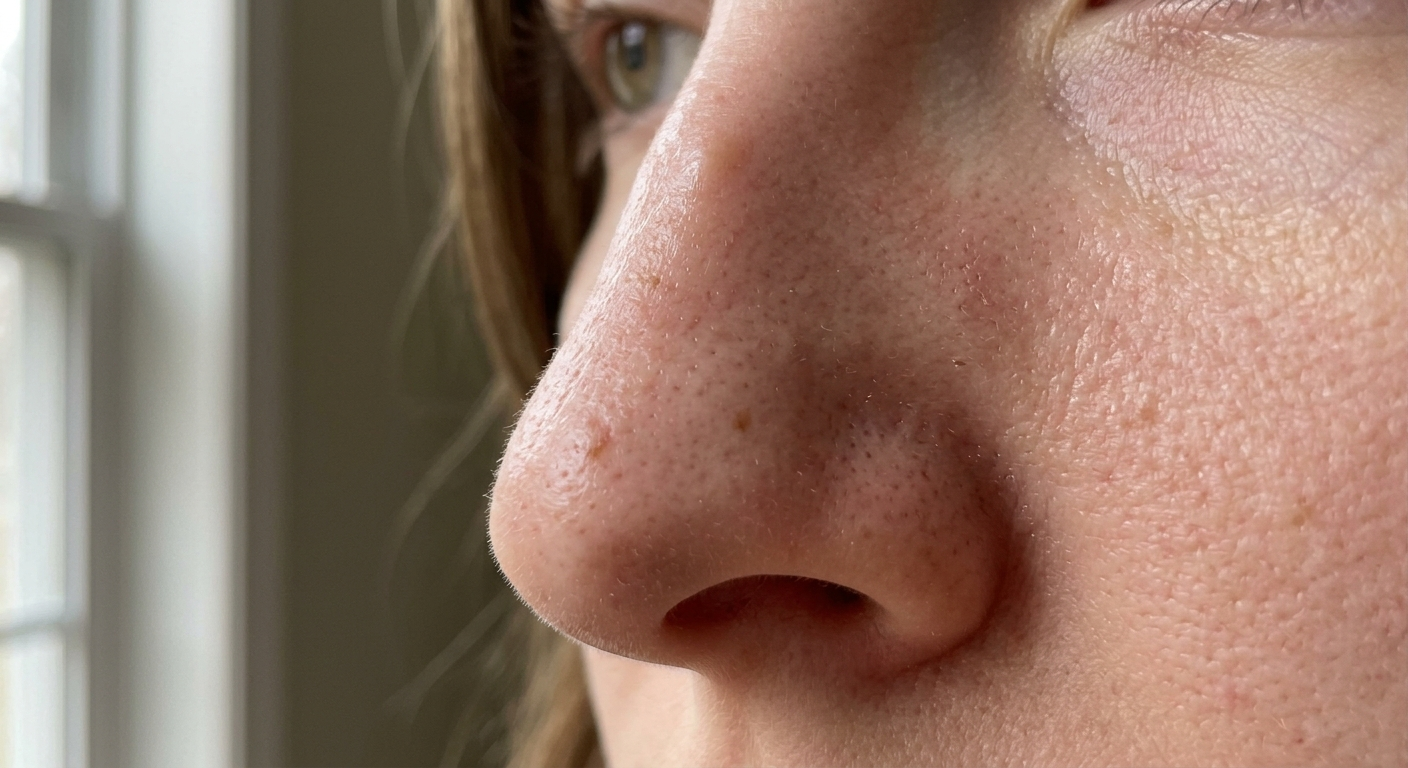
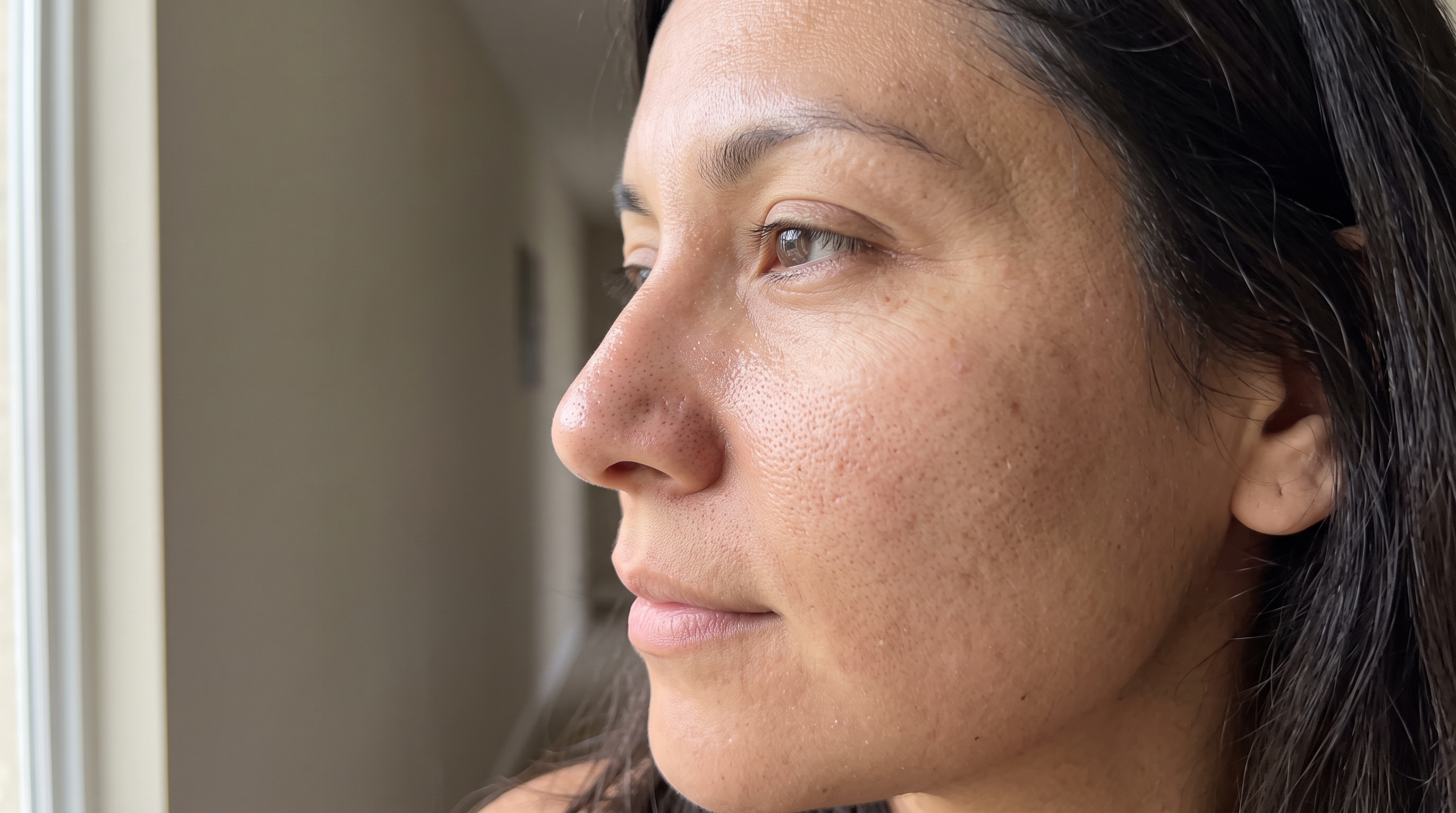
Every shelf in the pore aisle sells the same implied promise, which is that the opening on your nose can be made smaller. It cannot. A pore is the surface opening of a hair follicle, with no muscle around it and no mechanism for closing. What can change, sometimes dramatically, is how visible that opening is, and that depends on three separate physical variables that most product lines only address one of.
Knowing which of the three is driving your particular case is the difference between a product that works and a drawer full of toners.
Three Things Make a Pore Read as Large
The benchmark dermatology review of enlarged facial pores identifies three main clinical causes: high sebum excretion, decreased elasticity in the tissue around the follicle, and increased hair follicle volume [1]. They are genuinely independent. Two people with identically sized follicles can have very different looking skin depending on how much oil is being produced and how well the surrounding dermis is holding the opening in shape.
That framing matters commercially, because the three causes respond to completely different ingredients on completely different timescales. A product that addresses sebum will do nothing for a pore that looks large because the dermis around it has slackened, and it will look like the product failed.
Sebum: The Cause Everyone Treats
Oil output is the variable with the most direct relationship to pore size. In a study of sixty subjects, sebum output correlated most strongly with measured pore size, at r=0.47 in men and r=0.38 in women, with pore size also increasing with age and in men generally [2]. This is why pores look larger in the T-zone, larger in summer, and larger on oilier skin.
Niacinamide is the best-evidenced topical lever here. In a double-blind, placebo-controlled trial of a hundred subjects, 2% topical niacinamide significantly lowered the sebum excretion rate at both two and four weeks against placebo [3]. That is a modest, reliable, well-tolerated effect, and niacinamide’s low irritation profile makes it easy to run alongside everything else.
Every shelf in the pore aisle sells the same implied promise, which is that the opening on your nose can be made smaller.
Salicylic acid works on the same region from a different angle. Being lipophilic, it partitions into the follicle and acts on the keratin plug rather than on the oil itself, and controlled work on salicylic acid preparations shows reductions in comedonal lesion counts consistent with that comedolytic action [4]. A plugged follicle is a distended follicle, so clearing the plug reduces the apparent diameter. Our guide to clogged pores covers that mechanism in more detail, and the reason a product’s “non-comedogenic” badge predicts so little about whether it will plug a follicle is set out in our guide to the non-comedogenic moisturizer label.
The Collagen Ring Nobody Advertises
The third cause is the one almost no pore product is built around, and it is the reason pore appearance worsens with age even in people whose oil production has fallen.
Each follicle sits inside a ring of dermal collagen and elastic fibres that holds its opening in shape. Measure that support directly and the relationship shows up: using a Cutometer, the elasticity parameter R7 was negatively correlated with large pores at r=-0.337, while R9, a measure of tissue fatigue, was positively correlated at r=0.54 [5]. In plain terms, skin with poorer elastic recovery has more visible pores, independent of how oily it is.
This explains a pattern that frustrates a lot of people: dry, mature skin with obvious pores. Oil control is the wrong tool for that face entirely, and using it makes things worse by compromising a barrier that is already struggling. What that skin needs is dermal support, which brings the conversation to retinoids.
What Each Category Actually Does
Topical retinoids are the only category with evidence across more than one of the three causes. They normalise follicular keratinisation, which addresses plugging, and they stimulate dermal collagen, which addresses the slackened ring. In a multicentre randomised double-blind trial of 568 patients over twenty-four weeks, tazarotene 0.1% cream produced significantly greater improvement in apparent pore size than vehicle, with benefit appearing within the first few weeks [6]. That dual action, working on the follicle lining and the surrounding dermis at once, is why retinoids consistently outperform single-mechanism products here. The underlying process is the same skin cell turnover that drives most retinoid benefits.
If your skin is oily and your pores are worst in the T-zone, a 2% to 5% niacinamide serum plus a salicylic acid product a few nights a week covers both of the causes you have.
Niacinamide handles sebum reliably and gently, as above, and is a sensible partner rather than a solo answer.
Salicylic acid clears the plug and keeps it clear, with the effect lasting only as long as you keep using it.
Clay masks, astringents, and pore-minimising toners are where the money usually goes and where the evidence is weakest. A controlled assessment of a clay mask in oily and acne-prone skin found measurable reductions in sebum and in acne lesions, but instrumented measurement of pore area showed no significant change [7]. The tightened feeling is real. The structural change is not, and it fades within hours of washing.
Building a Shortlist
Work backwards from your face. If your skin is oily and your pores are worst in the T-zone, a 2% to 5% niacinamide serum plus a salicylic acid product a few nights a week covers both of the causes you have. If your skin is normal or dry and your pores have become more obvious over the last decade, sebum control is the wrong target and a retinoid is the primary purchase, with everything else optional. If both descriptions fit, start with the retinoid and layer niacinamide alongside it, since the two are complementary and neither destabilises the other.
Give any of these twelve weeks before judging. Sebum effects show within a month, but the collagen side of the equation moves on a much slower clock. Our guide on how to shrink pores covers the routine mechanics of running these together.
Why Delivery Decides the Result
There is a practical catch in recommending retinoids for pores. The people with the most visible pores are frequently the people who tolerate conventional retinol worst, either because they are already using an exfoliating acid or because their barrier is compromised from years of oil-stripping products. Conventional retinol formulations make that worse by design, since they rely on solvents and petroleum derivatives that disrupt the epithelial barrier to get the molecule through.
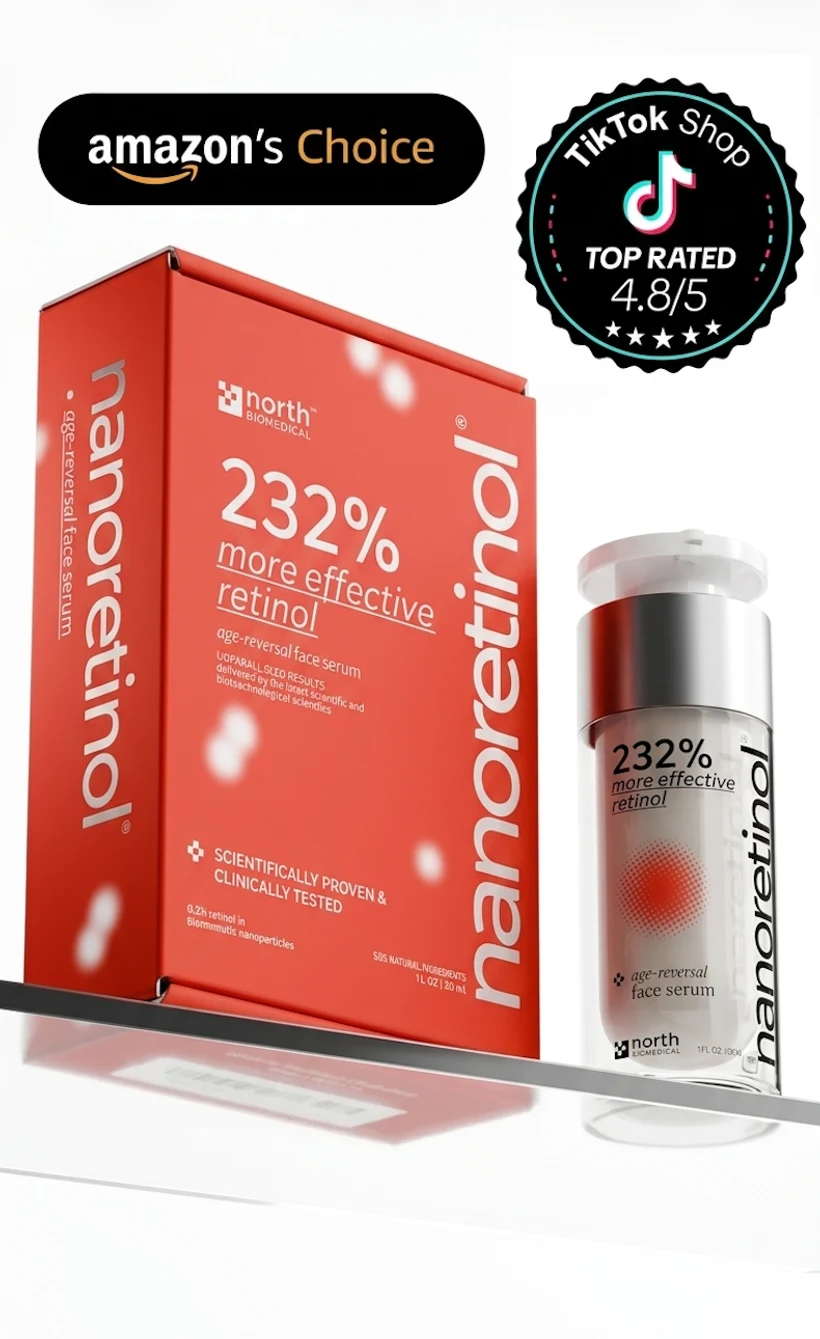
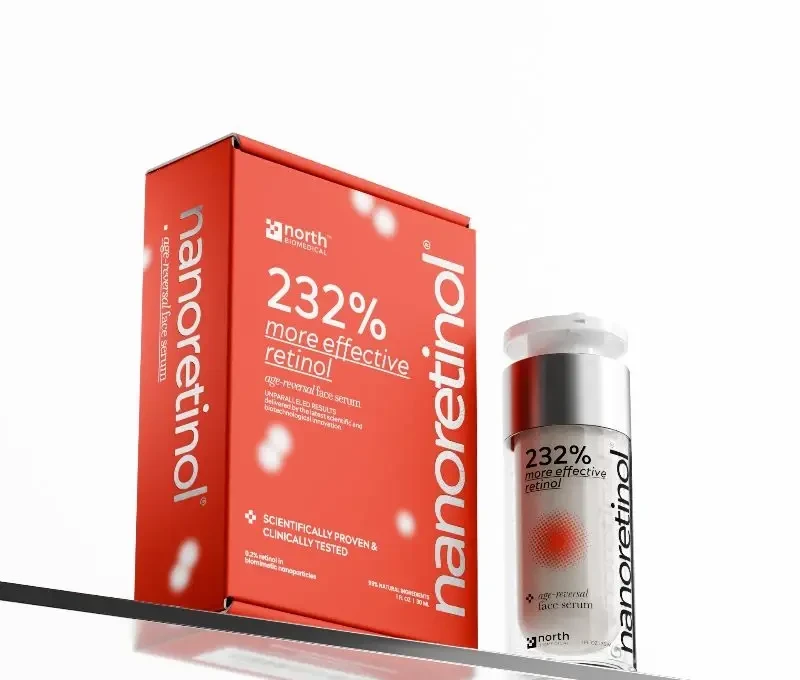
Nanoretinol solves the delivery problem without that trade-off. Its 0.2% retinol is encapsulated in biomimetic lipid nanoparticles that the skin recognises as its own and admits through the barrier intact, which is how it achieves 232% more effective collagen recovery and 73% more effective elastin recovery than conventional retinol while proving significantly gentler on skin cells. For pore appearance, elastin recovery is not a footnote. It is the second of the three causes, and it is the one that no toner, mask, or oil-control serum has ever been able to reach.
Setting the Bar
Judge any pore product against a fair standard. It will not close an opening, and a product that claims to is either describing a temporary swelling effect or overselling. What a good one does is reduce oil load, keep the follicle clear, and rebuild the dermal support that lets the opening sit tight rather than gape. Buy for whichever of those three you actually have, and give it a season rather than a fortnight.
References
- Lee SJ, Seok J, Jeong SY, Park KY, Li K, Seo SJ. “Facial Pores: Definition, Causes, and Treatment Options.” Dermatologic Surgery. 2016;42(3):277-285. doi:10.1097/DSS.0000000000000657
- Roh M, Han M, Kim D, Chung K. “Sebum Output as a Factor Contributing to the Size of Facial Pores.” British Journal of Dermatology. 2006;155(5):890-894. doi:10.1111/j.1365-2133.2006.07465.x
- Draelos ZD, Matsubara A, Smiles K. “The Effect of 2% Niacinamide on Facial Sebum Production.” Journal of Cosmetic and Laser Therapy. 2006;8(2):96-101. doi:10.1080/14764170600717704
- Zander E, Weisman S. “Treatment of Acne Vulgaris with Salicylic Acid Pads.” Clinical Therapeutics. 1992;14(2):247-253. PMID: 1535287
- Hameed A, Akhtar N, Khan HMS, Asrar M. “Skin Sebum and Skin Elasticity: Major Influencing Factors for Facial Pores.” Journal of Cosmetic Dermatology. 2019;18(6):1968-1974. doi:10.1111/jocd.12933
- Kang S, Krueger GG, Tanghetti EA, Lew-Kaya D, Sefton J, Walker PS, Gibson JR. “A Multicenter, Randomized, Double-Blind Trial of Tazarotene 0.1% Cream in the Treatment of Photodamage.” Journal of the American Academy of Dermatology. 2005;52(2):268-274. doi:10.1016/j.jaad.2004.06.021
- Zhang X, Zhang Z, Tao H, He X, Hsu K, Wang W, Fang X, Steel A. “Comprehensive Assessment of the Efficacy and Safety of a Clay Mask in Oily and Acne Skin.” Skin Research and Technology. 2023;29(11):e13513. doi:10.1111/srt.13513