
Nose Strips: Do Pore Strips Work, and What Do They Really Pull Out?
A nose strip gives you a satisfying look at what came out of your pores. Here is what those plugs actually are, why they come back, and what keeps pores clearer for longer
Peeling off a nose strip and inspecting the forest of tiny plugs stuck to it is one of the most oddly satisfying moments in skincare. It also raises an obvious question. If a strip can pull that much out of your pores, why does your nose look the same again a couple of weeks later?
The answer lies in what those plugs are, and in where they come from. This guide explains how nose strips work, what they can and cannot do, how to use one without irritating your skin, and which treatments actually change the way your pores fill up.
What is actually inside a nose pore
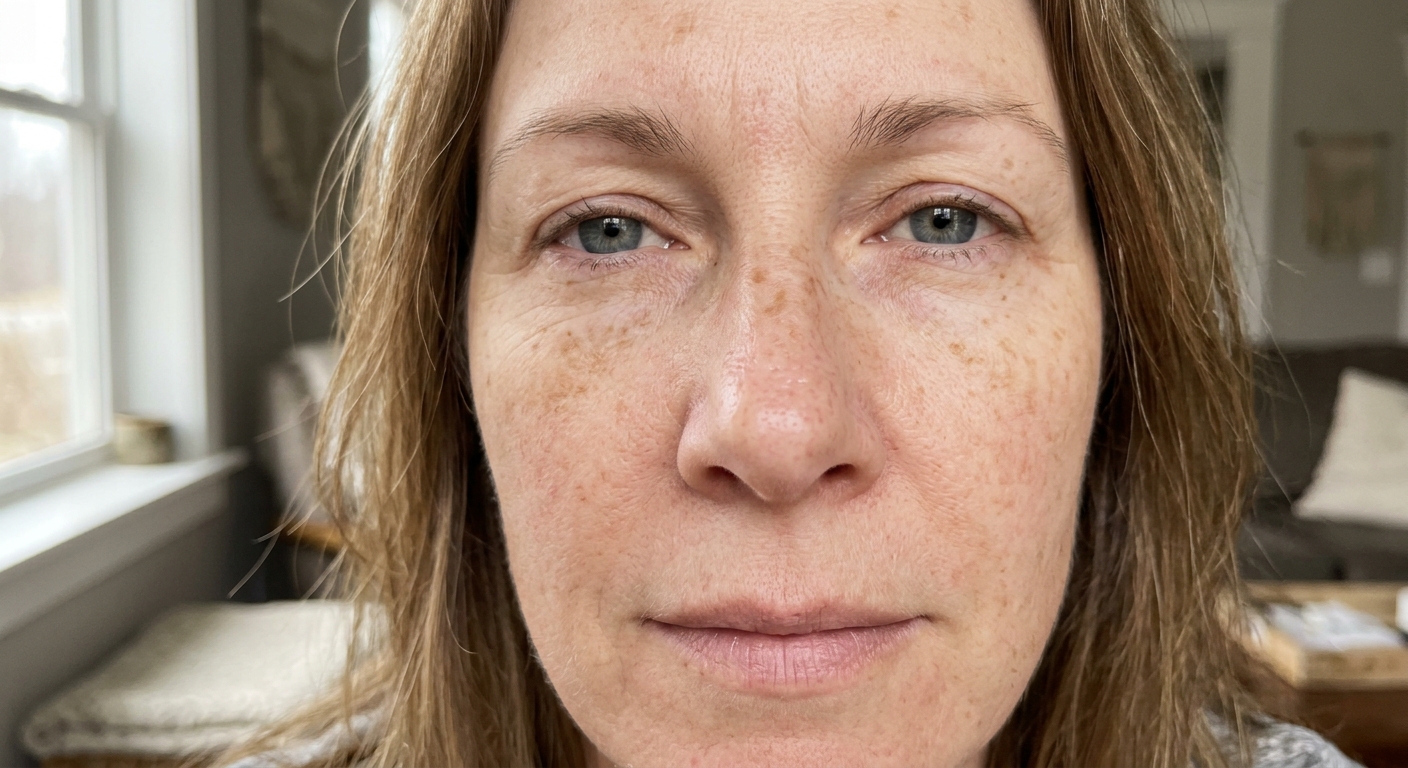
What we call pores are the openings of hair follicles, each attached to an oil gland. The nose has an unusually high number of them. When researchers mapped follicle density across the face using a skin-surface biopsy technique, they found a clear gradient: follicles and oil output were concentrated in the centre of the face and thinned out towards the sides [1].
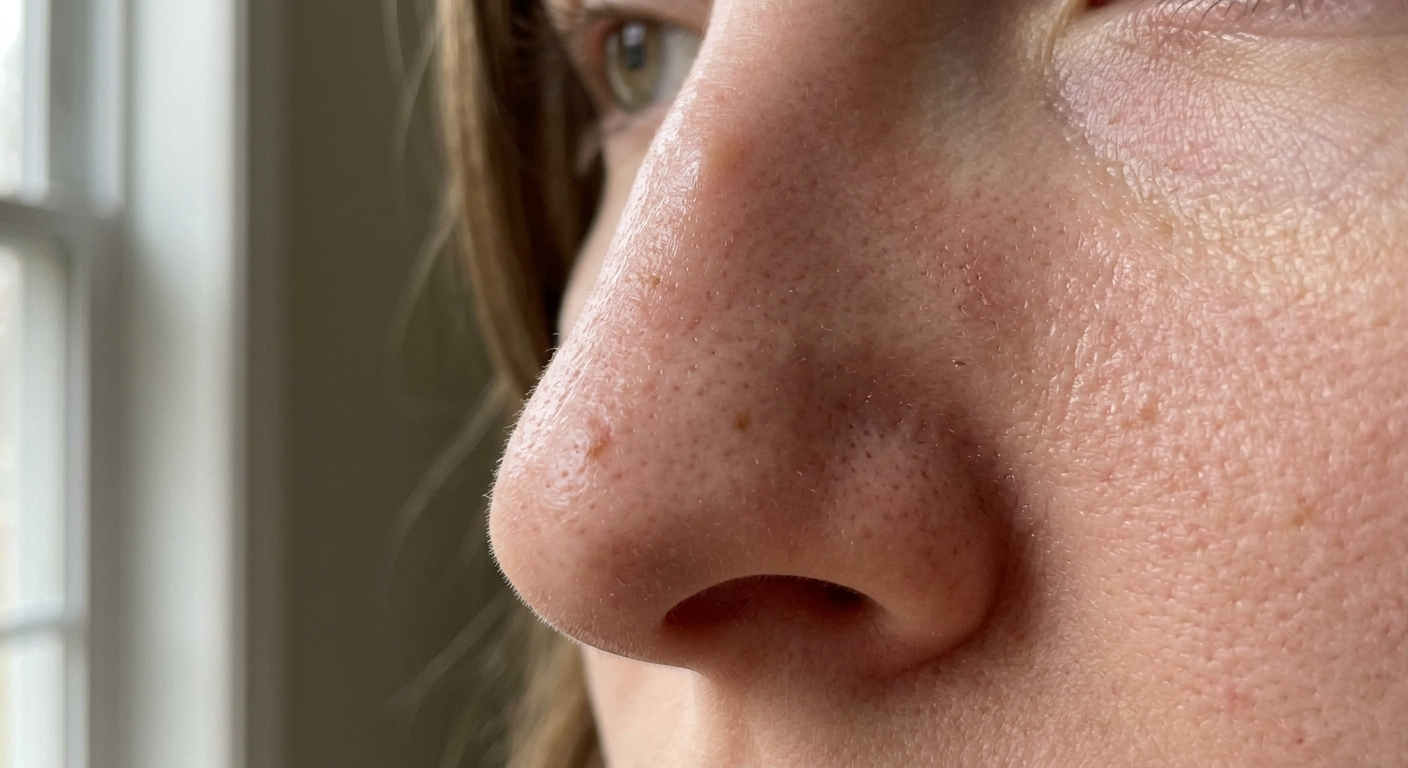
Each follicle opening constantly collects a mix of oil and shed skin cells. On the nose, most of what you see falls into one of two groups:
- Sebaceous filaments. These are normal, thin columns of oil and cells that line every follicle. They look like grey or beige dots, fill the pore evenly, and are not a skin problem. Our guide to sebaceous filaments covers them in detail.
- Blackheads (open comedones). These are true plugs, where sticky skin cells have built up inside the follicle and the exposed surface has darkened as it meets the air.
Dermatologists study these plugs with a technique that works much like a nose strip. A drop of cyanoacrylate glue is pressed onto the skin with a glass slide, left to set, and peeled away, taking the top of the follicle contents with it [2]. Researchers use the plugs collected this way to count microcomedones, the invisible early stage of a blackhead, and to measure how treatments change them [3].
Your nose strip lifts a crop of plugs in 10 minutes, but the pores begin refilling at once, and within 2 or 3 weeks most look much as they did before.
How a nose strip works
A pore strip is a fabric backing coated with an adhesive polymer that becomes tacky when wet. You wet your nose, press the strip on, and wait while it dries and grips the tops of the plugs. When you peel it off, anything that has bonded to the polymer more firmly than it is held by the pore comes away.
Your nose strip lifts a crop of plugs in 10 minutes, but the pores begin refilling at once, and within 2 or 3 weeks most look much as they did before.
That is not a flaw in the product. A strip only removes what sits at the surface. The oil gland underneath keeps producing sebum, and the follicle lining keeps shedding cells, so the column rebuilds. Most of what comes out on a strip is sebaceous filaments rather than deep blackheads, which is why the results look dramatic but fade quickly.
Are pore strips bad for your skin?
For most people, occasional use is fine. The risks come from frequency and from skin that is already sensitive:
- Redness and irritation. The adhesive also lifts a thin layer of surface skin cells. Used often, that can leave the nose red, dry and stinging.
- Broken capillaries. Anyone with visible small blood vessels or redness on the nose should skip the pulling force altogether.
- Not for inflamed spots. Never apply a strip over red, swollen pimples, broken skin, sunburn or skin that is peeling from a retinoid or acid.
- No change in pore size. A large multiethnic study of facial pores found that pore size and density vary widely by ethnicity and tend to plateau with age [4]. Emptying a pore does not shrink it.
Your pores respond far better to steady nightly chemistry than to force: in one trial, a retinoid cut the hidden plugs by about half within 6 weeks.
How to use nose strips safely
- Cleanse first and use the strip on clean skin with no oils or balms.
- Wet the nose well. The adhesive needs water to activate, and an evenly damp surface grips better.
- Press firmly and leave it for the time on the pack, usually 10 to 15 minutes, until the strip feels stiff.
- Peel slowly from the edges inward. If it pulls painfully, dampen it and remove it gently instead of yanking.
- Finish with a light moisturizer to settle any tightness.
- Limit use to once a week at most, and skip it during any week you are using a strong exfoliant or starting a retinoid.
What keeps pores clearer for longer
If you want fewer plugs rather than a brief clear-out, the target is the process that forms them: sticky, slow-shedding cells inside the follicle mixing with oil.
Salicylic acid is oil-soluble, so it can work inside the pore lining. It loosens the bonds between skin cells rather than dissolving them, which is why it is used as a gentle comedone-loosening exfoliant [5]. A leave-on toner or a pre-soaked pad used a few nights a week suits most noses, and our guide to salicylic acid pads explains how to choose a strength.
Retinoids go further, because they change how the follicle lining itself behaves. A review of topical retinoids in acne describes them as expelling mature comedones and reducing the formation of new microcomedones, which is why they are a first-line, long-term treatment [6].
Your pores respond far better to steady nightly chemistry than to force: in one trial, a retinoid cut the hidden plugs by about half within 6 weeks.
In that split-face study, volunteers applied tretinoin to one side of the face and a plain emollient to the other. Follicular biopsies showed the number of microcomedones fell by roughly 50% at 6 weeks and 80% at 12 weeks on the retinoid side, with only minimal change on the emollient side, and the remaining plugs had lost most of their structure [7]. Our guide to how to get rid of blackheads puts these options side by side.
Where Nanoretinol fits
The catch with retinoids is that the first weeks are often the hardest. Redness, dryness, itching and stinging are common in the early treatment phase [6]. That is when many people give up, just before the follicle-level benefits start to show.
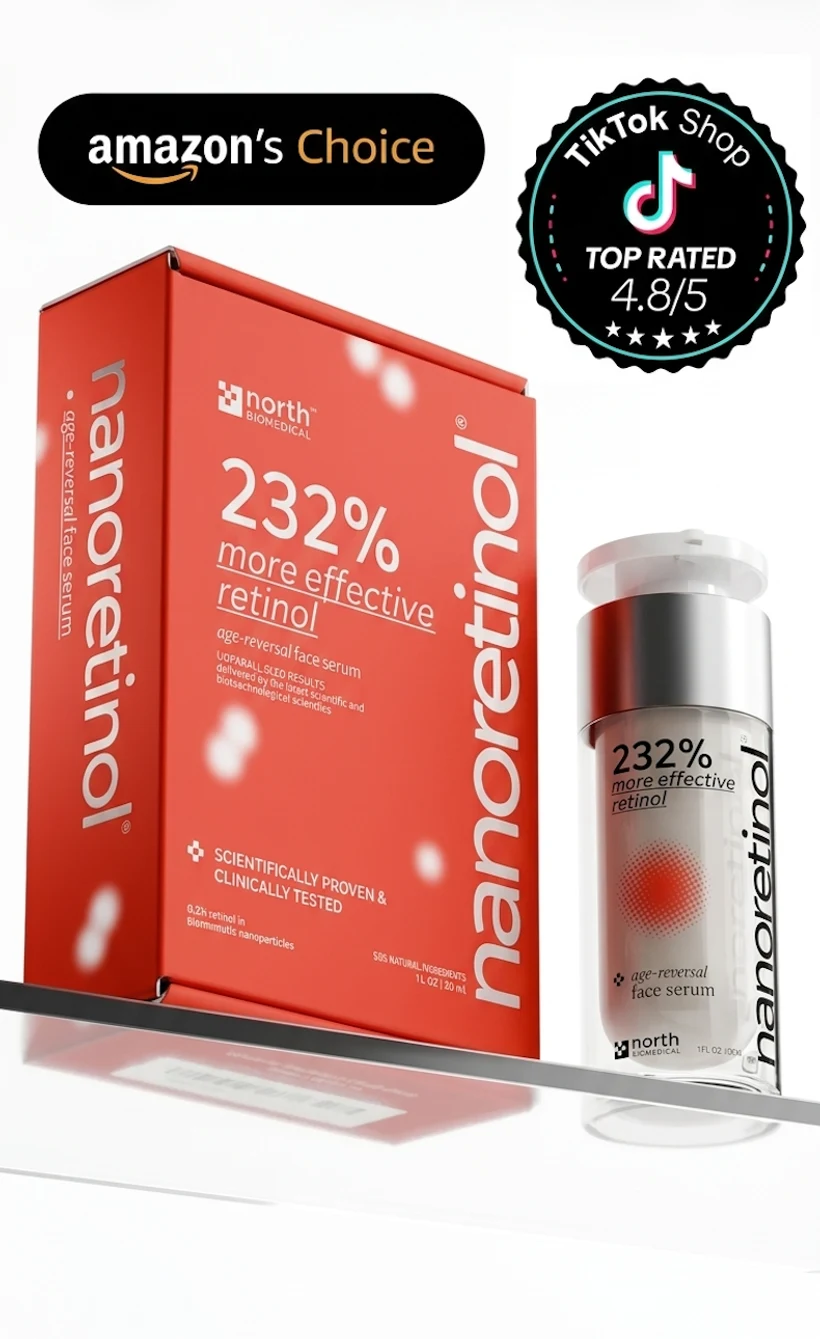
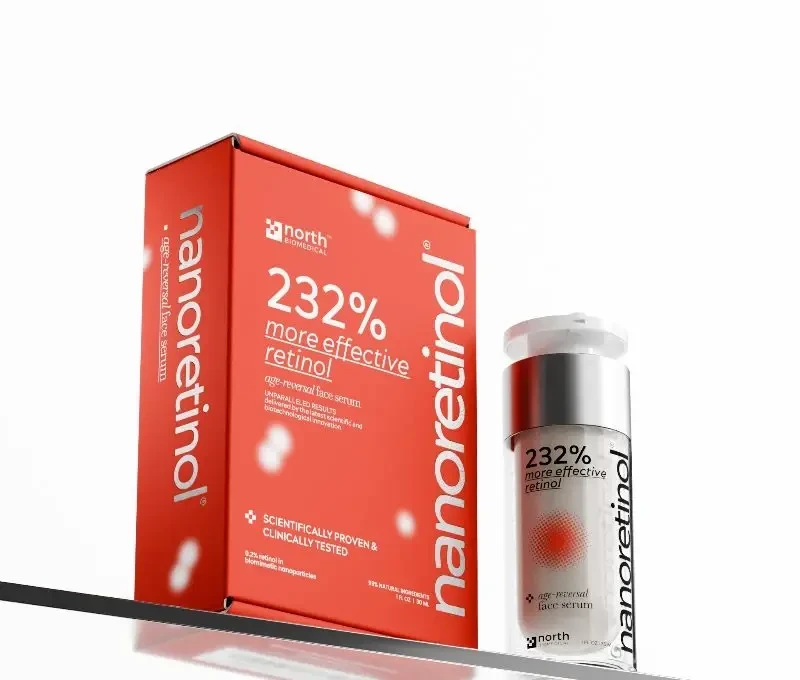
Nanoretinol was designed to make that phase easier. It delivers 0.2% retinol inside biomimetic lipid nanoparticles that the skin recognizes as its own, so the retinol passes into the skin without the barrier damage caused by many conventional formulas. Its cytotoxicity on skin cells is drastically lower than conventional retinol’s, and its water-based, non-greasy gel suits oily and combination skin. It also supports the skin around the pore: in North Biomedical’s study it was 232% more effective in collagen recovery than conventional retinol [8]. For a closer look at what retinol can and cannot do to the look of your pores, see our guide on whether retinol shrinks pores.
A practical routine is Nanoretinol at night, a salicylic acid product on two or three other evenings once your skin is comfortable, sunscreen every morning, and a nose strip only now and then when you want an instant clean-up before an event.
References
- Pagnoni A, Kligman AM, el Gammal S, Stoudemayer T. “Determination of density of follicles on various regions of the face by cyanoacrylate biopsy: correlation with sebum output.” British Journal of Dermatology. 1994;131(6):862-865. doi:10.1111/j.1365-2133.1994.tb08590.x
- Cunliffe WJ, Holland DB, Jeremy A. “Comedone formation: etiology, clinical presentation, and treatment.” Clinics in Dermatology. 2004;22(5):367-374. doi:10.1016/j.clindermatol.2004.03.011
- Thielitz A, Helmdach M, Röpke EM, Gollnick H. “Lipid analysis of follicular casts from cyanoacrylate strips as a new method for studying therapeutic effects of antiacne agents.” British Journal of Dermatology. 2001;145(1):19-27. doi:10.1046/j.1365-2133.2001.04276.x
- Flament F, Francois G, Qiu H, Ye C, Hanaya T, Batisse D, Cointereau-Chardon S, Seixas MD, Dal Belo SE, Bazin R. “Facial skin pores: a multiethnic study.” Clinical, Cosmetic and Investigational Dermatology. 2015;8:85-93. doi:10.2147/CCID.S74401
- Arif T. “Salicylic acid as a peeling agent: a comprehensive review.” Clinical, Cosmetic and Investigational Dermatology. 2015;8:455-461. doi:10.2147/CCID.S84765
- Thielitz A, Gollnick H. “Topical retinoids in acne vulgaris: update on efficacy and safety.” American Journal of Clinical Dermatology. 2008;9(6):369-381. doi:10.2165/0128071-200809060-00003
- Lavker RM, Leyden JJ, Thorne EG. “An ultrastructural study of the effects of topical tretinoin on microcomedones.” Clinical Therapeutics. 1992;14(6):773-780. PubMed:1283729
- North Biomedical LLC. “Nanoretinol vs. Conventional Retinol: Efficacy in Collagen and Elastin Recovery.” Clinical Study Summary, 2024. Study summary