Moisturizer for Itchy Skin: What Actually Calms Dry, Itchy Skin
Winter itch usually starts with a leaky skin barrier. Which moisturizer ingredients the research supports, which ones make itching worse, and when itch needs a doctor instead of a cream
It starts on the shins, or the backs of the arms, or the small of the back. A faint itch after the shower that becomes a nightly habit of scratching through pajamas. By January, plenty of people are going through a bottle of lotion a week and still waking up with white scratch lines on their legs.
Most of that itch has a simple cause: skin that has run out of water and the fats that hold it in. The good news is that the right moisturizer can calm it quickly. The bad news is that many lotions sold for dry skin contain the very ingredients that keep itch going. This guide explains what to look for, what to skip, and how to tell ordinary dry-skin itch from itch that needs a doctor.
Why dry skin itches
The outer layer of skin works like a brick wall. The bricks are flattened dead cells, and the mortar is a mix of fats called ceramides, cholesterol and fatty acids. When the mortar thins, water escapes, the bricks curl at the edges, and tiny cracks open between them.
Those cracks matter for itch. They let irritants from soap, fabric and air reach the nerve endings that sit just below the surface, and those nerves are easily set off. Scratching brings brief relief but scrapes away more mortar, which lets more water out. Dermatologists call this the itch-scratch cycle, and dry skin is one of its most common starting points.
Several things push skin into that state at once in winter. Heated indoor air pulls water out of the skin, hot showers strip away its fats, and older skin makes fewer of those fats in the first place. A review of dry skin in older adults points out that it is common but not a normal, harmless part of aging: it drives itch, the itch drives scratching, and broken skin raises the risk of infection [1].
Your skin can feel noticeably less itchy within 1 day of starting the right moisturizer, far sooner than most people expect.
What to look for in a moisturizer for itchy skin
No single ingredient is best for everyone, but a few have good evidence behind them for dry, itchy skin.
Colloidal oatmeal. Finely ground oats are one of the few ingredients the FDA allows to be labeled as a skin protectant. In lab work, oat extracts switched on genes that help skin build its barrier and helped buffer skin pH. In a clinical study of 50 women with moderate to severe dry skin on their lower legs, a colloidal oatmeal lotion significantly improved dryness, moisture levels and barrier function [3]. Our guide to colloidal oatmeal lotion covers how to pick one.
Your skin can feel noticeably less itchy within 1 day of starting the right moisturizer, far sooner than most people expect.
Glycerin. This humble humectant pulls water into the outer layer and holds it there. Research on glycerol shows it does more than attract water: it also supports the skin’s own barrier repair and helps the outer cells shed normally instead of piling up as flakes [5]. Look for it near the top of the ingredient list.
Urea. Urea is part of the skin’s own natural moisturizing factor. At around 10% or less it mainly hydrates, while higher strengths soften thick, scaly patches. A review of the clinical literature found consistent benefit for dry, rough skin across many trials [4].
Lactic acid, buffered. A gentle lactic acid lotion helps dissolve the dry flakes that make skin feel rough. In a winter study of 24 women with a history of dry, itchy skin, a cream combining 12% buffered lactic acid with 1% pramoxine improved hydration within 3 days and itch from the first day [6].
Pramoxine. Pramoxine is a mild topical numbing agent that quiets the itch signal directly. In a 4-week trial in people on dialysis, whose itch is notoriously stubborn, a 1% pramoxine lotion cut itch intensity by 61%, compared with 12% for a plain lotion [7].
Menthol, in small amounts. Menthol activates the same cold-sensing receptors that make mint feel cool, and that cooling signal can override itch for a while. Higher amounts can sting or irritate, so it suits short-term relief better than all-over daily use [8].
Ceramides and fatty acids. Because the mortar between skin cells is made of these fats, a moisturizer that supplies them helps rebuild the wall rather than just coating it. If your itch comes with tightness and flaking, a rich emollient cream with ceramides is often a better base than a thin lotion.
Ingredients that can make itch worse
- Fragrance and essential oils. Fragrance is one of the most common causes of skin allergy, and a fragrant lotion on scratched skin can turn ordinary dryness into a rash. Choose products labeled fragrance-free, not just unscented.
- Alcohol high on the list. Lightweight gels and sprays often rely on drying alcohols that sting on cracked skin.
- Strong acids on broken skin. Lactic acid helps rough, intact skin, but any acid will burn on open scratches. Wait until scratches have healed.
- Common sensitizers. The same review of older adults’ dry skin warns that some popular moisturizer ingredients, including lanolin and certain preservatives, can trigger delayed allergic reactions in a minority of people [1]. If a lotion seems to make you itch more after a few days, stop it.
Your skin holds on to far more water when you moisturize within 3 minutes of a shower than when you wait until it feels bone dry.
How to use a moisturizer so it actually stops the itch
Apply within 3 minutes of showering. Pat skin until it is damp, not dry, and apply straight away. A moisturizer can only hold in water that is already there.
Your skin holds on to far more water when you moisturize within 3 minutes of a shower than when you wait until it feels bone dry.
Turn the water down. Warm, short showers of about 5 to 10 minutes strip far less oil than long hot ones. Use a gentle, soap-free cleanser only where you need it.
Go heavier at night. Itch is often worst in bed, when skin is warm and there is nothing to distract you. A thicker cream before sleep keeps skin comfortable through the night.
Add humidity. A bedroom humidifier helps keep the air from pulling water out of your skin overnight, which the review of older adults’ dry skin lists as one of the simplest fixes [1].
Keep nails short and cool the skin instead of scratching. A cold, damp cloth or a cooling lotion breaks the urge without scraping the barrier.
Our guide to winter dry skin has more on adjusting your routine as the weather turns.
When itchy skin is not just dry skin
Most winter itch is dryness. But itch is a symptom, not a diagnosis, and some itch needs a doctor rather than a better lotion. A 2024 review in JAMA defines chronic itch as itch lasting 6 weeks or more and notes it affects about 22% of people at some point in their lives [2]. Inflammatory skin conditions such as eczema and psoriasis account for most cases, but nerve problems, medications and internal conditions such as kidney, liver or thyroid disease can also cause it [2].
See a doctor if your itch:
- lasts more than 6 weeks despite good moisturizing,
- comes with a rash, blisters, oozing or thickened patches,
- covers the whole body with no visible dryness,
- wakes you every night, or
- comes with weight loss, fever, fatigue or night sweats.
Itchy skin, retinol and aging skin
Itch and retinol have an awkward history. Conventional retinol often causes dryness, flaking and itching in the first weeks, especially on skin whose barrier is already thin, and that is one of the most common reasons people give up on it. Our guide to retinol side effects explains why that happens and how to manage it.
If your skin is itchy right now, fix that first. Give it two to three weeks of a fragrance-free moisturizer, gentler showers and a humidifier until the itch settles. Then reintroduce a retinoid slowly, two or three nights a week, applied to dry skin and followed by your moisturizer.
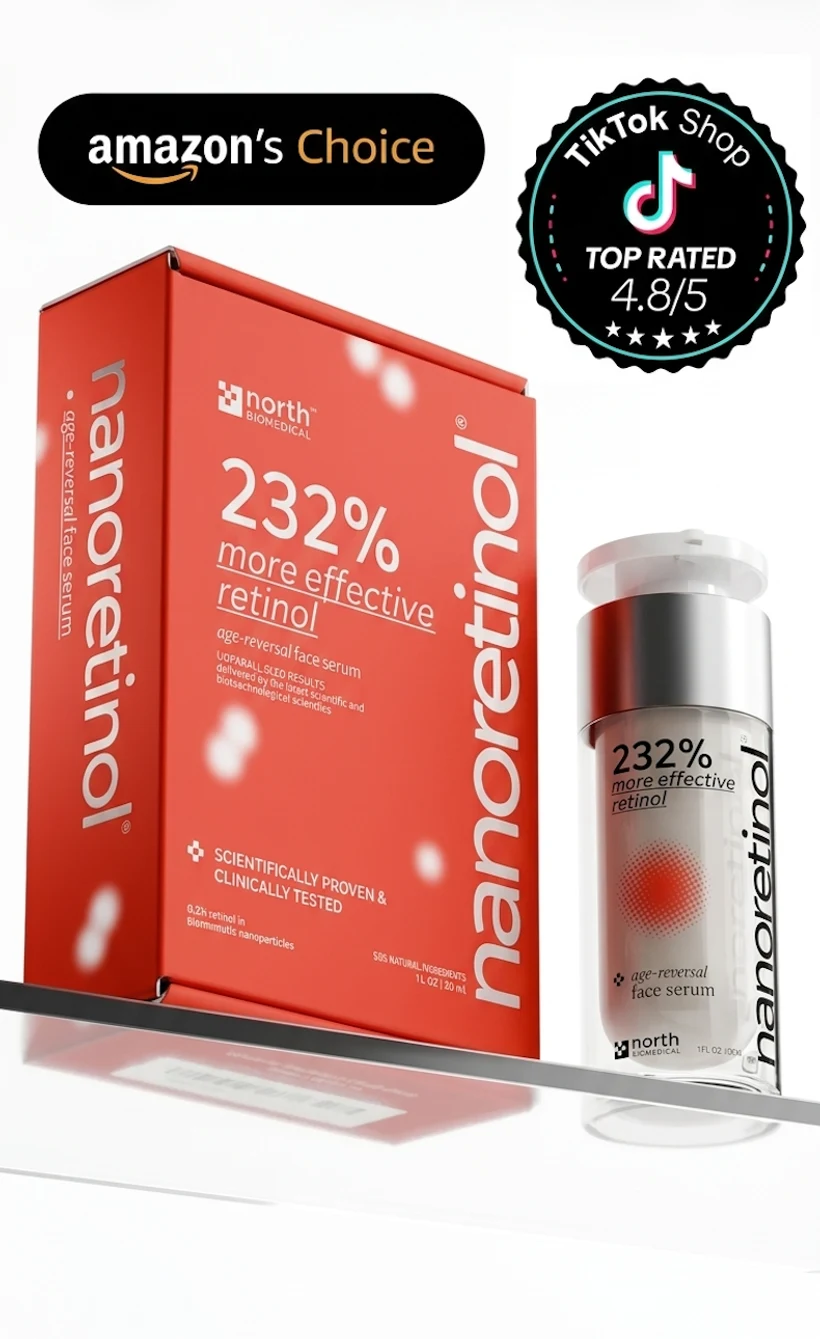
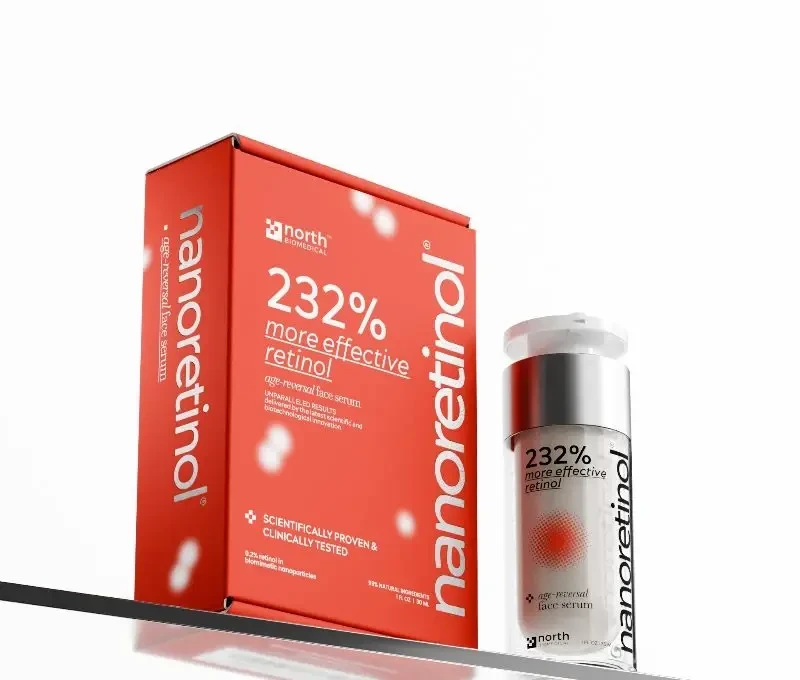
The formula matters at that point. Nanoretinol delivers 0.2% retinol in biomimetic lipid nanoparticles within a water-based gel, so it reaches the deeper layers without relying on the harsh solvents that break down an already fragile barrier. In North Biomedical’s study it was 232% more effective in collagen recovery than conventional retinol, with a 61% increase in firmness after 56 days of use, and side effects, when present, were milder than with conventional retinol [9]. Calm the barrier, then rebuild what lies beneath it.
References
- White-Chu EF, Reddy M. “Dry skin in the elderly: complexities of a common problem.” Clinics in Dermatology. 2011;29(1):37-42. doi:10.1016/j.clindermatol.2010.07.005
- Butler DC, Berger T, Elmariah S, et al. “Chronic Pruritus: A Review.” JAMA. 2024;331(24):2114-2124. doi:10.1001/jama.2024.4899
- Ilnytska O, Kaur S, Chon S, et al. “Colloidal Oatmeal (Avena Sativa) Improves Skin Barrier Through Multi-Therapy Activity.” Journal of Drugs in Dermatology. 2016;15(6):684-690. PubMed 27272074
- Pan M, Heinecke G, Bernardo S, Tsui C, Levitt J. “Urea: a comprehensive review of the clinical literature.” Dermatology Online Journal. 2013;19(11):20392. PubMed 24314769
- Fluhr JW, Darlenski R, Surber C. “Glycerol and the skin: holistic approach to its origin and functions.” British Journal of Dermatology. 2008;159(1):23-34. doi:10.1111/j.1365-2133.2008.08643.x
- Grove G, Zerweck C. “An evaluation of the moisturizing and anti-itch effects of a lactic acid and pramoxine hydrochloride cream.” Cutis. 2004;73(2):135-139. PubMed 15027519
- Young TA, Patel TS, Camacho F, et al. “A pramoxine-based anti-itch lotion is more effective than a control lotion for the treatment of uremic pruritus in adult hemodialysis patients.” Journal of Dermatological Treatment. 2009;20(2):76-81. doi:10.1080/09546630802441218
- Patel T, Ishiuji Y, Yosipovitch G. “Menthol: a refreshing look at this ancient compound.” Journal of the American Academy of Dermatology. 2007;57(5):873-878. doi:10.1016/j.jaad.2007.04.008
- North Biomedical LLC. “Nanoretinol vs. Conventional Retinol: Efficacy in Collagen and Elastin Recovery.” Clinical Study Summary, 2024. Study summary