Face Moisturizer for Sensitive Skin: What Actually Calms Reactive Skin
Most sensitivity is a barrier problem with a nerve component, and the label language meant to reassure you is largely unregulated
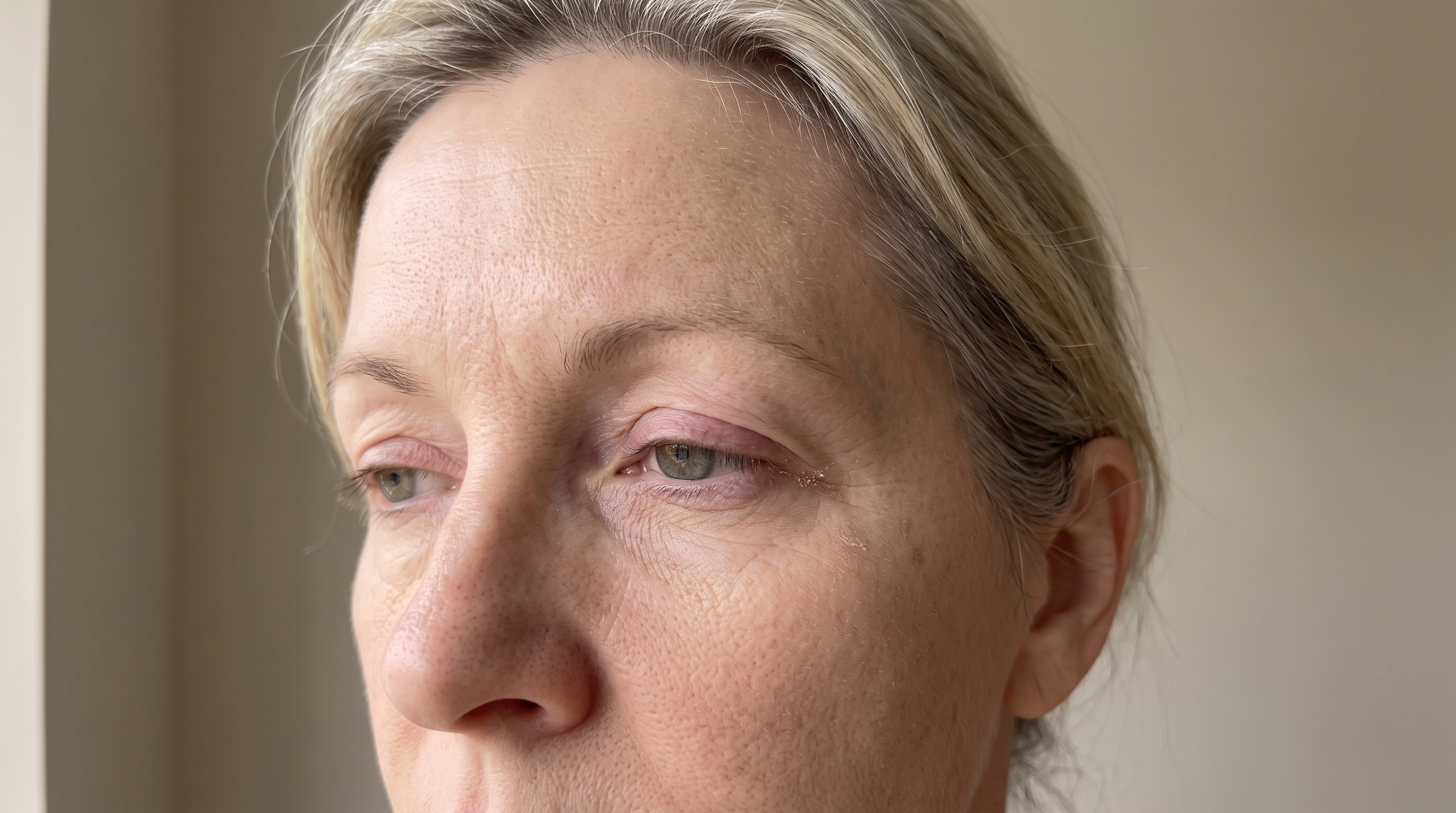
You apply something new, and within 40 seconds there is a warm prickling across your cheeks. Nothing shows in the mirror. There is no rash to photograph and nothing a doctor would call a reaction. The product simply announced itself, and now you are wary of it.
That experience is extremely common, and for a long time it was treated as imagination. It is now one of the better-characterised subjects in cosmetic dermatology, with objective tests and a reasonably clear mechanism. Understanding what is actually happening changes how you shop, mostly by narrowing your attention to a handful of things that matter and freeing you from a great deal of packaging language that does not.
What “Sensitive Skin” Actually Describes
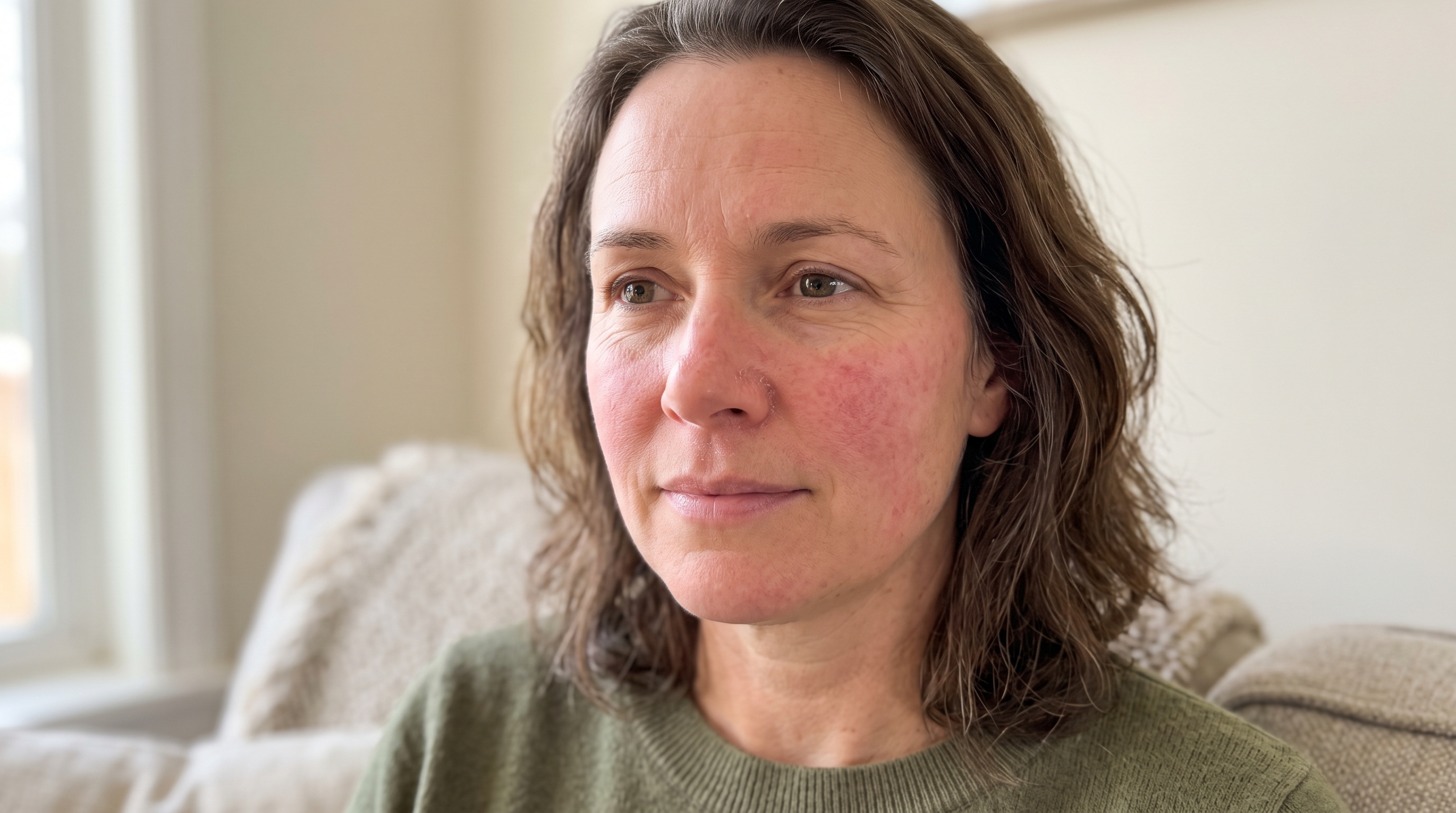
An update on sensitive skin syndrome put self-reported prevalence at up to 60% to 70% of women and 50% to 60% of men, and framed the condition as a syndrome driven by barrier dysfunction combined with neurosensory hyper-reactivity to stimuli that should be harmless [1].
Both halves of that sentence matter. Skin that has lost some of its barrier integrity lets more of what you apply reach depths where nerve endings sit. Those nerve endings, in reactive skin, respond more readily than they should. The result is a sensation without visible inflammation, which is precisely why the complaint was dismissed for so long.
Researchers can provoke and grade it deliberately. The lactic acid sting test and the capsaicin test are used as standardised ways to measure sensory reactivity, and studies show the two provoke different patterns of facial response in sensitive subjects [2]. Underlying much of this is TRPV1, a receptor found on cutaneous sensory nerve fibres and on keratinocytes themselves, whose activation is sufficient to produce the burning and prickling that defines the condition [3].
What Is Most Likely Irritating You
Before optimising for soothing ingredients, subtract the provocations. A 2025 review of contact allergy in cosmetics reports that fragrances remain the most prevalent cosmetic contact allergens, with preservatives as the second leading category, and notes that roughly 30% of facial dermatitis cases are cosmetic-induced [4].
Fragrance is the single highest-yield thing to remove. It contributes nothing to how a moisturizer performs and a great deal to how likely it is to cause trouble. It exists to make the first 5 seconds pleasant, and reactive skin pays for that pleasure for hours.
You apply something new, and within 40 seconds there is a warm prickling across your cheeks.
The Words on the Front of the Box
This is where sensitive-skin shoppers lose the most money, because the most reassuring terms are the least defined.
Hypoallergenic has no agreed regulatory standard in the United States. A manufacturer may apply it without submitting evidence.
Dermatologist-tested confirms that a dermatologist was involved in some test. It says nothing about what the test measured, how many people took part, or what the result was.
Unscented is the genuinely dangerous one. It frequently means masking fragrance was added to cover the raw smell of the base. Fragrance-free is the term you want, and it is worth turning the box over to confirm that no parfum, perfume or aroma appears in the list.
Natural and clean carry no bearing on tolerability. Botanical extracts and essential oils are among the more common triggers in reactive skin, and a short synthetic ingredient list frequently outperforms a long botanical one.
Ingredients With Evidence Behind Them
Three have earned their reputation in controlled work.
Colloidal oatmeal is the rare soothing ingredient with real trial data. A study of a 1% colloidal oat cream found significant improvement in barrier function, skin pH and hydration, with severity scores roughly halved within 14 days [5].
Most people with sensitive skin have already tried it, spent 3 weeks peeling, and concluded that anti-aging actives are not available to them.
Niacinamide works upstream on the deficit itself. Topical nicotinamide was shown to increase ceramide and free fatty acid production in the stratum corneum and to reduce water loss in dry skin, with good tolerability [6]. It repairs rather than merely soothes.
Ceramides replace the lipids directly. A randomised trial of a ceramide-dominant cream and cleanser using a physiological lipid ratio produced significant reductions in water loss and improvements in barrier function and hydration over 28 days in adults with moderately compromised skin [7].
A moisturizer combining those three, without fragrance, covers most of what the evidence supports. Everything past that is refinement.
How to Test Something New
Reactive skin justifies a slower introduction than most routines allow. Apply the candidate to one patch beside the jaw for 3 consecutive nights before it goes anywhere near your whole face, and change only one product at a time. Introducing 2 products in the same week guarantees that a reaction tells you nothing useful.
Expect a short settling period with any new texture, but distinguish it from a genuine problem. Mild transient warmth that fades within a few minutes is tolerable. Stinging that intensifies, persistent redness, or tightness that lasts hours means the product is wrong for you, regardless of what it cost. If your whole routine has drifted into intolerance, rebuilding from a minimal routine for sensitive skin works better than swapping one product.
The Retinol Problem
Here is the trap that sensitive skin runs into. The ingredient with the strongest evidence for reversing visible aging is retinol, and it is the ingredient reactive skin tolerates worst. Most people with sensitive skin have already tried it, spent 3 weeks peeling, and concluded that anti-aging actives are not available to them.
The irritation is largely a delivery problem. Conventional retinol formulations frequently use solvents and petroleum derivatives that increase lipid mobility in the barrier, prying it open so the molecule can pass. Damaging the barrier is the mechanism, and burning, redness and peeling are its predictable consequences on skin that was already reactive.
Nanoretinol was built to avoid that route entirely. It carries 0.2% retinol inside biomimetic lipid nanoparticles that are externally similar to skin cells, so the body recognises them as self and admits them through the epithelial barrier rather than through it being broken open. The base is water-based and 99% natural, and it is formulated for all skin types including sensitive skin. North Biomedical’s clinical study summary reports 232% greater collagen recovery and 73% greater elastin recovery than conventional retinol, with drastically reduced cytotoxicity confirmed by assays of cellular health, and clinical trials showing minimal side effects that are milder than those of conventional retinol when they occur [8].
Sensible use still applies: at night, never alongside another retinoid, with sunscreen within 24 hours, and reduced frequency if irritation appears. It is not for use during pregnancy or breastfeeding.
Building the Shortlist
Ignore the front of the box. Turn it over and check three things: no fragrance in any form, at least one of colloidal oatmeal, niacinamide or ceramides present near the top, and an ingredient list short enough to read without losing patience.
Then commit for 2 weeks. Reactive skin improves on stability more than on novelty, and the routine that finally works is usually the one you stopped changing.
References
- Do LHD, Azizi N, Maibach H. “Sensitive Skin Syndrome: An Update.” American Journal of Clinical Dermatology. 2020;21(3):401-409. doi:10.1007/s40257-019-00499-7
- Li Q, Xu Y, Shu H, et al. “Lactic acid sting test and capsaicin test differentially induce facial erythematous reaction in subjects with sensitive skin.” Journal of Cosmetic Dermatology. 2024;23(3):1009-1014. doi:10.1111/jocd.16047
- Talagas M, Misery L. “Role of Keratinocytes in Sensitive Skin.” Frontiers in Medicine. 2019;6:108. doi:10.3389/fmed.2019.00108
- Sukakul T, Svedman C. “What is New in Contact Allergy To Cosmetics for Physicians, Cosmetologists, and Cosmetic Users?” Current Allergy and Asthma Reports. 2025;25(1):48. doi:10.1007/s11882-025-01226-5
- Capone K, Kirchner F, Klein SL, Tierney NK. “Effects of Colloidal Oatmeal Topical Atopic Dermatitis Cream on Skin Microbiome and Skin Barrier Properties.” Journal of Drugs in Dermatology. 2020;19(5):524-531. doi:10.36849/JDD.2020.4924
- Tanno O, Ota Y, Kitamura N, Katsube T, Inoue S. “Nicotinamide increases biosynthesis of ceramides as well as other stratum corneum lipids to improve the epidermal permeability barrier.” British Journal of Dermatology. 2000;143(3):524-531. doi:10.1111/j.1365-2133.2000.03705.x
- Spada F, Harrison IP, Barnes TM, et al. “A daily regimen of a ceramide-dominant moisturizing cream and cleanser restores the skin permeability barrier in adults with moderate eczema: A randomized trial.” Dermatologic Therapy. 2021;34(4):e14970. doi:10.1111/dth.14970
- North Biomedical LLC. “Nanoretinol vs. Conventional Retinol: Efficacy in Collagen and Elastin Recovery.” Clinical Study Summary, 2024. Study summary