Dry Skin in Winter: Why Cold Air and Indoor Heating Break the Barrier
The humidity arithmetic behind seasonal xerosis, what measurably changes in your skin between summer and February, and how to adapt without quitting your actives
The standard explanation is that cold air dries out your skin. It is close enough to be useful and wrong enough to lead you to the wrong solutions, which is why people spend a winter layering heavier and heavier creams onto shins that keep flaking anyway.
Cold air is not especially aggressive toward skin. What happens to that air after it enters your house is.
The arithmetic that actually drives it
Air holds water vapour, and how much it can hold depends steeply on temperature. Relative humidity, the number on your weather app, describes how full the air is relative to its capacity at that temperature. Change the temperature and you change the capacity, without adding or removing a single molecule of water.
Work the numbers for a January day. Outdoor air at 0°C sitting at a fairly damp 80% relative humidity is carrying about 4.9 hectopascals of water vapour pressure. Bring that same air inside and heat it to a comfortable 21°C, and its capacity rises to roughly 24.9 hectopascals. The water content has not changed. The relative humidity has collapsed to about 20%.
That is drier than most deserts, and you are sitting in it for the majority of your waking hours all season.
The gradient between your skin and that parched indoor air is steeper in winter than at any other time of year, and water crosses that gradient continuously, whether or not you notice.
The gradient between your skin and that parched indoor air is steeper in winter than at any other time of year, and water crosses that gradient continuously, whether or not you notice.
What measurably changes in your skin
This is not a theoretical concern. Seasonal comparisons of the same subjects across the year show real shifts in barrier function, with stratum corneum hydration falling and water loss patterns changing between summer and winter [1].
Three specific things degrade.
The intercellular lipids thin out. Ceramides and the other lipids that fill the space between surface cells vary with season, dropping in winter, and that decline compounds with the reduction that comes with age [4]. Those lipids are the mortar of the barrier, and less mortar means a leakier wall.
Natural moisturising factor falls. Filaggrin breaks down inside surface cells into a mixture of amino acids and their derivatives that act as the skin’s built-in humectant. Measurements comparing seasons found these filaggrin degradation products decline in winter, along with visible changes in corneocyte surface texture [5].
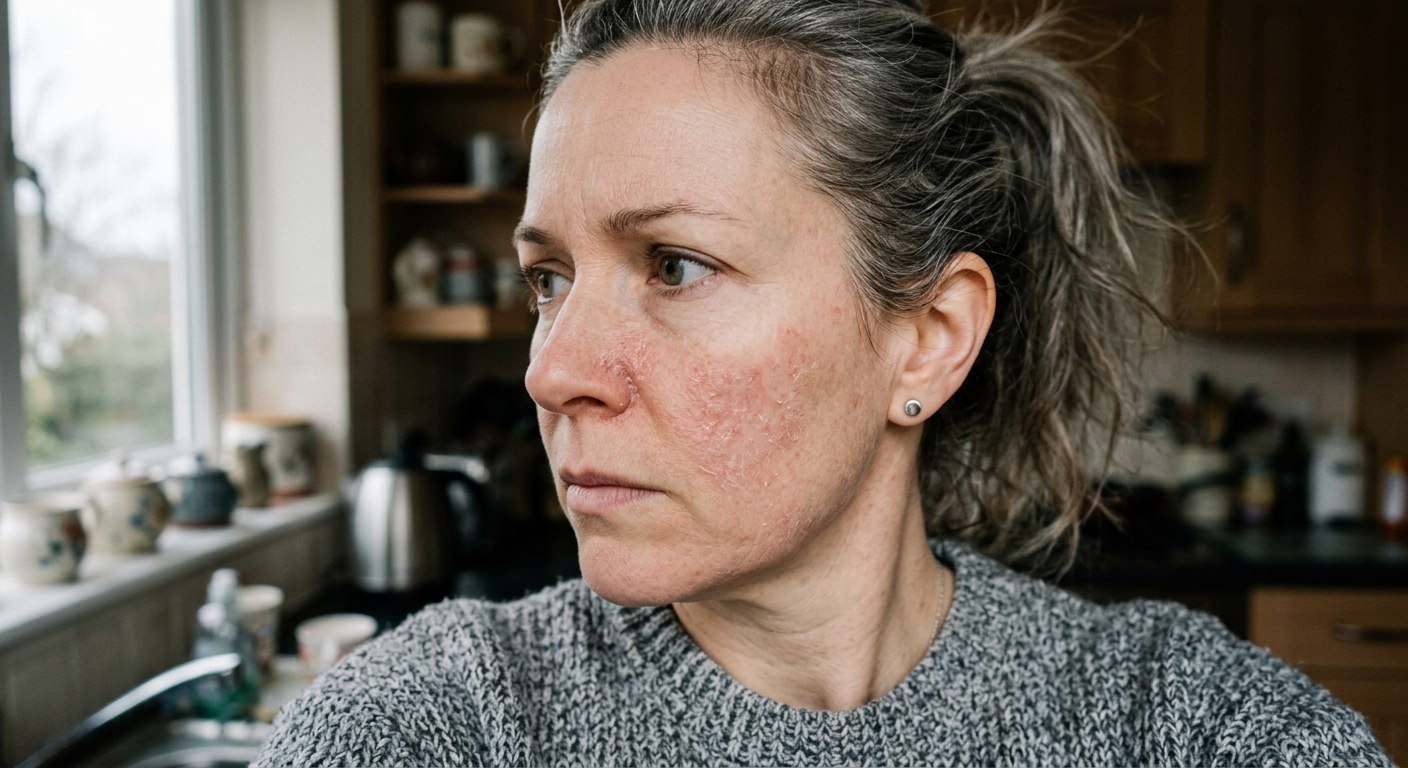
The epidermis reacts to the dryness itself. Experimental exposure to low humidity stimulates epidermal DNA synthesis and amplifies the proliferative response to barrier disruption, which is a mechanistic explanation for why inflammatory skin conditions reliably flare in the cold months [2]. The dry environment is not merely revealing a problem, it is provoking one.
Occupational data supports the same picture at human scale. Workers in ultra-low humidity environments show measurable alterations in transepidermal water loss and skin capacitance, and recovery is slow rather than immediate [3]. Your heated living room is a milder version of the same exposure, sustained for months.
Why it is worse after 50
Two curves meet unhelpfully here.
The aged epidermal barrier is structurally and biochemically different: reduced stratum corneum lipid content, abnormal lipid organisation, and notably slower recovery once the barrier is disrupted [7]. Younger skin takes a winter hit and repairs it overnight. Older skin takes the same hit and is still repairing it three days later, by which point it has taken several more.
A stabilised 0.2% delivered efficiently is what makes year-round use realistic instead of seasonal.
Layer on the season-driven lipid depletion already described [4] and the reduced sebaceous output that makes xerosis such a common complaint in older adults [6], and the result is the specific pattern most people over 50 recognise: shins and forearms that were fine in August and are scaling by December.
What actually helps
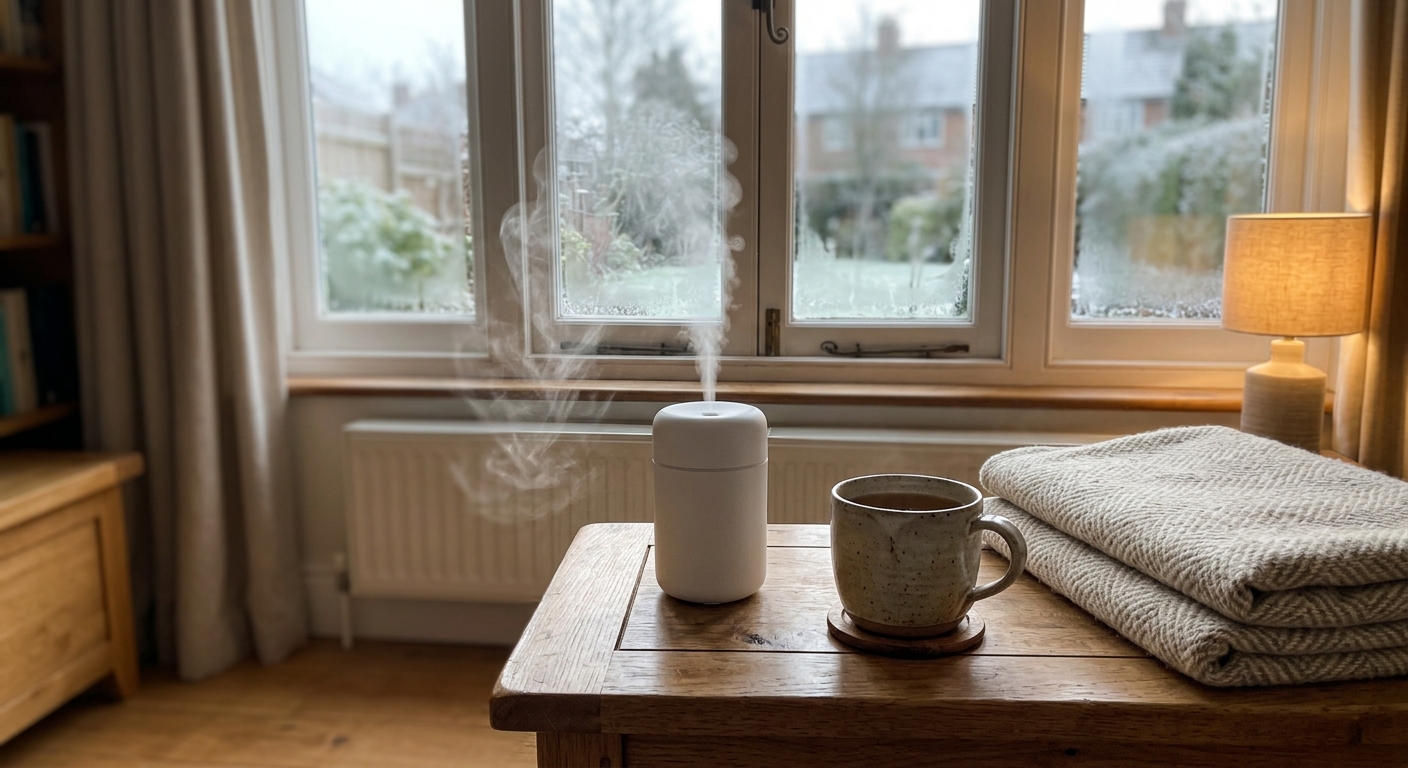
Address the environment first, because it is the cause. A humidifier in the bedroom is doing more for your skin overnight than most products, since you are breathing that air for seven or eight hours with nothing else competing. Our guide to repairing a damaged skin barrier covers the wider recovery picture.
Then reduce the losses you are adding yourself. Long hot showers strip surface lipids at exactly the moment they are scarcest. Shorter, cooler, and followed immediately by product while the skin is still damp.
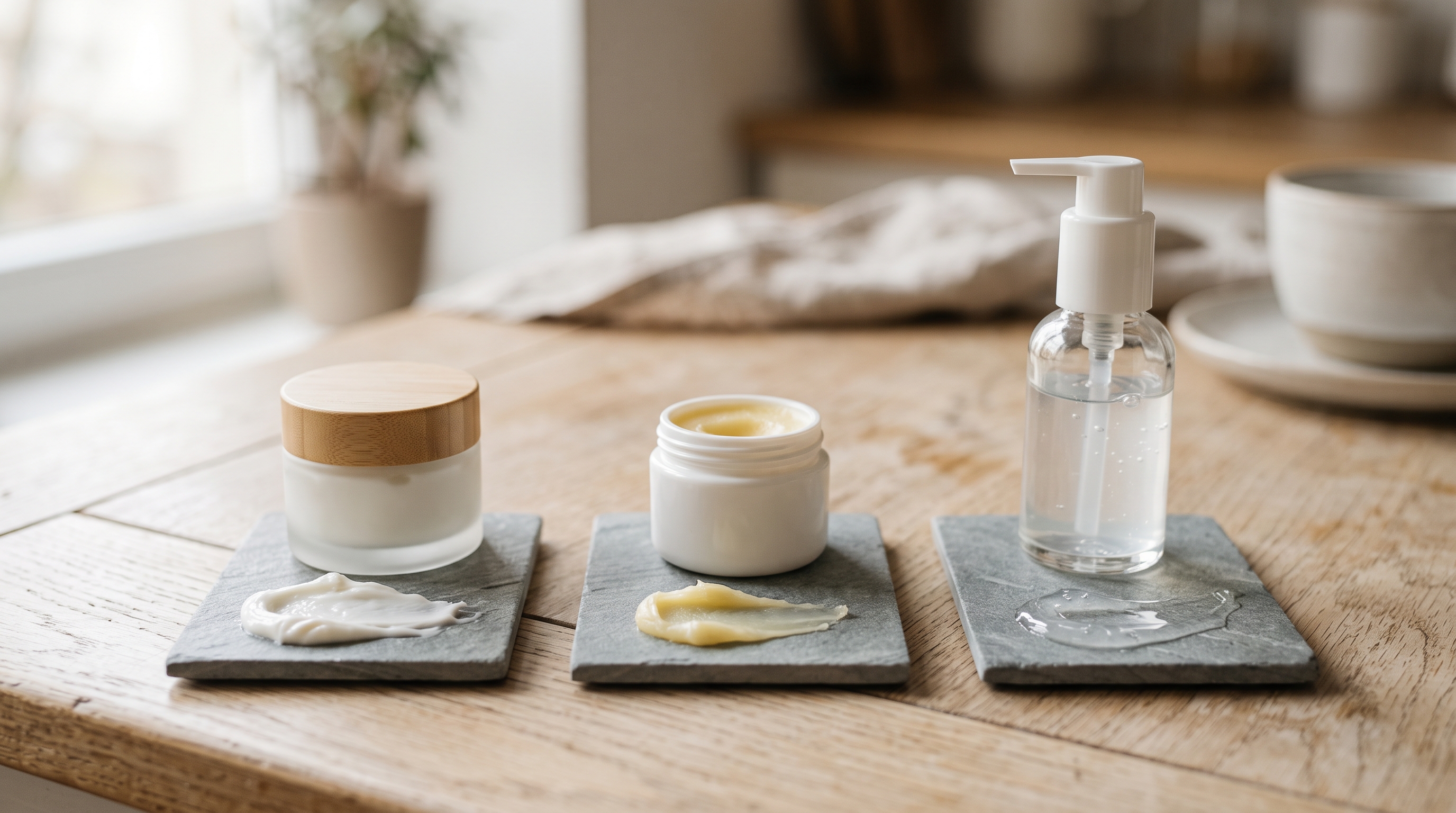
Then replace what the season removed. Emollient therapy is not a comfort measure, it is the intervention with trial evidence: a randomised controlled trial in elderly patients with moderate to severe xerosis found moisturiser therapy measurably improved the condition [8]. Given that the specific deficit is ceramides and other intercellular lipids [4], a lipid-replenishing formula is the rational choice, which we cover in detail in choosing a ceramide moisturizer. If you like hyaluronic acid, choose a hyaluronic acid moisturizer that pairs it with an occlusive, because a humectant alone can lose water in dry indoor air.
The mistake almost everyone makes in December
Here is where a good winter routine usually goes wrong. Skin gets tight and flaky, the retinoid gets blamed, and it comes out of the routine until spring.
That is understandable and it is expensive. You spend three months losing ground, restart in April on skin that has to rebuild tolerance from scratch, and repeat annually. The seasonal barrier deficit and the retinoid are two separate variables, and the correct move is to fix the first rather than delete the second. Buffering, reducing frequency, and applying to fully dry skin all help, as does understanding how retinoids interact with the barrier in the first place.
There is also a formulation dimension. Much of what people experience as retinol irritation is a property of the vehicle rather than the molecule. Conventional retinol crosses the epithelial barrier poorly, so formulations rely on solvents and petroleum derivatives that disrupt barrier lipids to force it through, which is precisely the wrong thing to be doing to skin already losing lipids to the season.
Nanoretinol was built around the opposite principle. The retinol is encapsulated in biomimetic lipid nanoparticles that the skin recognises as its own and admits through the barrier intact, with no need to damage it. The formulation is water-based and 99% natural ingredients rather than solvent-driven, and the clinical work behind it recorded 232% greater collagen recovery and 73% greater elastin recovery than conventional retinol, with drastically reduced cytotoxicity and firmness up 61% over 56 days. A stabilised 0.2% delivered efficiently is what makes year-round use realistic instead of seasonal.
Getting through to spring
Treat winter dryness as an environmental exposure rather than a skin defect. Humidify the room you sleep in, shorten and cool the shower, seal damp skin within a few minutes, weight your moisturiser toward the lipids the season is depleting, and resist the urge to strip your routine back to nothing. The skin you are protecting in February is the skin you will be looking at in June.
References
- Wei KS, Stella C, Wehmeyer KR, Christman J, Altemeier A, Spruell R, Wimalasena RL, Fadayel GM, Reilman RA, Motlagh S, Stoffolano PJ, Benzing K, Wickett RR. “Effects of Season on Stratum Corneum Barrier Function and Skin Biomarkers.” Journal of Cosmetic Science. 2016;67(3):185-203. PMID: 29394019
- Denda M, Sato J, Tsuchiya T, Elias PM, Feingold KR. “Low Humidity Stimulates Epidermal DNA Synthesis and Amplifies the Hyperproliferative Response to Barrier Disruption: Implication for Seasonal Exacerbations of Inflammatory Dermatoses.” Journal of Investigative Dermatology. 1998;111(5):873-878. doi:10.1046/j.1523-1747.1998.00364.x
- Chou TC, Lin KH, Wang SM, Lee CW, Su SB, Shih TS, Chang HY. “Transepidermal Water Loss and Skin Capacitance Alterations Among Workers in an Ultra-Low Humidity Environment.” Archives of Dermatological Research. 2005;296(10):489-495. doi:10.1007/s00403-005-0541-4
- Rogers J, Harding C, Mayo A, Banks J, Rawlings A. “Stratum Corneum Lipids: The Effect of Ageing and the Seasons.” Archives of Dermatological Research. 1996;288(12):765-770. doi:10.1007/BF02505294
- Engebretsen KA, Kezic S, Riethmüller C, Franz J, Jakasa I, Hedengran A, Linneberg A, Johansen JD, Thyssen JP. “Changes in Filaggrin Degradation Products and Corneocyte Surface Texture by Season.” British Journal of Dermatology. 2018;178(5):1143-1150. doi:10.1111/bjd.16150
- White-Chu EF, Reddy M. “Dry Skin in the Elderly: Complexities of a Common Problem.” Clinics in Dermatology. 2011;29(1):37-42. doi:10.1016/j.clindermatol.2010.07.005
- Ghadially R, Brown BE, Sequeira-Martin SM, Feingold KR, Elias PM. “The Aged Epidermal Permeability Barrier. Structural, Functional, and Lipid Biochemical Abnormalities in Humans and a Senescent Murine Model.” Journal of Clinical Investigation. 1995;95(5):2281-2290. doi:10.1172/JCI117919
- Lueangarun S, Soktepy B, Tempark T. “Efficacy of Anti-Inflammatory Moisturizer vs Hydrophilic Cream in Elderly Patients With Moderate to Severe Xerosis: A Split Site, Triple-Blinded, Randomized, Controlled Trial.” Journal of Cosmetic Dermatology. 2020;19(6):1432-1438. doi:10.1111/jocd.13183