Moisturizing Socks: Do Gel Heel Socks Really Fix Dry, Cracked Feet?
What a sock adds to your foot cream overnight, how gel, lotion and cotton socks differ, and the cream ingredients that do the real work on rough heels
Every winter, the same small product sells out next to the foot creams: socks that promise baby-soft heels by morning. Some are lined with a squishy gel, some come soaked in lotion, and some are plain cotton sold with a tub of cream. They look like a gimmick, but the idea behind them is one of the oldest tricks in dermatology.
Here is the short answer. A sock does not moisturize anything on its own. What it does is trap whatever you put underneath it against the skin for eight hours, which makes a good cream work harder and a poor one feel nicer. Knowing which part is doing the work saves money and gets you better heels.
What a Sock Actually Does: Occlusion
Dermatologists call it occlusion: covering the skin so water cannot escape from its surface. Covered skin swells with retained water, its outer barrier becomes more permeable, and ingredients applied beneath the cover often, though not always, soak in further than they would on bare skin [1]. Hospitals use the same principle when they wrap a cream under film or a dressing.
A sock is a gentle version of that wrap. Cotton is breathable, so it occludes far less than plastic, but it does three useful things. It keeps cream on your feet rather than on the sheets, it slows the evaporation that leaves heels tight by morning, and it gives a thick ointment time to soften hard skin instead of being wiped off in the first hour.
Why Heels Crack in the First Place
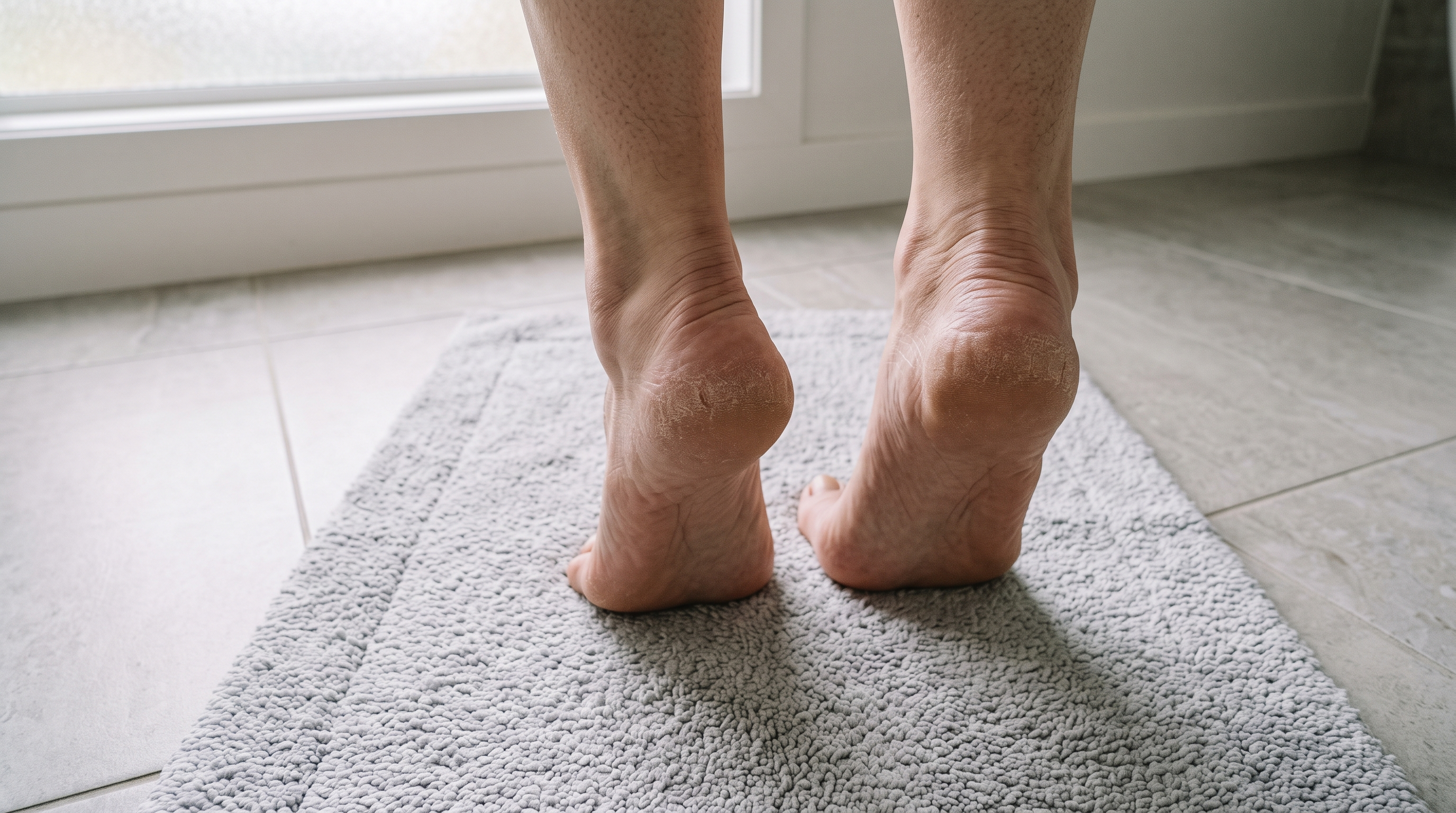
Your skin on the heel carries about 86 layers of dead cells, nearly ten times more than your face, which is why one night in socks rarely undoes weeks of cracking. That figure comes from a study that counted the cell layers of the outer skin on different body sites in 301 people: around 9 layers on the face, 15 on the arms and legs, and an average of 86 on the heel [2].
That thick, hard shell is built to take your weight, but it has little natural oil and does not bend well. When it dries out, it stiffens, and the pressure of each step splits it at the edges of the heel. Dryness also becomes far more common with age. In a French primary-care study of 756 people aged 65 and older, 55.6% had dry skin, and the risk rose with age and was higher in women [3].
Your skin on the heel carries about 86 layers of dead cells, nearly ten times more than your face, which is why one night in socks rarely undoes weeks of cracking.
Gel Socks, Lotion Socks and Plain Cotton
Three kinds of product share the name, and they behave differently.
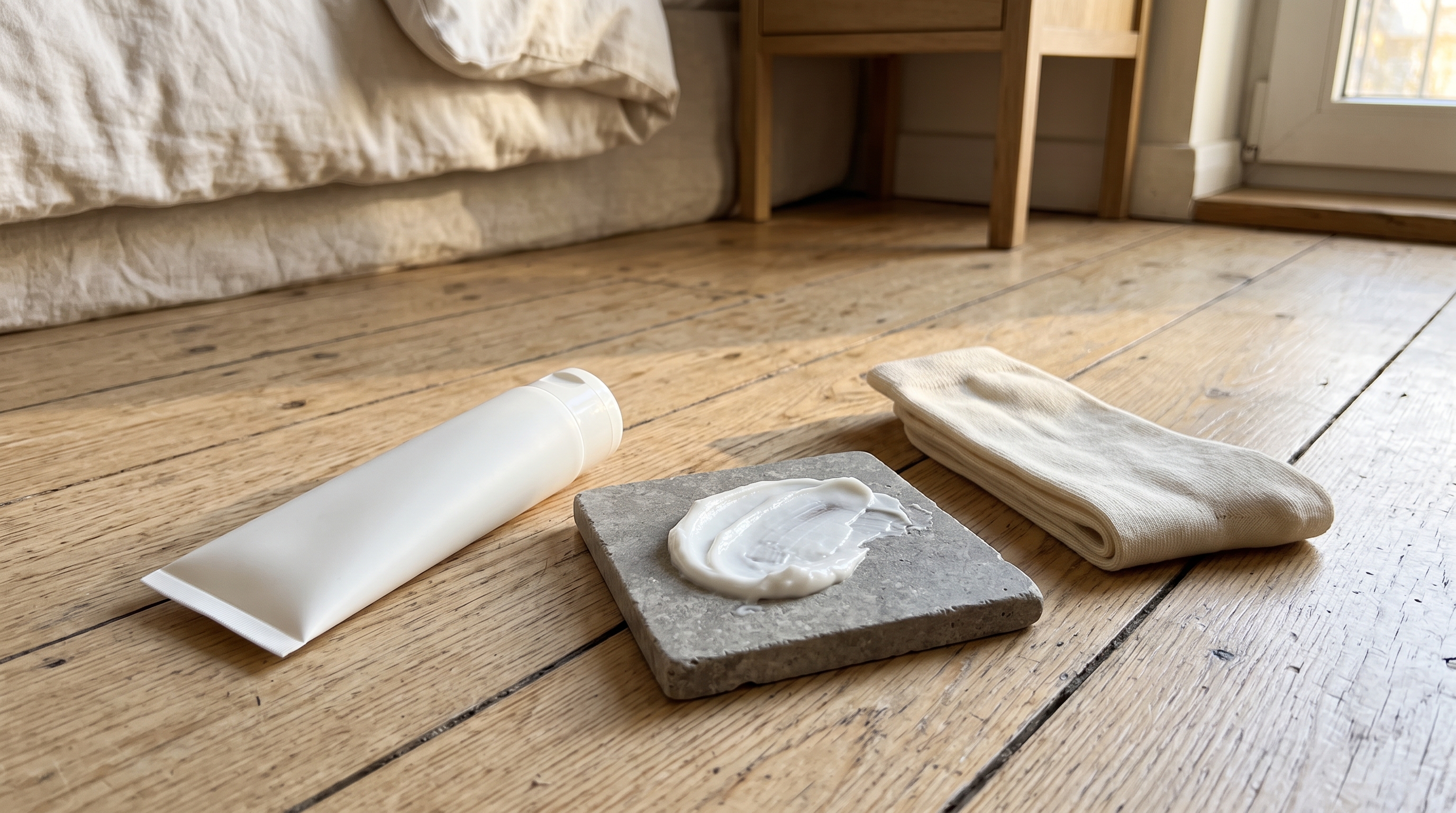
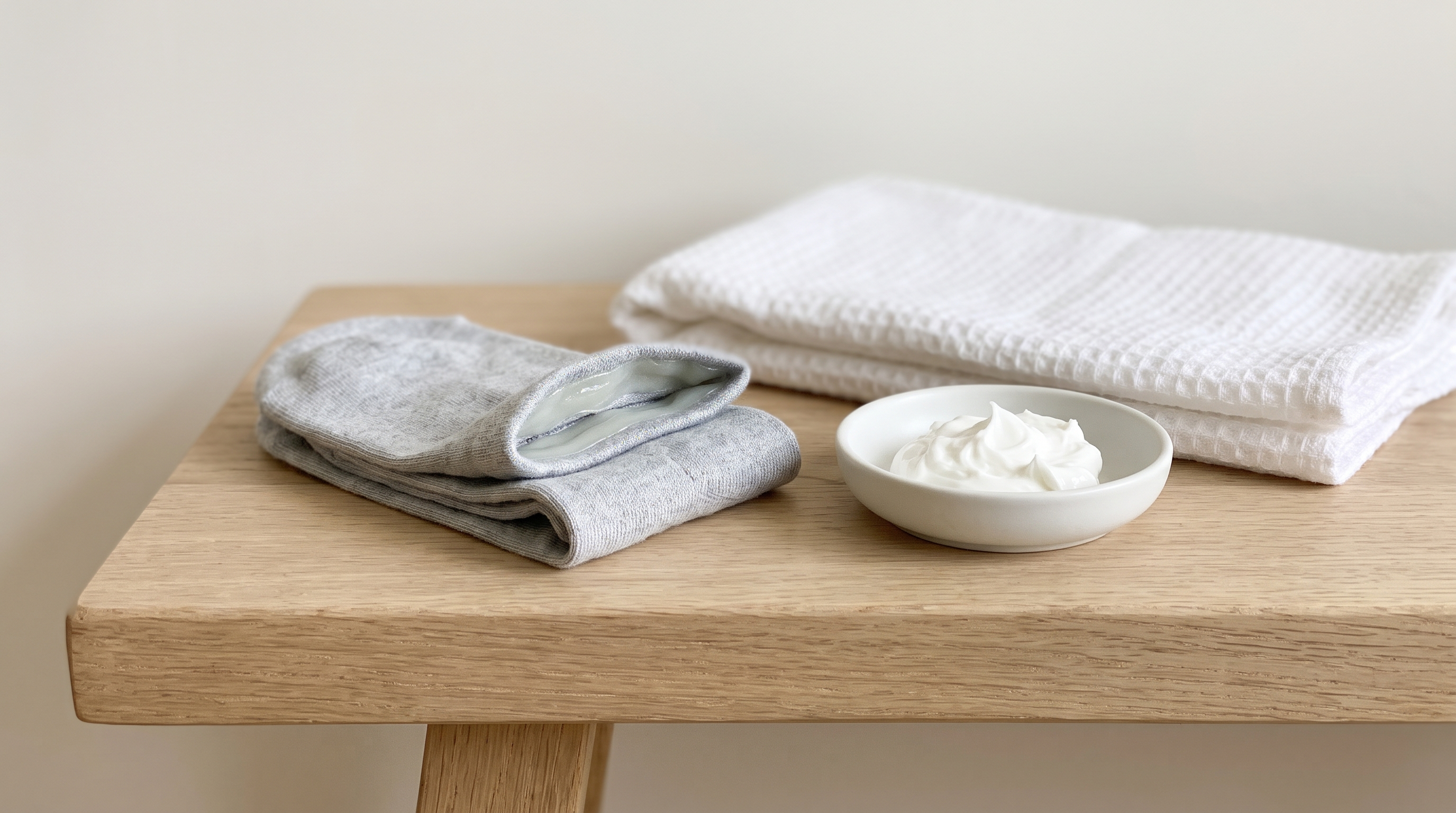
- Gel-lined heel socks. A soft polymer lining, often made with mineral oil and vitamin E, sits against the heel. The gel occludes better than fabric and is reusable, but it releases very little active ingredient. Think of it as a cushioned wrap for your own cream.
- Lotion-infused socks. These come pre-loaded with a moisturizer that wears out after a few washes. They are convenient for travel, but you cannot choose the formula, and the dose falls with every wear.
- Plain cotton socks. The cheapest option and, with the right cream underneath, the most flexible. Clean, thin cotton lets you use a urea cream one night and an ointment the next.
If your heels are only rough, any of the three will make them feel softer. If they are thick and split, the cream inside matters far more than the sock around it.
The Cream Matters More Than the Sock
A systematic review of moisturizers for dry feet found 22 trials covering 12 different active ingredients. Urea was the most studied, in 14 trials, followed by ammonium lactate in 7, though the review judged most of the research to be of poor to moderate quality [4]. Urea draws water into the outer skin and, at higher strengths, loosens the bonds between hard dead cells so they shed [5].
Your skin can close deep heel cracks within 4 weeks: in one trial of people with diabetes, only 6% using a urea cream still had an open fissure, versus 24% on placebo.
Your skin can close deep heel cracks within 4 weeks: in one trial of people with diabetes, only 6% using a urea cream still had an open fissure, versus 24% on placebo.
That trial randomly assigned 167 people with a deep open heel crack to a cream combining urea, glycerin and petrolatum or to a placebo, and it also found less dryness with the active cream [6]. The blend is the pattern to look for: a humectant such as urea or glycerin to pull water in, and an occlusive such as petrolatum to hold it there. Our guide to the best foot cream for dry, cracked feet compares the strengths and textures. For heels that are very cracked and sore, a plain ointment for dry skin under the sock is often more soothing than a urea cream, which can sting open splits.
How to Use Moisturizing Socks Overnight
- Soak or shower first, briefly. Five to ten minutes of lukewarm water softens hard skin. Pat your feet almost dry, leaving them slightly damp.
- Apply a generous layer of cream to the heels, the balls of the feet and the sides, where splits start. Skip the skin between the toes, which stays damp under a sock.
- Put on clean socks and wear them to bed. Thin cotton or a gel heel sleeve works; avoid tight synthetic socks that make feet sweat.
- Remove them in the morning and let your feet breathe. Wash cotton socks after each use and rinse gel socks with mild soap.
- Repeat three to five nights a week until the heels soften, then drop to once or twice a week to maintain.
Occlusion’s effects on the skin are temporary. In a study of 177 clean-room workers who wore occlusive gloves for whole shifts, their water-loss readings returned to normal within 30 minutes of taking the gloves off, and their skin was no worse than that of office staff [7]. Night-time socks are far gentler than that.
Once the cracks have closed, a gentle foot peel mask every month or two can thin built-up hard skin, but never use one on open splits. The same overnight trick works for dry hands, too: a hand mask or a thick cream under cotton gloves.
Who Should Be Careful
- People with diabetes or poor circulation. Reduced feeling means a split or blister can go unnoticed and become infected. Check your feet daily, keep the space between the toes dry, and see a podiatrist or doctor for any open crack.
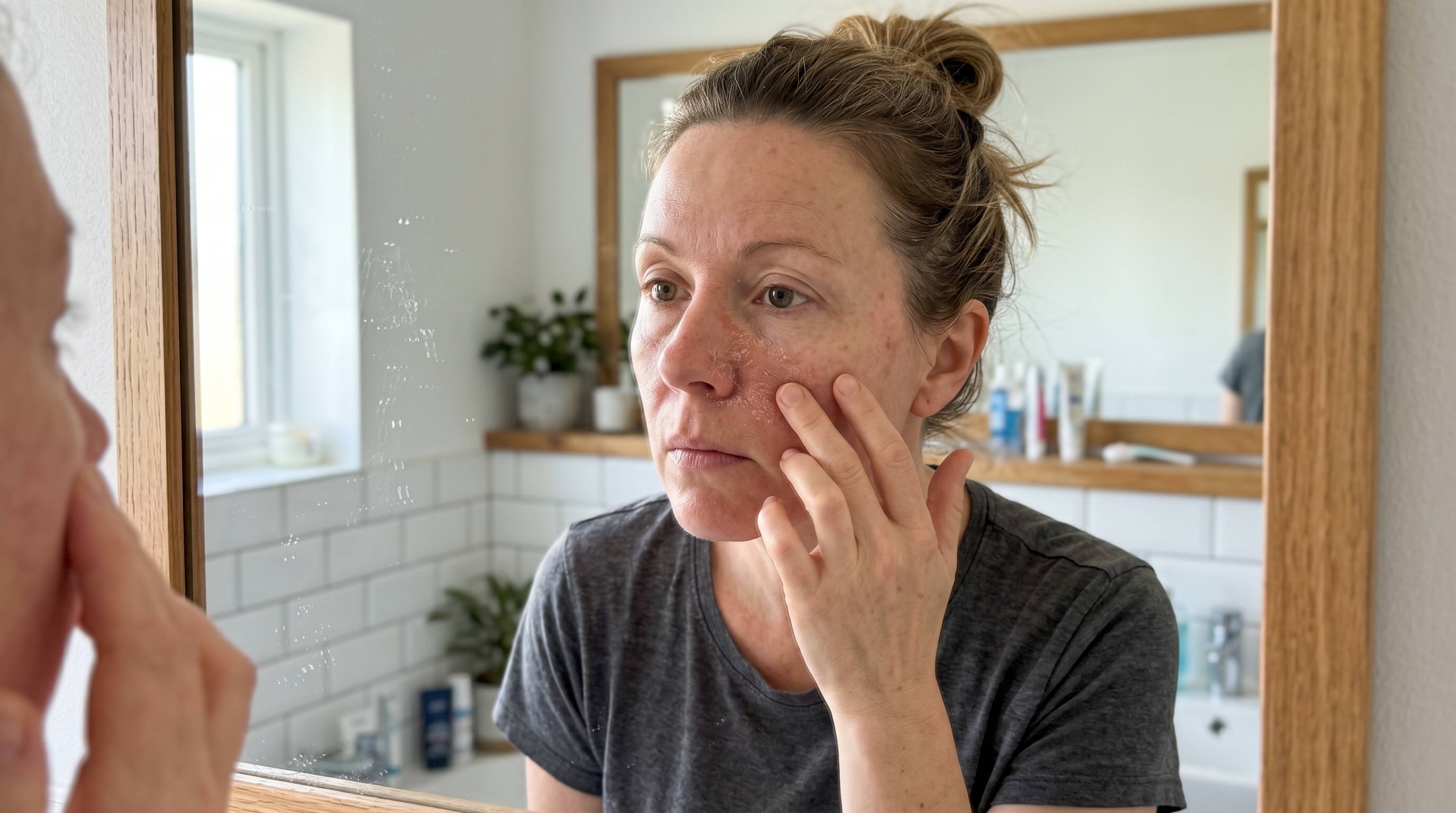
- Anyone with broken or inflamed skin. Occlusion can push irritants and allergens deeper into the skin as well as the good ingredients, which can make contact dermatitis worse [8]. Use bland ointments on raw areas, and stop if a cream starts to burn.
- People prone to athlete’s foot. Warm, damp skin suits fungus. Keep cream off the toe webs and change socks every night.
- Anyone with a sudden change. Painful, thick or discolored heels that do not respond to a few weeks of care deserve a professional look.
Beyond Soft Heels
Moisturizing socks are a good habit for a narrow job: softer, less cracked feet. They will not change the crepey, thinning skin that appears on the tops of the feet, ankles and shins with sun and age. That comes from collagen and elastin loss in the deeper skin, and the best-studied topical ingredient for it is retinol.
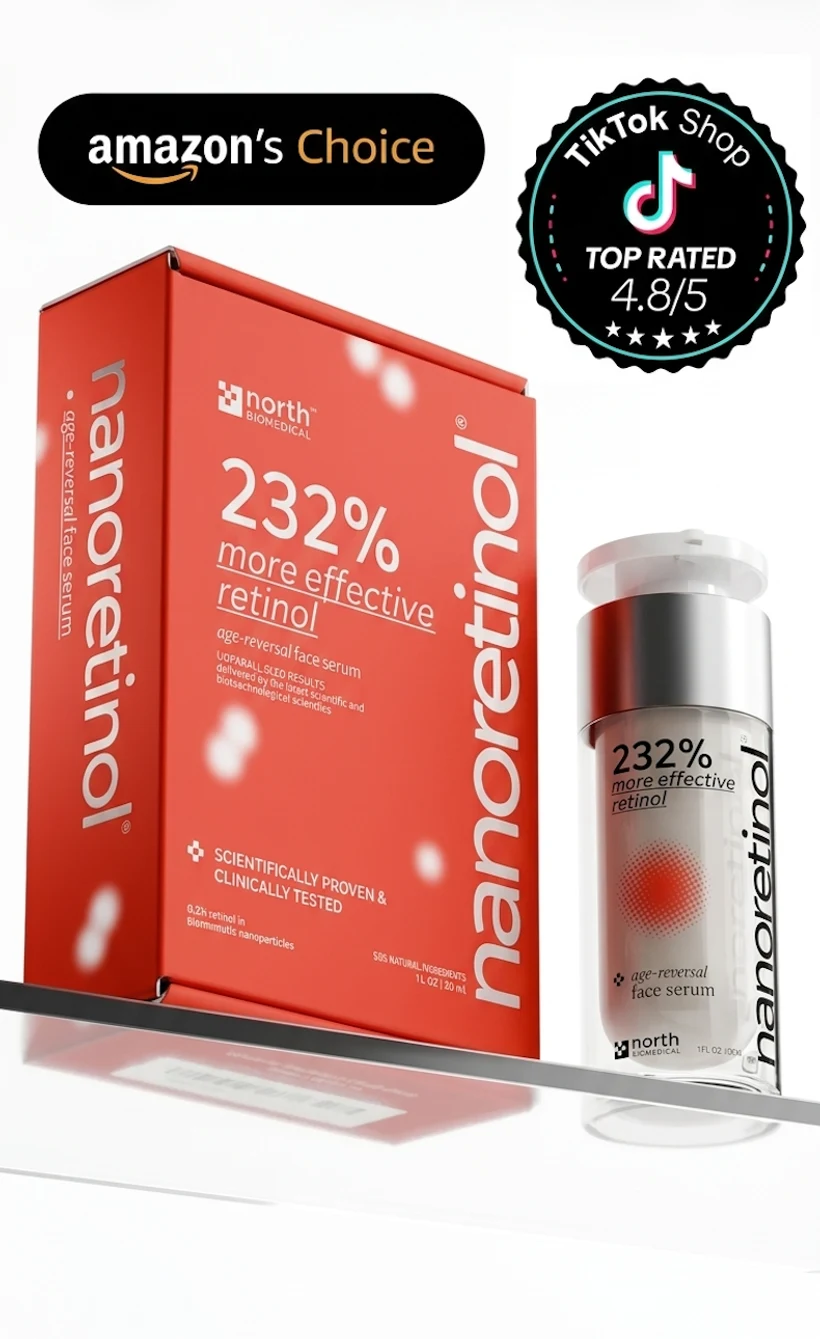
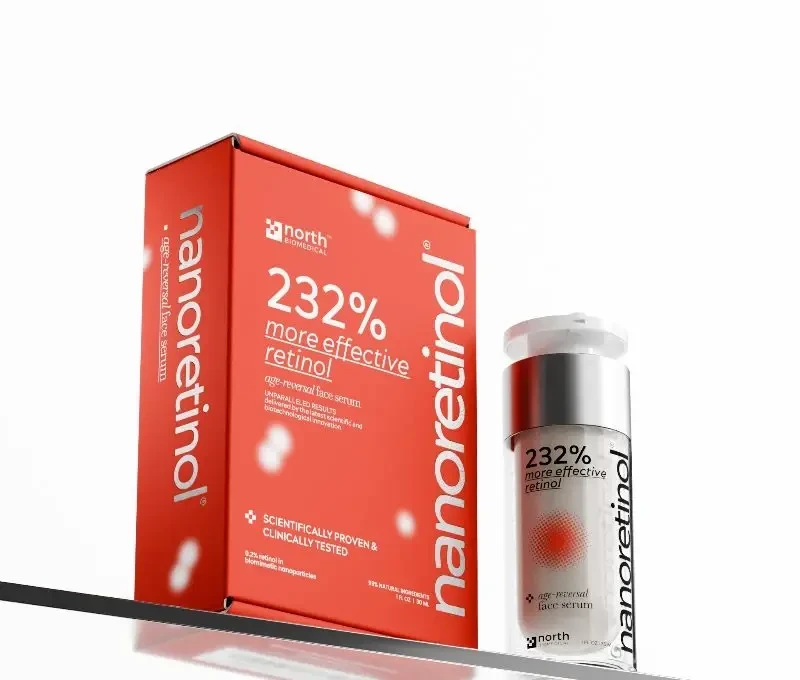
The trouble is that many conventional retinol formulas rely on harsh solvents that loosen the skin barrier to push retinol in, which is why redness and peeling are so common. Nanoretinol takes a different route. Its retinol is carried in biomimetic lipid nanoparticles that pass through the barrier without breaking it down, in a light, water-based gel with 99% natural ingredients. In North Biomedical’s clinical study, it was 232% more effective than conventional retinol in collagen recovery and 73% more effective in elastin recovery, and 56 days of use brought a 61% increase in skin firmness and a 56% increase in elasticity [9]. Side effects were minimal and milder than with conventional retinol.
Keep it off cracked or broken skin, and save the socks for your heels. Healthy skin on the shins and the tops of the feet can take a nightly retinol, while the cream under your socks handles the cracks.
References
- Zhai H, Maibach HI. “Effects of skin occlusion on percutaneous absorption: an overview.” Skin Pharmacology and Applied Skin Physiology. 2001;14(1):1-10. doi:10.1159/000056328
- Ya-Xian Z, Suetake T, Tagami H. “Number of cell layers of the stratum corneum in normal skin - relationship to the anatomical location on the body, age, sex and physical parameters.” Archives of Dermatological Research. 1999;291(10):555-559. doi:10.1007/s004030050453
- Paul C, Maumus-Robert S, Mazereeuw-Hautier J, Guyen CN, Saudez X, Schmitt AM. “Prevalence and risk factors for xerosis in the elderly: a cross-sectional epidemiological study in primary care.” Dermatology. 2011;223(3):260-265. doi:10.1159/000334631
- Parker J, Scharfbillig R, Jones S. “Moisturisers for the treatment of foot xerosis: a systematic review.” Journal of Foot and Ankle Research. 2017;10:9. doi:10.1186/s13047-017-0190-9
- Pan M, Heinecke G, Bernardo S, Tsui C, Levitt J. “Urea: a comprehensive review of the clinical literature.” Dermatology Online Journal. 2013;19(11):20392. PubMed 24314769
- Gin H, Rorive M, Gautier S, Condomines M, Saint Aroman M, Garrigue E. “Treatment by a moisturizer of xerosis and cracks of the feet in men and women with diabetes: a randomized, double-blind, placebo-controlled study.” Diabetic Medicine. 2017;34(9):1309-1317. doi:10.1111/dme.13402
- Weistenhöfer W, Wacker M, Bernet F, Uter W, Drexler H. “Occlusive gloves and skin conditions: is there a problem? Results of a cross-sectional study in a semiconductor company.” British Journal of Dermatology. 2015;172(4):1058-1065. doi:10.1111/bjd.13481
- Zhai H, Maibach HI. “Skin occlusion and irritant and allergic contact dermatitis: an overview.” Contact Dermatitis. 2001;44(4):201-206. doi:10.1034/j.1600-0536.2001.044004201.x
- North Biomedical LLC. “Nanoretinol vs. Conventional Retinol: Efficacy in Collagen and Elastin Recovery.” Clinical Study Summary, 2024. Study summary