Foot Peel Mask: How It Works and Why Nothing Happens for Days
An hour in plastic booties, then four days of apparently nothing, then your feet shed in sheets. The delay is the mechanism working.
A foot peel mask is the strangest product in skincare. You sit for an hour with your feet inside plastic booties filled with liquid, rinse, and see absolutely nothing. Day 2, nothing. Day 3, nothing. Then somewhere around day 4 or 5 the surface of both feet lifts away in sheets, and for the next week you leave a trail everywhere you walk.
That delay confuses people enough that plenty assume the mask failed and buy a second one. The delay is not a flaw. It is the direct consequence of how the chemistry works, and understanding it tells you exactly how to use one without wrecking your feet.
What is actually inside the booties
The liquid is a concentrated blend of alpha hydroxy acids, usually lactic and glycolic, frequently with salicylic acid alongside them, held at a low pH. Concentration is only half of what makes an acid active. The proportion existing in free acid form, which depends on pH and on how much the formula has been neutralised, decides how much of it can act on skin at all [1]. A well-formulated peel mask sits far lower on the pH scale than any leave-on lotion you would put on your face, which is why the same acids behave completely differently here.
What those acids do was worked out in the 1970s and described by Van Scott and Yu, who showed that hydroxy acids act on corneocyte cohesion at the lower levels of the stratum corneum rather than dissolving the surface [2]. They loosen the attachments that hold dead cells to one another. Nothing is burned away, nothing is scrubbed off, and the mask itself removes almost no tissue while it is on your feet.
The acid does not take anything off your feet. It quietly unglues cells several layers down and leaves them to fall off on their own schedule.
Why the peeling waits until day 4
Once the attachments deep in the stratum corneum are broken, those cells still have the entire thickness of the outer layers above them. The loosened plane has to migrate upward through normal turnover before it reaches the surface and separates visibly. On the body that takes days, and on the sole of the foot, where the stratum corneum is the thickest on the body by a wide margin, it takes longer still.
Which is why the timeline is so consistent: an hour of treatment, roughly 3 to 7 days of nothing, then peeling that peaks over several days and finishes within about 2 weeks. Someone with a heavy callus may peel later and longer than someone with mildly dry feet. Nothing has gone wrong in either case.
The practical rule follows from this. Do not repeat a mask because the first one seemed inert, and do not use a second one inside 4 weeks. You would be applying a high-dose acid to skin that has just lost its outer defence.
What the plastic bootie contributes
The bootie is not packaging. Occlusion changes percutaneous absorption substantially: sealing skin under an impermeable film raises stratum corneum hydration, and hydrated keratin is dramatically more permeable than dry keratin, so the same molecule penetrates further and stays active longer [3]. It also stops the solvent evaporating, which would otherwise concentrate and then strand the formula on the surface.
This is the reason a foot peel outperforms an acid foot cream containing similar ingredients. The cream has no chamber. On a heel with a millimetre of dry callus, an unoccluded acid barely gets started before it dries out.
A sealed plastic bootie turns a modest acid blend into something that reaches skin no foot cream can touch.
Feet are a genuinely different organ
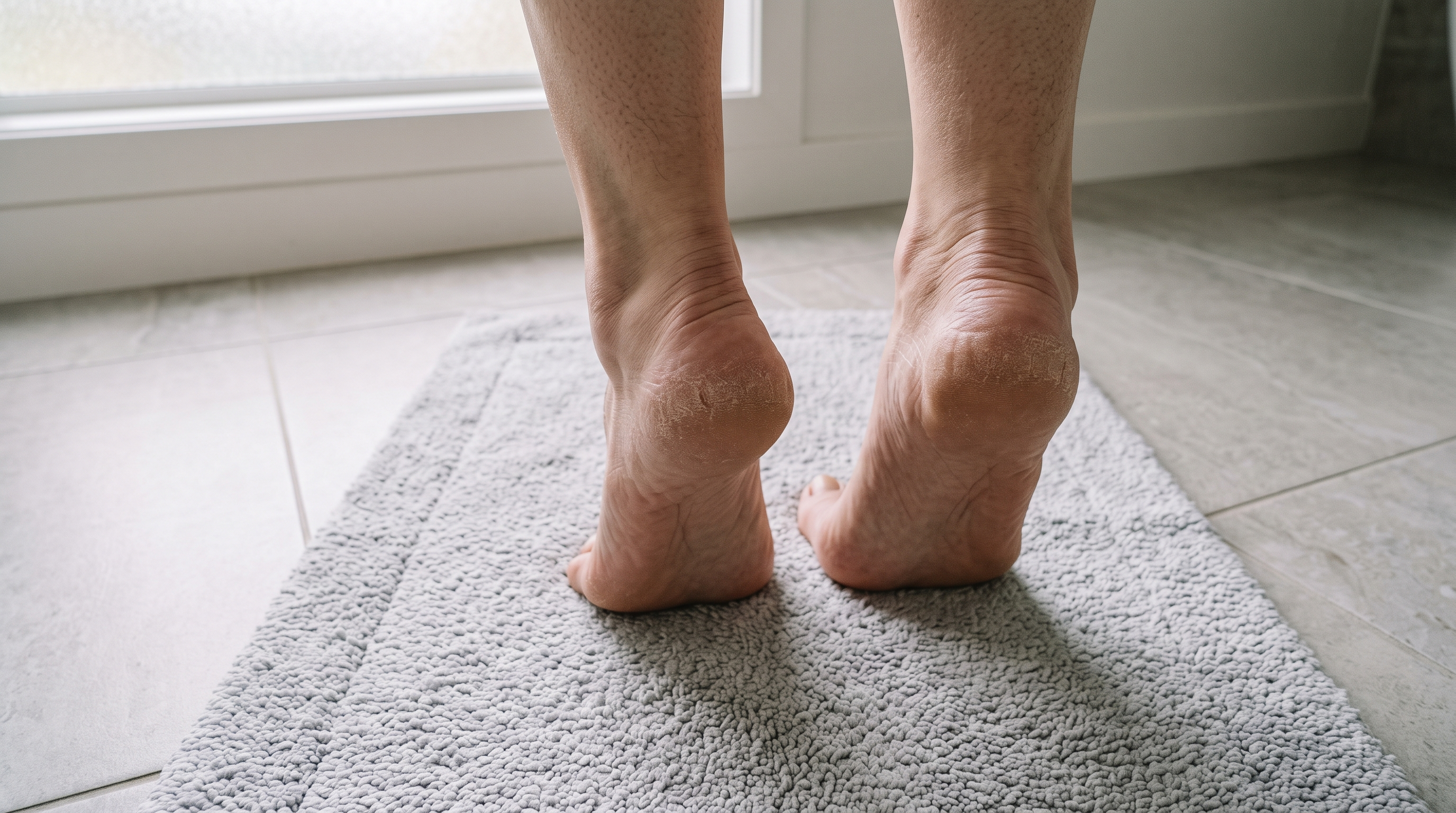
Plantar skin is built for load. Repeated pressure drives a protective thickening response, so the callus on your heel is your body doing its job somewhat too enthusiastically. Three ingredient families address that hyperkeratosis, and good masks use more than one.
Salicylic acid is lipophilic, which lets it move into the lipid-rich intercellular matrix, and it has a well-documented keratolytic action used across acne and hyperkeratotic conditions [4]. Lactic acid, beyond loosening cells, has measurable effects on the epidermis at appropriate concentrations and is also a component of the skin’s own natural moisturising factor [5]. Urea, common in dedicated heel products rather than in peel masks, is keratolytic at higher percentages and humectant at lower ones, which is why it appears in both categories [6]. Our guides to lactic acid for skin and urea for skin cover how those concentrations change the job each one is doing.
When not to use one
Skip foot peels entirely if you have diabetes, peripheral neuropathy or poor circulation in the feet. Deliberately shedding the protective layer from skin with impaired sensation and impaired healing is a bad trade, and foot care in those conditions belongs with a clinician. Do not apply one over cuts, cracks that are bleeding, active fungal infection, eczema or sunburn. Skip it during pregnancy and breastfeeding, where salicylic acid exposure is generally minimised.
For everyone else, the biggest avoidable injury is impatience. Do not pull sheets that are still attached. Peeling skin that separates under traction takes living tissue with it, which is how a cosmetic treatment turns into a raw patch. Let it come away in the shower, trim nothing, and keep walking on it normally.
What to do while it peels, and afterwards
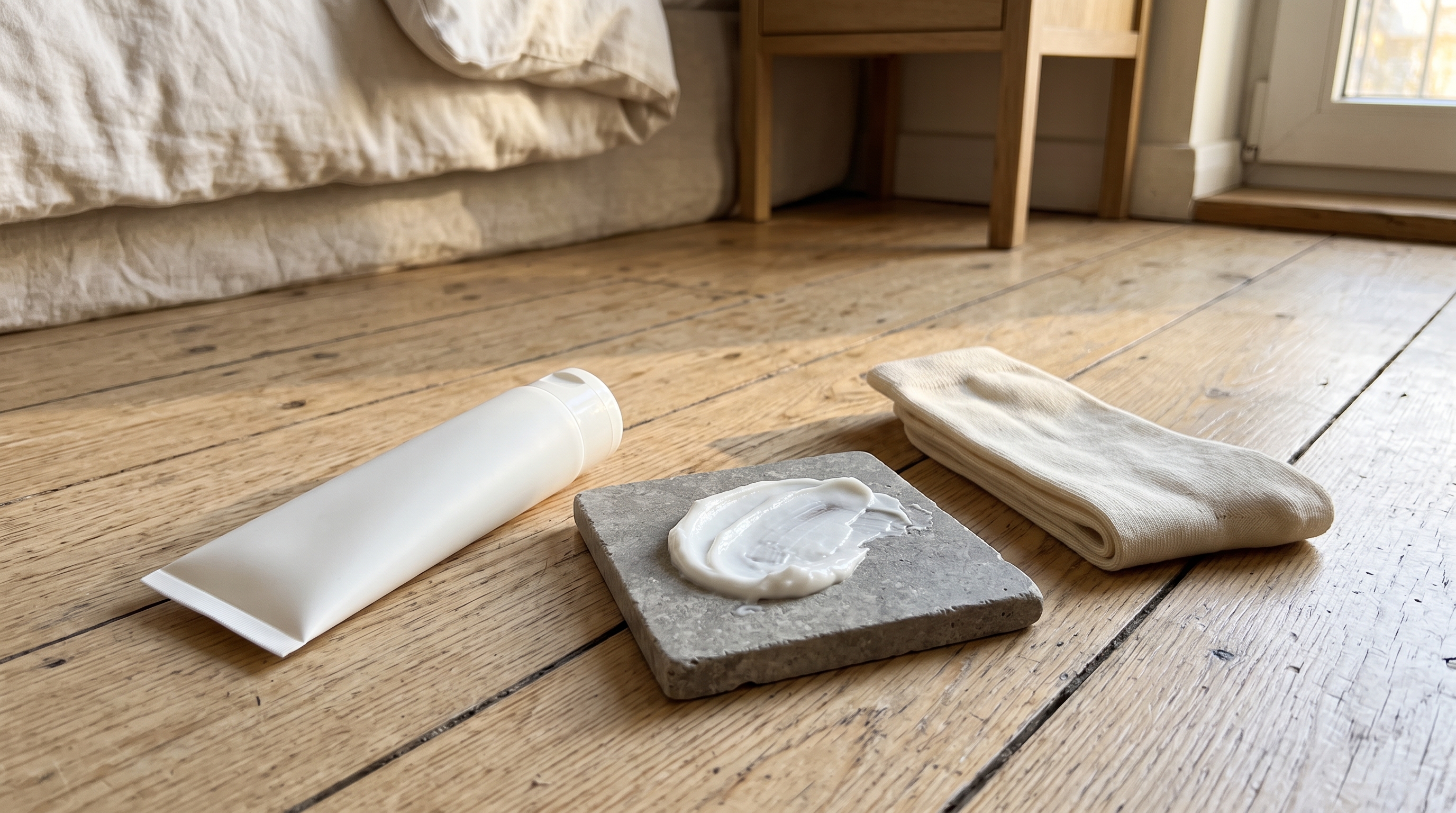
Keep the feet moisturised throughout. A moisturiser is a combination of humectants that draw water in, emollients that smooth the surface, and occlusives that slow water loss [7], and freshly revealed skin benefits from all three. Apply after showering while the skin is still damp, and wear socks overnight if you want the occlusive effect the booties demonstrated so effectively.
Once the peel finishes, maintenance is far cheaper than repetition. A urea or acid-containing heel cream used a few nights a week holds the result for months, which is the approach in our best foot cream for cracked heels guide. If you want the general logic of which acid suits which job, AHA vs BHA is the place to start.
The ceiling this product hits
A foot peel is a superb demonstration of one thing: a surprising amount of what looks like rough, aged, thickened skin is simply retained dead cells. Remove them and the surface underneath is better than you expected.
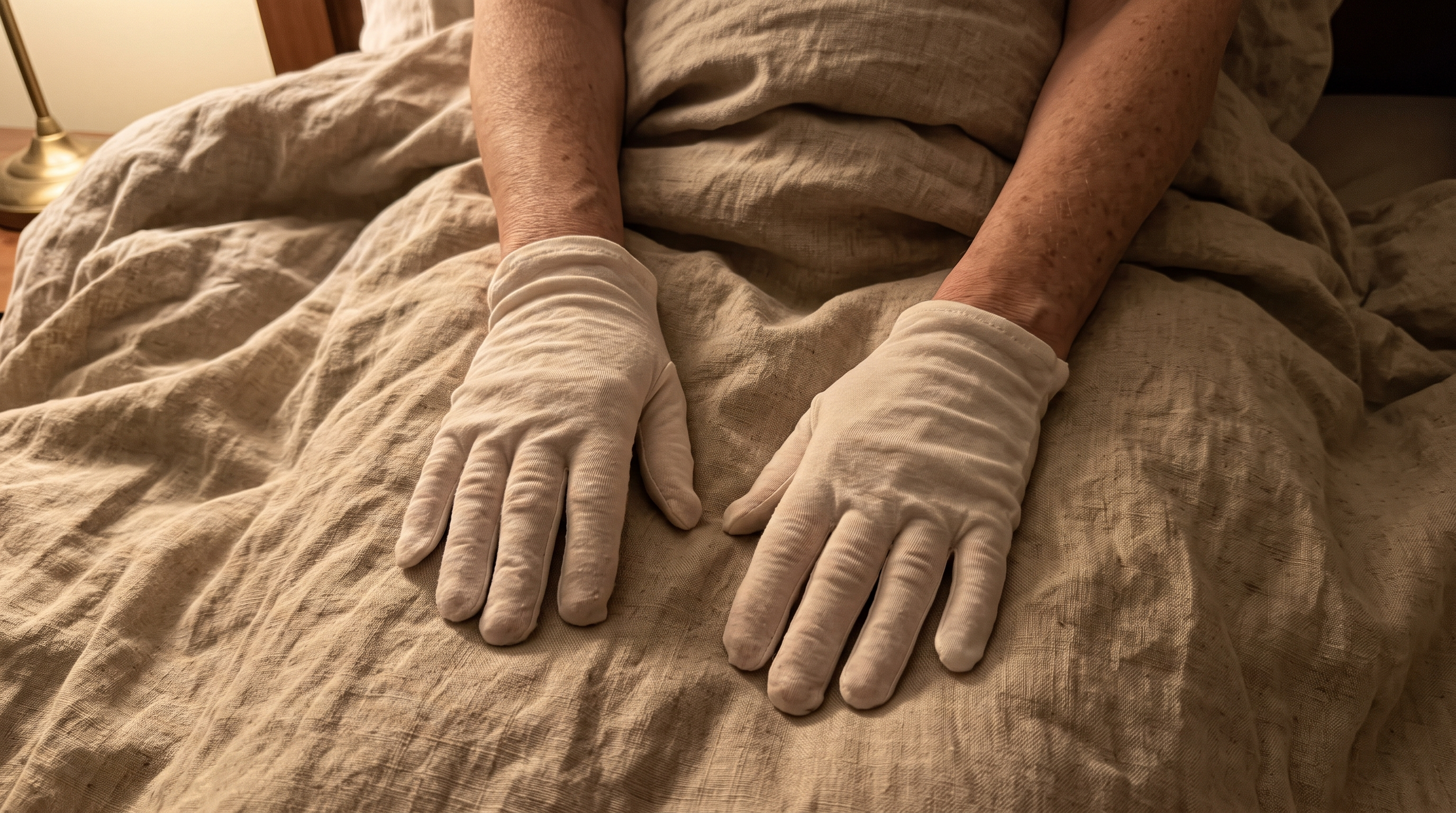
It is also a clean demonstration of the limit. Everything a peel mask touches is already dead tissue. It does not reach the dermis, it adds no collagen, and it changes nothing about elasticity or laxity. That is why the same reader who fixes their heels in a week finds that crepey skin on the hands, arms or neck does not respond to exfoliation at all, no matter how often it is repeated.
Where Nanoretinol fits
Crepiness and thinning are dermal problems, and the dermis needs an active that gets past the surface rather than removing it. Retinoids do that work, with the historic catch that conventional formulations rely on solvents and petroleum-derived enhancers to force retinol through the barrier by disrupting it, trading redness and flaking for results.
Nanoretinol encapsulates stabilised 0.2% retinol in biomimetic lipid nanoparticles the skin reads as its own and admits intact, so the barrier stays intact while the active arrives. North Biomedical’s clinical study summary reports 232% greater effectiveness in collagen recovery and 73% greater in elastin recovery than conventional retinol, with drastically reduced cytotoxicity, in a water-based gel light enough for daily use. Exfoliation reveals skin. A retinoid is what rebuilds it.
References
- Kornhauser A, Coelho SG, Hearing VJ. “Applications of hydroxy acids: classification, mechanisms, and photoactivity.” Clinical, Cosmetic and Investigational Dermatology. 2010;3:135-142. doi:10.2147/CCID.S9042
- Van Scott EJ, Yu RJ. “Hyperkeratinization, corneocyte cohesion, and alpha hydroxy acids.” Journal of the American Academy of Dermatology. 1984;11(5 Pt 1):867-879. PMID: 6096420
- Zhai H, Maibach HI. “Effects of skin occlusion on percutaneous absorption: an overview.” Skin Pharmacology and Applied Skin Physiology. 2001;14(1):1-10. doi:10.1159/000056328
- Arif T. “Salicylic acid as a peeling agent: a comprehensive review.” Clinical, Cosmetic and Investigational Dermatology. 2015;8:455-461. doi:10.2147/CCID.S84765
- Smith WP. “Epidermal and dermal effects of topical lactic acid.” Journal of the American Academy of Dermatology. 1996;35(3):388-391. doi:10.1016/S0190-9622(96)90602-7
- Celleno L. “Topical urea in skincare: a review.” Dermatologic Therapy. 2018;31(6):e12690. doi:10.1111/dth.12690
- Draelos ZD. “The science behind skin care: moisturizers.” Journal of Cosmetic Dermatology. 2018;17(2):138-144. doi:10.1111/jocd.12490