
Morpheus8: Does RF Microneedling Really Tighten Skin?
How fractional radiofrequency microneedling works, what the research shows, and the daily step that protects your results.
The Quiet Reason Your Jawline Softens
Somewhere in your forties, the mirror starts telling a story the bathroom scale doesn’t. The jaw blurs. The cheeks sit a little lower. The skin along the neck loses the crisp edge it once had. It is tempting to blame weight or sleep, but the real culprit is structural: the scaffolding under your skin is thinning.
Collagen — the protein that gives skin its firmness — peaks in early adulthood and then quietly declines. Researchers who isolated fibroblasts, the cells that build collagen, from young versus older skin found that the older cells simply produce less: aged dermal fibroblasts made markedly less type I procollagen than young ones, and the dermis itself becomes thinner and more fragmented with each passing decade [1]. Less collagen means less support, and less support means the soft tissue of the face begins to descend.
This is the problem Morpheus8 was designed to attack — not at the surface, but in the deep layers where that scaffolding lives.
What Morpheus8 Actually Does
Morpheus8 is a fractional radiofrequency (RF) microneedling device. That name is a mouthful, so break it into two ideas.
First, microneedling: an array of very fine needles creates thousands of microscopic channels in the skin. On its own, this controlled “injury” triggers the body’s wound-healing response, which includes laying down fresh collagen.
Somewhere in your forties, the mirror starts telling a story the bathroom scale doesn’t.
Second, radiofrequency: as the needles reach a set depth, they emit RF energy that heats the surrounding dermis and the fibrous tissue beneath it. Heat is the active ingredient here. When dermal tissue reaches a high enough temperature, existing collagen contracts immediately, and — more importantly — the heat injury kicks off weeks of new collagen and elastin production as the skin repairs itself.
What makes Morpheus8 distinctive is depth. Its needles can deliver that thermal energy several millimeters down, into the deeper dermis and the subdermal fat — the layers most responsible for the contour of the lower face. By concentrating energy in fractional zones while leaving islands of untouched skin between them, the device drives remodeling without removing the surface, which keeps recovery short.
What the Research Shows
The mechanism is well documented. In a clinical and histological study of microneedle fractional RF on facial fine lines and laxity, researchers saw partially denatured collagen fibers and immediate dermal shrinkage right after treatment, followed by a measurable increase in collagen and elastin at the four-month follow-up; roughly 87% of participants rated their results satisfactory [2]. A separate histologic evaluation of fractional RF using ultra-thin electrode pins confirmed the same cascade: the energy heats the superficial and deep dermis, creating controlled thermal microwounds that trigger new collagen, elastin, and glycosaminoglycan formation in the surrounding tissue [3].
Researchers are also studying what happens after the needles come out. A 2025 randomized controlled trial found that the way skin is supported in the days following RF microneedling measurably influenced the final aesthetic outcome — a reminder that the procedure starts a process the skin then has to finish [4].
What It Feels Like, Costs, and Who It’s For
A numbing cream is applied first, so most people describe the treatment as pressure and warmth rather than sharp pain. Afterward, expect redness and a sandpaper-like texture for a few days, sometimes mild swelling or a faint grid pattern that fades quickly. Most protocols call for one to three sessions spaced about a month apart, with results building gradually over three to six months as collagen matures.
For the bigger picture on protecting your skin’s structural reserves, see our guide to collagen banking and the fundamentals of non-surgical skin tightening.
Morpheus8 tends to suit people with mild to moderate laxity — early jowls, a softening jawline, crepey texture — who want improvement without surgery. It is not a facelift; deep, advanced sagging usually needs a surgical solution. Costs vary widely by region and the area treated, often running several hundred to a couple of thousand dollars per session, and it is not covered by insurance because it is cosmetic.
The Catch Nobody Mentions at the Consultation
Here is the part that matters most for anyone deciding whether the investment is worth it. Morpheus8 stimulates a burst of new collagen, but it does nothing to slow the underlying decline that caused the laxity in the first place. The fibroblasts that build your collagen keep aging. UV exposure, inflammation, and time keep chipping away at the scaffold. Without ongoing support, the gains soften over the following year or two, and you are back in the chair.
That is why the smartest patients treat an in-office procedure as a reset, not a finish line — and pair it with a daily routine that keeps nudging the skin to produce collagen between sessions. For the bigger picture on protecting your skin’s structural reserves, see our guide to collagen banking and the fundamentals of non-surgical skin tightening.
The Daily Half of the Equation
If a procedure’s whole job is to provoke new collagen, the obvious question is: what can you do at home, every night, to keep that signal switched on?
The most studied answer is a retinoid. In a landmark vehicle-controlled study, topical retinol applied to the naturally aged skin of older adults significantly increased collagen production and improved the appearance of fine wrinkles compared with an inactive control [5]. Retinol works precisely where Morpheus8 does — it talks to the fibroblasts and tells them to build — which makes it the natural daily complement to any collagen-stimulating treatment, as we explain in retinol and collagen.
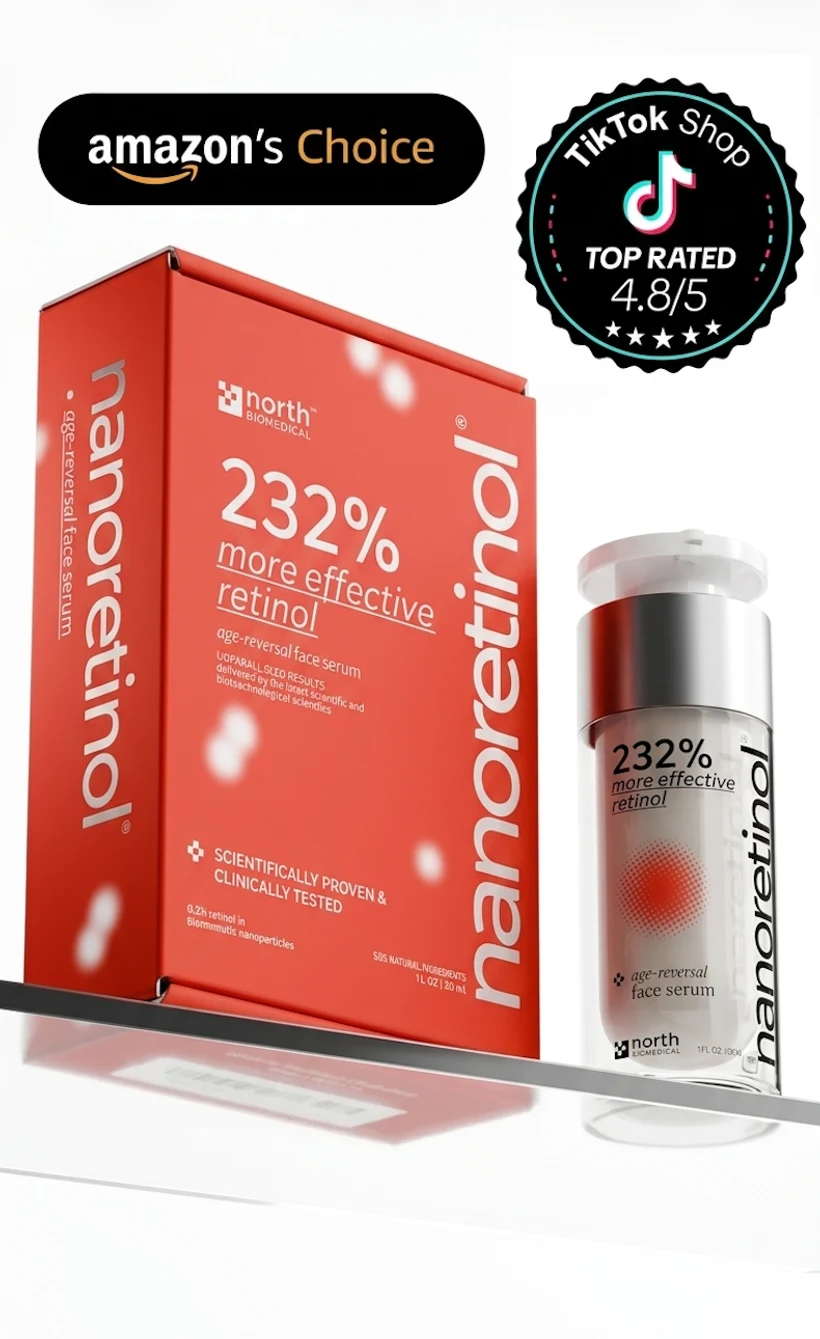
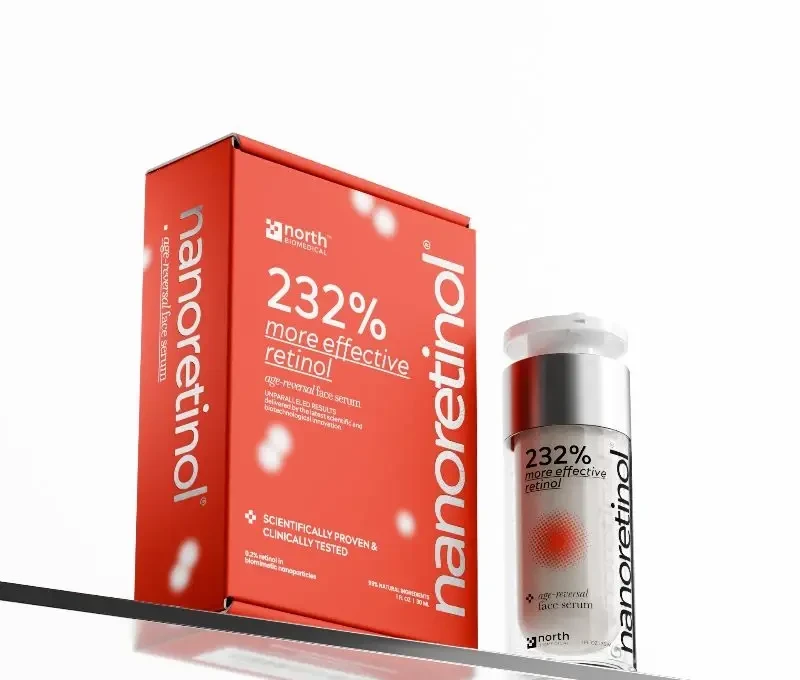
The limitation of conventional retinol is delivery. Ordinary formulas struggle to cross the skin barrier intact, and the chemistry many of them rely on can leave skin red and peeling — a hard sell when you are already recovering from a procedure. This is the gap Nanoretinol was built to close. It wraps retinol inside biomimetic lipid nanoparticles that the skin recognizes as “self,” carrying the active deep into the dermis without tearing down the barrier to get there. In North Biomedical’s clinical comparison, that delivery system proved 232% more effective at collagen recovery and 73% more effective at elastin recovery than conventional retinol, while clinical users saw a 61% increase in firmness and a 56% increase in elasticity over 56 days [6]. Because it is a gentle, water-based 0.2% formula, it fits neatly into the recovery window when harsher products are off the table.
Morpheus8 can rebuild in a few sessions what a decade quietly dismantled. But the decade doesn’t stop. Treat the procedure as the spark and a proven nightly retinoid as the fuel, and you give the new collagen something most people never do: a reason to stay.
References
- Varani J, Dame MK, Rittié L, Fligiel SEG, Kang S, Fisher GJ, Voorhees JJ. “Decreased Collagen Production in Chronologically Aged Skin: Roles of Age-Dependent Alteration in Fibroblast Function and Defective Mechanical Stimulation.” American Journal of Pathology. 2006;168(6):1861-1868. doi:10.2353/ajpath.2006.051302
- Suh DH, Cho M, Kim HS, Lee SJ, Song KY, Kim HS. “Clinical and histological evaluation of microneedle fractional radiofrequency treatment on facial fine lines and skin laxity in Koreans.” Journal of Cosmetic Dermatology. 2023;22(5):1507-1512. doi:10.1111/jocd.15614
- Kauvar ANB, Gershonowitz A. “Clinical and Histologic Evaluation of a Fractional Radiofrequency Treatment of Wrinkles and Skin Texture With Novel 1-mm Long Ultra-thin Electrode Pins.” Lasers in Surgery and Medicine. 2022;54(1):54-61. doi:10.1002/lsm.23452
- Lynch SE, Huxel ST, Bond R, Biron J, Gold M. “Recombinant Pure PDGF Improves Aesthetic Results and Patient Satisfaction Following RF Microneedling: A Prospective, Randomized, Controlled Clinical Trial.” Journal of Cosmetic Dermatology. 2025;24(9):e70425. doi:10.1111/jocd.70425
- Kafi R, Kwak HS, Schumacher WE, Cho S, Hanft VN, Hamilton TA, King AL, Neal JD, Varani J, Fisher GJ, Voorhees JJ, Kang S. “Improvement of Naturally Aged Skin With Vitamin A (Retinol).” Archives of Dermatology. 2007;143(5):606-612. doi:10.1001/archderm.143.5.606
- North Biomedical LLC. “Nanoretinol vs. Conventional Retinol: Efficacy in Collagen and Elastin Recovery.” Clinical Study Summary, 2024. Study summary