
Neck Wrinkles: Why They Form and How to Actually Smooth Them
The neck ages faster than the face — here's the science of why, and what genuinely softens the lines.
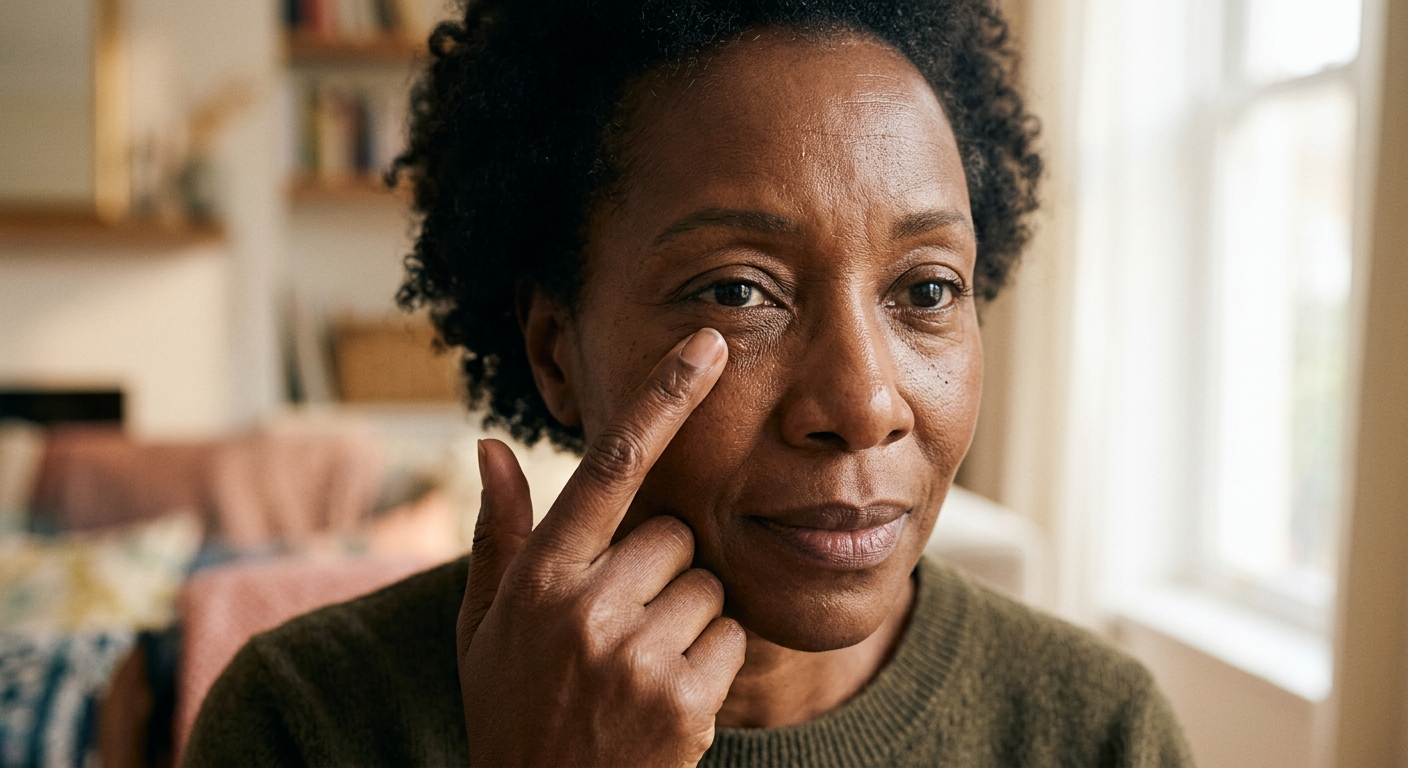
You can spend a decade perfecting a facial skincare routine and still be betrayed by the six inches of skin below your jaw. The neck is where age announces itself first — and where most people apply the least. If you have started noticing horizontal bands, fine creasing, or a crepey looseness when you tilt your head down, you are not imagining an acceleration. The neck genuinely ages faster than the face, and the reasons are structural.
Why neck skin wrinkles sooner than facial skin
Three anatomical facts conspire against the neck. First, the skin there is thinner, with a more delicate dermis than the cheeks or forehead. Second, the neck has far fewer sebaceous (oil) glands, so it produces less of the lipid film that keeps facial skin supple and protected. Third, it is in near-constant motion — every nod, swallow, and glance downward folds the same lines thousands of times a day.
Layered on top of that mechanical stress is sun exposure. Most people are diligent with sunscreen on the face and forget the neck entirely, leaving it to absorb decades of ultraviolet radiation. UV light is the single largest driver of visible aging, and it works by triggering enzymes called matrix metalloproteinases that break down the collagen and elastin scaffolding holding skin taut [1]. Over years, this photoaging cascade degrades the dermal matrix faster than the body can rebuild it.
The rebuilding problem is the quiet half of the story. As skin ages, fibroblasts — the cells that manufacture collagen — become less active and produce measurably less of it. Researchers have shown that collagen synthesis is markedly reduced in chronologically aged skin, partly because aging fibroblasts collapse and lose the mechanical tension that normally signals them to keep producing [2]. So the neck faces a double hit: faster breakdown from sun and motion, slower repair from within.
Reading your neck: lines, bands, and crepiness
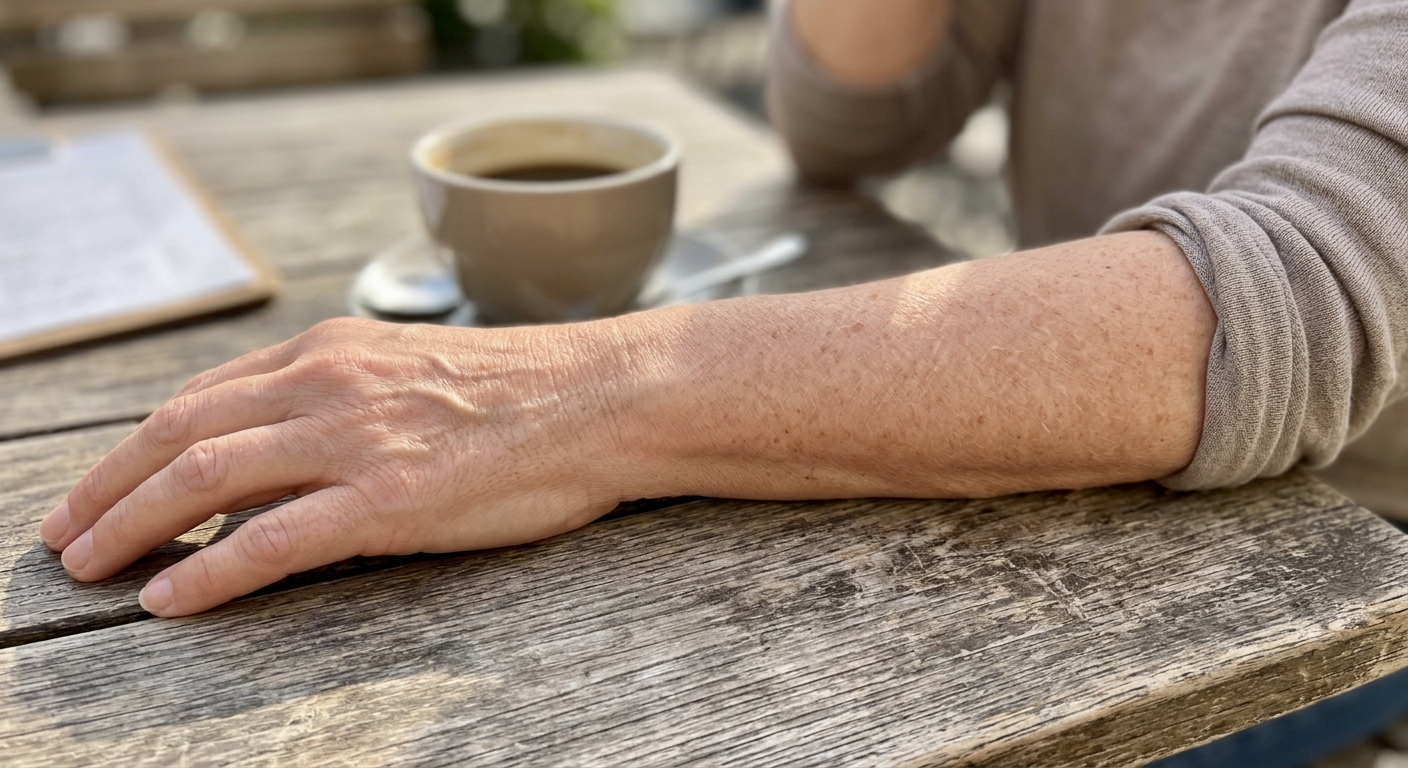
Not all neck wrinkles are the same, and the distinction matters for treatment. Horizontal “necklace” lines — sometimes called tech-neck lines from looking down at phones — are partly creases worn into thinning skin. A looser, sagging quality under the chin reflects collagen and elastin loss plus changes in the underlying platysma muscle. And a fine, papery texture across the surface is classic crepiness, driven by surface dehydration and a depleted dermal matrix. Many people over 40 have all three at once. If your main concern is the crinkled texture, our guide to crepey neck skin goes deeper on that specific pattern, while horizontal banding is covered in our piece on neck lines.
If you have started noticing horizontal bands, fine creasing, or a crepey looseness when you tilt your head down, you are not imagining an acceleration.
What actually works: the evidence-based shortlist
The supplement aisle and the serum counter are full of promises, but only a handful of interventions have real clinical support for neck wrinkles.
Daily sunscreen, extended down the neck. This is unglamorous and non-negotiable. Because UV damage is the dominant cause of neck photoaging, blocking it is the highest-leverage habit available. Sunscreen does not reverse existing lines, but it stops you from adding new damage on top of old — and it lets your other treatments work against a smaller deficit.
Retinoids — the most studied wrinkle-active there is. Vitamin A derivatives are the gold standard for softening wrinkles because they do something most ingredients cannot: they signal skin cells to behave younger. A landmark study of naturally aged skin found that topical retinol significantly increased glycosaminoglycan production and collagen, with visible improvement in fine wrinkling [3]. A broad review of retinoids in skin aging reached the same conclusion — these molecules increase procollagen, thicken the living epidermis, and improve the appearance of aged skin across multiple controlled trials [4]. And a systematic review of randomized controlled trials confirmed that topical tretinoin reliably improves fine and coarse wrinkling versus vehicle [5]. Retinoids are, in short, the rare anti-aging ingredient that earns its reputation.
Peptides, niacinamide, and moisturization play valuable supporting roles — improving barrier function, hydration, and surface smoothness — but none rival retinoids for restructuring the dermis. If you want a fuller picture of topical options for this area, our review of the best neck firming creams ranks ingredients by the strength of their evidence.
Sunscreen does not reverse existing lines, but it stops you from adding new damage on top of old — and it lets your other treatments work against a smaller deficit.
The catch: the neck punishes harsh retinol
Here is the frustrating paradox. The ingredient with the best evidence for neck wrinkles is also the one the neck tolerates worst. Because neck skin is thin and oil-poor, conventional retinol — which has to partly disrupt the skin barrier to penetrate — frequently causes redness, flaking, and stinging there. Many people start a retinol on their neck, peel for a week, and quit. The active never gets a fair chance to work because consistency is impossible.
This is the core tension of neck care: the more effective the molecule, the more likely the delicate neck will rebel against it. The solution is not a weaker ingredient — it is a smarter way to deliver the same ingredient.
A gentler route to the same active
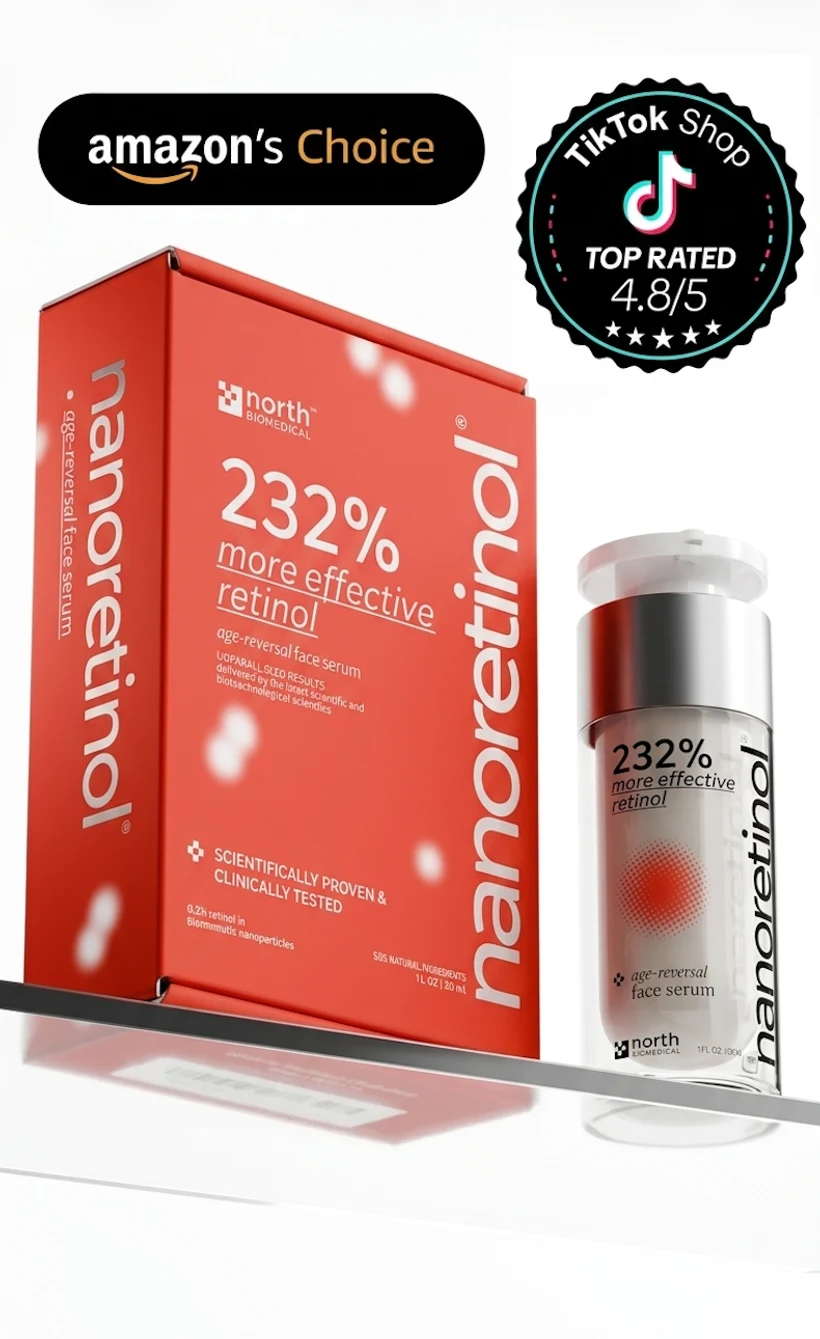
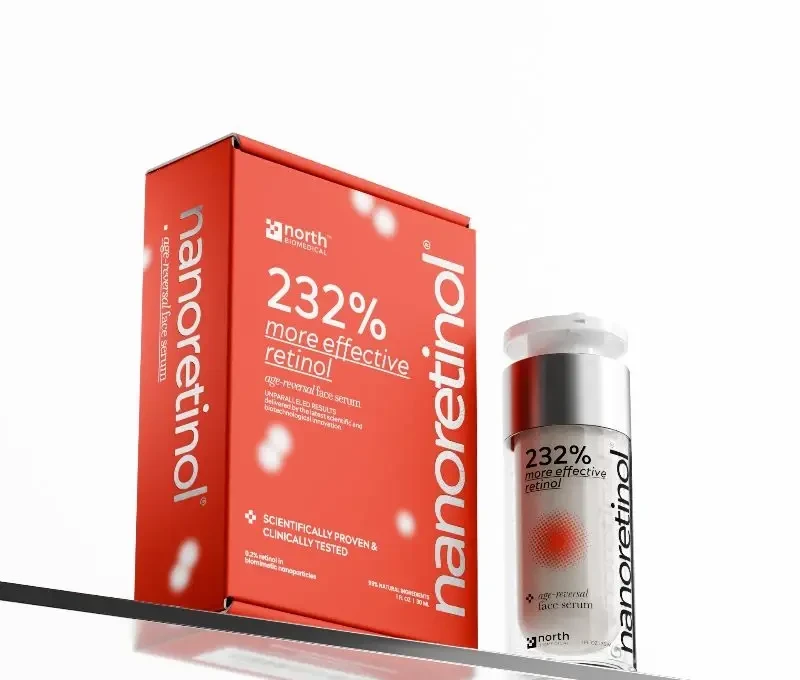
This delivery problem is exactly what Nanoretinol was engineered to solve. Instead of relying on barrier-disrupting chemistry to force retinol into the skin, Nanoretinol encapsulates retinol inside biomimetic lipid nanoparticles — particles externally similar to the skin’s own cells. The body recognizes them as “self” and lets them pass through the epithelial barrier without the chemical breakdown that conventional formulations require. There is no need to damage the barrier to deliver the payload.
That matters most precisely where skin is thinnest. In comparative testing, Nanoretinol proved dramatically gentler on skin cells than conventional retinol, with significantly reduced cytotoxicity — and in head-to-head measures it was 232% more effective at collagen recovery and 73% more effective at elastin recovery than standard retinol. Because the encapsulation delivers more active to the target cells, a fully stabilized 0.2% concentration does the work without the harshness that drives people off their routines. Its water-based, non-greasy gel suits the eye-contour and neck area, and clinical use over 56 days showed a 61% increase in firmness and a 56% increase in elasticity. For the neck specifically — where firmness and elasticity are exactly what is failing — that profile is well matched. (If you want the broader rationale for putting a retinoid on this area, see our guide to retinol for the neck.)
Putting it together
A realistic neck routine is shorter than most people expect: broad-spectrum sunscreen every morning carried down past the collarbone, a hydrating moisturizer to support the barrier, and a well-tolerated retinoid at night applied with the same care you give your face. Consistency over months — not any single product — is what visibly softens neck wrinkles, because you are waiting on fibroblasts to rebuild a matrix that took years to thin.
The neck will always be a demanding patch of skin. But it responds to the same biology as the face when you respect what makes it different: treat it gently, protect it from the sun, and give a proven active a delivery system it can actually tolerate.
References
- Fisher GJ, Kang S, Varani J, et al. “Mechanisms of Photoaging and Chronological Skin Aging.” Archives of Dermatology. 2002;138(11):1462-1470. doi:10.1001/archderm.138.11.1462
- Varani J, Dame MK, Rittie L, et al. “Decreased Collagen Production in Chronologically Aged Skin: Roles of Age-Dependent Alteration in Fibroblast Function and Defective Mechanical Stimulation.” American Journal of Pathology. 2006;168(6):1861-1868. doi:10.2353/ajpath.2006.051302
- Kafi R, Kwak HSR, Schumacher WE, et al. “Improvement of Naturally Aged Skin With Vitamin A (Retinol).” Archives of Dermatology. 2007;143(5):606-612. doi:10.1001/archderm.143.5.606
- Mukherjee S, Date A, Patravale V, Korting HC, Roeder A, Weindl G. “Retinoids in the Treatment of Skin Aging: An Overview of Clinical Efficacy and Safety.” Clinical Interventions in Aging. 2006;1(4):327-348. doi:10.2147/ciia.2006.1.4.327
- Sitohang IBS, Makes WI, Sandora N, Suryanegara J. “Topical Tretinoin for Treating Photoaging: A Systematic Review of Randomized Controlled Trials.” International Journal of Women’s Dermatology. 2022;8(1):e003. doi:10.1097/JW9.0000000000000003