
Lines Under Eyes When Smiling: Why They Form and How to Keep Them From Becoming Permanent
The dynamic creases that appear only when you smile — and the narrow window before they become static wrinkles you can't smooth away
The first time you notice it, you’re usually looking at a photo. You’re smiling — a real smile, the kind that crinkles your eyes — and there’s a sharp crease running just below each lower lash line. It wasn’t there a few years ago. Or maybe it was, but it disappeared the moment your face relaxed. Now it lingers for a few seconds. Then a few minutes. Then it doesn’t fully smooth out at all.
This is the most common — and most pivotal — moment in eye-area aging: the transition from dynamic wrinkles to static ones. Dynamic wrinkles only appear with muscle movement. Static wrinkles are there even when your face is at rest. The narrow window between them is the part of aging where what you do actually matters most.
Here’s the science of what’s happening under the smile, why it changes, and what the clinical evidence supports for keeping a temporary line from becoming a permanent one.
Why the Lines Appear When You Smile
The under-eye area is wrapped by a ring-shaped muscle called the orbicularis oculi. It runs around the entire eye socket and is responsible for blinking, squinting, and the subtle lift that distinguishes a polite smile from a genuine one — the so-called Duchenne smile. When you smile authentically, the orbicularis oculi contracts and pulls the skin around the eye into folds. The lines you see under your eyes when smiling are these folds becoming visible.
A 2025 anatomical study on dynamic periocular wrinkles mapped exactly how the muscle complex around the eye produces these patterns [1]. The researchers found that the wrinkle lines form perpendicular to the orientation of the contracting muscle fibers — meaning the location and direction of each crease is dictated by the underlying muscle anatomy, which varies somewhat from person to person. This is why some people get prominent crow’s feet at the outer corners, others get vertical creases below the lash line, and still others get a more complex pattern that fans out across the entire under-eye region.
The skin around the eye is approximately 0.5mm thick, compared to about 2mm on the rest of the face. With one-quarter the structural buffer, even moderate muscle contractions produce visible folds. In young skin, the abundant collagen and elastin allow the folds to flatten back out the moment the muscle relaxes. The line disappears with the smile.
That elastic recoil is what changes with age.
The Transition From Dynamic to Static
The line that vanishes the moment your face relaxes is purely dynamic. The line that lingers slightly is in transition. The line that’s still visible when you’re not smiling is static.
The transition happens through a predictable sequence. Each muscle contraction folds the skin along the same anatomical path. Young skin has dense, organized collagen and intact elastin fibers that snap back. Aged skin has fewer collagen fibers, and the ones that remain are fragmented and disorganized [2]. Elastin damage is worse — solar elastosis (UV-driven accumulation of abnormal elastic material) progressively destroys the snap-back property of the skin [3].
The narrow window between them is the part of aging where what you do actually matters most.
Once the elastic recoil is degraded enough, the folded skin doesn’t fully recover between contractions. The repeated fold leaves a faint groove that becomes deeper with each successive smile. Over months and years, the groove becomes a permanent line.
The orbicularis oculi muscle itself also changes with age. A 2024 pilot study using electromyography and electron microscopy found that aging reduces the contraction strength of the orbicularis oculi, but the wrinkles around it tend to deepen rather than diminish [4]. The reason is that the skin’s structural integrity declines faster than the muscle’s pulling force — so the same contraction, against weaker skin, produces a deeper crease.
Why MMPs Are the Real Enemy
Behind the visible changes is a slower-moving enzymatic process. Matrix metalloproteinases (MMPs) are enzymes that break down the structural proteins of the dermis — primarily MMP-1, MMP-3, and MMP-9 [5]. They have legitimate roles in normal tissue remodeling, but their activity is dramatically upregulated by UV exposure. Even a single UV exposure causes a near-complete shutdown of collagen synthesis for 24 hours and a corresponding surge in MMP activity.
The under-eye area gets hit unusually hard by this. It’s protruded slightly by the cheekbone, frequently exposed when sunglasses slip down, and rarely receives the same religious sunscreen application as the rest of the face. Decades of small UV exposures accumulate as decades of small collagen losses — and the under-eye area, with its already-thin starting reserve, has the least margin for error.
This is why the appearance of static under-eye lines correlates so strongly with cumulative sun exposure rather than chronological age alone. Two 45-year-olds can have very different under-eye skin depending on how much UV their faces have absorbed.
The 8-to-16 Week Window
The good news is that the structural quality of the under-eye skin is not fixed — it can be rebuilt. The reliable timeline for visible improvement from a topical retinoid is 8 to 16 weeks, with continued gains accumulating for up to a year of consistent use.
A 2024 pooled analysis of vehicle-controlled trials on 0.1% stabilized retinol found that 12 weeks of consistent use produced measurable improvements in fine lines and wrinkle depth in the periocular region, with the majority of subjects reporting visible benefit [6]. A separate 2007 randomized, double-blind study by Kafi and colleagues at the University of Michigan applied 0.4% retinol to subjects with a mean age of 87 — some of the most photoaged skin tested — and found significant increases in collagen production and reductions in fine wrinkles after 24 weeks [7].
The mechanism is well established: retinoids bind to retinoic acid receptors on dermal fibroblasts, which upregulates collagen I and III synthesis, suppresses MMP activity, and increases epidermal thickness [8]. For the under-eye area, the epidermal thickening is particularly relevant — it adds back some of the structural buffer that age has thinned.
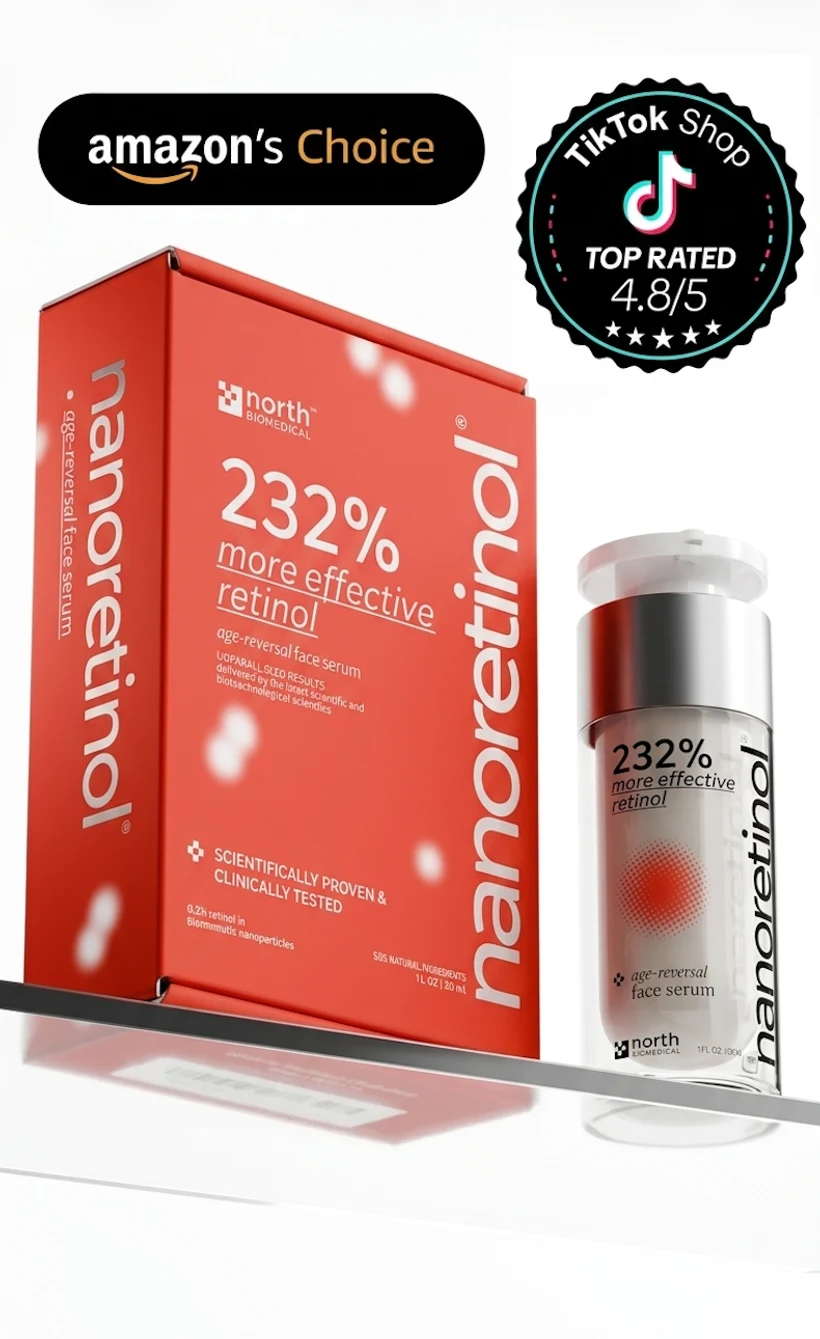
In clinical testing, the system showed 232% more effective collagen recovery and 73% greater elastin recovery — both of which directly address the structural failures that turn dynamic lines into static ones.
What this does not do is paralyze the muscle. The orbicularis oculi will still contract every time you smile. But contracting against a thicker, more elastic skin produces a shallower fold — and that fold is more likely to recover when the muscle relaxes. The line stays dynamic for years longer than it otherwise would.
The Delivery Problem Around the Eye
Here’s where most retinol products fail the under-eye area specifically. Conventional retinol formulations rely on chemical penetration enhancers — petroleum derivatives and solvents that disrupt the skin’s lipid barrier to push the active ingredient through. On the cheek, this is tolerable. On the thin, mobile, vascular skin around the eye, it frequently produces redness, peeling, and stinging that drives people to abandon retinol entirely.
The standard workaround in dermatology has been to use lower concentrations around the eye — but that reduces efficacy along with irritation. A 2022 clinical study comparing topical retinoid delivery systems demonstrated that the vehicle carrying the retinol is at least as important as the concentration [9]. A 1% retinol in a poor delivery system may put less active ingredient into fibroblasts than a 0.2% retinol in a system designed to actually reach the dermis.
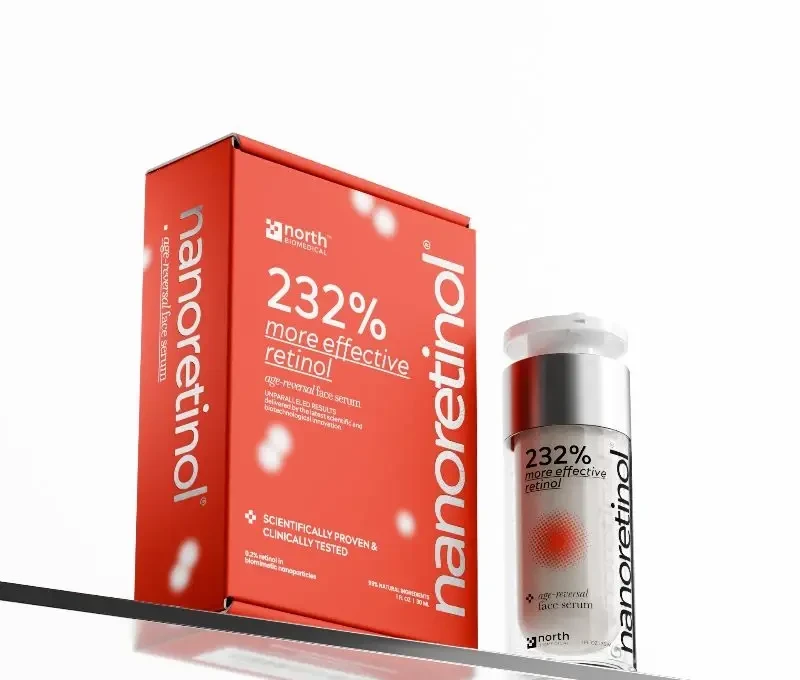
This is the gap Nanoretinol® was engineered to fill. The retinol is encapsulated in biomimetic lipid nanoparticles — structurally similar to the membranes of the skin’s own cells — so it passes through the epithelial barrier without the chemical disruption that drives conventional retinol irritation. The same nanoparticle delivery technology is used in pharmaceutical drug delivery, including some modern cancer therapies.
The result is that the formulation can be applied to the delicate under-eye area at a concentration (0.2%) that’s well-tolerated, while delivering more functional retinol to fibroblasts than substantially higher concentrations in conventional vehicles. In clinical testing, the system showed 232% more effective collagen recovery and 73% greater elastin recovery — both of which directly address the structural failures that turn dynamic lines into static ones.
The Practical Routine
If you’re noticing lines under your eyes when smiling and want to slow the dynamic-to-static transition, here’s what the clinical evidence supports — in priority order:
-
Daily broad-spectrum sunscreen. This is the single highest-impact intervention. UV is the primary driver of MMP activity, and the under-eye area receives more UV than people realize. Apply sunscreen to the upper cheek and lower orbital area as carefully as you apply mascara.
-
A well-tolerated retinoid at night. Consistency over 12 to 24 weeks matters far more than concentration. A formulation that doesn’t trigger irritation lets you keep using it — and the dermal remodeling only happens with sustained use.
-
An antioxidant serum in the morning. Vitamin C supports collagen synthesis and quenches the UV-generated free radicals that activate MMPs. It complements retinol by addressing the photoaging cascade at the oxidative-damage step.
-
Barrier support. A simple, ceramide-rich moisturizer helps maintain the barrier function that thin under-eye skin loses faster than the rest of the face.
-
Avoid the common mistakes. Aggressive tugging when removing eye makeup, sleeping in eye makeup, and squinting at screens all add to the cumulative mechanical and oxidative load on the under-eye area.
If you’re also seeing crow’s feet at the outer corners or under eye wrinkles that persist at rest, the strategy is the same — these are points along the same continuum of dynamic-to-static transition, just at different locations or further along the timeline.
A Realistic Mental Model
The cleanest way to think about lines under the eyes when smiling is this: the line is a record of every smile you’ve ever made, written on skin whose ability to erase the record is gradually fading. You can’t stop the muscle from contracting — and you wouldn’t want to, because a real smile is one of the most beautiful things a face does. What you can do is keep the skin around the muscle thick, elastic, and well-protected, so that each smile leaves a smaller trace.
The dynamic-to-static transition isn’t a single moment. It’s a gradient that plays out over years. The earlier you intervene in that gradient, the more of your dynamic skin you keep — and the further away the static line stays.
References
- Coban I, Yaprak Erkmen F, Aktaş GD. “Dynamic Periocular Wrinkle Patterns: An Anatomical Study on Young Adults.” Journal of Cosmetic Dermatology. 2025;24(5):e70215. doi:10.1111/jocd.70215
- Marcos-Garcés V, Molina Aguilar P, Bea Serrano C, et al. “Age-Related Dermal Collagen Changes During Development, Maturation and Ageing — a Morphometric and Comparative Study.” Journal of Anatomy. 2014;225(1):98-108. doi:10.1111/joa.12186
- Weihermann AC, Lorencini M, Brohem CA, de Carvalho CM. “Elastin Structure and Its Involvement in Skin Photoageing.” International Journal of Cosmetic Science. 2017;39(3):241-247. doi:10.1111/ics.12372
- Krajewska-Węglewicz L, Felczak P, Dorobek M. “Effects of Aging on Orbicularis Oculi Muscle Strength and Ultrastructure in Dermatochalasis: A Pilot Study.” Journal of Clinical Medicine. 2024;14(1):162. doi:10.3390/jcm14010162
- Quan T, Qin Z, Xia W, Shao Y, Voorhees JJ, Fisher GJ. “Matrix-degrading Metalloproteinases in Photoaging.” Journal of Investigative Dermatology Symposium Proceedings. 2009;14(1):20-24. doi:10.1038/jidsymp.2009.8
- Farris P, Berson D, Bhatia N, et al. “Efficacy and Tolerability of Topical 0.1% Stabilized Bioactive Retinol for Photoaging: A Vehicle-Controlled Integrated Analysis.” Journal of Drugs in Dermatology. 2024;23(4):209-215. doi:10.36849/JDD.8124
- Kafi R, Kwak HSR, Schumacher WE, et al. “Improvement of Naturally Aged Skin With Vitamin A (Retinol).” Archives of Dermatology. 2007;143(5):606-612. doi:10.1001/archderm.143.5.606
- Shao Y, He T, Fisher GJ, Voorhees JJ, Quan T. “Molecular Basis of Retinol Anti-Ageing Properties in Naturally Aged Human Skin in Vivo.” International Journal of Cosmetic Science. 2017;39(1):56-65. doi:10.1111/ics.12348
- Goberdhan LT, Pellacani G, Ardigo M, Schneider K, Makino ET, Mehta RC. “Assessing Changes in Facial Skin Quality Using Noninvasive In Vivo Clinical Skin Imaging Techniques After Use of a Topical Retinoid Product in Subjects With Moderate-to-Severe Photodamage.” Skin Research and Technology. 2022;28(4):604-613. doi:10.1111/srt.13172
- North Biomedical LLC. “Nanoretinol vs. Conventional Retinol: Efficacy in Collagen and Elastin Recovery.” Clinical Study Summary, 2024.