Niacinamide Body Wash: What It Can and Cannot Do for Dry Skin, Bumps and Dark Spots
A niacinamide body wash is gentle and pleasant to use, but it spends about a minute on your skin. Here is what the research supports, how to choose one and what to pair it with
Niacinamide has moved from serums into almost every product category, and the shower is the latest. Niacinamide body washes promise brighter, smoother, less dry skin from something you already do every day. It is an appealing idea, and niacinamide is one of the best-studied ingredients in skincare.
The catch is time. A body wash is lathered on and rinsed off within a minute or two, while the studies behind niacinamide’s reputation used creams and lotions left on the skin twice a day for weeks. This guide explains what niacinamide does, what a rinse-off product can realistically deliver, how to choose a good one and what to pair it with if you want to fade dark spots or firm up body skin.
What niacinamide does in skin
Niacinamide is a form of vitamin B3. Applied to the skin, it has calming, oil-balancing and brightening effects, depending on the concentration and how long it stays in contact [1]. Two of its effects matter most for the body.
A stronger barrier. In laboratory work, niacinamide raised the skin cells’ production of ceramides, the waxy lipids that seal moisture in, by roughly four to five times. Applied to dry skin, it increased ceramides and fatty acids in the outer layer and reduced water loss [2].
More even tone. Niacinamide does not stop pigment from being made. Instead, it reduces the transfer of pigment from the cells that make it to the surrounding skin cells, cutting that transfer by 35% to 68% in the lab, and moisturizers containing 2% to 5% niacinamide lightened facial pigmentation after four weeks [3].
On the body, two 35-day studies found that body moisturizers combining niacinamide with glycerin improved dryness, hydration and barrier function more than conventional body lotions and untreated skin [4].
Your skin holds a body wash for about a minute, far less time than the twice-daily lotions used for 4 to 12 weeks in the niacinamide trials.
Your skin holds a body wash for about a minute, far less time than the twice-daily lotions used for 4 to 12 weeks in the niacinamide trials.
Can a rinse-off product deliver anything?
Some of it, yes. Research on modern body washes shows that ingredients can stay behind after rinsing. In one study, a mild cleanser carrying stearic acid, a natural skin lipid, deposited it through all ten layers of the outer skin that the researchers sampled, and the amount left after five washes was similar to the fatty acid content of a single layer of skin [5].
That is a meaningful finding, but it also shows the scale. A body wash leaves a thin trace of its ingredients, while a lotion leaves the whole dose. No published trial has tested a niacinamide body wash for dark spots, and it would be unrealistic to expect one to match a leave-on product.
The bigger benefit of a good niacinamide body wash is often what it does not do. Harsh cleansers strip lipids, swell the outer layer of skin and leave it tight, dry and itchy, whereas milder surfactants and added moisturizing ingredients limit that damage [6]. For dry, rough or easily irritated body skin, a gentle wash with niacinamide is a sensible upgrade from a harsh soap, as long as you see it as a supporting step rather than a treatment.
Why the cleanser base matters more than the label
The front of the bottle highlights niacinamide, but the base decides how your skin feels afterwards.
pH. Healthy skin is slightly acidic, with a natural surface pH that averages below 5. In a study of 330 people, skin with a pH below 5 showed better barrier function, hydration and less scaling than skin above 5, and alkaline soap and even tap water raised skin pH for hours [7]. A wash labelled pH-balanced or soap-free is a better choice than a traditional bar soap.
Your skin got measurable results from niacinamide lotions within 4 to 5 weeks in trials, a far stronger record than any body wash can yet claim.
Surfactants. Syndet washes, built from milder synthetic cleansing agents, cause less dryness and irritation than alkaline soaps [8]. Look for gentle cleansing agents such as cocamidopropyl betaine or sodium cocoyl isethionate near the top of the list.
Supporting ingredients. Glycerin, ceramides and plant oils help a wash leave skin softer. Fragrance is a common irritant, so fragrance-free versions are safer for sensitive skin.
Your skin got measurable results from niacinamide lotions within 4 to 5 weeks in trials, a far stronger record than any body wash can yet claim.
Who benefits from a niacinamide body wash
- Dry or tight-feeling skin after showering: a gentle, pH-balanced wash protects the barrier niacinamide supports.
- Rough, bumpy skin on the arms and thighs: pair the wash with an exfoliating step a few times a week; our guide to exfoliating body wash explains which acids help.
- Uneven tone and spots on the body: the wash is a gentle base, but the fading needs leave-on products, as our guide to dark spots on the body explains.
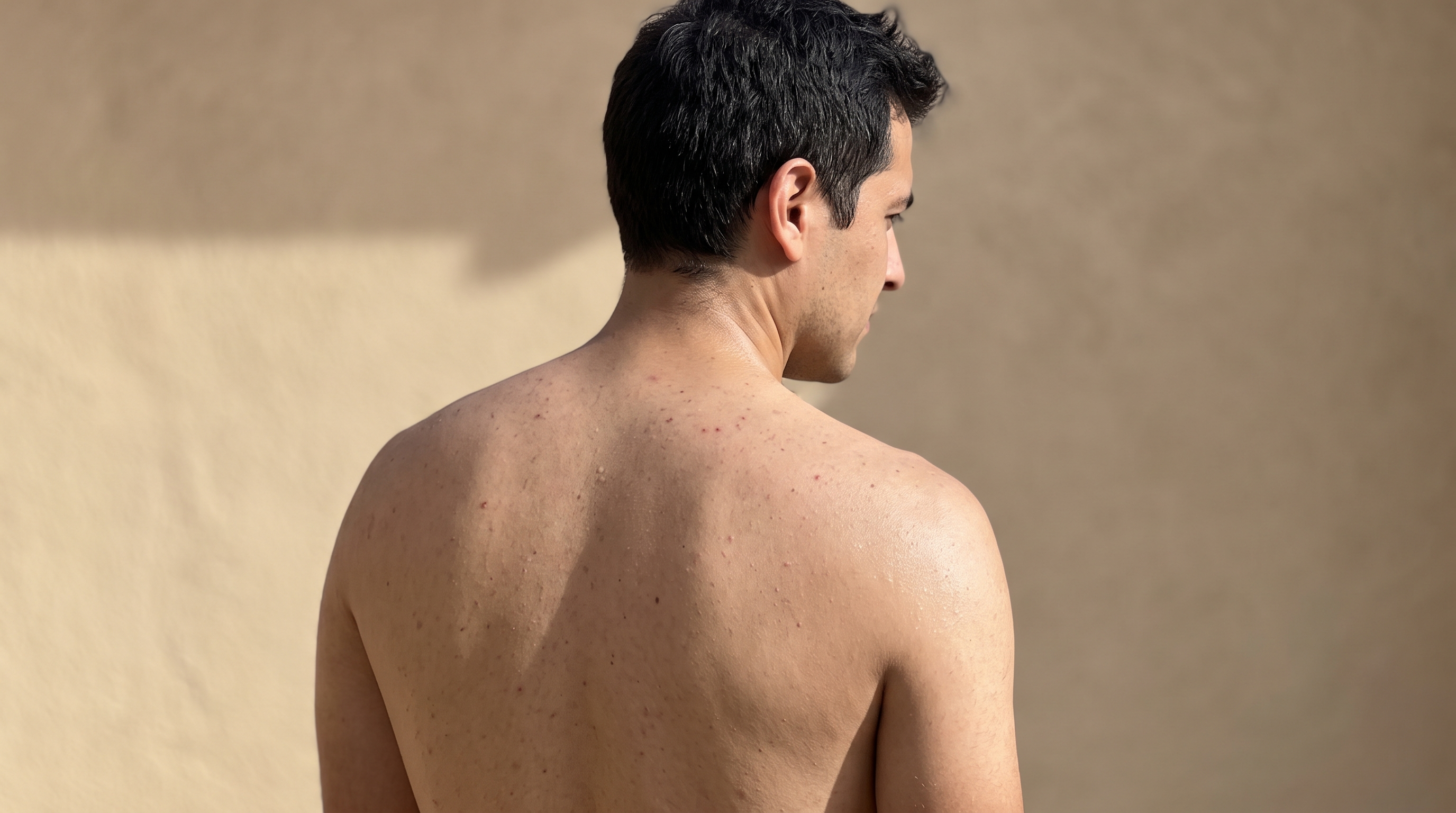
- Breakouts on the back and chest: niacinamide is calming, but a wash with an acne-fighting ingredient is usually more effective.
How to use it well
- Use lukewarm water. Hot water strips lipids faster.
- Let it sit. Lather it onto the areas you care about first and leave it for a minute before rinsing, so whatever can deposit has time to do so.
- Pat dry and moisturize within a few minutes. Damp skin holds moisturizer better, and this is where the real niacinamide dose can come in. Our guide to niacinamide body lotion covers what to look for.
- Protect exposed areas. Sunscreen on the chest, arms and hands prevents new spots while you work on old ones.
When you want firmer, smoother body skin
Niacinamide helps hydration and tone, but crepey texture, fine lines and loss of firmness come from a decline in collagen. For those concerns, retinoids have the strongest evidence. In a 24-week study in older adults, a 0.4% retinol lotion applied to the arm significantly improved fine wrinkling and increased collagen production compared with its base [9]. If you want to bring retinol into your body care, our guide to the best retinol body lotion explains what to look for.
A gentle niacinamide wash is a good match for a body retinol, because it cleanses without adding to the dryness retinol can cause.
Where Nanoretinol fits
The skin on the neck and chest is thinner and shows sun damage early, which makes it a natural place to start with retinol, and also a place where conventional formulas often sting. Many of them rely on chemicals that break down the skin’s lipid barrier to push retinol in.
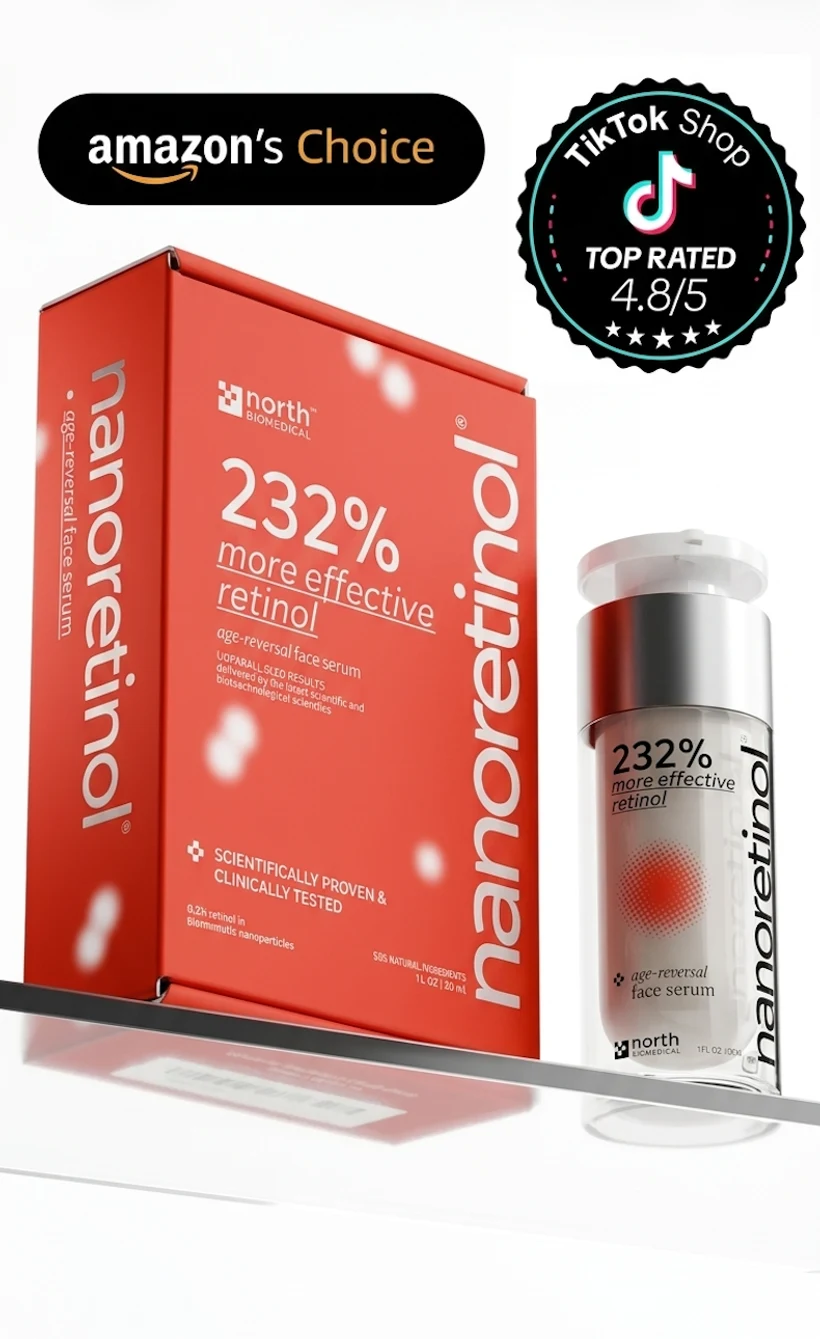
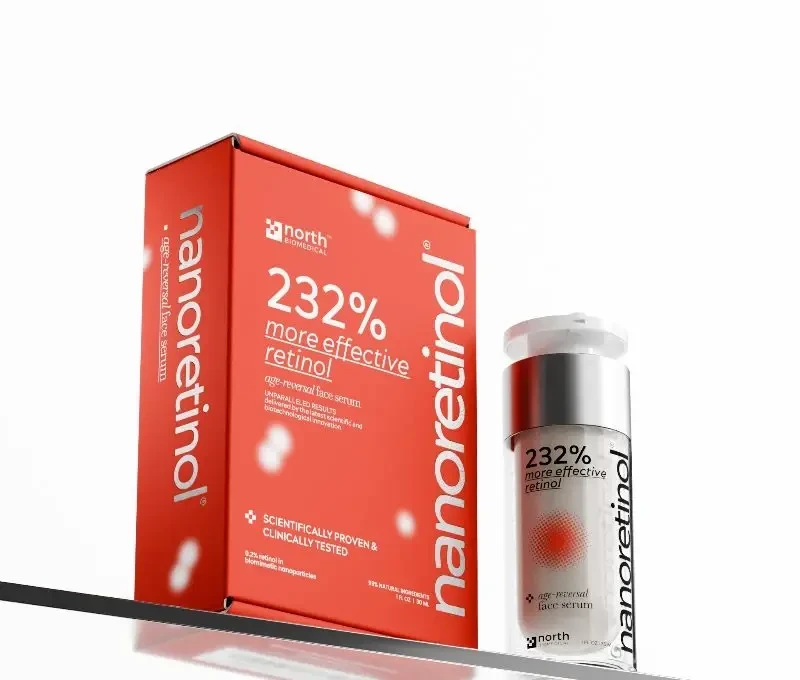
Nanoretinol takes a different route. Its 0.2% stabilized retinol is carried in biomimetic lipid nanoparticles that the skin recognizes as its own, so it crosses the barrier without damaging it, in a light, water-based gel suited to all skin types, including sensitive skin. In North Biomedical’s study summary, Nanoretinol was 232% more effective in collagen recovery and 73% more effective in elastin recovery than conventional retinol, and after 56 days of use, skin firmness rose by 61% and elasticity by 56% [10].
An easy routine is a niacinamide body wash and moisturizer in the shower each day, then Nanoretinol on the face, neck and chest at night, starting every other night. Use sunscreen on those areas the next morning, and do not layer Nanoretinol with another retinoid product.
References
- Wohlrab J, Kreft D. “Niacinamide - mechanisms of action and its topical use in dermatology.” Skin Pharmacology and Physiology. 2014;27(6):311-315. doi:10.1159/000359974
- Tanno O, Ota Y, Kitamura N, Katsube T, Inoue S. “Nicotinamide increases biosynthesis of ceramides as well as other stratum corneum lipids to improve the epidermal permeability barrier.” British Journal of Dermatology. 2000;143(3):524-531. doi:10.1111/j.1365-2133.2000.03705.x
- Hakozaki T, Minwalla L, Zhuang J, et al. “The effect of niacinamide on reducing cutaneous pigmentation and suppression of melanosome transfer.” British Journal of Dermatology. 2002;147(1):20-31. doi:10.1046/j.1365-2133.2002.04834.x
- Christman JC, Fix DK, Lucus SC, et al. “Two randomized, controlled, comparative studies of the stratum corneum integrity benefits of two cosmetic niacinamide/glycerin body moisturizers vs. conventional body moisturizers.” Journal of Drugs in Dermatology. 2012;11(1):22-29. PubMed:22206073
- Mukherjee S, Edmunds M, Lei X, et al. “Stearic acid delivery to corneum from a mild and moisturizing cleanser.” Journal of Cosmetic Dermatology. 2010;9(3):202-210. doi:10.1111/j.1473-2165.2010.00510.x
- Ananthapadmanabhan KP, Moore DJ, Subramanyan K, et al. “Cleansing without compromise: the impact of cleansers on the skin barrier and the technology of mild cleansing.” Dermatologic Therapy. 2004;17(Suppl 1):16-25. doi:10.1111/j.1396-0296.2004.04s1002.x
- Lambers H, Piessens S, Bloem A, Pronk H, Finkel P. “Natural skin surface pH is on average below 5, which is beneficial for its resident flora.” International Journal of Cosmetic Science. 2006;28(5):359-370. doi:10.1111/j.1467-2494.2006.00344.x
- Draelos ZD. “The science behind skin care: Cleansers.” Journal of Cosmetic Dermatology. 2018;17(1):8-14. doi:10.1111/jocd.12469
- Kafi R, Kwak HS, Schumacher WE, et al. “Improvement of naturally aged skin with vitamin A (retinol).” Archives of Dermatology. 2007;143(5):606-612. doi:10.1001/archderm.143.5.606
- North Biomedical LLC. “Nanoretinol vs. Conventional Retinol: Efficacy in Collagen and Elastin Recovery.” Clinical Study Summary, 2024. Study summary