Octyldodecanol in Skincare: What It Does and Is It Safe?
The silky fatty alcohol in lipsticks, creams and sunscreens: why formulators use it, what safety reviews found, and the rare people who react to it
Turn over a lipstick, a rich night cream or a tinted sunscreen and you will often find octyldodecanol somewhere in the first third of the ingredient list. It sounds like a harsh solvent, and the “alcohol” at the end does not help. In reality, it is a smooth, oily liquid that makes products glide, keeps pigments evenly spread, and leaves skin feeling soft rather than greasy.
This guide covers what octyldodecanol is, why formulators rely on it, what the safety data say, where its pore-clogging reputation comes from, and the small group of people who should avoid it.
What Octyldodecanol Is
Octyldodecanol, sometimes listed as 2-octyldodecanol, is a fatty alcohol with 20 carbon atoms. It belongs to a family called Guerbet alcohols, made by joining two smaller alcohols so that the final molecule has a branch near the middle. That branch is the secret to its texture. Straight fatty alcohols like cetyl or stearyl alcohol pack together into waxy solids, while the branched shape keeps octyldodecanol a clear liquid at room temperature.
It is also saturated, meaning it has no double bonds for oxygen to attack. Plant oils with many double bonds can slowly go rancid in the jar, but octyldodecanol stays stable for a long time.
The word “alcohol” causes a lot of confusion. Octyldodecanol is nothing like the drying ethanol in toners and hand sanitizers. It does not evaporate, does not sting, and behaves like a light oil on the skin.
Why Formulators Use It
- Emollient. It fills the tiny gaps between surface skin cells, so skin feels smoother and softer.
- Slip without grease. It spreads easily and absorbs quickly, giving creams a silky finish.
- Pigment dispersant. In lipstick, the oil has to wet each pigment particle so the color goes on evenly. A study comparing dispersing oils for lipstick found octyldodecanol wet pigment well and gave the highest color payoff, though it also made the softest stick [1].
- Solvent for other ingredients. Many active ingredients and sunscreen filters dissolve poorly in water. Researchers have used octyldodecanol as the oil phase in nanoemulsions designed to carry ceramides into the skin, because it dissolves them well [2].
Your skin may meet products that are more than 50% octyldodecanol, yet only a handful of allergy cases have ever been published.
The Cosmetic Ingredient Review panel noted that octyldodecanol is used across many product types at concentrations ranging from under 0.1% to more than 50% [3]. In a lipstick or a balm it can be a major ingredient, while in a serum it may be a minor helper. Your skin may meet products that are more than 50% octyldodecanol, yet only a handful of allergy cases have ever been published.
Is It Safe?
The Cosmetic Ingredient Review expert panel assessed octyldodecanol together with stearyl and oleyl alcohol. Animal tests showed very low toxicity and only minimal to mild skin irritation, and clinical patch testing showed a very low potential for irritation and sensitization. The panel concluded that octyldodecanol is safe as currently used in cosmetics [3].
That does not mean nobody reacts to it. A handful of published case reports describe allergic contact dermatitis traced to octyldodecanol in specific products:
- an antifungal clotrimazole cream [4]
- a cream that caused genital swelling [5]
- an anti-itch cream, where the patient also reacted to a second ingredient [6]
- a men’s anti-aging cream, reported as recently as 2025 [7]
What these cases have in common is worth noticing. Several involve medicated creams applied to skin that was already inflamed or broken, which makes it easier for any ingredient to trigger an immune reaction. Given how widely octyldodecanol is used, four published cases over nearly three decades is a very low rate, but if you are one of those people, patch testing can confirm it.
Your skin reacts to the finished cream on your face, not to a single raw oil tested undiluted on a rabbit’s ear decades ago.
Does It Clog Pores?
Octyldodecanol appears on many online lists of “comedogenic” ingredients. Most of those lists trace back to rabbit ear tests from the 1970s and 1980s, in which raw ingredients were applied undiluted to rabbit ears, which are far more prone to clogging than human faces.
Human testing tells a more reassuring story. When dermatologists tested finished products on people prone to clogged pores, they concluded that products containing ingredients labeled comedogenic are not necessarily comedogenic themselves [8]. What matters is the whole formula: the concentration, the other oils and waxes, and how heavy the final texture is. Your skin reacts to the finished cream on your face, not to a single raw oil tested undiluted on a rabbit’s ear decades ago.
If you are acne-prone, judge a product by how your skin responds over two to four weeks rather than by one ingredient on a list. You can compare it with similar silky oils in our guides to ethylhexyl palmitate, isopropyl myristate and caprylic/capric triglyceride, and our guide to non-comedogenic moisturizers explains what that label does and does not promise.
Who Should Skip It
- People with a confirmed octyldodecanol allergy from patch testing. Check every label, including medicated creams, which list inactive ingredients.
- Anyone who reacted to a cream applied to broken or inflamed skin and has not identified the cause. Ask a dermatologist about patch testing rather than guessing.
- Very acne-prone skin that breaks out with rich lip and face balms. The issue is more likely the heavy overall formula than octyldodecanol alone, but switching to lighter textures is reasonable.
For everyone else, octyldodecanol is one of the gentler ingredients on the label.
What It Means for Retinol Products
Retinol does not dissolve in water, so conventional retinol creams need an oily base to carry it, and silky oils like octyldodecanol are common choices. That works for texture, but a cream base alone does not solve retinol’s two biggest problems: getting enough of it through the skin barrier, and doing so without irritation. Many conventional formulas rely on solvents and penetration enhancers that loosen the barrier, which is why redness and peeling are so common.
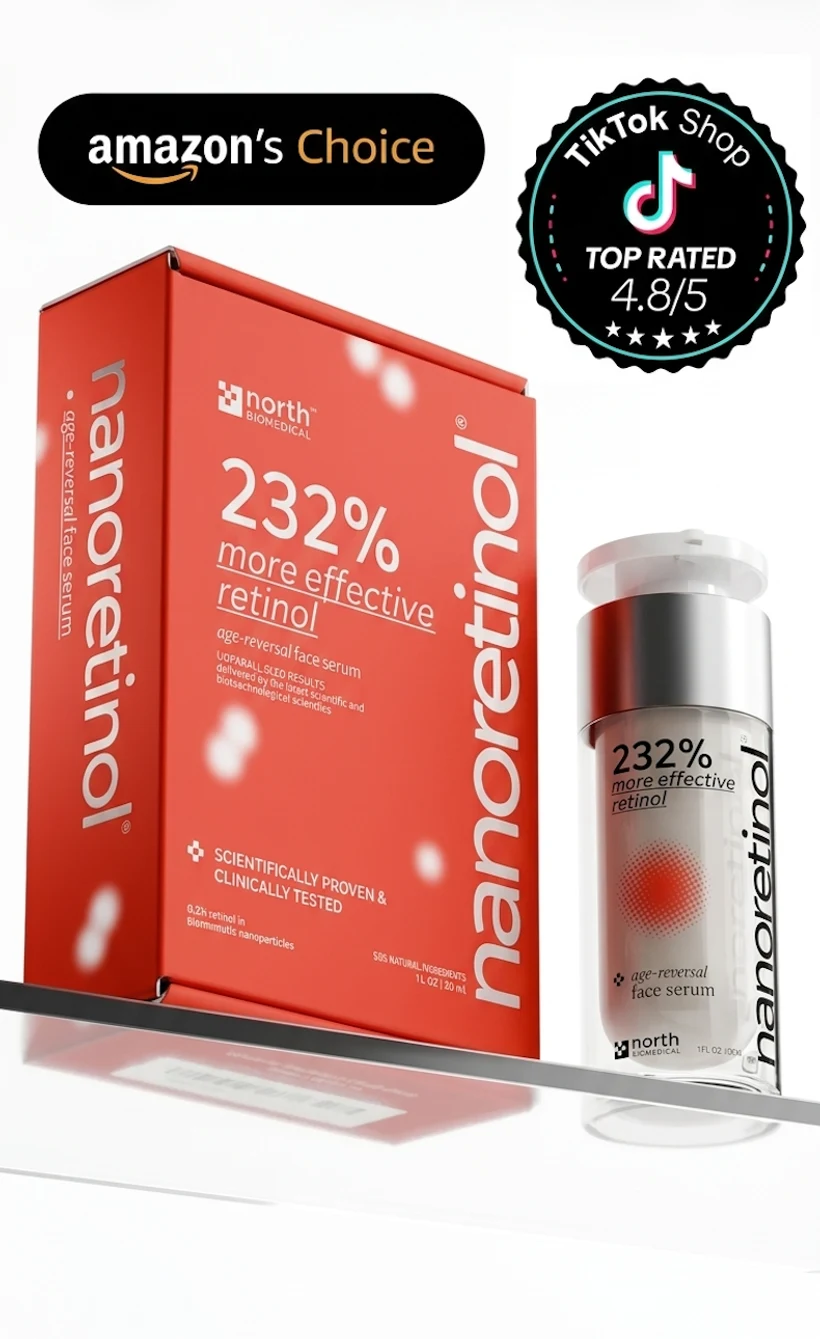
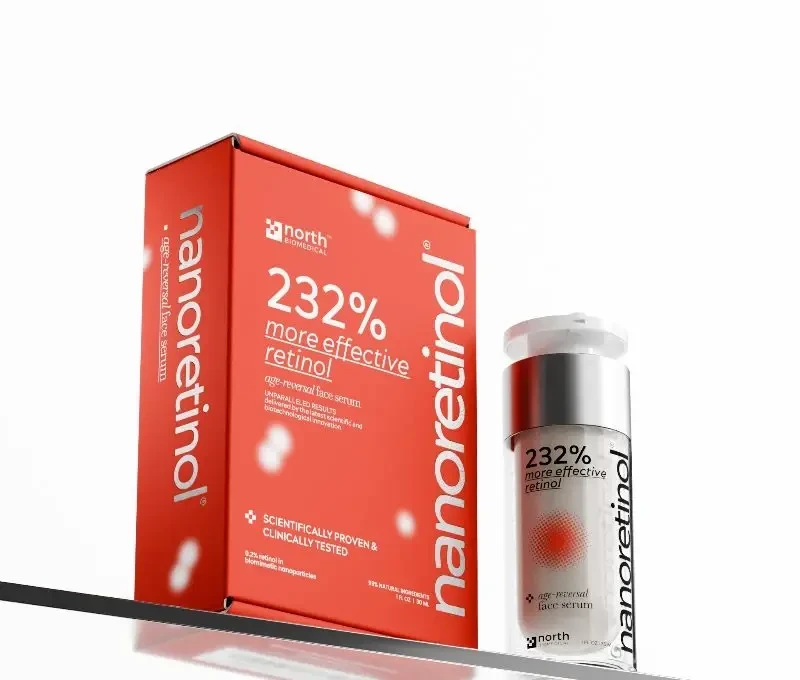
Nanoretinol takes a different approach. Instead of dissolving retinol in an oily cream, it encapsulates it in biomimetic lipid nanoparticles suspended in a light, water-based gel with 99% natural ingredients, and octyldodecanol is not on its ingredient list. The nanoparticles are recognized by the skin and pass through its barrier without breaking it down. In North Biomedical’s clinical study, Nanoretinol was 232% more effective than conventional retinol in collagen recovery and 73% more effective in elastin recovery [9].
Reading the Label With Confidence
Octyldodecanol is a stable, silky fatty alcohol that helps lipsticks glide and creams feel soft. Safety reviewers consider it safe as used, true allergy is rare, and its pore-clogging reputation rests on old animal tests rather than how finished products behave on human skin. When you see it on a label, it tells you more about the product’s texture than about its risk.
References
- Maktabi B, Liberatore MW, Baki G. “Meadowfoam seed oil as a natural dispersing agent for colorants in lipstick.” International Journal of Cosmetic Science. 2021;43(4):484-493. doi:10.1111/ics.12724
- Su R, Yang L, Wang Y, Yu S, Guo Y, Deng J, Zhao Q, Jin X. “Formulation, development, and optimization of a novel octyldodecanol-based nanoemulsion for transdermal delivery of ceramide IIIB.” International Journal of Nanomedicine. 2017;12:5203-5221. doi:10.2147/IJN.S139975
- Cosmetic Ingredient Review Expert Panel. “Final Report on the Safety Assessment of Stearyl Alcohol, Oleyl Alcohol, and Octyl Dodecanol.” Journal of the American College of Toxicology. 1985;4(5):1-29. doi:10.3109/10915818509078685
- Dharmagunawardena B, Charles-Holmes R. “Contact dermatitis due to octyldodecanol in clotrimazole cream.” Contact Dermatitis. 1997;36(4):231. doi:10.1111/j.1600-0536.1997.tb00281.x
- Dawn G, Forsyth A. “Genital swelling caused by octyldodecanol contact dermatitis.” Clinical and Experimental Dermatology. 2003;28(2):228-229. doi:10.1046/j.1365-2230.2003.01232_6.x
- Singh M, Winhoven SM, Beck MH. “Contact sensitivity to octyldodecanol and trometamol in an anti-itch cream.” Contact Dermatitis. 2007;56(5):289-290. doi:10.1111/j.1600-0536.2006.00990.x
- Badaoui A. “Allergic Contact Dermatitis to Octyldodecanol in a Men’s Anti-Aging Cream: A Case Report.” Contact Dermatitis. 2025;93(3):263-264. doi:10.1111/cod.14828
- Draelos ZD, DiNardo JC. “A re-evaluation of the comedogenicity concept.” Journal of the American Academy of Dermatology. 2006;54(3):507-512. doi:10.1016/j.jaad.2005.11.1058
- North Biomedical LLC. “Nanoretinol vs. Conventional Retinol: Efficacy in Collagen and Elastin Recovery.” Clinical Study Summary, 2024. Study summary