Benzyl Alcohol in Skincare: Is the 2026 Allergen of the Year Safe?
What benzyl alcohol does in your products, why dermatologists just put a spotlight on it, and how often it really causes a reaction
Benzyl alcohol is one of the most common ingredients you have probably never thought about. It appears in moisturizers, sunscreens, shampoos, makeup, hair dyes, prescription creams and even injectable medicines. Then, in 2026, the American Contact Dermatitis Society named it Allergen of the Year, and the ingredient suddenly started showing up on “avoid” lists.
That title sounds alarming, but it was chosen for a specific reason, and it does not mean benzyl alcohol has become dangerous. This guide explains what benzyl alcohol is, the three jobs it does in a formula, what the allergy numbers actually show, where the newborn warning came from, and who should check their labels for it.
What Benzyl Alcohol Is
Benzyl alcohol is a simple aromatic alcohol: a ring of carbon atoms with a single alcohol group attached. Despite the word “alcohol,” it behaves nothing like the drying ethanol in toners. It is a clear, faintly sweet-smelling liquid that plants make on their own, and it occurs naturally in jasmine, ylang-ylang and hyacinth flowers, in many fruits and in tea.
Cosmetic chemists value it because it is cheap, works at low concentrations and does more than one thing at once. The Cosmetic Ingredient Review panel reassessed benzyl alcohol in 2017 and concluded that it is safe in the way it is currently used and at the concentrations found in cosmetics [1].
Three Jobs in One Bottle
Benzyl alcohol usually earns its place for one of three reasons, and often for two of them at the same time [2]:
- Preservative: It slows the growth of bacteria and molds in water-based products, usually as a partner to a stronger preservative. European rules cap it at 1% when it is used this way.
- Solvent: It dissolves ingredients that do not mix easily with water, which is why it turns up in topical medications such as steroid creams.
- Fragrance component: Its mild floral note makes it a building block of perfumes, and it is one of the fragrance allergens that European labels must name when present above a trace level.
Concentration matters here. Your skin gets at most 1% benzyl alcohol from a moisturizer, while a lice lotion approved for babies from 6 months contains 5 times more than that.
Your skin gets at most 1% benzyl alcohol from a moisturizer, while a lice lotion approved for babies from 6 months contains 5 times more than that.
That lotion, a 5% benzyl alcohol treatment, was tested in children in several clinical trials and proved both safe and effective [7]. The comparison is useful because it shows how far everyday cosmetic exposure sits below doses that have been studied directly on young skin.
Why It Became the 2026 Allergen of the Year
The Allergen of the Year is an awareness campaign, not a ranking of the most dangerous chemicals. Each year the society picks an ingredient that dermatologists tend to miss. Benzyl alcohol was chosen because it is everywhere, can cause allergic contact dermatitis with prolonged or repeated exposure, and is left out of many standard patch-test panels, so reactions to it often go undiagnosed [2].
There is also a labeling problem. A 2026 review points out that benzyl alcohol can appear in products marketed as “clean,” “sensitive,” “fragrance-free” or “hypoallergenic” [3]. When it is added as a preservative it must be listed by name, so a “fragrance-free” cream can still contain it. When it is part of a fragrance blend sold in the US, it can sit hidden behind the single word “fragrance” because fragrance formulas are protected as trade secrets [3]. Readers who rely on fragrance-free skincare to stay clear of reactions should therefore still read the full ingredient list.
How Often Does It Actually Cause Allergy?
This is where the headline and the data part ways. Allergy to benzyl alcohol is real but uncommon.
The largest dataset comes from a German network of dermatology clinics. Between 2010 and 2019, 70,867 patients with suspected contact allergy were patch tested with benzyl alcohol, and only 146 of them (0.21%) reacted. Most of those reactions (89%) were only weakly positive, and when patients were retested, the results were often not reproducible [4]. The North American Contact Dermatitis Group found a similar picture: across more than two decades of testing, benzyl alcohol had one of the lowest positive rates of any preservative, at 0.3%, close to phenoxyethanol at 0.2% [5].
The German data also show who tends to react. People with positive tests were more often over 40, more often had dermatitis on the legs, and were twice as likely to have been referred because a topical medication had irritated them [4]. That pattern points to long-term use of medicated creams on damaged, inflamed skin, rather than a nightly face moisturizer on healthy skin.
Your skin is unlikely to react to benzyl alcohol: of 70,867 people patch tested over 10 years, fewer than 1 in 400 did, and most reactions were faint.
Your skin is unlikely to react to benzyl alcohol: of 70,867 people patch tested over 10 years, fewer than 1 in 400 did, and most reactions were faint.
The Newborn Warning, Explained
If you have seen benzyl alcohol described as “toxic to babies,” the warning traces back to hospital medicine in the early 1980s, not to skincare. Premature infants who received intravenous flush solutions preserved with benzyl alcohol developed a severe condition called gasping syndrome, and some died [6]. Those babies were getting the ingredient directly into the bloodstream, in large amounts relative to their tiny body weight, and their immature livers could not break it down.
Since then, preserved intravenous solutions are avoided in newborns. That history is a good reason for drug makers to be careful with injectable products for infants. It says little about a leave-on cream for an adult, where exposure is a small fraction of a percent spread over the surface of the skin.
When a Solvent Meets a Sensitive Barrier
Allergy is only one kind of reaction. Benzyl alcohol is also a solvent, and solvents can loosen the orderly lipid layers that hold the outer skin together. That property helps a medicated cream deliver its drug, but on skin that is already dry or irritated, it can add to stinging and redness.
This is a broader problem with how many conventional formulas work. To push an active ingredient through the barrier, they rely on solvents and penetration helpers that disturb the barrier lipids. Retinol products are a classic example: much of the peeling and burning people blame on retinol itself comes partly from the vehicle that forces it in. Anyone who has struggled with irritation will find practical steps in our guide to retinol for sensitive skin.
Who Should Look for It on the Label
Most people can use products containing benzyl alcohol without a second thought. A few groups have good reason to check:
- Confirmed allergy: If a patch test has shown a reaction, avoid it in every product, including medicated creams and “fragrance-free” lines.
- Long-standing leg or hand dermatitis: These were the most common profiles among people who tested positive.
- Repeated reactions to prescription creams: Benzyl alcohol is a common solvent and preservative in topical medicines, so ask your dermatologist about testing for it.
- Fragrance-allergic skin: Because it can hide inside “fragrance,” choose products with no added fragrance at all.
For everyone else, the more useful habit is a short ingredient list and a gentle formula, which is also the logic behind most non-toxic skincare advice when it is grounded in evidence rather than fear.
A Gentler Way to Get Active Ingredients In
The lesson of benzyl alcohol is less about one molecule and more about how a product is built. A formula that needs harsh solvents to drive its active ingredient through the skin will always carry some risk of irritation.
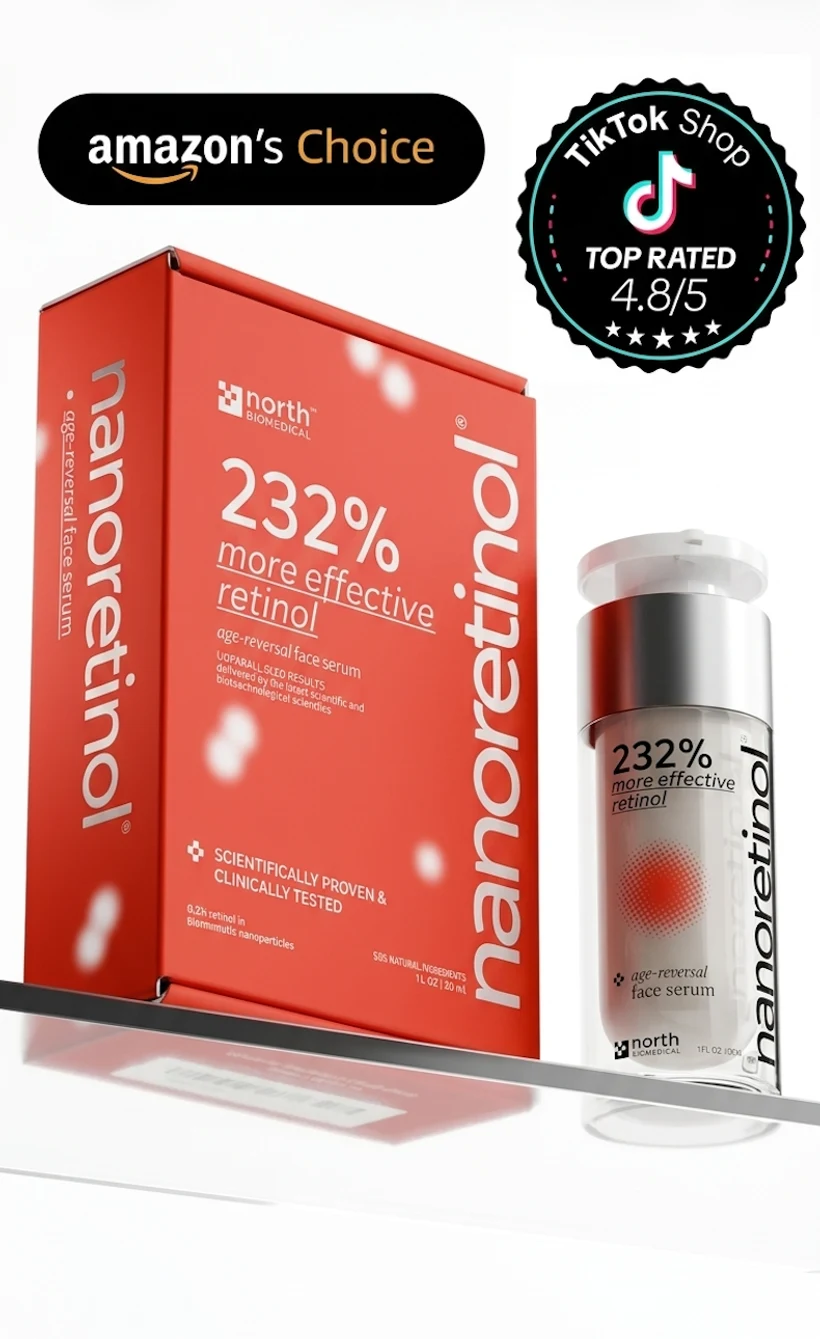
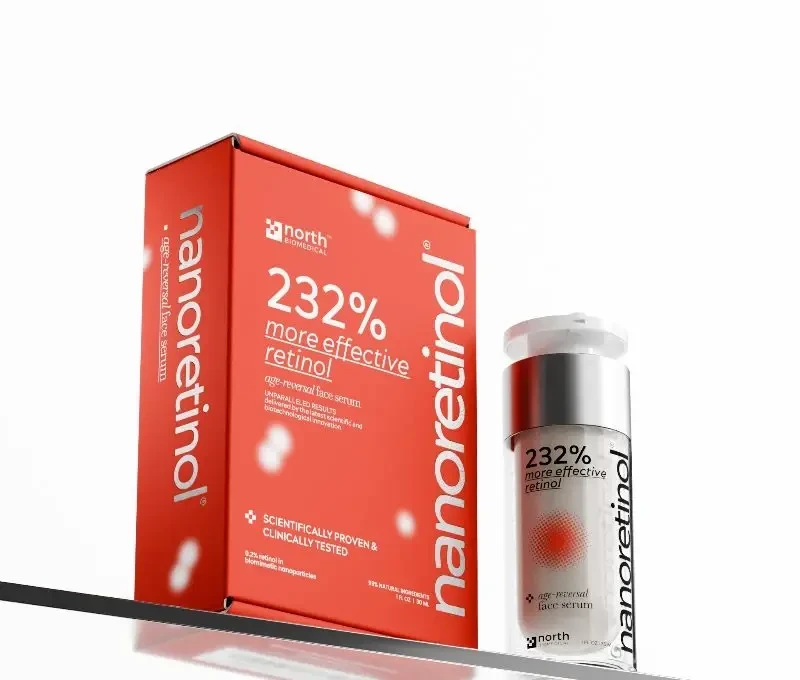
Nanoretinol takes a different route. Instead of relying on solvents that loosen the barrier, it carries retinol inside biomimetic lipid nanoparticles that the skin recognizes as its own, so the retinol gets where it needs to go without breaking the barrier down. It is a water-based gel preserved with phenoxyethanol and ethylhexylglycerin, and its published ingredient list contains no benzyl alcohol and no added fragrance. In testing against conventional retinol, it was 232% more effective in collagen recovery and 73% more effective in elastin recovery, and over 56 days of use it increased skin firmness by 61% and elasticity by 56%, with milder side effects than conventional retinol [8].
References
- Johnson W Jr, Bergfeld WF, Belsito DV, et al. “Safety Assessment of Benzyl Alcohol, Benzoic Acid and its Salts, and Benzyl Benzoate.” International Journal of Toxicology. 2017;36(3_suppl):5S-30S. doi:10.1177/1091581817728996
- Le NT, Wu PA. “Benzyl Alcohol: Allergen of the Year 2026.” Dermatitis. 2026;37(1):4-12. doi:10.1177/17103568251386038
- Zheng L, Reeder M, Atwater AR, Yu J. “Benzyl Alcohol: The 2026 American Contact Dermatitis Society Allergen of the Year.” Cutis. 2026;118(3):88-91. doi:10.12788/cutis.1444
- Geier J, Ballmer-Weber B, Buhl T, et al. “Is benzyl alcohol a significant contact sensitizer?” Journal of the European Academy of Dermatology and Venereology. 2022;36(6):866-872. doi:10.1111/jdv.17968
- Atwater AR, Petty AJ, Liu B, et al. “Contact dermatitis associated with preservatives: Retrospective analysis of North American Contact Dermatitis Group data, 1994 through 2016.” Journal of the American Academy of Dermatology. 2021;84(4):965-976. doi:10.1016/j.jaad.2020.07.059
- Gershanik J, Boecler B, Ensley H, McCloskey S, George W. “The gasping syndrome and benzyl alcohol poisoning.” New England Journal of Medicine. 1982;307(22):1384-1388. doi:10.1056/NEJM198211253072206
- Meinking TL, Villar ME, Vicaria M, et al. “The clinical trials supporting benzyl alcohol lotion 5% (Ulesfia): a safe and effective topical treatment for head lice (pediculosis humanus capitis).” Pediatric Dermatology. 2010;27(1):19-24. doi:10.1111/j.1525-1470.2009.01059.x
- North Biomedical LLC. “Nanoretinol vs. Conventional Retinol: Efficacy in Collagen and Elastin Recovery.” Clinical Study Summary, 2024. Study summary