Papaya Soap: Can a Fruit Enzyme Bar Really Fade Dark Spots?
Papaya soap is sold to brighten and even out skin tone. Here is what the papain enzyme actually does, why the bar itself can work against it, and how to build a dark-spot routine that lasts
Papaya soap is one of the most popular brightening bars in the world. It is usually orange, smells faintly fruity, and promises to fade dark spots, even out skin tone and leave skin smoother. Many bars also add kojic acid or glutathione to the mix.
The appeal makes sense: papaya contains a real enzyme that breaks down protein, and dark spots often sit under a layer of dull, built-up skin. The question is how much of that enzyme survives soap-making, and what a bar that rinses off in a minute can actually change. This guide explains what papaya brings to a soap, what the evidence shows, who should be careful, and where lasting tone change comes from.
What papaya brings to a soap
The key ingredient is papain, a protein-digesting enzyme found in the latex and fruit of the papaya plant. Papain is used across food, medicine and cosmetics because it breaks down a wide range of proteins under many different conditions [1]. Papaya also supplies a second enzyme, chymopapain, along with small amounts of vitamins and plant antioxidants.
In skin terms, an enzyme like papain works as an exfoliant. The top layer of skin is held together by protein bonds between dead cells. Loosening those bonds helps the dullest cells shed, which can make skin feel smoother and look slightly brighter.
What the evidence actually shows
Most of the research on papaya and skin comes from wound care, not cosmetics. In one hospital in The Gambia, mashed papaya pulp was applied daily to children’s severe burns, and doctors reported that it helped clear dead tissue and kept the wounds clean enough for skin grafts [2]. A review of enzymes used to clean wounds found that papain has been widely used for this around the world, though the authors noted concerns about its safety [3].
That is strong evidence that papain can break down dead tissue. It is not evidence that papaya soap fades dark spots. Pigment in a sun spot or a mark left by acne sits in deeper, living layers of skin, where a rinse-off enzyme cannot reach. At best, a papaya bar helps the surface look fresher while the spot underneath stays the same.
Your skin keeps dark spots in living layers that a 60-second rinse cannot reach, which is why tone changes take 12 weeks of leave-on care rather than a new soap.
Your skin keeps dark spots in living layers that a 60-second rinse cannot reach, which is why tone changes take 12 weeks of leave-on care rather than a new soap.
Why the bar itself can work against you
Soap-making is hard on enzymes. Traditional bar soap is made by reacting oils with a strong alkali, and many bars are made with heat. Enzymes are proteins, and high pH and heat can change their shape and stop them working. Unless a brand adds papain after the soap is made and protects it, it is hard to know how much active enzyme reaches your skin.
Most bars are alkaline. Healthy skin surface pH sits on average below 5, and skin in that acidic range measured better for barrier function, moisture and scaling than skin above it [4]. In a week-long forearm study, an alkaline soap raised skin pH at every time point and caused more redness than glycerin or creamy soaps, while a mild syndet bar did the least damage [5].
Irritation can darken skin. Skin that is repeatedly dried and inflamed can develop new marks, especially on darker skin tones. Scrubbing hard with a brightening bar twice a day is a common way to end up with more uneven tone, not less.
Papaya-only, papaya-kojic and papaya-glutathione bars
Papaya-only bars rely on papain and fruit extract. Expect a mild polish at best.
Papaya and kojic acid bars are the most common blend. Kojic acid is a fungal compound that blocks tyrosinase, the enzyme that makes melanin, and it is used as a skin-lightening agent in creams, lotions and soaps [6]. It is the ingredient doing most of the brightening in these bars, and it works far better in a leave-on product. Our guide to kojic acid soap covers it in detail.
Your skin gets less than 2 minutes a day of contact with a soap, far less than the 8 hours a cream left on overnight provides.
Your skin gets less than 2 minutes a day of contact with a soap, far less than the 8 hours a cream left on overnight provides.
Papaya and glutathione bars add an antioxidant that is popular for brightening, though evidence for it in a rinse-off bar is thin.
If what you want is the enzyme effect, a leave-on or wash-off enzyme product made for the face is usually gentler and better controlled, as our guide to the enzyme exfoliant explains.
Who should be careful
People with a latex allergy should be cautious with papaya products. Around 30-50% of people allergic to natural rubber latex also react to certain plant foods, especially fresh fruit, a pattern called latex-fruit syndrome [7]. Papain itself can also sensitize people, although in one study of 341 allergic patients, those sensitized to papaya’s enzyme reported no symptoms from eating papaya, suggesting papain allergy is mainly a risk for workers who handle it in large amounts [8].
Test any new bar on the inside of the forearm for a few days first, and stop if you notice itching, hives or swelling.
How to choose and use papaya soap
- Read the full ingredient list. Look for papain or papaya extract by name, not just “fragrance” and orange colouring.
- Prefer a syndet or glycerin bar. These are gentler than a classic alkaline soap.
- Check what else is doing the work. Kojic acid, niacinamide or glycerin matter more than the papaya.
- Keep contact short. Lather, leave it on for 30 to 60 seconds, rinse and moisturize.
- Start with once a day on the body, and use it on the face only if your skin tolerates it well.
- Skip it on broken, sunburned or freshly shaved skin.
For body spots in particular, an exfoliating body wash with a gentle acid is another option.
A dark-spot routine that actually lasts
Use the bar as the cleansing step, then put your effort into what stays on the skin:
- Wash with a gentle papaya or syndet bar, then moisturize while skin is damp.
- Use a leave-on brightening product in the morning, such as a kojic acid, niacinamide or vitamin C serum or lotion.
- Use a retinoid at night, starting two or three nights a week, to speed up the turnover of pigmented cells.
- Wear sunscreen every day on the face, neck, chest and hands. Without it, new spots form as fast as old ones fade.
Where the soap stops and retinol starts
A papaya bar can make the surface of your skin feel smoother. The changes people buy it for, fewer sun spots, a more even tone and less dullness on sun-worn skin, come from leave-on treatment that works over weeks. In a controlled trial in older adults, a 0.4% retinol lotion applied to the arm up to three times a week for 24 weeks reduced fine wrinkling and increased collagen production compared with the same lotion without retinol [9]. Our guide to retinol for dark spots explains how retinoids fade pigment.
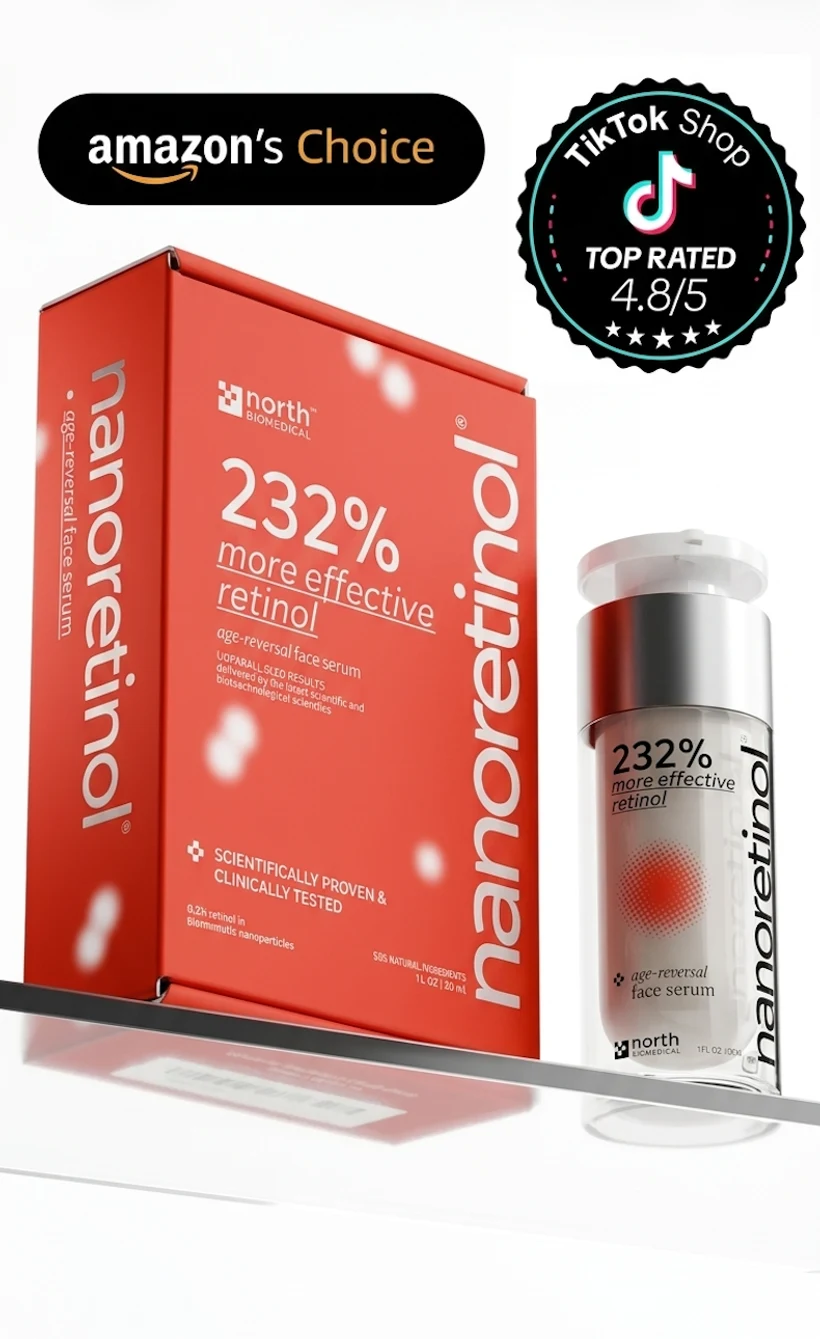
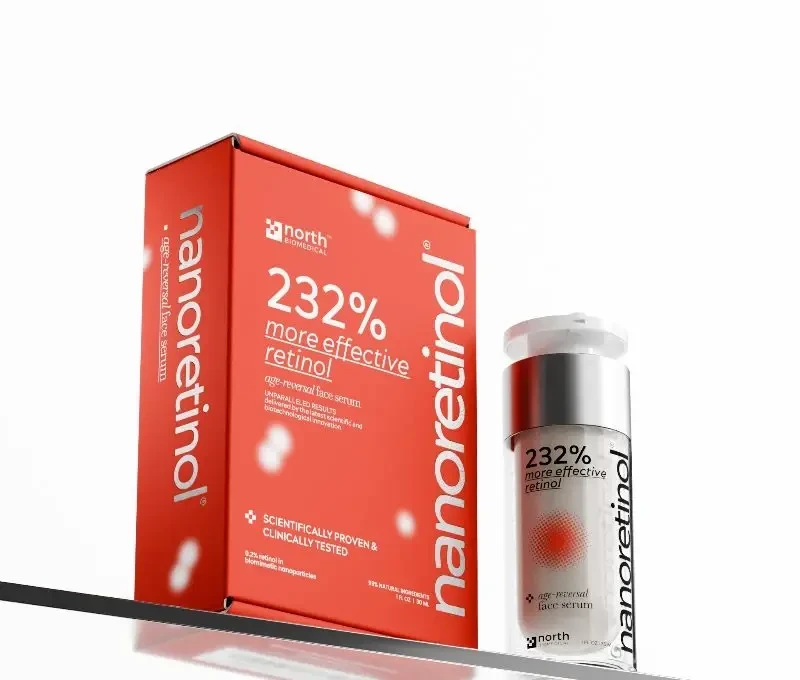
Many people give up retinol because conventional formulas leave skin red and flaking. Nanoretinol was designed to avoid that. It is a light, water-based gel that carries 0.2% retinol inside biomimetic lipid nanoparticles, which the skin recognizes as its own, so the retinol passes through the barrier without damaging it. In North Biomedical’s study, it was 232% more effective in collagen recovery and 73% more effective in elastin recovery than conventional retinol, and users saw a 61% increase in skin firmness and a 56% increase in skin elasticity after 56 days [10].
Keep the papaya bar if you enjoy it. Apply Nanoretinol in the evening to the areas you most want to even out, and wear broad-spectrum sunscreen every morning.
References
- Choudhary R, Kaushik R, Chawla P, Manna S. “Exploring the extraction, functional properties, and industrial applications of papain from Carica papaya.” Journal of the Science of Food and Agriculture. 2025;105(3):1533-1545. doi:10.1002/jsfa.13776
- Starley IF, Mohammed P, Schneider G, Bickler SW. “The treatment of paediatric burns using topical papaya.” Burns. 1999;25(7):636-639. PubMed:10563690
- Mathioudaki E, Vitsos A, Rallis MC. “Proteolytic enzymes and wound debridement: a literature review.” Wounds. 2024;36(11):357-365. doi:10.25270/wnds/23181
- Lambers H, Piessens S, Bloem A, Pronk H, Finkel P. “Natural skin surface pH is on average below 5, which is beneficial for its resident flora.” International Journal of Cosmetic Science. 2006;28(5):359-370. doi:10.1111/j.1467-2494.2006.00344.x
- Khosrowpour Z, Ahmad Nasrollahi S, Samadi A, Ayatollahi A, Shamsipour M, Rajabi-Esterabadi A, et al. “Skin biophysical assessments of four types of soaps by forearm in-use test.” Journal of Cosmetic Dermatology. 2022;21(7):3127-3132. doi:10.1111/jocd.14589
- Saeedi M, Eslamifar M, Khezri K. “Kojic acid applications in cosmetic and pharmaceutical preparations.” Biomedicine & Pharmacotherapy. 2019;110:582-593. doi:10.1016/j.biopha.2018.12.006
- Wagner S, Breiteneder H. “The latex-fruit syndrome.” Biochemical Society Transactions. 2002;30(Pt 6):935-940. doi:10.1042/bst0300935
- Giangrieco I, Ciardiello MA, Tamburrini M, Tuppo L, Rafaiani C, Mari A, et al. “Comparative analysis of the immune response and the clinical allergic reaction to papain-like cysteine proteases from fig, kiwifruit, papaya, pineapple and mites in an Italian population.” Foods. 2023;12(15):2852. doi:10.3390/foods12152852
- Kafi R, Kwak HS, Schumacher WE, Cho S, Hanft VN, Hamilton TA, et al. “Improvement of naturally aged skin with vitamin A (retinol).” Archives of Dermatology. 2007;143(5):606-612. doi:10.1001/archderm.143.5.606
- North Biomedical LLC. “Nanoretinol vs. Conventional Retinol: Efficacy in Collagen and Elastin Recovery.” Clinical Study Summary, 2024. Study summary