Pentylene Glycol in Skincare: What It Does and Who Reacts to It
How this small humectant doubles as a preservative booster, how it differs from propylene glycol, what the absorption study found, and what the allergy reports really show
Pentylene glycol rarely gets attention, but it is in a growing share of serums, eye creams, sunscreens and “preservative-free” moisturizers. Its name sounds like a cousin of propylene glycol, which makes some people wary, and a handful of allergy reports have added to the worry.
This guide explains what pentylene glycol is, what it does in a formula, how it compares with the other glycols on your labels, and what the safety evidence actually shows.
What Pentylene Glycol Is
Pentylene glycol is the cosmetic name for 1,2-pentanediol. It is a small molecule with a five-carbon chain and two hydroxyl groups on neighboring carbons at one end. That structure gives it a split personality: the hydroxyl end loves water, while the short carbon tail is comfortable around oils.
The glycol family on ingredient lists is a set of close relatives that differ mainly in chain length:
- Propylene glycol (1,2-propanediol) has three carbons.
- Butylene glycol has four.
- Pentylene glycol has five.
- Hexanediol and caprylyl glycol have six and eight.
Propanediol, the bio-based humectant in our guide to propanediol, also has three carbons, but with its hydroxyl groups at opposite ends of the chain, which is why it behaves differently on skin.
What It Does in a Formula
Pentylene glycol is popular because it does several jobs at once:
Your skin lets go of more pentylene glycol than expected: in pig-skin tests lasting up to 24 hours, much of it in a sunscreen simply evaporated instead of soaking in.
- Humectant. Like glycerin, it draws water into the outer layer of skin and holds it there.
- Solvent. It helps dissolve actives and plant extracts that mix poorly with water.
- Texture. It lightens a formula and reduces the tacky feel that heavy humectants can leave.
- Preservative booster. It makes it harder for bacteria and fungi to grow.
Your skin lets go of more pentylene glycol than expected: in pig-skin tests lasting up to 24 hours, much of it in a sunscreen simply evaporated instead of soaking in.
The preservative-booster role is the main reason its use has grown. Glycols with a longer carbon tail interfere more with microbial membranes, so their antimicrobial strength rises as the chain gets longer. A German study testing four alkanediols in a standard cream confirmed that link between chain length and preservative strength, and showed that the longer glycols also interfered more with the cream’s internal structure [1]. Pentylene glycol sits at a useful middle point, strong enough to help but gentle on the formula.
In practice it lets a product use less of a traditional preservative, or pair with one such as phenoxyethanol for broad protection. That is how some products end up labeled “preservative-free” while still being protected: the glycol is doing preservative work without being classed as a preservative.
What It Does to the Skin Barrier
Small glycols can help other ingredients penetrate the skin, and pentylene glycol is no exception. In laboratory testing, adding it to creams increased how much of a steroid reached the skin, and in some formulas it had the strongest effect of the glycols tested [2].
The mechanism matters. Confocal Raman measurements showed that none of the glycols stripped lipids from the outer skin layer or thinned it. The longer glycols pushed the barrier lipids into a more disordered state, but that effect was not seen with the shorter ones such as pentylene glycol, which seem to work through the water-loving regions of the barrier instead [2].
Your skin would need more than 140 times the pentylene glycol that a normal sunscreen layer delivers to reach the highest dose that caused no harm in animal studies.
Irritation is a separate question. A Korean study of five glycols found that stinging and other sensations increased with chain length, while visible irritation was lowest for the six-carbon hexanediol and rose for both shorter and longer chains [3]. Pentylene glycol fell in between, mild for most people but not entirely inert.
How Much Gets Into Your Skin
For years, safety assessments of pentylene glycol assumed that all of it, or nearly all of it, was absorbed. A team at a dermatology company decided to measure it instead, using a commercial SPF 50+ sunscreen on pig skin [4].
They found the amount left on and in the skin dropped steadily over time, and traced the loss to an unexpected property: pentylene glycol is volatile, so much of it evaporates from the skin surface. Even in a worst-case setup using five times the normal sunscreen dose, the amount available to the body after 24 hours was small.
Your skin would need more than 140 times the pentylene glycol that a normal sunscreen layer delivers to reach the highest dose that caused no harm in animal studies.
The calculated margins of safety for adults ranged from 140 to 671, depending on exposure time, and stayed comfortably high for children too [4]. The US Cosmetic Ingredient Review panel had already concluded that pentylene glycol and related 1,2-glycols are safe as used in cosmetics, noting that they are absorbed through the skin but that oral toxicity and genetic toxicity data were reassuring [5].
Who Reacts to Pentylene Glycol
True allergy to pentylene glycol is uncommon but real. A 2022 report from Ferrara described a 44-year-old woman who developed severe facial eczema from an anti-aging day cream, tested positive to pentylene glycol at 5% and 10%, and did not react to propylene glycol. The authors noted only a handful of earlier cases, most involving the face and many in people with existing dermatitis [6].
A 2026 Belgian review of nearly 2,000 patch-tested patients put numbers on the question. Of the 89 patients who were tested with pentylene glycol, 6 were allergic. Cross-reactions between glycols were limited and showed up mostly among the closely related short-chain ones [7]. Patients sent for patch testing already have a suspected skin allergy, so that rate does not apply to the general population, where reactions remain rare.
Patch test first if you have eczema, a history of reactions to propylene glycol or other glycols, or eyelid dermatitis, since some reported cases involved eye creams. If a product keeps giving you a red, itchy rash, a dermatologist can test its ingredients individually.
Why It Sits Inside Nanoretinol
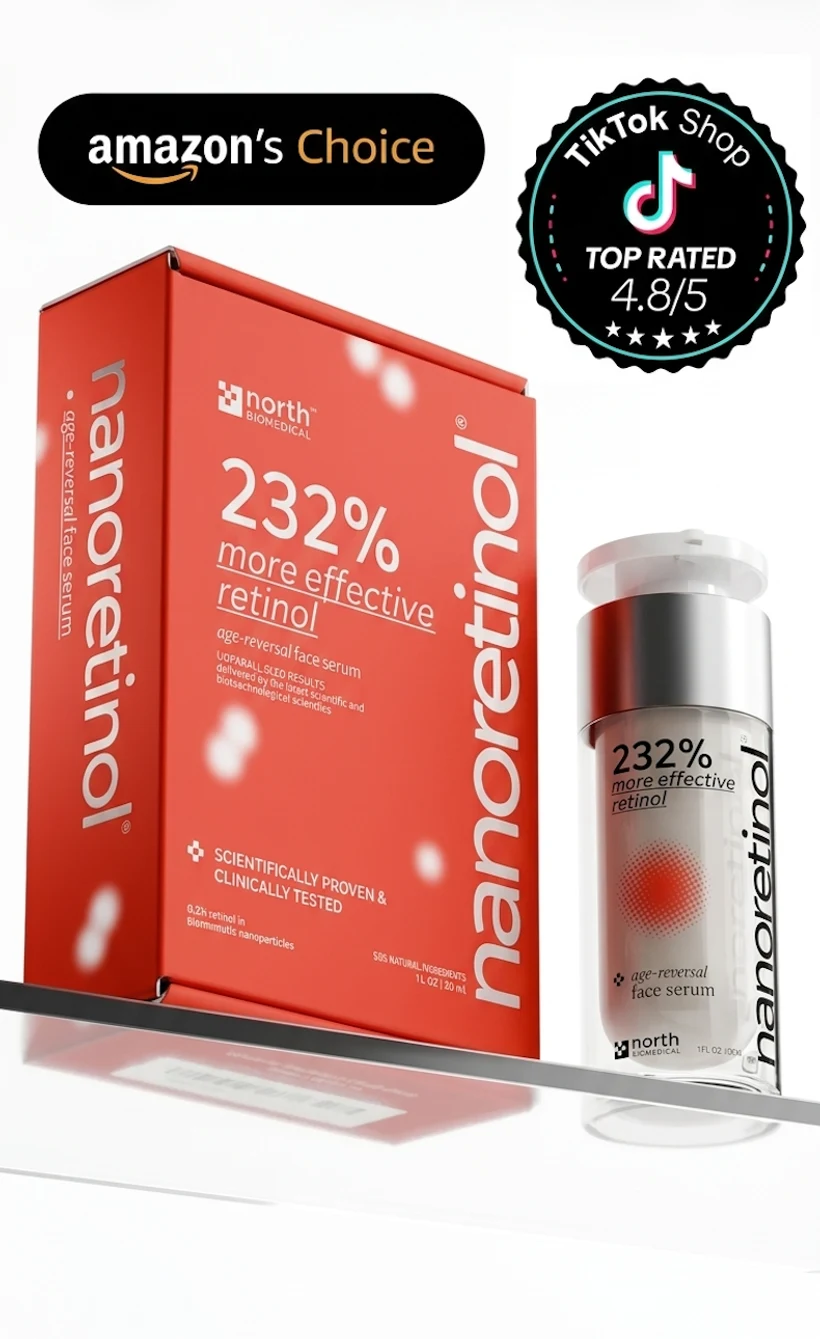
Pentylene glycol is one of the ingredients inside the lipid nanoparticles that carry Nanoretinol’s retinol, alongside glycerin, the humectant described in our guide to glycerin for skin. In water-based formulas like this one, glycols of this kind act as humectants and solvents and support the preservative system.
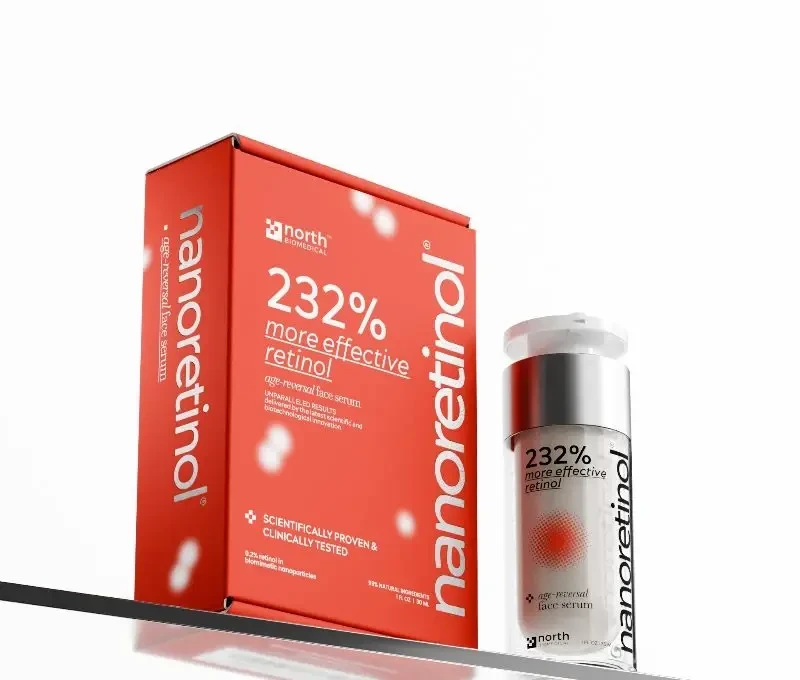
The bigger point is the delivery system. Conventional retinol products often depend on chemicals and petroleum derivatives that loosen the skin barrier to drive retinol in, which explains much of the redness and peeling. Nanoretinol’s 0.2% retinol travels inside biomimetic lipid nanoparticles that the skin recognizes as its own, so it crosses the barrier without damaging it, in a light gel made with 99% natural ingredients. In North Biomedical’s study, Nanoretinol was 232% more effective in collagen recovery than conventional retinol, and skin firmness rose 61% and elasticity 56% after 56 days of use [8]. It is applied once daily at night, followed by sunscreen the next morning, and anyone with a known glycol allergy should patch test it first like any new product.
What It Means on Your Label
Pentylene glycol is a small, multitasking glycol that hydrates, dissolves actives and helps a formula stay free of microbes with less traditional preservative. Measured absorption is lower than once assumed, the safety margins are wide, and the expert review found it safe as used. Allergy exists but is rare, and it is worth a patch test mainly if your skin already reacts to glycols or is prone to eczema.
References
- Sigg M, Daniels R. “Investigations on Alkanediols as Alternative Preservatives in a Nonionic Hydrophilic Cream.” Pharmaceutics. 2020;12(11):1117. doi:10.3390/pharmaceutics12111117
- Sigg M, Daniels R. “Impact of Alkanediols on Stratum Corneum Lipids and Triamcinolone Acetonide Skin Penetration.” Pharmaceutics. 2021;13(9):1451. doi:10.3390/pharmaceutics13091451
- Lee E, An S, Cho SA, et al. “The influence of alkane chain length on the skin irritation potential of 1,2-alkanediols.” International Journal of Cosmetic Science. 2011;33(5):421-425. doi:10.1111/j.1468-2494.2011.00646.x
- Steiner A, Kugarajan K, Wullimann M, Ruty B, Kunze G. “Margin of safety of pentylene glycol derived using measurements of cutaneous absorption and volatility.” Regulatory Toxicology and Pharmacology. 2017;87:106-111. doi:10.1016/j.yrtph.2017.05.007
- Johnson W Jr, Bergfeld WF, Belsito DV, et al. “Safety assessment of 1,2-glycols as used in cosmetics.” International Journal of Toxicology. 2012;31(5 Suppl):147S-168S. doi:10.1177/1091581812460409
- Corazza M, Schenetti C, Schettini N, Zedde P, Borghi A. “Pentylene glycol: An emerging cosmetic allergen?” Contact Dermatitis. 2022;86(1):44-46. doi:10.1111/cod.13963
- Kanokrungsee S, Dendooven E, Aerts O. “Contact Allergy and Allergic Contact Dermatitis From Propylene Glycol and Related Glycols: Cosmetic Skin Sensitisers After All?” Contact Dermatitis. 2026;95(5):450-460. doi:10.1111/cod.70211
- North Biomedical LLC. “Nanoretinol vs. Conventional Retinol: Efficacy in Collagen and Elastin Recovery.” Clinical Study Summary, 2024. Study summary