Propanediol in Skincare: What It Is and Why It Is Not Propylene Glycol
How this plant-sugar humectant is made, what it does in a formula, what the hydration study found, and how it compares with propylene glycol
If you read ingredient lists, you have probably noticed propanediol creeping toward the top of them. It turns up second or third in serums, toners and gels, often right after water. Because the name sounds like propylene glycol, an ingredient with a mixed reputation, many people assume the two are the same thing.
They are related, but they are not the same. This guide explains what propanediol is, how it is made, what it does for your skin and the formula, and what the evidence says about its safety.
What Propanediol Is
Propanediol, written in full as 1,3-propanediol, is a small molecule with three carbon atoms and two hydroxyl groups, one at each end of the chain. Those hydroxyl groups are what make it love water.
Propylene glycol has exactly the same atoms arranged differently. Its full chemical name is 1,2-propanediol, because its two hydroxyl groups sit on neighboring carbons instead of at the two ends. That small shift changes how the molecule behaves on skin, and it is the reason the two names should not be treated as interchangeable on a label.
Much of the propanediol used in skincare today is made by fermentation. Engineers took genes from bacteria that naturally turn glycerol into 1,3-propanediol and built a microbe that makes it from glucose, a cheaper sugar usually taken from corn [1]. That is why it is often marketed as plant-derived or bio-based. Propylene glycol, by contrast, is mostly made from petroleum.
What It Does in a Formula
Propanediol is a multitasker, which is why formulators like it.
Your skin held more water for the full 8 hours measured after one coat of propanediol, and water loss fell further at 15% than at 5%.
- Humectant. Like glycerin, it draws water into the outer layer of skin and helps hold it there.
- Solvent. Many active ingredients dissolve poorly in plain water. Propanediol helps keep them in solution, so the product stays clear and evenly mixed.
- Texture. It gives water-based products a light, slightly slippy feel without the stickiness glycerin can have at high strength.
- Preservative support. It makes it harder for microbes to grow, so a formula can rely on a smaller amount of preservative.
What the Hydration Study Found
Your skin held more water for the full 8 hours measured after one coat of propanediol, and water loss fell further at 15% than at 5%. That comes from a study of 30 healthy women in Brazil, who had propanediol applied to their forearms at 5%, 10% or 15%, alone or combined with butylene glycol or glycerol [2].
Every concentration and every combination raised skin hydration and lowered water loss through the skin at 15 minutes, 2 hours and 8 hours. Adding glycerol to 15% propanediol gave the best result of all, with a stronger barrier effect than propanediol alone. In other words, propanediol works well, and it works even better alongside glycerin. Our guide to glycerin for skin explains why glycerin remains the benchmark humectant: it also supports barrier repair, skin elasticity and protection against irritation [3].
This was a short study on healthy forearm skin, so it shows how propanediol behaves as a humectant rather than proving any anti-aging effect. That is the right way to think about it: a supporting ingredient that makes a formula more comfortable, not an active that changes skin structure.
Is Propanediol Safe?
The Cosmetic Ingredient Review expert panel, which assesses cosmetic ingredient safety in the United States, reviewed ten small diols used as solvents in cosmetics. It concluded that seven of them, including propanediol, are safe as currently used, and that there was not enough data to judge the remaining three [4].
Your skin reacts to propylene glycol more often as the dose rises: in Mayo Clinic patch testing, positive reactions climbed from 0% at a 5% test strength to 1.86% at 20%.
There is much less allergy data on propanediol than on propylene glycol, mostly because propanediol is newer and is not part of the standard patch-test series. Reports of reactions to it are uncommon, but uncommon is not the same as never. If a product containing it keeps giving you a red, itchy rash, a dermatologist can test the individual ingredients.
How It Compares With Propylene Glycol
Propylene glycol is a useful and inexpensive ingredient, but it has a real downside. The American Contact Dermatitis Society named it Allergen of the Year for 2018, noting that it acts as both a weak sensitizer and an irritant, which makes patch-test results hard to read [5].
Your skin reacts to propylene glycol more often as the dose rises: in Mayo Clinic patch testing, positive reactions climbed from 0% at a 5% test strength to 1.86% at 20%. That review covered nearly 12,000 patients tested over two decades, with an overall positive rate of 0.85% [6]. Those are people who had already been referred for suspected allergy, so the general population rate is lower.
For most people, neither ingredient causes trouble. But if you know you react to propylene glycol, propanediol is a reasonable alternative to try, carefully, because it is a different molecule rather than a relabeled version of the same one.
Reading It on a Label
- Propanediol or 1,3-propanediol is the bio-based humectant and solvent described here.
- Propylene glycol or 1,2-propanediol is the related ingredient with the higher irritation and allergy record.
- Butylene glycol, pentylene glycol and methylpropanediol are other small glycols doing similar solvent and humectant jobs.
Where propanediol appears on a list tells you something about the product. Near the top, it is part of the base, the liquid that carries everything else. Lower down, it is probably helping to dissolve an active or support the preservative. Like the fatty alcohols in our guide to cetyl alcohol, it is a structural ingredient whose job is to make the formula work, and to pair with water-binding actives such as those covered in our look at hyaluronic acid benefits.
Why the Base Matters for Retinol
Retinol is a good example of why the base of a formula matters as much as the active. Many conventional retinol products use chemicals and petroleum derivatives that loosen the skin barrier to push the retinol through. That is a large part of why retinol earns its reputation for redness, burning and peeling.
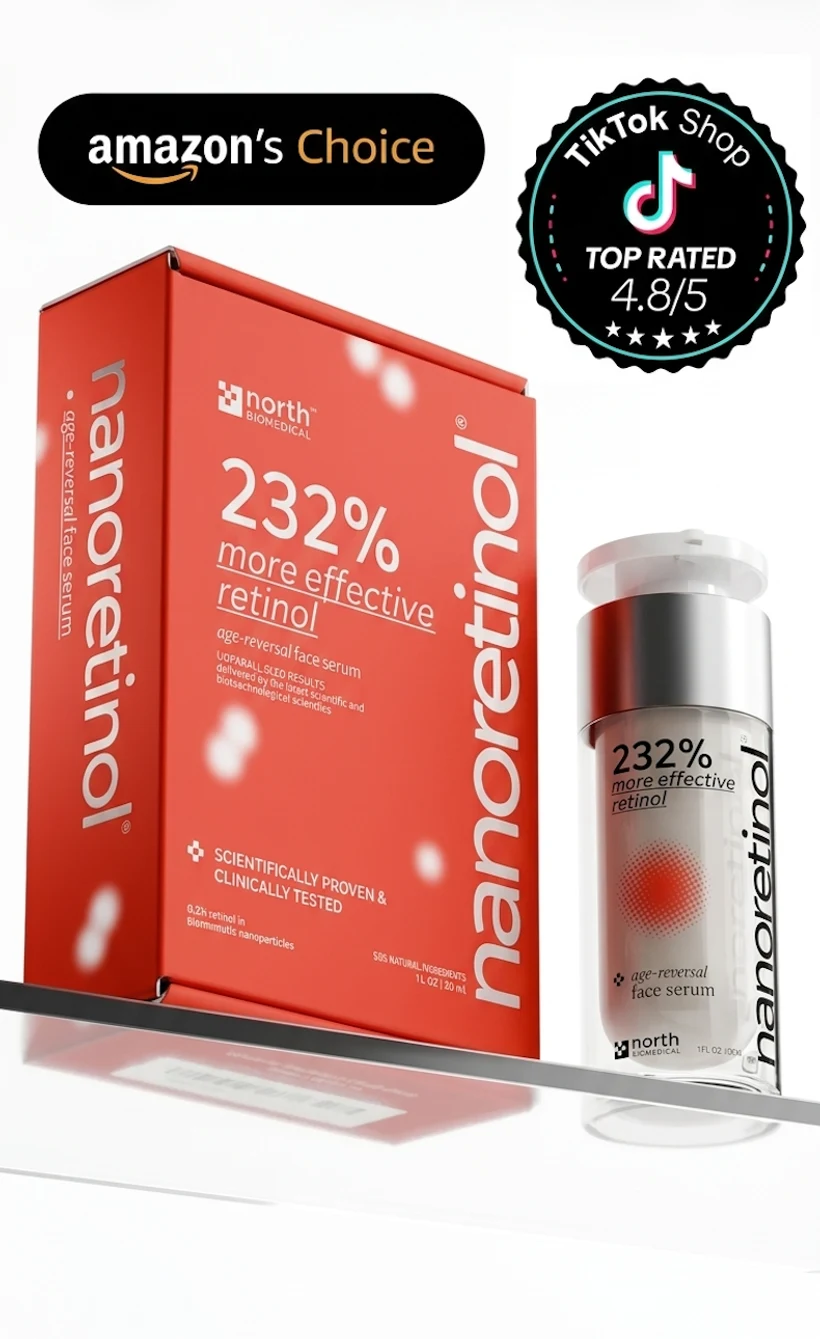
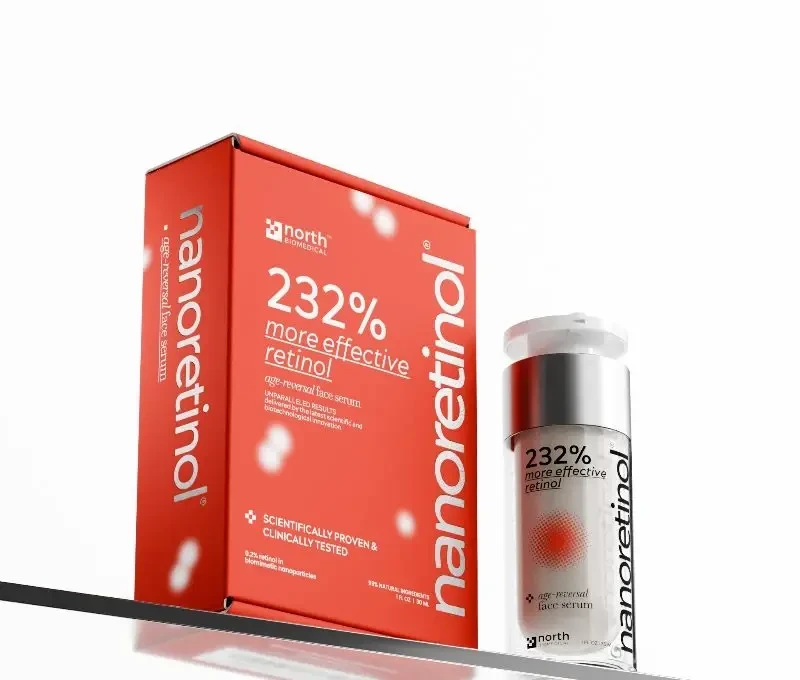
Nanoretinol is built on a different base. Propanediol is its second ingredient, right after water, in a water-based gel made with 99% natural ingredients. The 0.2% retinol itself is held inside biomimetic lipid nanoparticles that pass through the barrier without damaging it, so the retinol does not need a harsh vehicle to get where it works. In North Biomedical’s study, Nanoretinol was 232% more effective in collagen recovery than conventional retinol, and users saw a 61% increase in firmness and a 56% increase in elasticity after 56 days of use [7]. It is applied once a day at night, followed by sunscreen the next morning.
What to Take Away
Propanediol is a light, water-loving solvent and humectant that keeps formulas clear, comfortable and stable. It is not propylene glycol, it has a clean safety review, and the evidence that it hydrates skin is solid. Treat it as a sign of a thoughtfully built base, and judge the product as a whole by how your skin feels after a few weeks of use.
References
- Nakamura CE, Whited GM. “Metabolic engineering for the microbial production of 1,3-propanediol.” Current Opinion in Biotechnology. 2003;14(5):454-459. doi:10.1016/j.copbio.2003.08.005
- Pinto JR, Monteiro e Silva SA, Leonardi GR. “Effects of 1,3-propanediol associated, or not, with butylene glycol and/or glycerol on skin hydration and skin barrier function.” International Journal of Cosmetic Science. 2024;46(1):85-95. doi:10.1111/ics.12911
- Fluhr JW, Darlenski R, Surber C. “Glycerol and the skin: holistic approach to its origin and functions.” British Journal of Dermatology. 2008;159(1):23-34. doi:10.1111/j.1365-2133.2008.08643.x
- Scott LN, Fiume M, Bergfeld WF, et al. “Safety Assessment of Alkane Diols as Used in Cosmetics.” International Journal of Toxicology. 2024;43(2 Suppl):70S-131S. doi:10.1177/10915818231224234
- McGowan MA, Scheman A, Jacob SE. “Propylene Glycol in Contact Dermatitis: A Systematic Review.” Dermatitis. 2018;29(1):6-12. doi:10.1097/DER.0000000000000307
- Lalla SC, Nguyen H, Chaudhry H, et al. “Patch Testing to Propylene Glycol: The Mayo Clinic Experience.” Dermatitis. 2018;29(4):200-205. doi:10.1097/DER.0000000000000393
- North Biomedical LLC. “Nanoretinol vs. Conventional Retinol: Efficacy in Collagen and Elastin Recovery.” Clinical Study Summary, 2024. Study summary