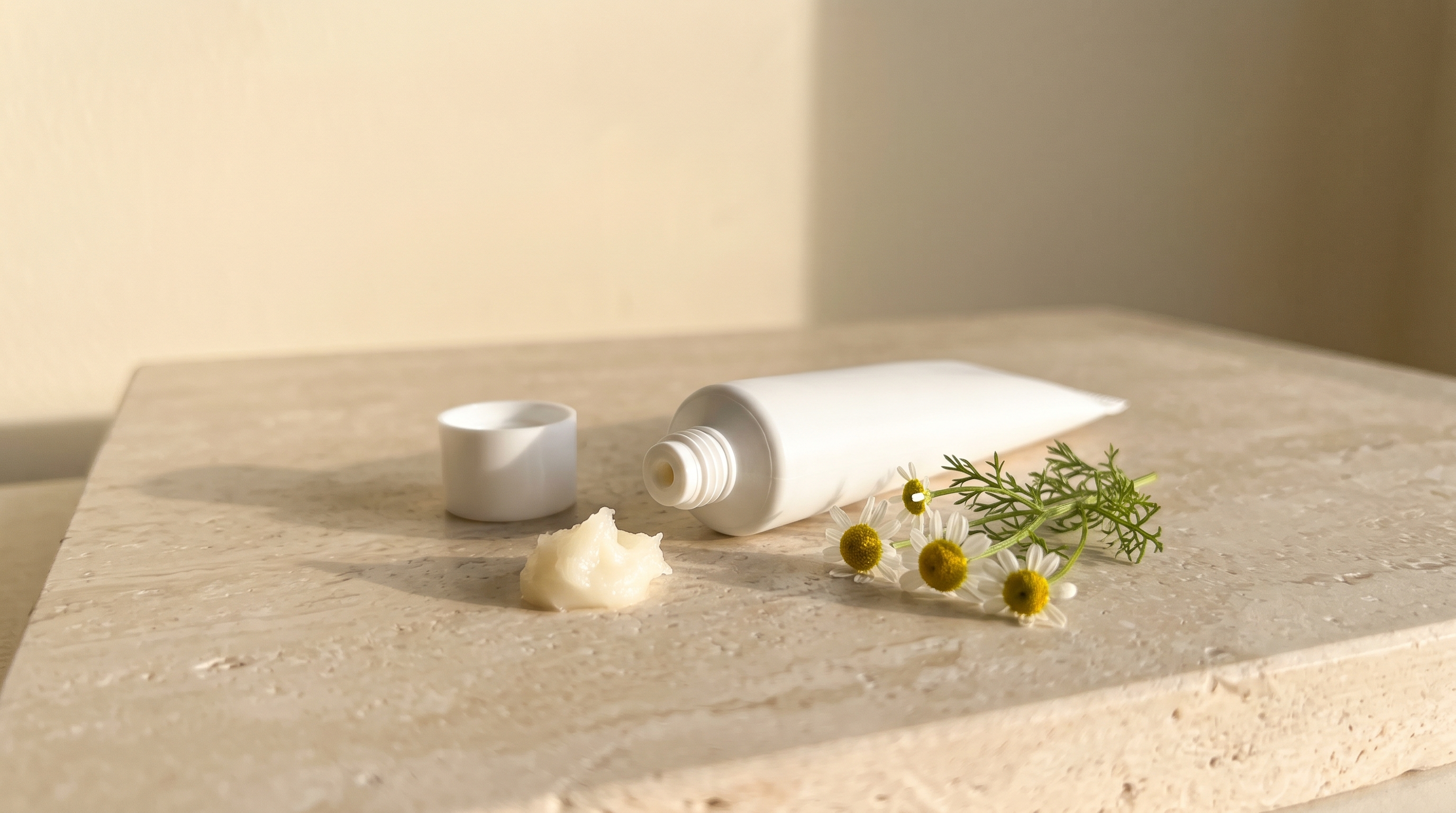
Eye Balm: Who It Suits, What to Look For, and When to Skip It
A balm is the richest thing you can put around your eyes. How it differs from an eye cream or gel, which skin it helps, which it can clog, and how to pair it with retinol
An eye balm is the heaviest texture in the eye-care aisle: a waxy, often solid product that melts on contact and leaves a soft, cushioned finish. For some people it is the only thing that stops their eyelids feeling tight and papery in winter. For others it is a fast route to tiny white bumps and makeup that slides off by lunchtime.
Whether a balm is right for you depends on what your eye skin is actually short of. This guide explains what sets a balm apart, who benefits, who should skip it, and how to use one alongside the ingredients that do the repair work.
Eye balm, eye cream or eye gel?
All three are moisturizers. The difference is how much water and oil they contain.
- Eye gels are mostly water, thickened into a light, cooling texture. They hydrate and suit oily or puffy eyes, and they disappear under makeup.
- Eye creams blend water and oil. They are the middle ground, and they can carry active ingredients such as retinol, peptides or vitamin C in a light enough base for daily wear.
- Eye balms contain little or no water. They are built on waxes, butters and oils such as beeswax, shea butter, squalane or petrolatum, so their main job is to seal moisture in and cushion the skin.
That makes a balm more of a protector than a treatment. It is excellent at stopping water escaping from dry, fragile skin. It is not the best vehicle for most active ingredients, which tend to work better in lighter textures.
Why eye skin dries out so easily
The skin around the eyes is unusual. In a study that measured 39 sites across the face, the upper eyelid had the thinnest dermis and the thinnest skin overall [1]. That skin also folds with every blink, thousands of times a day.
Eyelid skin also produces very little oil. Instrument measurements found extremely low amounts of surface lipids on the eyelid compared with the cheek and nose, yet it still loses water as fast as the rest of the face. It manages to stay soft thanks to unusually large surface cells that hold water well [2].
Your skin on the upper eyelid is the thinnest on your face and makes far less oil than your cheeks, so it feels dry long before anywhere else.
Your skin on the upper eyelid is the thinnest on your face and makes far less oil than your cheeks, so it feels dry long before anywhere else.
That balance is easily tipped. Cold wind, heated rooms, rubbing tired eyes and harsh makeup removers all pull water from skin that has almost no oil of its own to fall back on, and that is where a balm earns its place.
Who an eye balm suits
Dry, mature eye skin. After menopause the skin makes less oil and repairs its barrier more slowly. A balm gives eyelids the lipid layer they no longer produce enough of.
Crepey, papery eyelids. A balm will not rebuild collagen, but by holding water in the outer layer it plumps the surface and softens the look of fine crinkling for hours.
Winter-chapped or windburned eyes. Skiers, cyclists and dog walkers often find a balm protects better outdoors than a cream.
Anyone whose eye cream stings. Many balms have short, fragrance-free ingredient lists with no water, which means fewer preservatives as well. Our guide to dry skin around the eyes covers the other causes worth ruling out.
Your skin around the eyes often feels softer after just a few nights under a fragrance-free balm, far sooner than any wrinkle treatment can work.
Who should skip it
People prone to milia. Milia are tiny, hard white bumps of trapped keratin that are especially common around the eyes [4]. If you already get them, rich balms are worth avoiding or using sparingly.
Puffy eyes. A heavy, occlusive layer does nothing for fluid puffiness. A cool gel is the better choice; our article on eye serum vs eye cream and our guide to eye gel compare the lighter options.
Oily lids or daytime makeup wearers. A balm under eyeshadow tends to make it crease and slide.
People with itchy, red or scaly eyelids. That is often a reaction, not dryness. In a 10-year review of patients tested for eyelid rashes, 43.8% had an allergic contact reaction, most often to fragrances, metals or preservatives [3]. A balm cannot fix an allergy, and a scented one can cause it.
What to look for in a good eye balm
- Fragrance-free. Fragrance is the leading allergen around the eyes [3], so this one matters more here than anywhere else on the face.
- Proven occlusives and emollients. Petrolatum, shea butter, squalane, ceramides and plant oils seal and soften. Petrolatum is especially well studied: in barrier experiments it moved into the outer skin layer and sped up repair rather than simply sitting on top [5].
- A short ingredient list. Fewer ingredients mean fewer chances of a reaction on very thin skin.
- A tube or a stick rather than a jar. Fingers dipped into a jar every night carry bacteria into a product that sits beside your eyes.
Your skin around the eyes often feels softer after just a few nights under a fragrance-free balm, far sooner than any wrinkle treatment can work.
How to apply it without irritating your eyes
- Use very little. A grain of rice is enough for both eyes. Warm it between your ring fingers until it softens.
- Pat, never rub. Tap it along the orbital bone and onto the outer eyelid, staying a few millimetres from the lash line.
- Keep it out of the eye. Balms melt with body heat and migrate, so apply at least 20 minutes before bed and do not take it to the lash line.
- Use it last. A balm seals in whatever is underneath, so it goes on after any serum or eye cream, never before.
Pairing a balm with retinol
A balm hydrates and protects, but the fine lines, crepiness and thinning around the eyes come from collagen loss in the dermis below. The best-studied over-the-counter ingredient for that is retinol. In a 24-week trial in older adults, retinol significantly improved fine wrinkling and increased collagen production compared with a plain lotion [6].
The catch is irritation. Retinoids can cause burning, scaling and dermatitis, although retinol is considerably less irritating than prescription tretinoin [7], and eye skin is the thinnest on the face. A sensible evening routine is a gentle retinol first, applied around the orbital bone, then a thin layer of balm on top once it has absorbed. In the morning, finish with sunscreen. Our guide to retinol around the eyes explains how to start.
Choosing a retinol gentle enough for the eye area
Many conventional retinol formulas rely on solvents that loosen the skin’s lipid barrier to push the retinol through, the same barrier that eyelid skin is already short of. That is why so many people give up on retinol around the eyes.
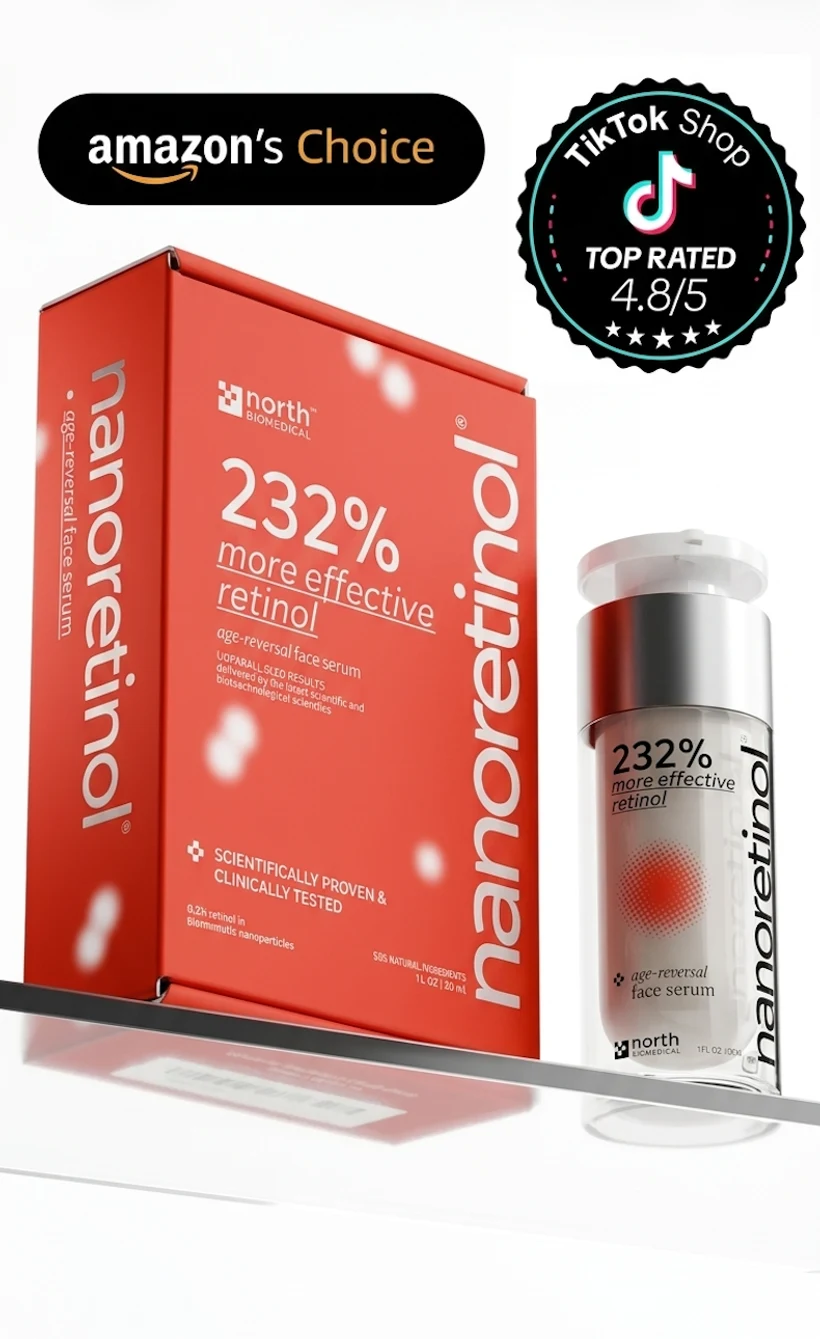
Nanoretinol delivers 0.2% retinol inside biomimetic lipid nanoparticles in a light, water-based gel that is safe for the eye contour. In North Biomedical’s study it was 232% more effective in collagen recovery and 73% more effective in elastin recovery than conventional retinol, with a 56% increase in skin elasticity after 56 days of use [8]. Use it at night, let it absorb, and seal it with a thin layer of fragrance-free balm: the retinol works on the collagen while the balm protects the surface.
References
- Chopra K, Calva D, Sosin M, Tadisina KK, Banda A, De La Cruz C, et al. “A comprehensive examination of topographic thickness of skin in the human face.” Aesthetic Surgery Journal. 2015;35(8):1007-1013. doi:10.1093/asj/sjv079
- Pratchyapruit W, Kikuchi K, Gritiyarangasan P, Aiba S, Tagami H. “Functional analyses of the eyelid skin constituting the most soft and smooth area on the face: contribution of its remarkably large superficial corneocytes to effective water-holding capacity of the stratum corneum.” Skin Research and Technology. 2007;13(2):169-175. doi:10.1111/j.1600-0846.2007.00183.x
- Amin KA, Belsito DV. “The aetiology of eyelid dermatitis: a 10-year retrospective analysis.” Contact Dermatitis. 2006;55(5):280-285. doi:10.1111/j.1600-0536.2006.00927.x
- Berk DR, Bayliss SJ. “Milia: a review and classification.” Journal of the American Academy of Dermatology. 2008;59(6):1050-1063. doi:10.1016/j.jaad.2008.07.034
- Ghadially R, Halkier-Sorensen L, Elias PM. “Effects of petrolatum on stratum corneum structure and function.” Journal of the American Academy of Dermatology. 1992;26(3 Pt 2):387-396. PubMed 1564142
- Kafi R, Kwak HS, Schumacher WE, Cho S, Hanft VN, Hamilton TA, et al. “Improvement of naturally aged skin with vitamin A (retinol).” Archives of Dermatology. 2007;143(5):606-612. doi:10.1001/archderm.143.5.606
- Mukherjee S, Date A, Patravale V, Korting HC, Roeder A, Weindl G. “Retinoids in the treatment of skin aging: an overview of clinical efficacy and safety.” Clinical Interventions in Aging. 2006;1(4):327-348. doi:10.2147/ciia.2006.1.4.327
- North Biomedical LLC. “Nanoretinol vs. Conventional Retinol: Efficacy in Collagen and Elastin Recovery.” Clinical Study Summary, 2024. Study summary