Pumpkin Enzyme Mask: What It Does, What It Can't, and How to Use One
Pumpkin masks promise enzyme exfoliation and natural vitamin A. Here is what pumpkin really brings to your skin, why most masks lean on fruit acids, and where a mask fits next to retinol
Every autumn, pumpkin masks reappear on spa menus and shop shelves with the same two promises: fruit enzymes that dissolve dull skin, and a dose of “natural vitamin A” that works like a gentle retinol. The orange color helps the story along, since it comes from the same carotenoids that the body turns into vitamin A.
Part of that story holds up. Pumpkin is rich in antioxidants, and a well-made pumpkin mask can leave skin smoother and brighter for a few days. The vitamin A part is where the marketing runs well ahead of the evidence. This guide explains what pumpkin contains, what the enzymes and carotenoids can and cannot do on skin, how to choose and use a mask, and where it fits in an anti-aging routine.
What is actually in a pumpkin
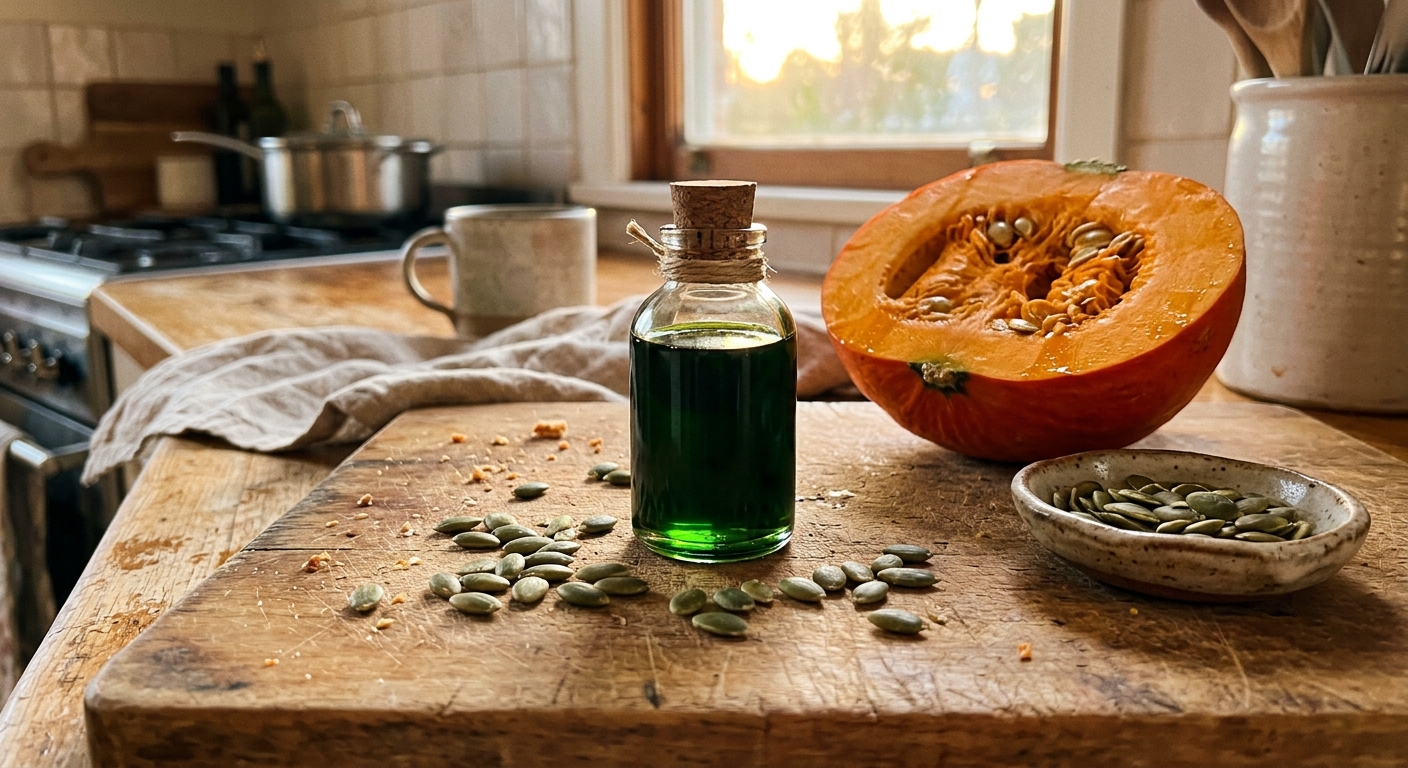
Pumpkin flesh is mostly water and fiber, but it carries a dense mix of plant compounds. The headline ones are carotenoids, mainly beta-carotene, alpha-carotene and lutein, which give it its color. It also supplies vitamin C, vitamin E, polysaccharides, minerals and a modest amount of natural sugars and organic acids [1].
The peel is even richer in some of these. A lab study of fifteen extracts from pumpkin and squash peels found strong antioxidant activity and a small sun-filtering effect, and the extracts were not toxic to human skin cells even at high concentrations [2]. That makes pumpkin a reasonable antioxidant ingredient. It does not make it a strong exfoliant on its own.
The enzyme claim
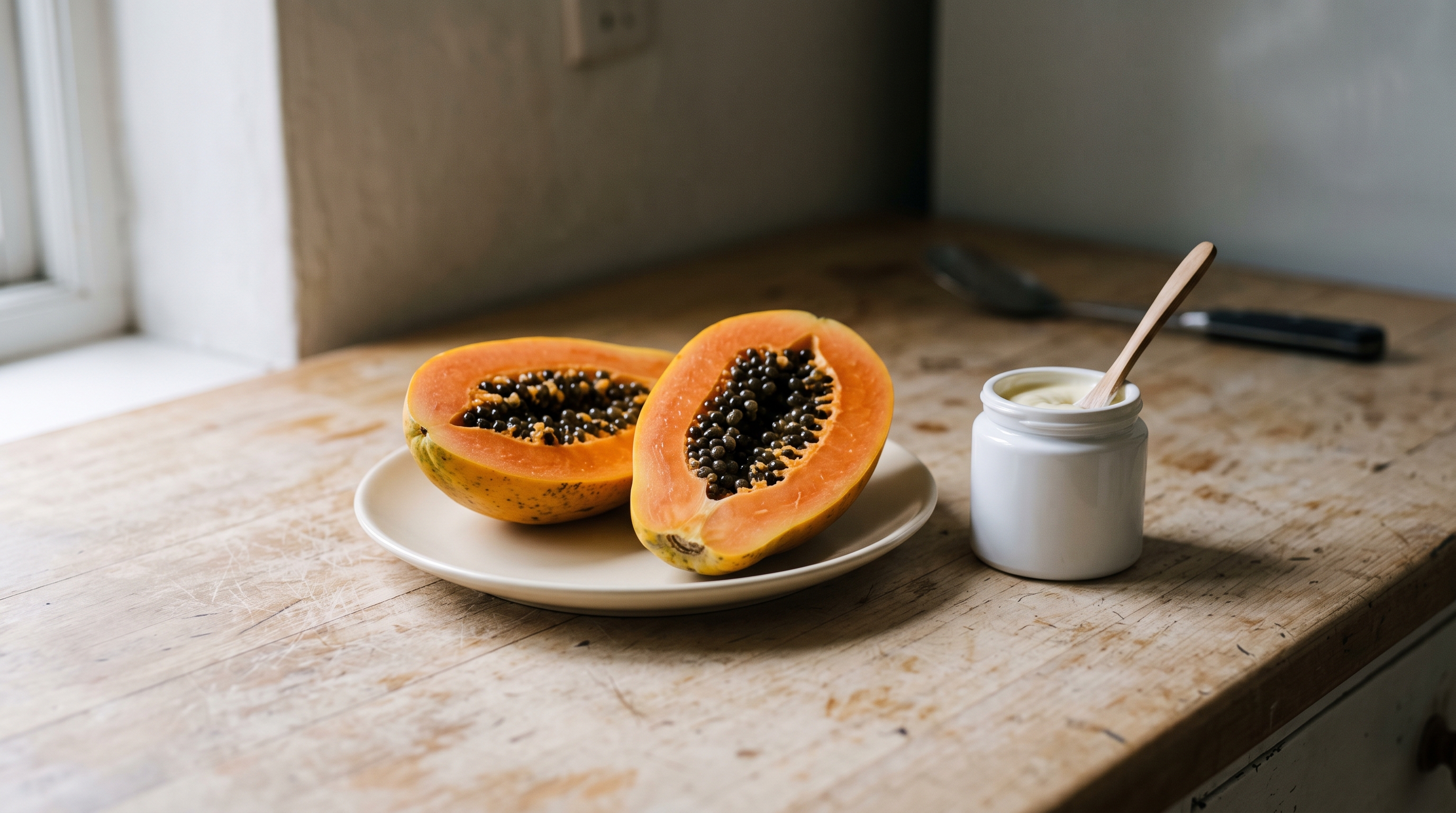
Fruit enzymes exfoliate by cutting the protein bonds that hold dead cells to the skin surface. The best-studied ones are papain from papaya, bromelain from pineapple and ficin from figs, all proteases that have been tested as gentle cosmetic exfoliants [3]. Pumpkin is credited with similar enzymes, but its enzyme activity on skin has barely been studied, and almost no mask tells you how much active enzyme survives in the jar.
Your skin gets about 10 minutes of contact from a pumpkin mask, far less time than a leave-on serum spends working overnight.
That is why so many pumpkin enzyme masks also list glycolic acid, lactic acid or another fruit acid near the top of the ingredient list. The acid does most of the visible exfoliating, and the pumpkin adds antioxidants, color and a pleasant story. If you like the idea of enzyme exfoliation in general, our guide to enzyme exfoliants explains how they compare with acids, and papaya, the classic enzyme fruit, is covered in our look at papaya soap.
Your skin gets about 10 minutes of contact from a pumpkin mask, far less time than a leave-on serum spends working overnight.
The vitamin A claim
Beta-carotene is a provitamin, which means the body can split it into retinol. In the gut, that conversion is well established. In skin, it is more limited. Cultured human skin cells can take up beta-carotene and convert some of it into retinol, so the idea is not absurd [4]. Carotenoids also collect in the outer layer of skin, where they act as antioxidants against sunlight and pollution [5].
What no one has shown is that a rinse-off pumpkin mask delivers enough beta-carotene, converts enough of it and keeps it there long enough to act like a retinoid. The anti-aging results people want from vitamin A, smoother fine lines and new collagen, come from trials that applied retinol itself, repeatedly, for months [6]. Our explainer on vitamin A for skin walks through the whole retinoid family and how each form converts.
Your skin needed 24 weeks of direct retinol to smooth fine lines in one trial, a far bigger commitment than a weekly pumpkin mask.
Your skin needed 24 weeks of direct retinol to smooth fine lines in one trial, a far bigger commitment than a weekly pumpkin mask.
What a pumpkin mask can do
Set the vitamin A promise aside and a pumpkin mask still has real uses:
- Brighter, smoother skin for a few days. The acid and enzyme content loosens dead surface cells, so skin reflects light more evenly afterward.
- Antioxidant support. Carotenoids, vitamin C and vitamin E help mop up free radicals at the surface, although most of that benefit rinses away with the mask.
- A gentler kind of exfoliation. Masks that pair pumpkin with a low dose of fruit acid tend to be milder than a strong peel. Fruit acids used consistently at higher strengths do change skin over time: a six-month study of 25% fruit acid lotion found sun-damaged forearm skin grew about 25% thicker, with denser collagen [7]. A weekly mask is a much smaller dose.
How to choose a pumpkin mask
Read the label rather than the front of the jar.
- Look for the acid. If glycolic or lactic acid appears in the first few ingredients, treat the mask as an acid exfoliant and do not stack it with other peels.
- Check the fragrance. Many autumn masks add cinnamon, clove or “pumpkin spice” fragrance, which are common irritants.
- Prefer opaque, airtight packaging. Vitamin C and carotenoids break down with light and air.
- Be wary of “enzyme peel” claims with no acid listed. That mask may be very mild, which is fine, but it will not match a professional peel.
How to use one
Apply a thin, even layer to clean, dry skin, avoiding the eyes and lips. Most masks call for 5 to 15 minutes. A gentle tingle is normal; burning is not, so rinse at once if it stings. Rinse with lukewarm water, pat dry and follow with a plain moisturizer. Once or twice a week is enough for most skin types.
A homemade version of plain cooked pumpkin puree with a spoon of honey is mild and safe for most people, mainly a soothing antioxidant mask. Our guide to honey face masks covers what honey adds. Do not add lemon juice, raw spices or baking soda.
Who should skip it
Skip pumpkin masks with added acid if you have a damaged or freshly sunburned barrier, active eczema, or very reactive skin. Anyone allergic to papaya, pineapple, kiwi or fig should patch test first, because the enzymes in those fruits are known allergens [8]. And do not use an acid pumpkin mask on the same night as a retinoid; keep at least a day between them.
A seasonal treat, not a vitamin A routine
A pumpkin mask is a pleasant way to polish dull skin and add a little antioxidant support, especially in the dry months. It is not a source of retinol, and it will not rebuild collagen.
For real vitamin A, the dependable route is a leave-on retinol used most nights. The catch has always been tolerability, and that is where Nanoretinol differs. It encapsulates 0.2% retinol in biomimetic lipid nanoparticles that pass into the skin without breaking down its barrier. In North Biomedical’s clinical study, it was 232% more effective in collagen recovery and 73% more effective in elastin recovery than conventional retinol, with a 61% increase in firmness and a 56% increase in elasticity after 56 days [9]. Use it on your retinol nights and keep the pumpkin mask for a gentle weekly reset on a different evening.
References
- Aziz A, Noreen S, Khalid W, Ejaz A, Faiz Ul Rasool I, Maham, et al. “Pumpkin and Pumpkin Byproducts: Phytochemical Constitutes, Food Application and Health Benefits.” ACS Omega. 2023;8(26):23346-23357. doi:10.1021/acsomega.3c02176
- Gaweł-Bęben K, Czech K, Strzępek-Gomółka M, Czop M, Szczepanik M, Lichtarska A, Kukula-Koch W. “Assessment of Cucurbita spp. Peel Extracts as Potential Sources of Active Substances for Skin Care and Dermatology.” Molecules. 2022;27(21):7618. doi:10.3390/molecules27217618
- Venetikidou M, Lykartsi E, Adamantidi T, Prokopiou V, Ofrydopoulou A, Letsiou S, Tsoupras A. “Proteolytic Enzyme Activities of Bromelain, Ficin, and Papain from Fruit By-Products and Potential Applications in Sustainable and Functional Cosmetics for Skincare.” Applied Sciences. 2025;15(5):2637. doi:10.3390/app15052637
- Andersson E, Vahlquist A, Rosdahl I. “Beta-carotene Uptake and Bioconversion to Retinol Differ Between Human Melanocytes and Keratinocytes.” Nutrition and Cancer. 2001;39(2):300-306. doi:10.1207/S15327914nc392_21
- Darvin ME, Lademann J, von Hagen J, Lohan SB, Kolmar H, Meinke MC, Jung S. “Carotenoids in Human Skin In Vivo: Antioxidant and Photo-Protectant Role against External and Internal Stressors.” Antioxidants. 2022;11(8):1451. doi:10.3390/antiox11081451
- Kafi R, Kwak HS, Schumacher WE, Cho S, Hanft VN, Hamilton TA, et al. “Improvement of Naturally Aged Skin with Vitamin A (Retinol).” Archives of Dermatology. 2007;143(5):606-612. doi:10.1001/archderm.143.5.606
- Ditre CM, Griffin TD, Murphy GF, Sueki H, Telegan B, Johnson WC, Yu RJ, Van Scott EJ. “Effects of Alpha-Hydroxy Acids on Photoaged Skin: A Pilot Clinical, Histologic, and Ultrastructural Study.” Journal of the American Academy of Dermatology. 1996;34(2 Pt 1):187-195. PubMed:8642081
- Giangrieco I, Ciardiello MA, Tamburrini M, Tuppo L, Rafaiani C, Mari A, et al. “Comparative analysis of the immune response and the clinical allergic reaction to papain-like cysteine proteases from fig, kiwifruit, papaya, pineapple and mites in an Italian population.” Foods. 2023;12(15):2852. doi:10.3390/foods12152852
- North Biomedical LLC. “Nanoretinol vs. Conventional Retinol: Efficacy in Collagen and Elastin Recovery.” Clinical Study Summary, 2024. Study summary