Vitamin A for Skin: Why It's the Most Studied Anti-Aging Ingredient on Earth
How vitamin A and its derivatives — retinyl esters, retinol, retinaldehyde, retinoic acid — actually work, and which form earns the time on your shelf
If you sorted every skincare ingredient ever marketed for anti-aging by the strength of the clinical evidence behind it, vitamin A would sit at the top of the list — alone, with daylight between it and whatever is in second place. It is the only topical category that consistently produces measurable, biopsy-confirmed structural change in human skin across decades of randomized trials. Yet most consumers buy it without understanding what “vitamin A skincare” actually means. The category is not a single ingredient. It is a family of related molecules with different potencies, different side effects, and different rules for use.
Once you understand the family, the marketing copy on serum bottles starts to make sense — and the right choice for your skin becomes much easier.
Why Vitamin A Matters for Skin
Vitamin A is a fat-soluble vitamin that the body uses for vision, immunity, and — most relevant here — the regulation of how skin cells grow, mature, and produce structural proteins. Inside the dermis, retinoic acid (the active form of vitamin A) binds nuclear receptors known as RARs and RXRs, which then bind specific sequences of DNA called retinoic acid response elements. The result is a coordinated change in gene expression that affects nearly every aging-relevant process in the skin.
Topical vitamin A increases procollagen synthesis, reduces matrix metalloproteinase (MMP) activity that degrades existing collagen, and accelerates keratinocyte turnover [1]. In a controlled study of naturally aged skin in elderly subjects, 24 weeks of topical retinol significantly reduced fine wrinkling compared to vehicle, with measurable increases in glycosaminoglycan expression and procollagen synthesis on biopsy [2]. The visible improvement was not cosmetic blurring — it was structural.
This is why dermatology has been recommending topical vitamin A for fifty years and continues to. Almost no other ingredient produces this caliber of evidence.
The Vitamin A Family Tree
The single biggest source of confusion in vitamin A skincare is that the bottle says “retinol” but the relevant question is which form of vitamin A is in the bottle. Each form must be converted into retinoic acid before it can act on the receptors in your dermis, and each conversion step costs potency.
Retinyl Esters (Retinyl Palmitate, Retinyl Acetate)
The mildest forms. Found in many “anti-aging” creams marketed to sensitive skin or as introductory retinoids. They require three conversions in the skin to become retinoic acid (ester → retinol → retinaldehyde → retinoic acid), and each step is inefficient. The clinical evidence for retinyl esters is meaningfully weaker than for the more advanced forms. Useful as a starting point — not as a destination.
Retinol
The most common form in over-the-counter products. Two conversions are required (retinol → retinaldehyde → retinoic acid). Retinol has the strongest body of OTC clinical evidence among the non-prescription forms. The 2007 JAMA Dermatology trial of retinol on naturally aged skin remains a foundational reference for what topical retinol can accomplish at relatively low concentrations [2].
Once you understand the family, the marketing copy on serum bottles starts to make sense — and the right choice for your skin becomes much easier.
Retinaldehyde (Retinal)
One conversion away from retinoic acid (retinaldehyde → retinoic acid). In theory, this means more potency per molecule than retinol with somewhat better tolerability than prescription retinoids. In practice, retinaldehyde is less stable in formulation, and product quality varies widely. See retinol vs retinal for a deeper comparison.
Retinoic Acid (Tretinoin, Isotretinoin)
The active molecule itself. Prescription-only in the United States. Tretinoin is the gold standard for evidence in dermatology — decades of randomized trials documenting wrinkle reduction, photodamage reversal, and dermal remodeling [3]. A 2025 network meta-analysis of 23 randomized trials confirmed that tretinoin and retinol significantly improved fine wrinkles and hyperpigmentation, with tretinoin emerging as the most balanced treatment across efficacy and safety [4].
Tazarotene and Adapalene
Synthetic retinoids approved primarily for acne but with anti-aging evidence as well. Adapalene is now available over the counter and has gentler tolerance than tretinoin.
The Conversion Cascade in One Image
Think of the vitamin A family as a relay race. The molecule must reach the active form (retinoic acid) before it can bind the receptor and produce structural change. The earlier in the cascade you start, the more steps must happen — and the more potency is lost along the way. This is why a “0.5% retinyl palmitate” serum and a “0.5% retinol” serum are not equivalent products. The numbers describe the ingredient, not what reaches the dermis.
What the Evidence Actually Shows
Topical retinoic acid stimulates collagen synthesis in vivo. A landmark 1991 study showed that the content of type III procollagen approximately doubled after ten weeks of topical retinoic acid treatment, with a corresponding increase in type I collagen [5]. This is structural change at the molecular level — not surface smoothing.
For naturally aged skin, the JAMA Dermatology trial demonstrated that retinol at low concentrations improved fine wrinkling and increased dermal procollagen and glycosaminoglycan content over 24 weeks [2]. For photoaged skin, the network meta-analysis of 23 RCTs found tretinoin and retinol superior to most alternatives for fine wrinkles and pigmentation [4].
This evidence base is why dermatologists treat vitamin A as the foundation of anti-aging skincare, with most other categories — peptides, antioxidants, growth factors — positioned as adjuncts rather than substitutes.
This is why a “0.5% retinyl palmitate” serum and a “0.5% retinol” serum are not equivalent products.
What Topical Vitamin A Cannot Do
Vitamin A is powerful, but the marketing around it sometimes overstates the case. Honest framing matters:
- It does not “lift” the face. Skin tightening from collagen induction is real but modest. Topicals cannot reverse fat-pad descent, bone resorption, or significant skin laxity.
- Results take months. Tretinoin trials typically show meaningful improvement after three to six months of consistent use. Retinol typically requires twelve to sixteen weeks.
- It is not curative for acne or melasma alone. It is one component of a multi-ingredient strategy.
- Oral vitamin A is not a substitute for topical. Diet and supplementation matter for whole-body vitamin A status, but the dermis responds to what is delivered locally to it [6].
Side Effects and Tolerance
The same receptor activation that drives benefit also drives the classic side-effect profile: redness, peeling, dryness, sun sensitivity, and a “purge” period where existing concerns may temporarily worsen before improving. Tolerability is the single biggest reason people abandon vitamin A skincare before benefits accrue.
The pharmacology of irritation is well understood. Conventional topical vitamin A formulations rely on chemicals and petroleum derivatives to push the molecule past the epithelial barrier through a process called lipid mobility — a mechanism that disrupts the barrier itself. The disruption is what produces the redness, the peeling, and the sting. The reason “start low, go slow” is universal advice with retinoids is precisely because the formulation strategy that delivers the active also damages the surface en route.
This is the gap that newer delivery systems are designed to close.
A Smarter Way to Deliver Vitamin A
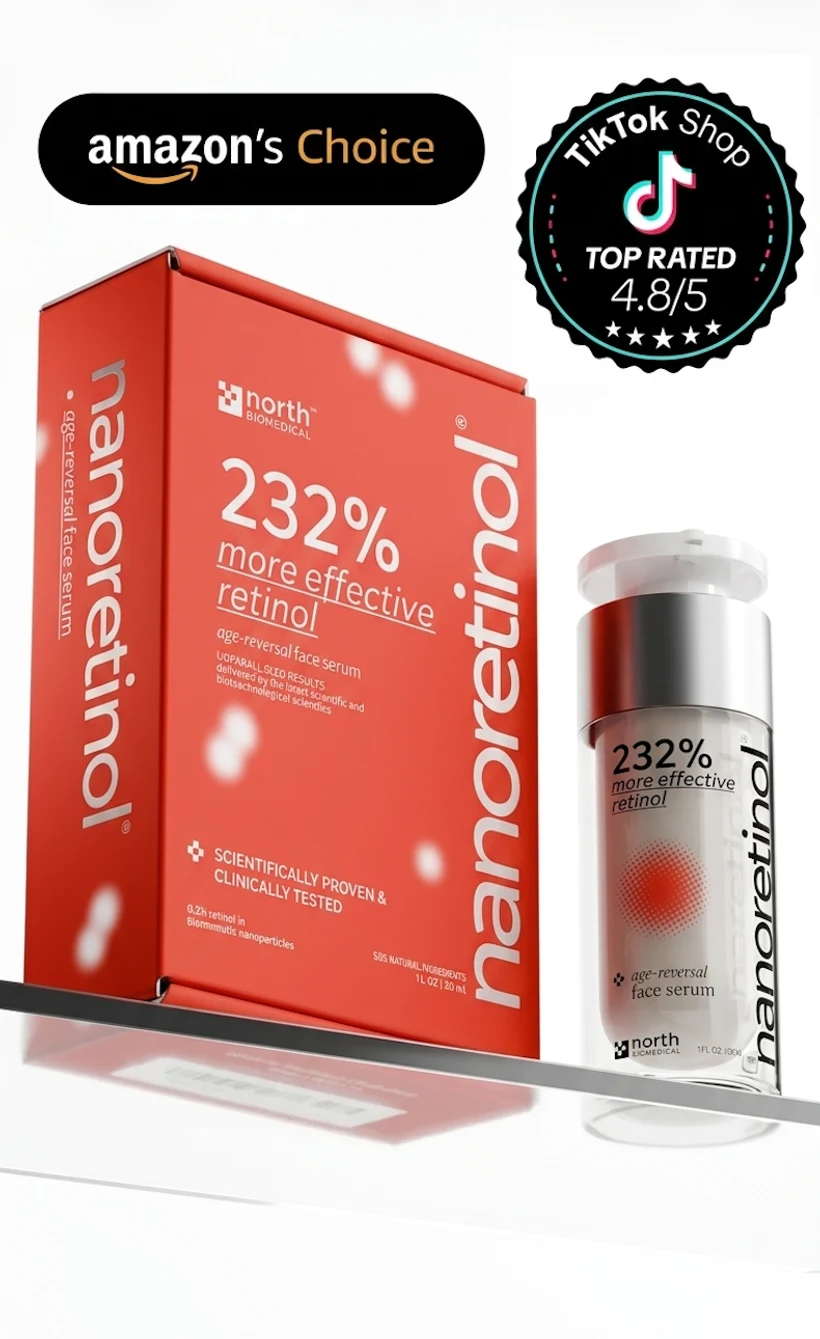
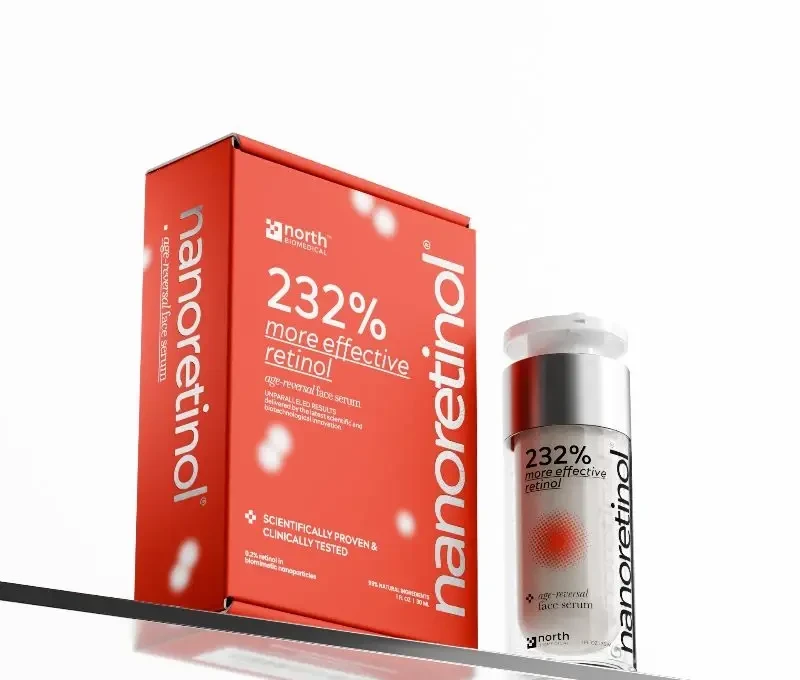
Nanoretinol approaches the delivery problem from a different angle. The retinol is encapsulated in biomimetic lipid nanoparticles — particles whose outer surface mimics the skin’s own cell membranes. The skin recognizes them as “self” and allows them to pass through the epithelial barrier without breaking it down. Once across, the nanoparticles release retinol directly to skin cells, and the phospholipid carrier is gradually absorbed into the cells themselves.
The same delivery technology underlies several novel cancer therapies in the drug-delivery industry, where targeted intracellular access is essential. Applied to topical vitamin A, it means more retinol reaching its receptors and less collateral damage to the surface.
In comparative testing, this approach was 232% more effective in collagen recovery and 73% more effective in elastin recovery than conventional retinol — at a 0.2% retinol concentration that is fully stabilized in a water-based, gel-like formulation [7]. The cytotoxicity to skin cells is drastically reduced, and clinical trials confirm minimal side effects, milder than those caused by conventional retinol when present at all.
For vitamin A skincare specifically, the value is that the molecule with the most decades of evidence behind it can finally be delivered without the irritation that has historically limited who can actually use it. The 2.5% of women who try retinol once and quit because their face peeled for two weeks — they are the population for whom delivery, not potency, was always the missing variable.
Choosing the Right Form for Your Skin
A practical decision framework:
- First-time user, sensitive skin: Start with a low-concentration retinol or a well-formulated retinyl ester for two to four weeks before stepping up.
- Tolerated retinol but plateaued: Move to a higher-concentration retinol, retinaldehyde, or a prescription retinoid.
- Want maximum evidence-based outcome and willing to manage side effects: Prescription tretinoin, used appropriately, has the strongest single-product evidence in dermatology.
- Tried conventional retinol and abandoned it from irritation: A nanoencapsulated formulation typically resolves the tolerability barrier without sacrificing efficacy.
Whichever form you choose, daily broad-spectrum SPF 30+ is non-negotiable. Vitamin A increases UV sensitivity, and the benefits will be erased by unprotected sun exposure faster than any topical can produce them. See sunscreen for aging skin for product selection.
Where to Start
If you are not already using a vitamin A product, begin with two or three nights per week of a low-concentration retinol applied to clean, dry skin, followed by a moisturizer with ceramides. Build to nightly use over six to eight weeks. Reassess at twelve weeks. Most of the structural change happens between months three and six — the first month is largely about tolerance.
Among the dozens of categories competing for shelf space in your routine, vitamin A is the one with the longest paper trail and the most consistent results. The decision is not whether to use it. The decision is which form, at what concentration, and through what delivery system — and the answer to that has changed in the last decade.
References
- Mukherjee S, Date A, Patravale V, et al. “Retinoids in the treatment of skin aging: an overview of clinical efficacy and safety.” Clinical Interventions in Aging. 2006;1(4):327-348. doi:10.2147/ciia.2006.1.4.327
- Kafi R, Kwak HSR, Schumacher WE, et al. “Improvement of Naturally Aged Skin With Vitamin A (Retinol).” Archives of Dermatology. 2007;143(5):606-612. doi:10.1001/archderm.143.5.606
- Quan T. “Human Skin Aging and the Anti-Aging Properties of Retinol.” Biomolecules. 2023;13(11):1614. doi:10.3390/biom13111614
- Lin L, Chen X, Liu C, et al. “Comparative efficacy of topical interventions for facial photoaging: a network meta-analysis.” Scientific Reports. 2025;15:26889. doi:10.1038/s41598-025-12597-0
- Schwartz E, Cruickshank FA, Mezick JA, Kligman LH. “Topical all-trans retinoic acid stimulates collagen synthesis in vivo.” Journal of Investigative Dermatology. 1991;96(6):975-978. doi:10.1111/1523-1747.ep12476385
- Sullivan K, Law RM, Lain E, et al. “Evaluation of a retinol containing topical treatment to improve signs of neck aging.” Journal of Cosmetic Dermatology. 2023;22(10):2755-2764. doi:10.1111/jocd.15904
- North Biomedical LLC. “Nanoretinol vs. Conventional Retinol: Efficacy in Collagen and Elastin Recovery.” Clinical Study Summary, 2024. northbiomedical.com/documents/Nanoretinol-Study_Summary.pdf