
Restylane Fillers: What They Actually Do for Aging Skin (and the One Thing They Can't Fix)
How this hyaluronic acid filler restores volume, how long it really lasts, and the part of aging skin it was never designed to treat.
Walk into any medical spa and Restylane will be one of the first names on the menu. It has been used in tens of millions of treatments worldwide, it is one of the most studied dermal fillers in existence, and for the right problem it delivers a result you can see the moment you stand up from the chair. But there is a persistent misunderstanding about what fillers like Restylane are for — one that leads people to expect the wrong thing and walk away disappointed. So let’s be precise about what this product does, what the clinical evidence actually shows, and the one dimension of aging skin it was never built to address.
What Restylane Is Made Of
Restylane is a family of injectable gels made from cross-linked hyaluronic acid. Hyaluronic acid is not exotic; it is a sugar molecule your body already produces in enormous quantities, prized for its ability to bind water and give tissue its plump, cushioned quality. The trick that turns a naturally slippery molecule into a filler is cross-linking — chemically tethering the chains together so the gel resists your body’s enzymes and holds its shape under the skin.
The original Restylane uses a firmer, more granular gel technology, while newer members of the family — Kysse, Refyne, Defyne, Lyft, and the injectable-moisturizer Skinvive — are tuned for different jobs, from plumping lips to softening deep folds to smoothing crepey texture. What unites them is the mechanism: they physically occupy space beneath the skin, lifting what has deflated.
The Problem It Solves: Volume Loss
Aging is not only about wrinkles. Under the surface, we lose fat pads, bone recedes, and the scaffolding that once held the face taut gives way. Cheeks flatten, the smile lines running from nose to mouth deepen, and hollows appear under the eyes. This is a structural problem, and structure is exactly what a filler restores. Injected into the mid-face, Restylane can lift sagging cheeks; placed carefully in the tear trough, it can soften under-eye hollows.
A separate study following patients for up to 15 months confirmed that modern resilient hyaluronic acid gels maintain visible fold correction well beyond the first few months.
The clinical record here is genuinely strong. In a randomized, double-blind, multicenter trial of 138 patients, Restylane provided more durable correction of nasolabial folds than the bovine collagen filler it was compared against, and was well tolerated [1]. A separate study following patients for up to 15 months confirmed that modern resilient hyaluronic acid gels maintain visible fold correction well beyond the first few months [2].
How Long Does It Actually Last?
This is where honest expectations matter. Marketing tends to quote the longest possible figure; biology is more variable. Most Restylane results in the nasolabial folds and cheeks last somewhere between six and eighteen months, depending on the specific product, the area treated, and how quickly your metabolism breaks the gel down. Lips, which move constantly, tend to metabolize filler faster. A study in nasolabial folds documented persistence of visible correction across multiple months with a favorable safety profile, with most side effects — swelling, bruising, tenderness — mild and resolving on their own [3].
There is also an intriguing bonus effect. Research published in the Archives of Dermatology found that injecting cross-linked hyaluronic acid into photodamaged skin stimulated the skin’s own fibroblasts to produce new collagen, apparently by mechanically stretching them back into an active state [4]. It is a real phenomenon — but it is localized to the tissue immediately around the injection, not a whole-face rejuvenation.
You can read more about how to actually boost your skin’s collagen production here.
The One Thing Restylane Can’t Do
Here is the crux. Restylane changes the architecture beneath your skin. It does not change the quality of the skin itself. It cannot fade sun spots. It cannot refine rough texture or shrink enlarged pores. It cannot rebuild the broad, thinning collagen network across your entire face, tighten crepey surface skin, or restore the smooth, light-reflecting finish that reads as “youthful.” A beautifully filled face with dull, sun-damaged, texturally rough skin still looks aged — because volume and skin quality are two separate problems.
This is the mistake that leaves people underwhelmed: they expect a structural tool to solve a surface problem. Skin quality is a job for what you do every single day, not what happens in a chair twice a year.
Where Topical Retinoids — and Nanoretinol — Come In
The gold-standard ingredient for improving skin quality is the retinoid. Retinoids signal your fibroblasts to build collagen across the whole treated surface, accelerate cell turnover to smooth texture, and fade pigmentation over time. They address precisely the dimension filler leaves untouched. The catch is that conventional retinol penetrates the skin barrier poorly and, at the concentrations needed to compensate, frequently causes the redness and peeling that send people back to the shelf. You can read more about how to actually boost your skin’s collagen production here.
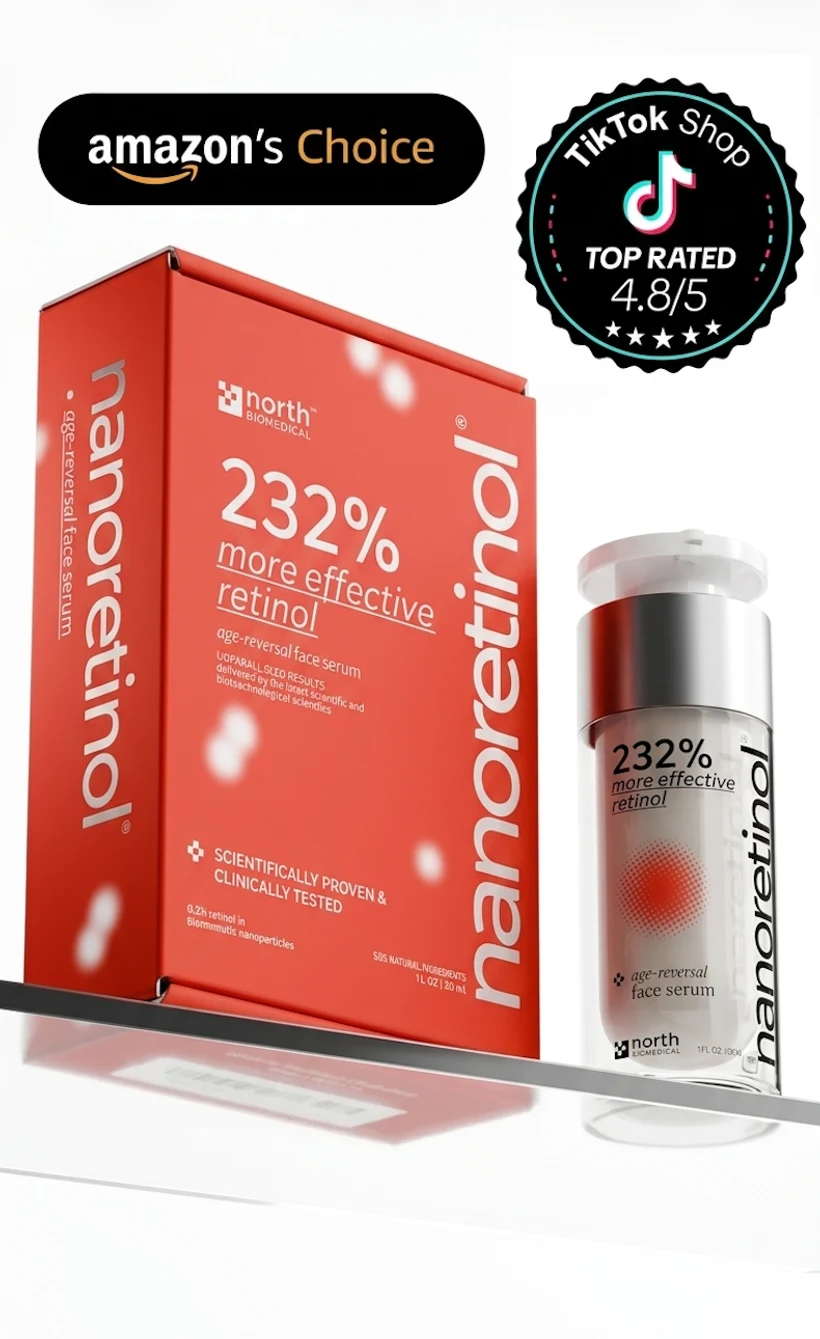
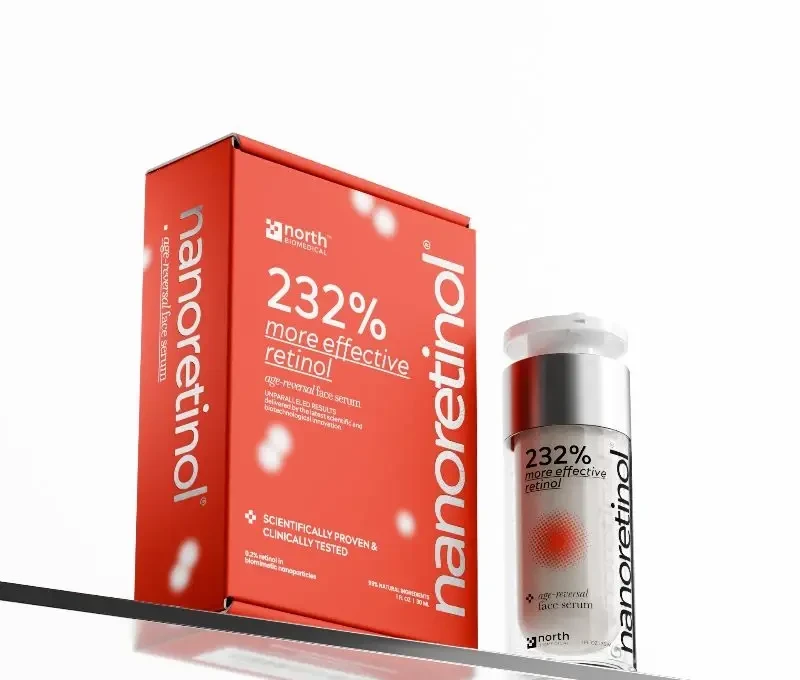
Nanoretinol was built to close that gap. By encapsulating retinol inside biomimetic lipid nanoparticles that pass through the skin barrier without disrupting it, it delivers active retinol efficiently at a gentle, fully stabilized 0.2% — no barrier damage, far less irritation. North Biomedical’s testing showed this delivery system produced substantially greater collagen and elastin recovery than conventional retinol while proving markedly gentler on skin cells. In practical terms, it is the kind of daily tool that improves the canvas — the tone, texture, and firmness of the skin itself — so that if you do choose filler, it is smoothing a healthier surface rather than propping up a neglected one.
The Honest Takeaway
Restylane is an excellent solution to a specific problem: lost volume and deepened folds. The evidence for its safety and durability is solid, and for the right candidate the results are immediate and natural-looking. Just don’t ask it to do a job it was never designed for. Volume is restored in a chair; skin quality is earned at the bathroom sink. The people who look best over time treat both — and a well-delivered retinoid is how the second half of that equation gets done. If you are considering injectables, consult a board-certified dermatologist or qualified injector to map the right approach for your face. For the budgeting question behind repeat appointments, how long filler lasts separates how long the gel persists from how long the result shows.
References
- Narins RS, Brandt F, Leyden J, et al. “A randomized, double-blind, multicenter comparison of the efficacy and tolerability of Restylane versus Zyplast for the correction of nasolabial folds.” Dermatologic Surgery. 2003;29(6):588-595. PubMed: 12786700
- Kaufman-Janette J, Taylor SC, Cox SE, Weinkle SH, Smith S, Kinney BM. “Efficacy and safety of a new resilient hyaluronic acid dermal filler, in the correction of moderate-to-severe nasolabial folds: A 64-week, prospective, multicenter, controlled, randomized, double-blind and within-subject study.” Journal of Cosmetic Dermatology. 2019;18(5):1244-1253. doi:10.1111/jocd.13100
- Arsiwala SZ. “Safety and Persistence of Non-Animal Stabilized Hyaluronic Acid Fillers for Nasolabial Folds Correction in 30 Indian Patients.” Journal of Cutaneous and Aesthetic Surgery. 2010;3(3):156-161. doi:10.4103/0974-2077.74492
- Wang F, Garza LA, Kang S, et al. “In vivo stimulation of de novo collagen production caused by cross-linked hyaluronic acid dermal filler injections in photodamaged human skin.” Archives of Dermatology. 2007;143(2):155-163. doi:10.1001/archderm.143.2.155