Salicylic Acid Serum: How It Clears Pores and How to Use It Without Drying Out
Salicylic acid is the one exfoliant that dissolves into oil, which makes it uniquely good at clearing pores. Here is what the evidence shows, what strength to buy, and how it fits an anti-aging routine
Most exfoliating acids work on the surface of your skin. Salicylic acid goes somewhere the others cannot: inside the pore. That single property explains why a salicylic acid serum is the first thing dermatologists suggest for blackheads, clogged pores and oily patches, and why it has quietly become a staple in adult routines that are as concerned with texture as with breakouts.
It is also easy to misuse. Too strong, too often or layered with the wrong partners, a salicylic serum can leave skin tight, flaky and more reactive than before. Here is how to choose one that works and use it so it keeps working.
Why salicylic acid reaches where others cannot
Salicylic acid is a beta hydroxy acid (BHA). Unlike glycolic and lactic acid, which dissolve in water, salicylic acid dissolves in oil. Pores are lined with sebum, so an oil-soluble acid can travel down into them and loosen the plug of oil and dead cells that forms a blackhead or a closed comedone.
Its exfoliating action is also different. Salicylic acid was long described as simply breaking down keratin, but it is now understood to work mainly by disrupting the junctions that hold skin cells together, so they release more evenly. That comedolytic effect, meaning it helps clear and prevent clogged pores, is why it is so widely used for acne-prone skin [1].
For a deeper look at the ingredient itself, see our guide to salicylic acid for skin.
It does more than exfoliate
Two further properties make salicylic acid more interesting than a simple scrub in a bottle.
A 2% serum is far milder than a peel, but it works through the same mechanisms, just more gradually.
First, it appears to reduce oil at the source. In human sebocytes, the cells that produce sebum, salicylic acid lowered lipid production by switching down the AMPK/SREBP-1 pathway, and it reduced inflammatory signalling through NF-κB. In an animal acne model, three weeks of topical salicylic acid lowered inflammatory cytokines around lesions [2].
Second, it is anti-inflammatory. Salicylic acid is chemically related to aspirin, and that calming effect is part of why it often feels gentler than its exfoliating strength would suggest.
What the evidence says about leave-on strengths
In the US, over-the-counter acne products may contain 0.5% to 2% salicylic acid, and most serums sit at the top of that range, usually 2%. Cosmetic products generally keep it below 3% [3].
The leave-on research is smaller than you might expect. In an open 4-week study of 20 adults with mild to moderate facial acne, a 1.5% salicylic acid cream applied twice daily improved 95% of participants, with no side effects reported. There was no comparison group, so the result is encouraging rather than definitive [4].
Much of the strongest evidence comes from higher-strength peels. Biweekly 30% salicylic acid peels reduced both inflammatory and non-inflammatory acne lesions in 35 Korean patients, with tolerable side effects and no change in skin hydration or barrier water loss [5]. Peels at the same strength also faded pigment spots, reduced surface roughness and softened fine lines in photodamaged skin [6]. A 2% serum is far milder than a peel, but it works through the same mechanisms, just more gradually.
How to choose a salicylic acid serum
- Strength: 1% to 2%. Leave-on products for home use rarely go higher, and they do not need to.
- Texture: Lightweight gels and water-based serums suit oily and combination skin; a formula with glycerin or panthenol suits drier skin.
- Skip heavy fragrance and alcohol-heavy bases, which add irritation without improving results.
- Check the whole routine. If your cleanser, toner and spot treatment already contain salicylic acid, you probably do not need a serum as well.
If your cleanser, toner and spot treatment already contain salicylic acid, you probably do not need a serum as well.
How to use it without drying your skin
Start with two or three evenings a week on clean, dry skin, followed by moisturizer. If your skin stays comfortable after two weeks, you can increase to most nights; oily skin often tolerates daily use, while dry or mature skin usually does better with three or four nights a week.
Signs you are overdoing it include tightness, flaking around the nose and chin, or new redness. When that happens, cut back rather than pushing through.
Give it time. Blackheads and closed comedones form over weeks, and clearing them takes a similar timescale. Our guide to clogged pores explains why consistency beats intensity, and our comparison of AHA vs BHA helps if you are deciding between salicylic acid and glycolic acid.
Safety notes worth knowing
Salicylic acid is absorbed through the skin, and very rarely large amounts can cause salicylate toxicity, known as salicylism. Reported cases involve high concentrations, large areas of skin, occlusion, broken skin or impaired kidney function, not a small amount of serum on the face [7]. Still, a few precautions make sense:
- Aspirin allergy: If you react to aspirin, talk to a clinician before using salicylic acid.
- Pregnancy: Small facial amounts are often considered low risk, but avoid peels and large-area use and check with your doctor or midwife.
- Sun protection: The Cosmetic Ingredient Review panel recommended that effects on sun sensitivity be considered for salicylic acid products, so daily broad-spectrum sunscreen is a sensible partner [3].
Salicylic acid and retinol: a strong pair, used carefully
Salicylic acid keeps pores clear. It does not, however, fix the reason pores often look larger after 40. As skin ages, the collagen scaffold around each pore weakens, so the opening sags and stretches. That is a structural problem, and it is where retinoids come in.
In a vehicle-controlled trial, 0.4% retinol applied for 24 weeks significantly improved fine wrinkles in older adults and increased procollagen and glycosaminoglycan production in the skin [8]. Our guide on whether retinol can shrink pores looks at how that collagen support changes the look of pores over time.
The catch is that salicylic acid and retinol can both dry the skin, so stacking them on the same night often backfires. The simplest routine alternates: salicylic acid serum on two or three evenings, retinol on the others, moisturizer every night.
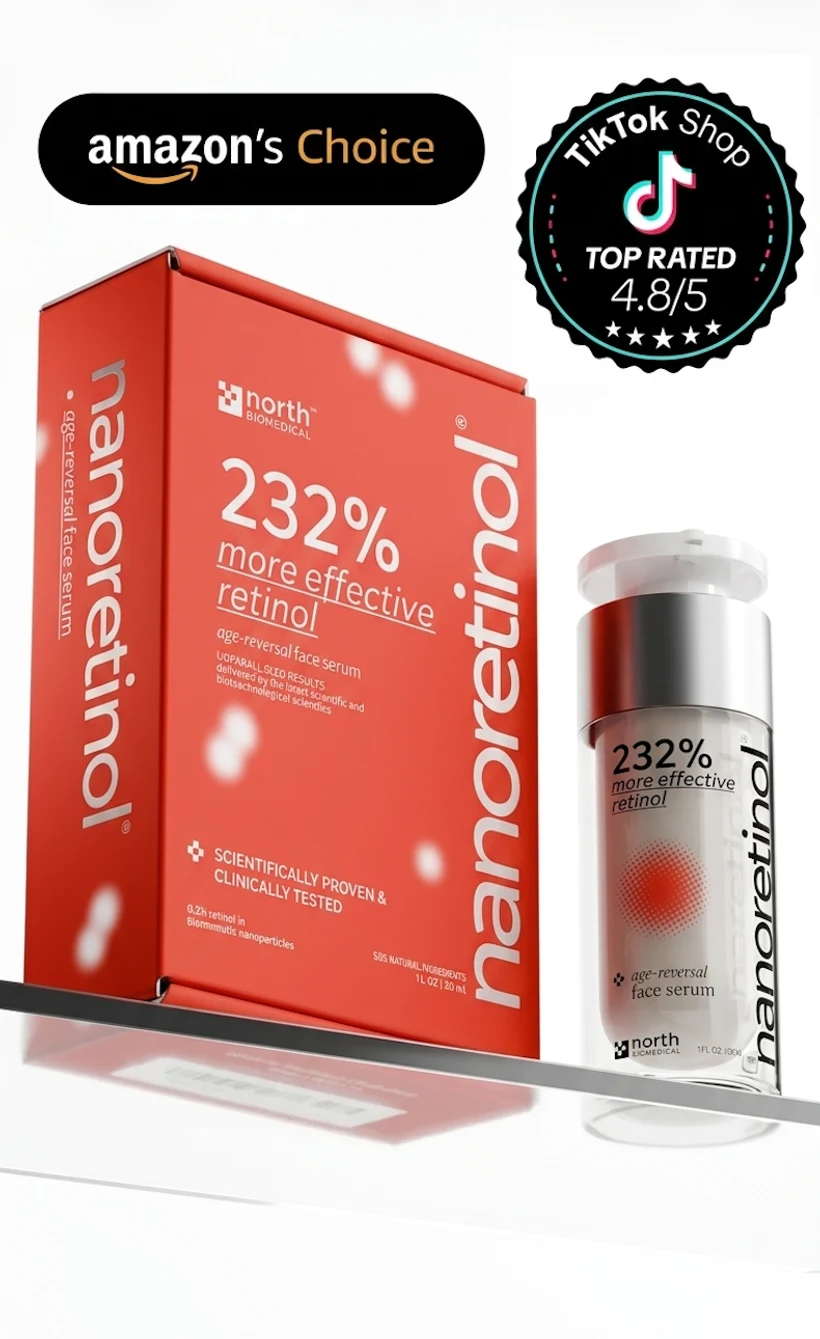
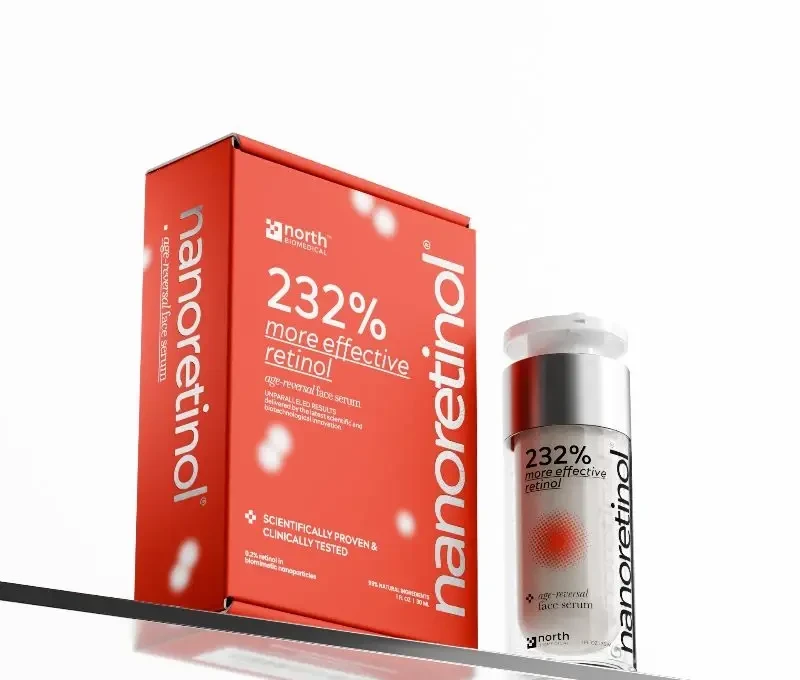
That routine is easier to sustain with a retinol that is gentle on its own. Nanoretinol delivers stabilized 0.2% retinol in biomimetic lipid nanoparticles that skin recognises as its own, reaching skin cells without breaking down the barrier the way conventional formulations can. In North Biomedical’s study summary, Nanoretinol was 232% more effective in collagen recovery than conventional retinol and produced a 61% increase in firmness after 56 days, with side effects that were minimal and milder than those of conventional retinol [9]. It is water-based, gel-like and suitable for oily and combination skin, which makes it a natural partner for a salicylic serum: one clears the pore, the other rebuilds the support around it.
References
- Arif T. “Salicylic acid as a peeling agent: a comprehensive review.” Clinical, Cosmetic and Investigational Dermatology. 2015;8:455-461. doi:10.2147/CCID.S84765
- Lu J, Cong T, Wen X, et al. “Salicylic acid treats acne vulgaris by suppressing AMPK/SREBP1 pathway in sebocytes.” Experimental Dermatology. 2019;28(7):786-794. doi:10.1111/exd.13934
- Kornhauser A, Coelho SG, Hearing VJ. “Applications of hydroxy acids: classification, mechanisms, and photoactivity.” Clinical, Cosmetic and Investigational Dermatology. 2010;3:135-142. doi:10.2147/CCID.S9042
- Zheng Y, Wan M, Chen H, et al. “Clinical evidence on the efficacy and safety of an antioxidant optimized 1.5% salicylic acid (SA) cream in the treatment of facial acne: an open, baseline-controlled clinical study.” Skin Research and Technology. 2013;19(2):125-130. doi:10.1111/srt.12022
- Lee HS, Kim IH. “Salicylic acid peels for the treatment of acne vulgaris in Asian patients.” Dermatologic Surgery. 2003;29(12):1196-1199. doi:10.1111/j.1524-4725.2003.29384.x
- Kligman D, Kligman AM. “Salicylic acid peels for the treatment of photoaging.” Dermatologic Surgery. 1998;24(3):325-328. doi:10.1111/j.1524-4725.1998.tb04162.x
- Madan RK, Levitt J. “A review of toxicity from topical salicylic acid preparations.” Journal of the American Academy of Dermatology. 2014;70(4):788-792. doi:10.1016/j.jaad.2013.12.005
- Kafi R, Kwak HS, Schumacher WE, et al. “Improvement of naturally aged skin with vitamin A (retinol).” Archives of Dermatology. 2007;143(5):606-612. doi:10.1001/archderm.143.5.606
- North Biomedical LLC. “Nanoretinol vs. Conventional Retinol: Efficacy in Collagen and Elastin Recovery.” Clinical Study Summary, 2024. Study summary