Retinol Moisturizer: When an All-in-One Cream Beats Layering
A retinol moisturizer promises results without the dryness. Here is what decides whether the retinol in the jar still works, how vehicle chemistry affects irritation, and how to start one
Retinol has a dropout problem. Plenty of people buy a retinol serum, use it for a couple of weeks, watch their skin turn tight and flaky, and quietly put the bottle at the back of the cabinet. A retinol moisturizer is the industry’s answer: one step that delivers the active and the comfort together.
The idea is sound, and for many people it works better than a serum. But combining retinol with a moisturizing base introduces its own trade-offs, and some retinol moisturizers contain far less working retinol than the label suggests by the time you use them.
Why retinol dries skin out in the first place
Retinol speeds up cell turnover and switches on collagen production, which is why it is one of the best-studied over-the-counter anti-aging ingredients [1]. In a 24-week trial in elderly volunteers, it significantly reduced fine wrinkles and increased collagen production compared with an inactive lotion [2].
The same activity also triggers a short-term inflammatory response. Laboratory work has traced retinol irritation to specific signaling molecules that cause redness and peeling [3]. Among retinoids, retinol is considerably less irritating than prescription tretinoin, but it is far from irritation-free [1].
Your skin often settles into retinol within 4 to 6 weeks, and the right moisturizing base can make that adjustment period far gentler than a bare serum.
Does adding moisturizer actually reduce irritation?
The evidence says yes, mostly. In a randomized split-face study, people using prescription tretinoin across the whole face added a moisturizer to one side only [4]. Most still had some irritation on both sides, but the moisturized side was predominantly mild and was preferred for tolerability.
Your skin often settles into retinol within 4 to 6 weeks, and the right moisturizing base can make that adjustment period far gentler than a bare serum.
The base the active sits in matters even more. A double-blind split-face trial compared the same 0.05% tretinoin in two different vehicles [5]. After two weeks, the side using the conventional cream had 122% to 144% more redness, scaling and dryness than the side using a hydrating lotion base, and about 70% of participants preferred the gentler formula.
The same active in a better vehicle can mean less redness, flaking and dryness than a harsher formula, so the base of a retinol moisturizer is not just packaging.
This is the logic behind the retinol sandwich method, where moisturizer goes on before and after a retinol serum. A well-made retinol moisturizer builds that buffering into a single product.
The stability problem nobody puts on the label
Retinol is one of the least stable ingredients in skincare. It breaks down in light, air and heat, and some formulas protect it far better than others.
When researchers measured retinoid content in 12 commercial cosmetic products over six months, almost all of them lost retinoid content [6]. At room temperature, losses ranged from 0% to 80%. In warmer storage, they ranged from 40% to 100%, and light caused more degradation than heat. Some products already contained less retinoid than declared.
Your retinol cream can lose up to 80% of its retinol in 6 months at room temperature, so the container matters more than the price tag.
Your retinol cream can lose up to 80% of its retinol in 6 months at room temperature, so the container matters more than the price tag.
Moisturizers are especially vulnerable because they are usually emulsions packed with water and oils, and often sold in wide-mouth jars that let in air and light each time you open them. That is why packaging and formulation technology matter more for a retinol moisturizer than for almost any other product.
What to look for in a retinol moisturizer
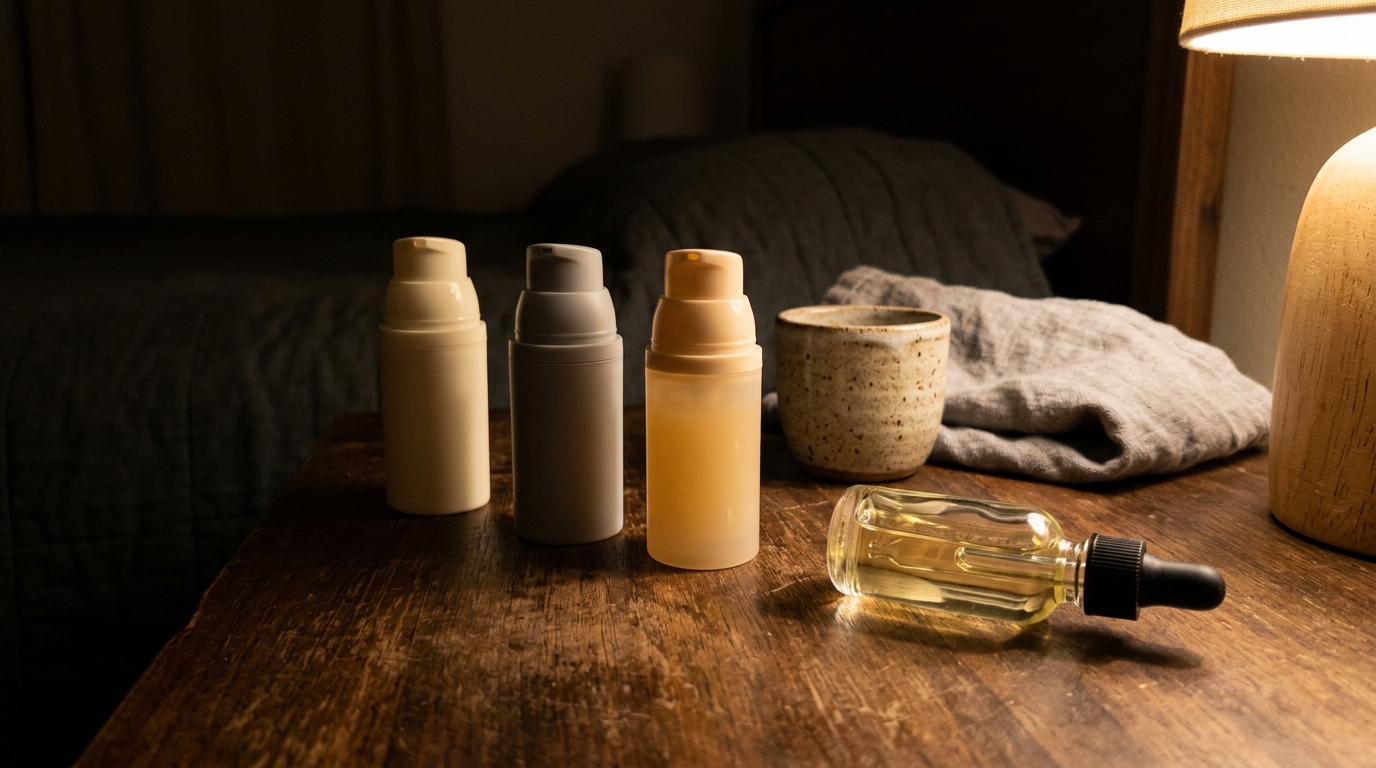
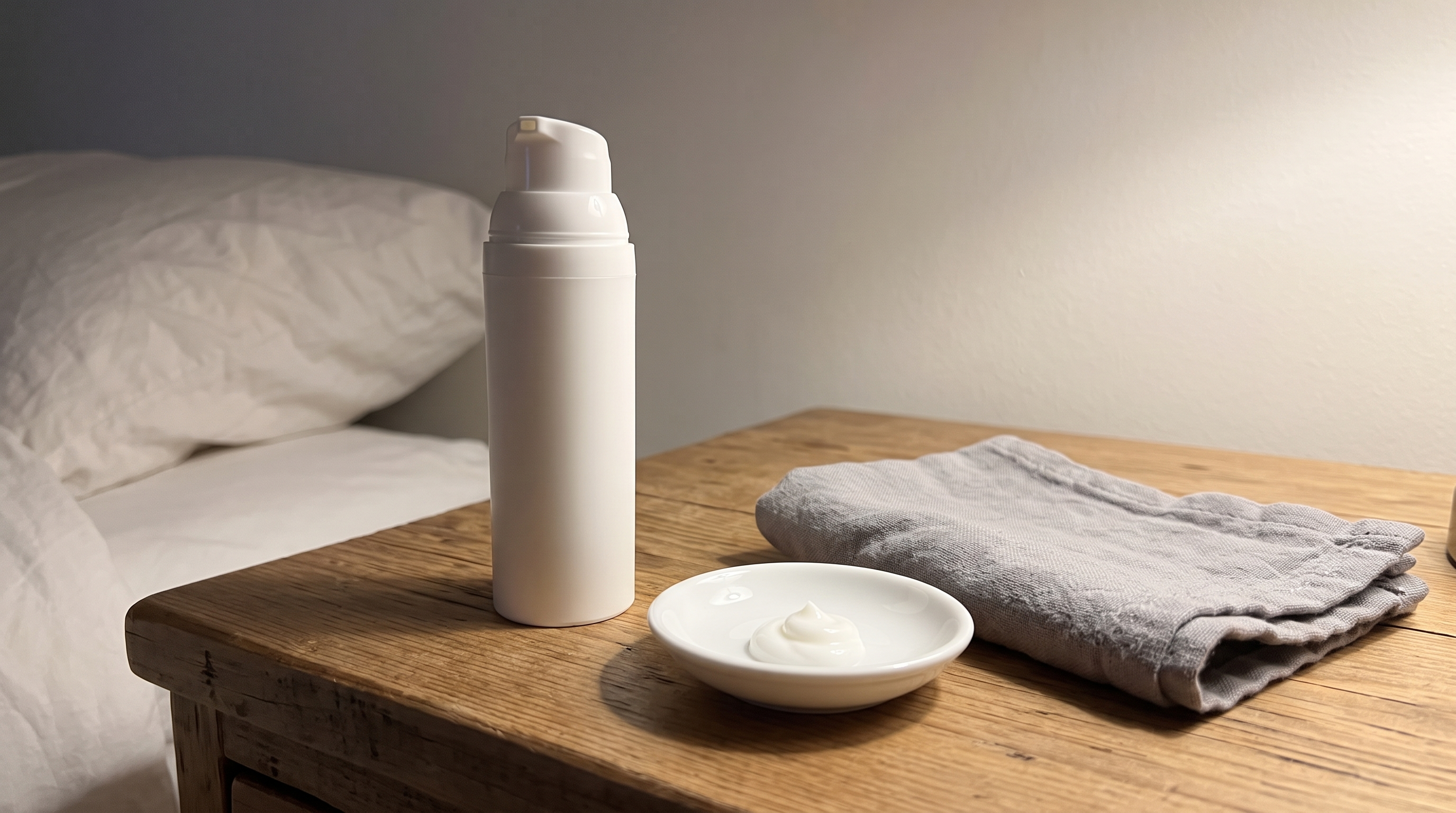
- Airless pump or opaque tube. Avoid clear jars. Every exposure to light and air accelerates breakdown.
- A stated concentration. Brands that list a retinol percentage are easier to evaluate than those that hide it. Our retinol concentration guide explains what each level means in practice.
- Stabilization or encapsulation. Retinol held inside a protective carrier degrades more slowly and releases more gradually. Nanoparticle delivery has shown promise for improving retinoid stability and tolerability [1].
- Supportive moisturizers. Glycerin, ceramides, squalane and niacinamide help offset dryness without competing with the retinol.
- Fragrance-free. Retinol already asks a lot of your skin barrier, so avoid adding a common irritant.
- Night use. Retinol is a night-time product, so a retinol moisturizer should replace your evening cream, not your daytime one.
All-in-one or layering: which is better?
A retinol moisturizer makes sense if you have a simple routine, if you have quit retinol before because of dryness, or if you want consistency more than flexibility. Fewer steps tend to mean better adherence, and consistency is what produces results: in a one-year trial, a stabilized 0.1% retinol kept improving skin month after month, reducing crow’s feet fine lines by 44% by week 52 [7].
Layering a separate serum and moisturizer is better if you want to adjust the retinol strength independently, if your skin needs a much richer cream in winter, or if you already use other actives at night. Starting slowly matters either way, and our retinol for beginners guide outlines a sensible schedule.
How to start a retinol moisturizer
- Use it two or three nights a week for the first two weeks, on clean, dry skin.
- Increase to every other night, then nightly, as long as your skin feels comfortable.
- Keep a plain moisturizer on hand for extra dryness, especially around the nose and mouth.
- Wear broad-spectrum sunscreen every morning.
- Give it 12 weeks. In a comparative study, retinol produced measurable wrinkle reduction after 12 weeks, and induced the same kinds of skin changes as prescription retinoic acid at a smaller magnitude [8].
A retinol that does not need a heavy cream
The reason people want a retinol moisturizer is simple: they want retinol results without the dryness and peeling. Nanoretinol approaches that problem from the delivery side rather than by burying retinol in a thick cream.
It carries 0.2% retinol inside biomimetic lipid nanoparticles, suspended in a light, water-based gel with 99% natural ingredients. The nanoparticles are designed to pass through the skin barrier without damaging it, and as they release retinol, skin cells absorb the phospholipids in their membranes, which nourishes the skin without an oily residue. In laboratory testing, Nanoretinol was 232% more effective in collagen recovery and 73% more effective in elastin recovery than conventional retinol, with skin firmness increasing 61% and elasticity 56% over 56 days of clinical use [9]. It is also significantly gentler on skin cells than conventional retinol. To understand why encapsulation changes the equation, see our guide to encapsulated retinol.
Because it absorbs fully to a matte finish, you can follow it with any moisturizer you already love, or use it on its own if your skin is comfortable.
Choosing comfort without giving up results
A retinol moisturizer is a good choice when it is fragrance-free, packed in an airless container, and built around a protected form of retinol. Be skeptical of jar packaging and unstated percentages, start slowly, and judge results after three months rather than three weeks. The best retinol product is the one gentle enough that you keep using it.
References
- Mukherjee S, Date A, Patravale V, et al. “Retinoids in the treatment of skin aging: an overview of clinical efficacy and safety.” Clinical Interventions in Aging. 2006;1(4):327-348. doi:10.2147/ciia.2006.1.4.327
- Kafi R, Kwak HS, Schumacher WE, et al. “Improvement of naturally aged skin with vitamin A (retinol).” Archives of Dermatology. 2007;143(5):606-612. doi:10.1001/archderm.143.5.606
- Kim BH, Lee YS, Kang KS. “The mechanism of retinol-induced irritation and its application to anti-irritant development.” Toxicology Letters. 2003;146(1):65-73. doi:10.1016/j.toxlet.2003.09.001
- Schorr ES, Sidou F, Kerrouche N. “Adjunctive use of a facial moisturizer SPF 30 containing ceramide precursor improves tolerability of topical tretinoin 0.05%: a randomized, investigator-blinded, split-face study.” Journal of Drugs in Dermatology. 2012;11(9):1104-1107. PubMed:23135655
- Draelos Z, Tanghetti E, Guenin E. “Vehicle Formulation Impacts Tolerability and Patient Preference: Comparison of Tretinoin Branded Lotion and Generic Cream.” Journal of Drugs in Dermatology. 2022;21(8):875-880. doi:10.36849/JDD.6945
- Temova Rakuša Ž, Škufca P, Kristl A, et al. “Retinoid stability and degradation kinetics in commercial cosmetic products.” Journal of Cosmetic Dermatology. 2021;20(7):2350-2358. doi:10.1111/jocd.13852
- Randhawa M, Rossetti D, Leyden JJ, et al. “One-year topical stabilized retinol treatment improves photodamaged skin in a double-blind, vehicle-controlled trial.” Journal of Drugs in Dermatology. 2015;14(3):271-280. PubMed:25738849
- Kong R, Cui Y, Fisher GJ, et al. “A comparative study of the effects of retinol and retinoic acid on histological, molecular, and clinical properties of human skin.” Journal of Cosmetic Dermatology. 2016;15(1):49-57. doi:10.1111/jocd.12193
- North Biomedical LLC. “Nanoretinol vs. Conventional Retinol: Efficacy in Collagen and Elastin Recovery.” Clinical Study Summary, 2024. Study summary