Salicylic Acid Toner: What Strength to Buy, Who It Suits, and How to Use It
A leave-on salicylic acid toner keeps working on clogged pores long after a cleanser would have rinsed away. Here is what the evidence supports, what it cannot fix, and how to use it alongside retinol
Most toners are little more than lightly scented water. A salicylic acid toner is a different product entirely: it is a leave-on exfoliant, and it keeps working inside your pores for hours after a cleanser would have gone down the drain. That makes it one of the most useful steps for oily, congested skin, and one of the easiest to overdo.
This guide covers what salicylic acid actually does, what the percentage on the label means for a product you do not rinse off, who should skip it, and how to fit it into a routine that also includes retinol.
Why salicylic acid suits a pore toner
Salicylic acid is a beta hydroxy acid, and its defining trait is that it dissolves in oil. Glycolic and lactic acid are water-soluble and work mainly on the skin’s surface. Salicylic acid can travel into the oily lining of a pore, where it loosens the bonds between dead cells that would otherwise pack together into blackheads and whiteheads [1]. Dermatologists call this a comedolytic effect, and it is why salicylic acid is the default ingredient for clogged pores.
It is also calmer than most acids. Salicylic acid is a chemical relative of aspirin, and its mild anti-inflammatory action helps explain why it tends to sting less than glycolic acid at comparable strengths [1]. For a full side-by-side of the two acid families, see our explainer on AHA vs BHA.
Toner versus cleanser: contact time decides it
A salicylic acid face wash sits on your skin for perhaps a minute before you rinse it off. A toner stays. Your skin feels a leave-on 2% salicylic acid toner far more than a 2% cleanser, because the acid stays in place for hours rather than seconds.
That contact time matters because the acid needs time to move into the skin. Researchers using in-vivo confocal Raman spectroscopy tracked 2% salicylic acid from two leave-on products into the top layers of skin, and how deep it reached depended clearly on the base and pH of the formula, which were around 3.75 to 4 [2]. The practical lesson is that the leave-on step is where salicylic acid does most of its work, and the vehicle matters as much as the percentage.
Your skin feels a leave-on 2% salicylic acid toner far more than a 2% cleanser, because the acid stays in place for hours rather than seconds.
What strength to buy
Cosmetic products use salicylic acid across a wide range, up to about 3% [3]. Most toners land between 0.5% and 2%:
- 0.5% to 1%: a sensible start for first-timers, combination skin, or anyone who reacts easily to acids. It can usually be used daily once your skin adjusts.
- 2%: for established oily, congested skin that already tolerates exfoliants. Start every other day.
- Alcohol-light formulas: a high-alcohol base feels refreshing but can leave skin tight and dry. Look for alcohol well down the ingredient list, or a formula that adds glycerin or panthenol.
On safety, the Cosmetic Ingredient Review expert panel concluded that salicylic acid is safe in cosmetics when products are formulated to avoid irritation and either avoid raising sun sensitivity or tell users to wear sun protection every day [3]. In the clinical tests the panel reviewed, 2% salicylic acid caused only minimal cumulative irritation.
What a salicylic acid toner can and cannot do
The best recent data comes from leave-on salicylic acid products in general rather than toners specifically. In a 21-day study of 42 adults with mild to moderate acne and oily or combination skin, a salicylic acid gel used twice daily cut surface oil by about 24%, raised skin hydration by about 40% and improved acne severity by about 24%, with only 5% reporting brief mild itching [4]. The study was run with the manufacturer, and it had no comparison group, so treat the numbers as an encouraging signal rather than a guarantee.
Pores are where expectations need managing. A review of facial pores identified three main causes of enlargement: heavy oil production, loss of elasticity in the skin around each pore, and larger hair follicles [5]. Salicylic acid addresses the first cause well. It does very little for the second, which is the one that gets worse with age.
Your skin can look less oily within 3 weeks of a leave-on salicylic acid product, but pores that have stretched with age need more than an exfoliant.
Your skin can look less oily within 3 weeks of a leave-on salicylic acid product, but pores that have stretched with age need more than an exfoliant.
Stronger in-office salicylic acid peels do show broader benefits. Thirty percent peels repeated at four-week intervals faded pigment spots, smoothed roughness and softened fine lines in photodamaged skin [6]. A daily toner is far gentler than that, so think of it as maintenance for clear pores and smoother texture, not a resurfacing treatment.
Who should skip it, or go slowly
- Dry or easily irritated skin. If your face already feels tight, a daily acid will make it worse. Use it two or three nights a week at most, or skip it.
- Anyone allergic to aspirin. Salicylic acid is closely related, so ask your doctor before using it [1].
- Skin already using another exfoliant. Two acid toners on the same night is a common route to a damaged barrier. If your main concern is dull, rough texture rather than congestion, a glycolic acid toner is usually the better single choice.
- People who want a targeted step. If you only break out on your chin or nose, a more concentrated salicylic acid serum applied only where you need it may suit you better than a full-face toner.
How to use a salicylic acid toner
- Cleanse, then pat your face completely dry. Damp skin can increase stinging.
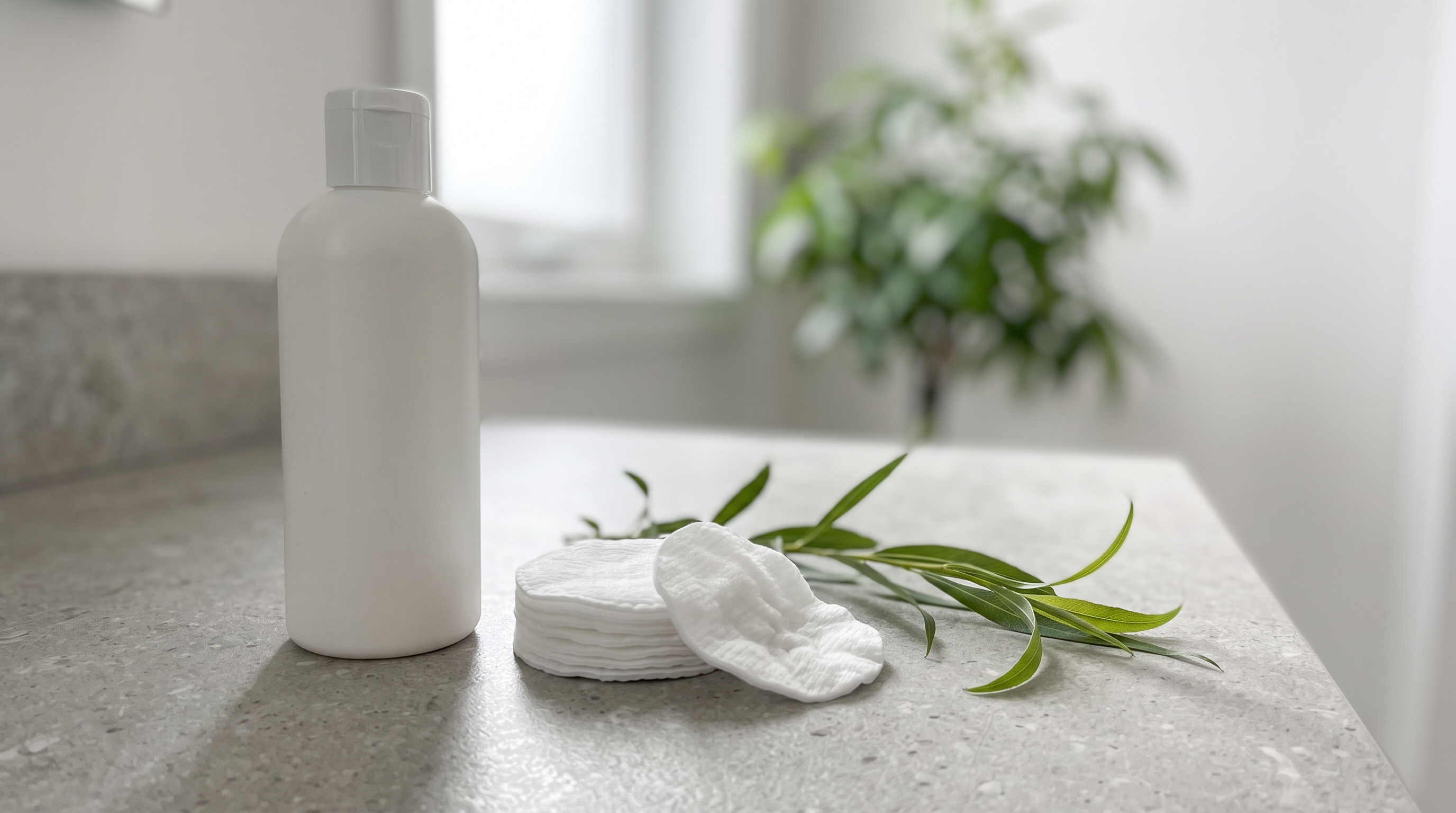
- Apply a few drops to your palms or a cotton pad and press or sweep it over oily areas, avoiding the eye area and the corners of the nose and mouth.
- Let it dry for a minute, then follow with a light, fragrance-free moisturizer.
- Start with three evenings a week. Increase only if your skin stays calm after two weeks.
- Wear broad-spectrum sunscreen every morning. Exfoliated skin is more exposed to UV damage, which is exactly why the safety panel attached sun protection to its conclusion [3].
Mild tingling for a few seconds is normal. Burning, persistent redness or flaking means you are using it too often or the formula is too strong.
Where retinol fits for oily, aging skin
Salicylic acid keeps pores clear. It does not rebuild the collagen that holds pore walls firm, and that is where retinol comes in. In a randomized, vehicle-controlled study of adults with a mean age of 87, a 0.4% retinol lotion applied up to three times a week for 24 weeks significantly improved fine wrinkling and increased collagen production compared with the plain lotion [7]. Our guide to retinol for pores explains how firmer surrounding skin makes pores look smaller.
The difficulty is that conventional retinol and a daily acid toner can be too much together, especially in the first weeks. A gentler retinol makes the combination far easier to sustain.
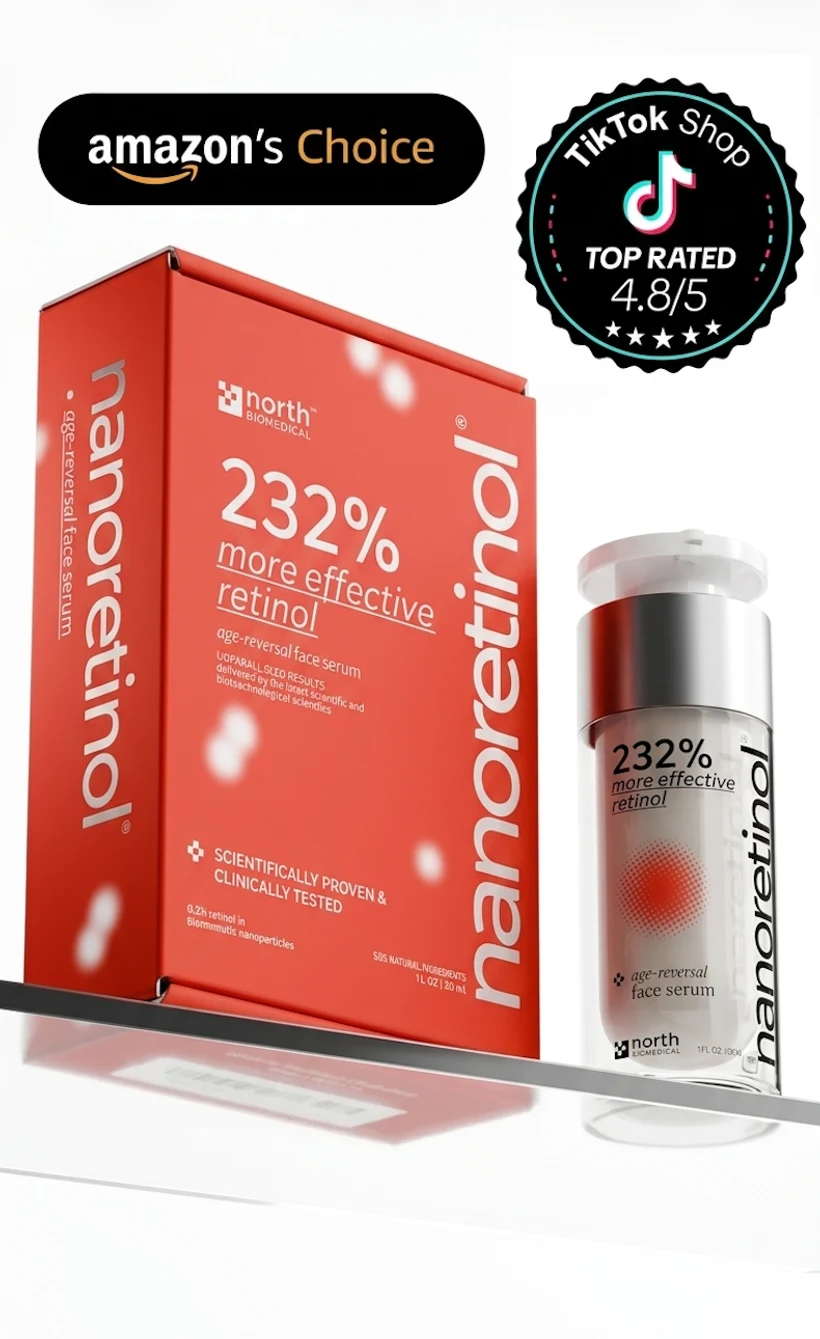
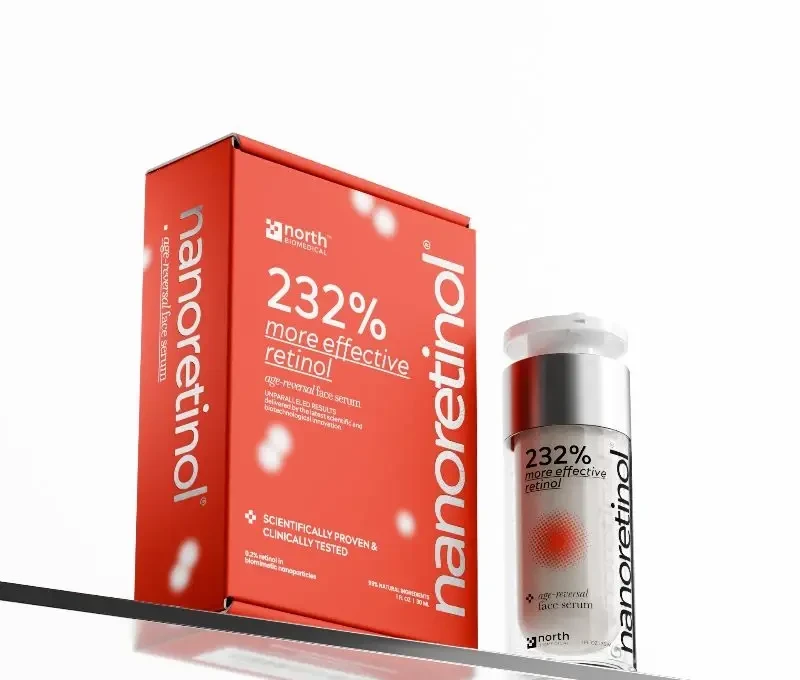
Nanoretinol was designed for exactly this kind of routine. It delivers 0.2% stabilized retinol inside biomimetic lipid nanoparticles that the skin recognizes as its own, so the retinol reaches skin cells without breaking down the barrier the way conventional formulations can. Its water-based gel absorbs completely to a smooth matte finish, which suits oily and combination skin. In North Biomedical’s study summary, Nanoretinol was 232% more effective in collagen recovery than conventional retinol, and clinical testing showed a 61% increase in skin firmness after 56 days, with side effects that were minimal and milder than those of conventional retinol [8].
A simple schedule that works
Use your salicylic acid toner in the morning, or on the evenings you skip retinol, and Nanoretinol on the other nights. Moisturize after both, wear sunscreen daily, and judge the routine after eight to twelve weeks. Clear pores come from the acid, firmer skin around them comes from retinol, and sunscreen protects the progress of both.
References
- Arif T. “Salicylic acid as a peeling agent: a comprehensive review.” Clinical, Cosmetic and Investigational Dermatology. 2015;8:455-461. doi:10.2147/CCID.S84765
- Davies MA. “An in vivo confocal Raman spectroscopic investigation of salicylic acid penetration: Variation with formulation parameters.” Journal of Cosmetic Science. 2017;68(1):55-58. PubMed
- Cosmetic Ingredient Review Expert Panel. “Safety assessment of Salicylic Acid, Butyloctyl Salicylate, Calcium Salicylate, C12-15 Alkyl Salicylate, Capryloyl Salicylic Acid, Hexyldodecyl Salicylate, Isocetyl Salicylate, Isodecyl Salicylate, Magnesium Salicylate, MEA-Salicylate, Ethylhexyl Salicylate, Potassium Salicylate, Methyl Salicylate, Myristyl Salicylate, Sodium Salicylate, TEA-Salicylate, and Tridecyl Salicylate.” International Journal of Toxicology. 2003;22 Suppl 3:1-108. PubMed
- Liu Y, Dan Y, Yang J, et al. “Clinical Efficacy of a Salicylic Acid-Containing Gel on Acne Management and Skin Barrier Function: A 21-Day Prospective Study.” Journal of Cosmetic Dermatology. 2025;24(7):e70353. doi:10.1111/jocd.70353
- Lee SJ, Seok J, Jeong SY, Park KY, Li K, Seo SJ. “Facial Pores: Definition, Causes, and Treatment Options.” Dermatologic Surgery. 2016;42(3):277-285. doi:10.1097/DSS.0000000000000657
- Kligman D, Kligman AM. “Salicylic acid peels for the treatment of photoaging.” Dermatologic Surgery. 1998;24(3):325-328. doi:10.1111/j.1524-4725.1998.tb04162.x
- Kafi R, Kwak HS, Schumacher WE, et al. “Improvement of naturally aged skin with vitamin A (retinol).” Archives of Dermatology. 2007;143(5):606-612. doi:10.1001/archderm.143.5.606
- North Biomedical LLC. “Nanoretinol vs. Conventional Retinol: Efficacy in Collagen and Elastin Recovery.” Clinical Study Summary, 2024. Study summary