Vitamin C Toner: Which Forms Work in a Watery Formula and Who Should Use One
Vitamin C is fragile, and a toner is a demanding place to keep it. Here is what the absorption research says about forms, pH and strength, and how a vitamin C toner compares with a serum
Vitamin C is one of the best-studied ingredients for aging skin. It neutralizes the free radicals that sunlight generates, supports collagen production and slows pigment formation [1]. Most of that evidence comes from serums and creams, which is why the newer vitamin C toners raise a fair question: can a watery splash-on step deliver the same benefits?
Sometimes, but only if the formula gets a few details right. This guide covers which forms of vitamin C hold up in a toner, why pH and packaging matter so much, what a realistic result looks like, and how to fit a vitamin C toner into a routine that also includes retinol.
Why vitamin C is hard to bottle
Pure vitamin C, known as L-ascorbic acid, is the form with the strongest research. It is also unstable. In water it reacts with oxygen and light, turning yellow, then brown, and losing activity as it goes [2]. A toner is mostly water, often packed in a clear bottle you open every morning, which is close to the worst setting for an ingredient this fragile.
Getting it into skin is the second hurdle. In absorption studies on pig skin, L-ascorbic acid entered the skin only when the formula’s pH was below 3.5, and absorption peaked at a 20% concentration. Skin levels were saturated after three daily applications and stayed up with a half-life of about 4 days [3].
Your skin absorbs pure vitamin C only from formulas more acidic than pH 3.5, a level many gentle toners never reach.
That same study found that several popular derivatives, including magnesium ascorbyl phosphate and ascorbyl palmitate, did not raise skin levels of L-ascorbic acid [3]. That does not mean derivatives do nothing, but it does mean they behave differently.
Your skin absorbs pure vitamin C only from formulas more acidic than pH 3.5, a level many gentle toners never reach.
The forms you will see on a toner label
- L-ascorbic acid. The most potent form when it is fresh and acidic. In a toner, look for a low pH, an opaque or dark bottle and a short use-by period once opened. A strongly acidic toner can sting on sensitive skin.
- Sodium ascorbyl phosphate. A stable, water-soluble salt that is gentler on skin. In one study, a 5% sodium ascorbyl phosphate lotion used for 12 weeks by 60 people with acne-prone skin was rated as working well or excellently in about three quarters of them, and a 1% solution sharply reduced acne bacteria in the lab [4]. It suits oily and blemish-prone skin well.
- Magnesium ascorbyl phosphate. Another stable derivative. A 10% cream noticeably lightened pigment in 19 of 34 people with melasma or age spots [5], which shows it can work on pigment even though it does not behave like pure vitamin C in absorption tests.
- Ethyl ascorbic acid and other newer forms. These are designed for stability in water. They are promising, but the human evidence is thinner.
A review of vitamin C and its derivatives concluded that the challenge is balancing stability with skin penetration, and that each form needs to be judged on its own data [2].
What results to expect
The best clinical evidence comes from higher-strength products used for months. In a six-month double-blind trial, a 5% vitamin C cream applied daily to the neck and arms improved the overall appearance of sun-damaged skin compared with the same cream without vitamin C, reduced deep furrows and showed signs of elastic tissue repair under the microscope [6].
Your skin is unlikely to see results that strong from a toner, which usually holds less vitamin C than a serum and is applied as a thinner layer than a cream. Expect a modest antioxidant boost and gradual brightening over 8 to 12 weeks of daily use rather than a visible lift.
Your skin gets the most from a vitamin C toner when you treat it as a morning shield, used daily for at least 8 weeks, rather than a fast fix.
Your skin gets the most from a vitamin C toner when you treat it as a morning shield, used daily for at least 8 weeks, rather than a fast fix.
Toner or serum?
Choose a serum if your main goal is brightening or visible anti-aging. A serum can hold a higher, better-protected dose, and our guide to the best vitamin C serum explains what to look for.
Choose a toner if:
- Your skin is oily and you dislike layered products.
- Your skin is sensitive to strong acids, in which case a gentle derivative-based toner is a reasonable compromise.
- You want an antioxidant step without adding a serum to an already full routine.
Do not stack a vitamin C toner and a vitamin C serum in the same routine. You will pay twice for one ingredient. If you prefer a toner that is mainly about moisture, our guide to hydrating toner covers how humectants hold water in the skin.
How to use a vitamin C toner
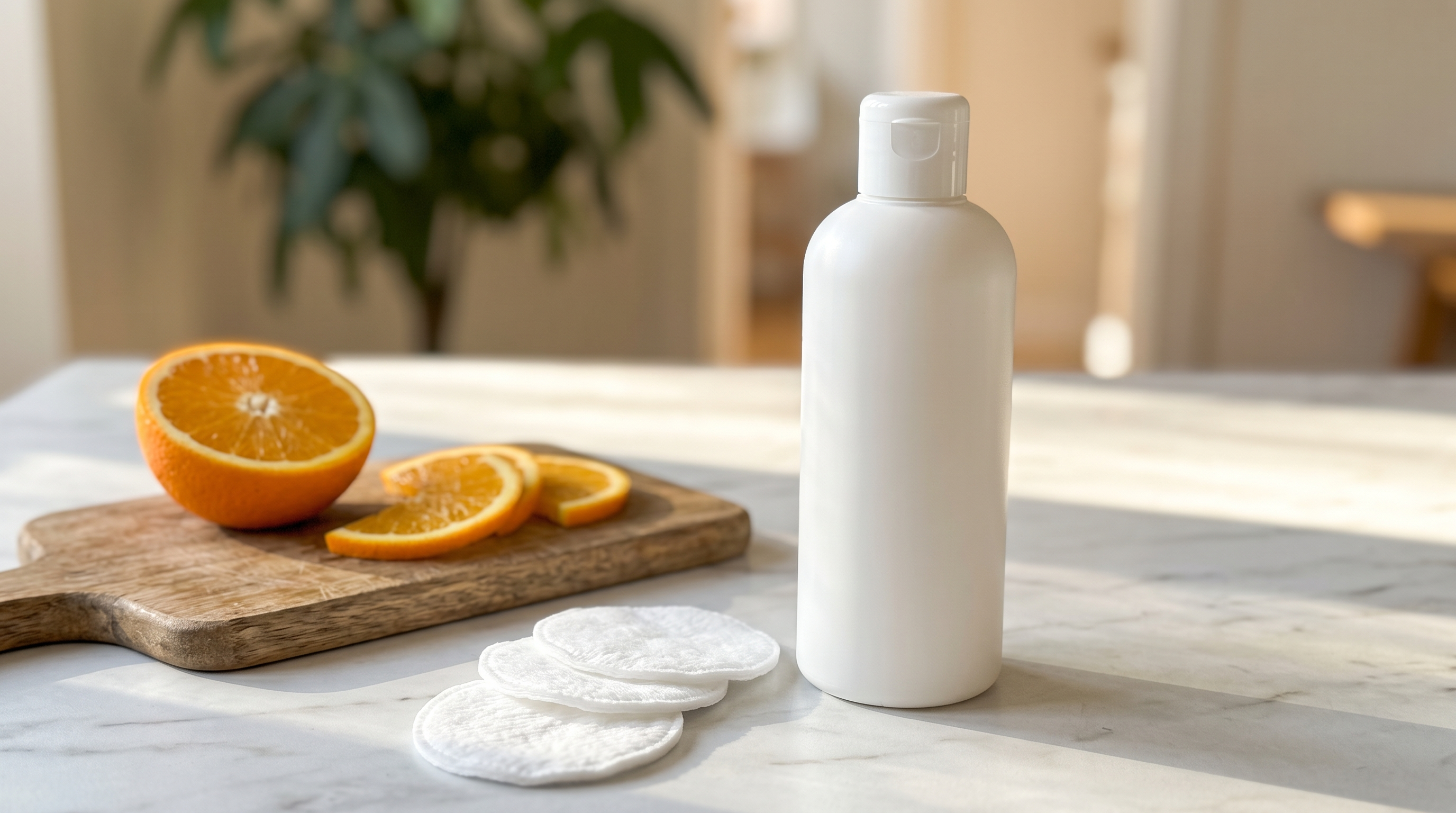
Use it in the morning after cleansing, once a day. Vitamin C works best as a daytime antioxidant under sunscreen, because it helps neutralize the free radicals UV light creates rather than blocking UV itself [1]. Shake a few drops into your palms and press them into the face, or sweep with a cotton pad if you prefer.
Follow with moisturizer and broad-spectrum sunscreen. If the toner has turned dark orange or brown, replace it. Oxidized vitamin C no longer does its job. If you also wash with a vitamin C formula, our guide to vitamin C cleanser explains what a face wash can and cannot add.
Morning vitamin C, night retinol
Vitamin C and retinol do different jobs. Vitamin C defends during the day. Retinol rebuilds overnight. In a 24-week vehicle-controlled study in older adults, a 0.4% retinol lotion reduced fine wrinkling and increased collagen production and water-holding molecules in the skin compared with a plain lotion [7]. Our guide to retinol and vitamin C explains why splitting them between morning and night works better than layering them together.
The catch with conventional retinol is irritation, which is why many people quit before it has time to work.
A gentle split routine
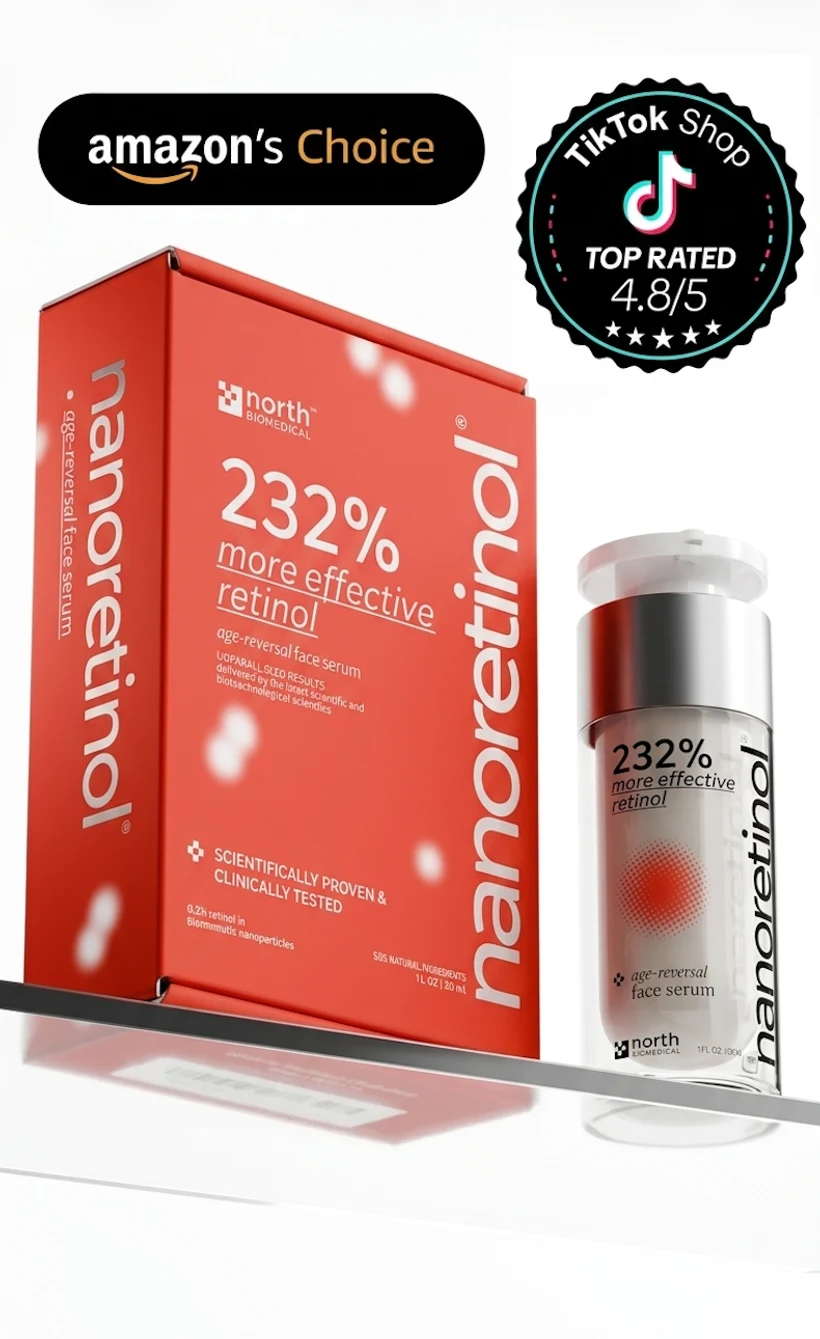
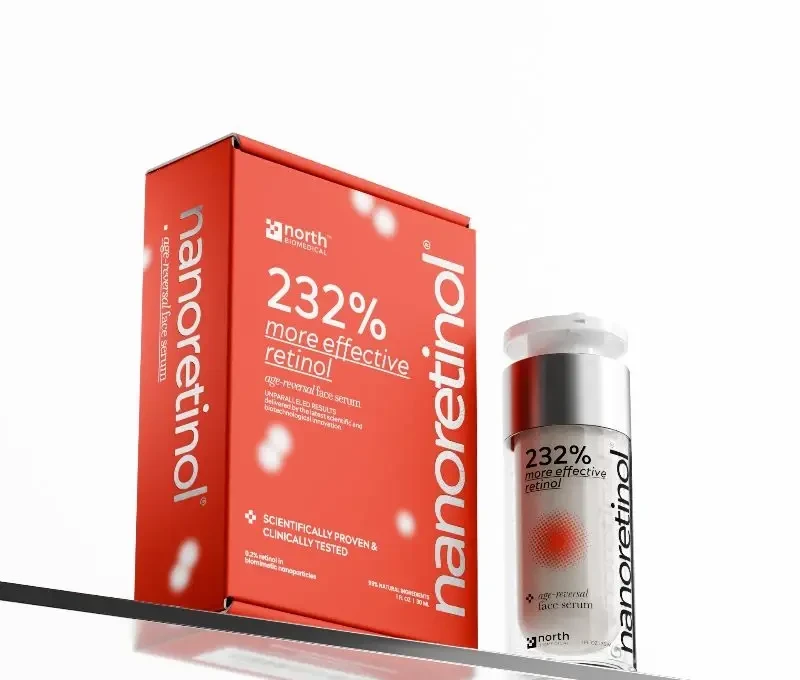
Nanoretinol was designed to remove that obstacle. It delivers 0.2% stabilized retinol inside biomimetic lipid nanoparticles that the skin recognizes as its own, so the retinol reaches skin cells without breaking down the barrier the way conventional formulations can. In North Biomedical’s study summary, Nanoretinol was 232% more effective in collagen recovery than conventional retinol, and after 56 days of use skin firmness rose by 61% and elasticity by 56% [8].
The routine is simple. In the morning, cleanse, apply a vitamin C toner, then moisturizer and sunscreen. At night, cleanse, then apply Nanoretinol. Vitamin C protects the collagen you have, and retinol helps you build more.
References
- Al-Niaimi F, Chiang NYZ. “Topical Vitamin C and the Skin: Mechanisms of Action and Clinical Applications.” Journal of Clinical and Aesthetic Dermatology. 2017;10(7):14-17. PubMed 29104718
- Stamford NP. “Stability, transdermal penetration, and cutaneous effects of ascorbic acid and its derivatives.” Journal of Cosmetic Dermatology. 2012;11(4):310-317. doi:10.1111/jocd.12006
- Pinnell SR, Yang H, Omar M, et al. “Topical L-ascorbic acid: percutaneous absorption studies.” Dermatologic Surgery. 2001;27(2):137-142. doi:10.1046/j.1524-4725.2001.00264.x
- Klock J, Ikeno H, Ohmori K, Nishikawa T, Vollhardt J, Schehlmann V. “Sodium ascorbyl phosphate shows in vitro and in vivo efficacy in the prevention and treatment of acne vulgaris.” International Journal of Cosmetic Science. 2005;27(3):171-176. doi:10.1111/j.1467-2494.2005.00263.x
- Kameyama K, Sakai C, Kondoh S, et al. “Inhibitory effect of magnesium L-ascorbyl-2-phosphate (VC-PMG) on melanogenesis in vitro and in vivo.” Journal of the American Academy of Dermatology. 1996;34(1):29-33. PubMed 8543691
- Humbert PG, Haftek M, Creidi P, et al. “Topical ascorbic acid on photoaged skin. Clinical, topographical and ultrastructural evaluation: double-blind study vs. placebo.” Experimental Dermatology. 2003;12(3):237-244. doi:10.1034/j.1600-0625.2003.00008.x
- Kafi R, Kwak HS, Schumacher WE, et al. “Improvement of naturally aged skin with vitamin A (retinol).” Archives of Dermatology. 2007;143(5):606-612. doi:10.1001/archderm.143.5.606
- North Biomedical LLC. “Nanoretinol vs. Conventional Retinol: Efficacy in Collagen and Elastin Recovery.” Clinical Study Summary, 2024. Study summary