Rice Serum: What Fermented Rice Can and Can't Do for Aging Skin
Rice serums promise glass-skin glow. What is actually inside them, what the research shows for brightness and hydration, where the hype runs ahead of the data, and how to pair one with retinol
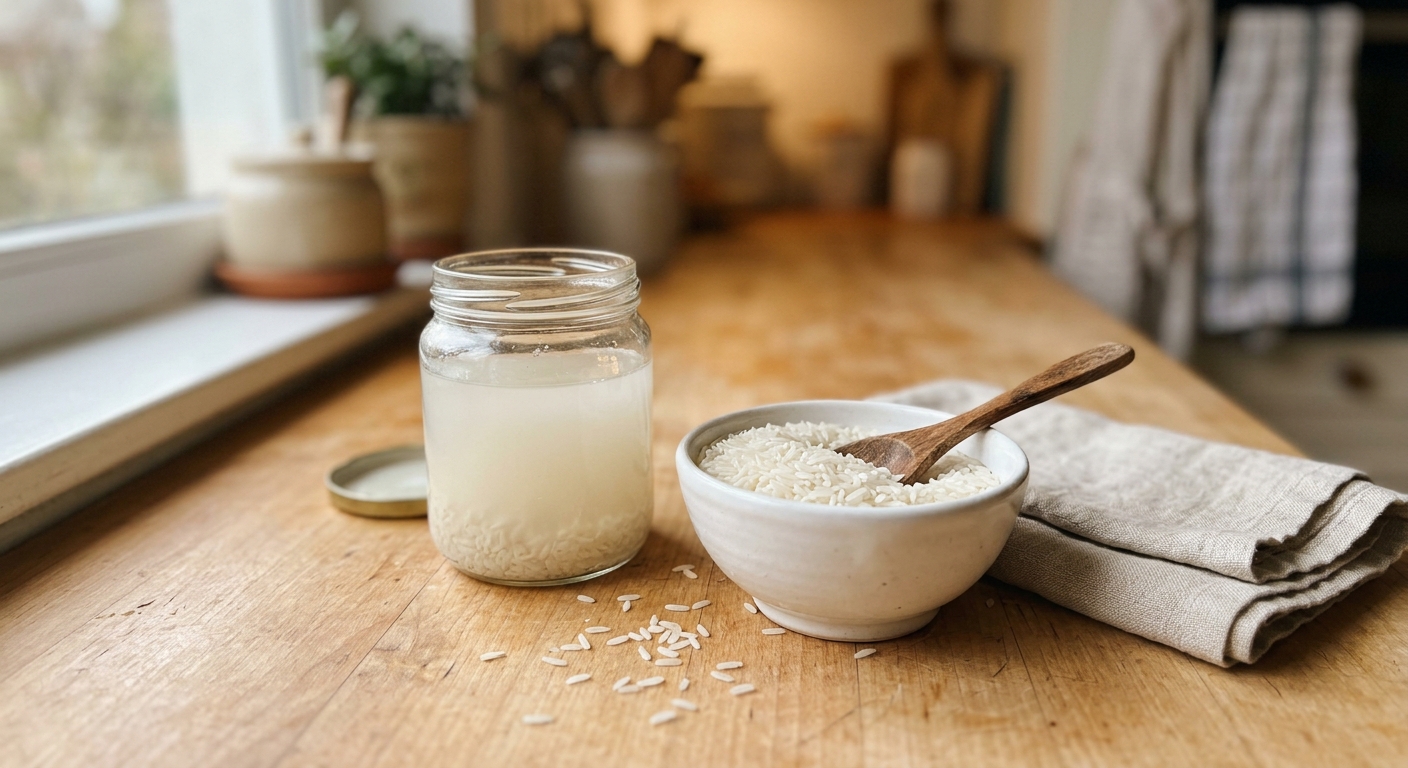
Rice has gone from the kitchen to the bathroom shelf. The story behind it is appealing: court ladies in old Japan and Korea rinsing their faces in the cloudy water left over from washing rice, and sake brewers whose hands supposedly stayed smooth and pale into old age. Today that story sells a whole category of rice serums, toners and essences, most of them from Korean brands.
Some of the appeal is real. Rice contains several ingredients with genuine skin benefits, and a well-made rice serum can make dull, dehydrated skin look brighter and feel smoother. But the evidence is thinner than the marketing suggests, and a lot of what makes these serums work has little to do with rice. This guide sorts out which is which.
What is actually in a rice serum
“Rice serum” is a marketing label, not an ingredient. Most products draw on one or more of these:
- Rice ferment filtrate. Rice fermented with yeast, similar to the first stage of sake brewing, then filtered. On labels it often appears as Saccharomyces/Rice Ferment Filtrate. Fermentation breaks starches and proteins into smaller sugars, amino acids and organic acids.
- Rice bran extract or oil. The bran is rich in ferulic acid, gamma-oryzanol and phytic acid, all antioxidants.
- Rice-derived ceramides. Rice is a commercial source of glucosylceramides, plant versions of the lipids that hold the skin barrier together.
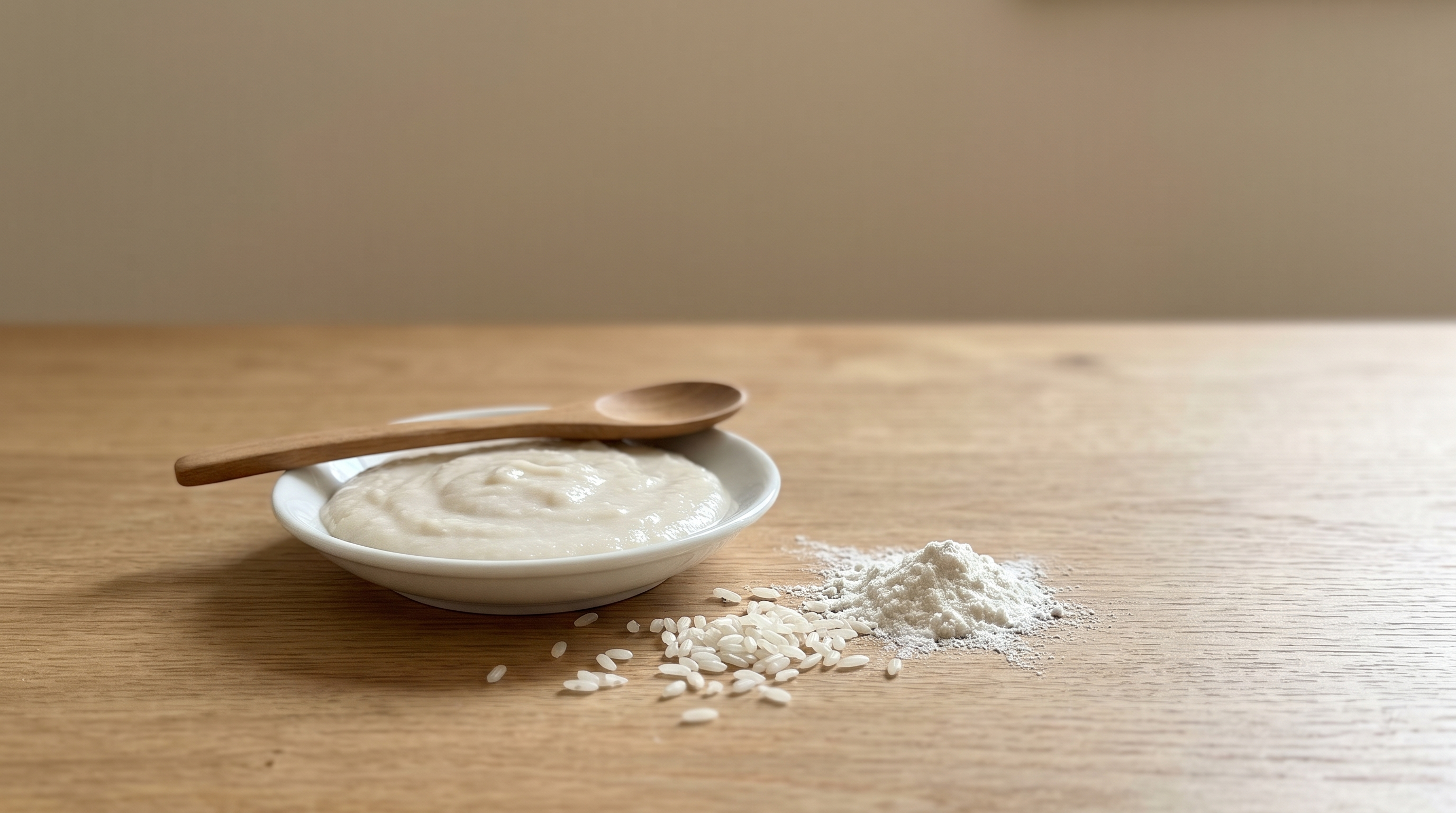
- Rice starch or rice water. The cloudy, soothing part of the folk remedy.
Many rice serums also include niacinamide, glycerin and hyaluronic acid. Keep that in mind, because it changes how to read the results. Our article on rice water for skin covers the traditional rinse in more detail.
What the research shows
The studies on rice ingredients fall into three groups.
Brightness. A team at a Korean cosmetics company tested sake extract on pigment cells and found it lowered melanin production and reduced levels of tyrosinase, the enzyme that drives pigment. When volunteers applied a formula containing the extract, their skin measured lighter within seven days [1].
Your skin may look brighter within 7 days of starting a rice ferment serum, far sooner than it will show any change in fine lines.
Your skin may look brighter within 7 days of starting a rice ferment serum, far sooner than it will show any change in fine lines.
Hydration and barrier. Researchers isolated individual glucosylceramides and ceramides from rice and tested them on lab-grown human skin. Several reduced water loss through the skin model, and one increased production of filaggrin, a protein that helps the outer layer hold water [2]. In an older study, adding rice starch to bath water improved the recovery of experimentally irritated forearm skin by about 20 percent [3].
Anti-aging. Rice bran compounds packed into tiny lipid carriers called niosomes were tested in gel and cream form on 30 volunteers. Over 28 days, the formulas improved hydration, skin lightness, thickness, roughness and elasticity [4]. In lab work, a yeast and rice ferment filtrate combined with sialic acid raised collagen gene activity and lowered inflammatory signals in cultured skin cells [5].
Where the hype runs ahead of the data
Put together, those findings sound impressive. Look closely and the limits become clear:
- Most studies are small, short or done in cell cultures. The largest human group above is 30 people.
- Many are run by the companies that make the ingredient. That does not make them wrong, but independent replication is rare.
- The tested formulas are not the serum on your shelf. Concentrations, carriers and combinations differ from product to product.
- No study compares a rice serum with established actives like vitamin C, niacinamide or retinol.
There is also a quieter point. Many popular rice serums owe a good share of their results to the niacinamide in the formula.
Your skin gets more from the niacinamide in many rice serums than from the rice itself, because niacinamide has 12 weeks of trial data behind it and rice ferment has far less.
Your skin gets more from the niacinamide in many rice serums than from the rice itself, because niacinamide has 12 weeks of trial data behind it and rice ferment has far less.
In a double-blind trial in 50 women with sun-aged skin, 5 percent niacinamide applied twice daily for 12 weeks reduced fine lines, dark spots, red blotchiness and yellowing, and improved elasticity compared with the side treated with a plain base [6]. Another study showed that niacinamide blocks the transfer of pigment from melanocytes to surrounding skin cells by 35 to 68 percent in a lab model, and that it reduced hyperpigmentation in volunteers after four weeks [7].
Rice serum vs rice water vs a rice mask
The format matters as much as the ingredient.
- Homemade rice water is a rinse-off liquid of unknown strength that spoils within a day or two at room temperature.
- A rice face mask gives a short, concentrated dose once or twice a week. Our rice face mask guide covers how to use one.
- A rice serum is a leave-on, preserved, standardized product that stays on the skin for hours every day. If the ingredients do anything, a serum is the format most likely to show it.
Who benefits most from a rice serum
A rice serum makes the most sense if your main complaints are dullness, uneven tone and skin that feels tight or dehydrated. It is a gentle, low-irritation choice for sensitive skin and suits anyone chasing the dewy, reflective finish described in our guide to glass skin.
When comparing products, look for rice ferment filtrate or rice bran extract near the top of the ingredient list, niacinamide between 2 and 5 percent if you want stronger brightening, and no added fragrance. If pigment is your main concern, our roundup of the best brightening serums compares rice with stronger options.
What a rice serum will not do is rebuild collagen in any meaningful way. Deep wrinkles, sagging along the jaw and crepey texture come from structural loss in the dermis, and no rice ingredient has human data for reversing that.
How to layer rice serum with retinol
The easiest routine splits the two by time of day:
- Morning: cleanse, rice serum, moisturizer, then broad-spectrum sunscreen. The antioxidants in rice bran sit well under sunscreen.
- Night: cleanse, retinol, then moisturizer. Retinol is the ingredient with the long track record for wrinkles. In one trial, a 0.4 percent retinol lotion used for 24 weeks improved fine wrinkling and increased procollagen in elderly skin [8].
If you prefer a single routine, a rice serum can go on first at night, followed by retinol once it has absorbed, as long as your skin tolerates both.
Glow by day, firmness by night
The catch with most retinol is irritation. Conventional formulas push retinol through the barrier with solvents that disturb the skin’s lipids, which can undo the calm, hydrated look a rice serum is meant to give.
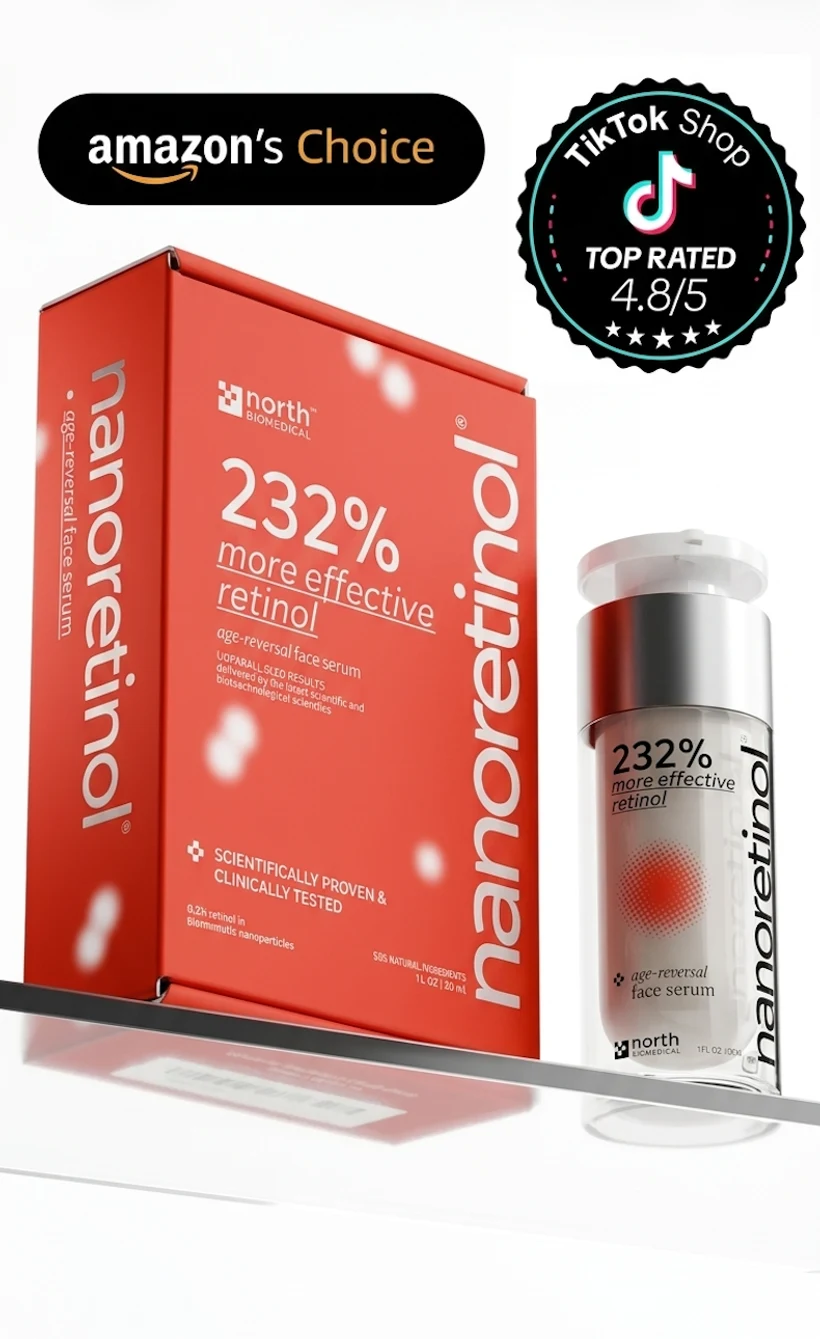
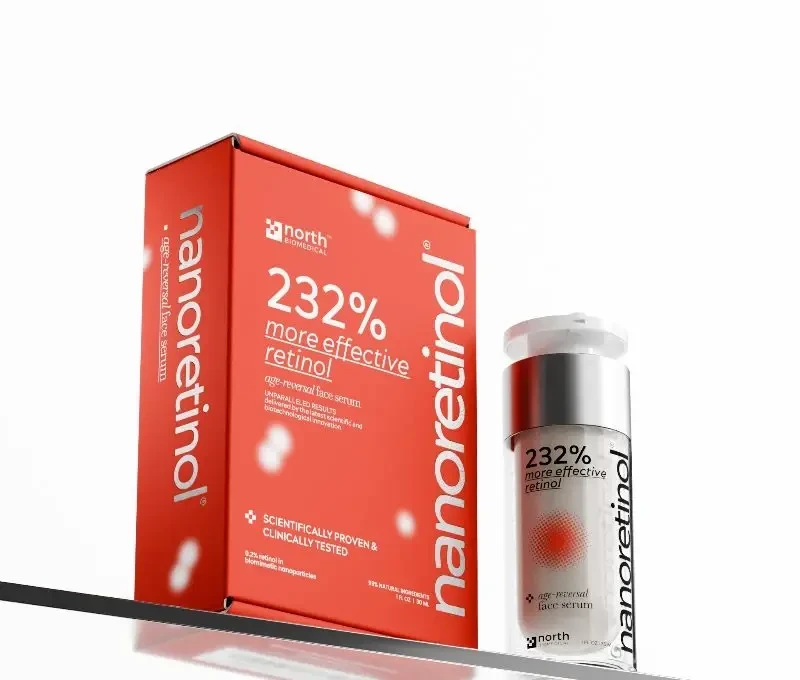
Nanoretinol avoids that by carrying 0.2% retinol inside biomimetic lipid nanoparticles in a water-based gel with a smooth matte finish, so the retinol reaches skin cells without breaking down the barrier first. In laboratory testing it was 232 percent more effective in collagen recovery and 73 percent more effective in elastin recovery than conventional retinol, and over 56 days of clinical use it increased firmness by 61 percent and elasticity by 56 percent [9]. Pair a rice serum in the morning with Nanoretinol at night for brightness and firmness with less irritation than conventional retinol.
References
- Hwang JA, Goh MJ, Kim EJ, et al. “Identification of sake extract as a new anti-melanogenic ingredient by in vitro and clinical trials.” Natural Product Communications. 2013;8(11):1605-1608. PubMed 24427952
- Takeda S, Yoneda A, Miyasaka K, Manse Y, Morikawa T, Shimoda H. “Comparative Study on Epidermal Moisturizing Effects and Hydration Mechanisms of Rice-Derived Glucosylceramides and Ceramides.” International Journal of Molecular Sciences. 2022;24(1):83. doi:10.3390/ijms24010083
- De Paepe K, Hachem JP, Vanpee E, Roseeuw D, Rogiers V. “Effect of rice starch as a bath additive on the barrier function of healthy but SLS-damaged skin and skin of atopic patients.” Acta Dermato-Venereologica. 2002;82(3):184-186. doi:10.1080/00015550260132460
- Manosroi A, Chutoprapat R, Abe M, Manosroi W, Manosroi J. “Anti-aging efficacy of topical formulations containing niosomes entrapped with rice bran bioactive compounds.” Pharmaceutical Biology. 2012;50(2):208-224. doi:10.3109/13880209.2011.596206
- Yang F, Li M, Zuo Y, et al. “In Vitro Anti-Aging Effects of Yeast/Rice Fermentation Filtrate Combined with Sialic Acid in Cosmetic Applications.” Antioxidants. 2025;14(10):1184. doi:10.3390/antiox14101184
- Bissett DL, Oblong JE, Berge CA. “Niacinamide: A B vitamin that improves aging facial skin appearance.” Dermatologic Surgery. 2005;31(7 Pt 2):860-865. doi:10.1111/j.1524-4725.2005.31732
- Hakozaki T, Minwalla L, Zhuang J, et al. “The effect of niacinamide on reducing cutaneous pigmentation and suppression of melanosome transfer.” British Journal of Dermatology. 2002;147(1):20-31. doi:10.1046/j.1365-2133.2002.04834.x
- Kafi R, Kwak HS, Schumacher WE, et al. “Improvement of naturally aged skin with vitamin A (retinol).” Archives of Dermatology. 2007;143(5):606-612. doi:10.1001/archderm.143.5.606
- North Biomedical LLC. “Nanoretinol vs. Conventional Retinol: Efficacy in Collagen and Elastin Recovery.” Clinical Study Summary, 2024. Study summary