Ginseng Serum: What the Evidence Says About This K-Beauty Root
Red, white and fermented ginseng all promise firmer, brighter skin. What ginsenosides do, what the small human trials found, and how to pair ginseng with retinol
Ginseng has been part of Korean medicine for centuries, so it is no surprise that it became one of the signature ingredients of Korean skincare. Ginseng serums promise firmer skin, a brighter tone and protection against the daily wear of sun and pollution, and the most expensive versions are built around red or fermented ginseng that has been aged, steamed or treated to change its chemistry.
The research behind those promises is more interesting than most marketing suggests, and also thinner. This guide covers what ginseng actually contains, what the human studies found, and how to fit a ginseng serum into an anti-aging routine that works.
What is in a ginseng serum
The ginseng in skincare is almost always the root of Panax ginseng, often called Korean ginseng. Its best-studied compounds are ginsenosides, a large family of plant molecules with antioxidant and anti-inflammatory activity. The root also contains sugars and other compounds that researchers are only starting to test on skin [1].
How the root is processed changes its chemistry, which is why labels make such a fuss about it:
- White ginseng: the root is peeled and dried. It keeps the larger ginsenosides found in fresh ginseng.
- Red ginseng: the root is steamed and then dried. Heat converts some ginsenosides into smaller forms that do not exist in fresh root.
- Fermented or enzyme-treated ginseng: microbes or enzymes break large ginsenosides down further into small ones such as compound K, which some researchers believe the skin can use more easily.
Your skin loses collagen faster after every unprotected day in the sun, and ginseng’s main promise is slowing that loss more than reversing it.
That last point is the core argument for fermented ginseng, and it has some lab support. But a serum label rarely tells you how much ginsenoside, or which kind, is actually in the bottle.
What ginseng does in the lab
Most of the evidence on ginseng and skin comes from cell cultures and animal studies. In those settings, ginseng extracts and individual ginsenosides calm inflammation, neutralize free radicals, protect skin cells from UV damage and slow the enzymes that break down collagen. A 2024 review of ginseng for skin health found a long list of promising effects, but concluded that it is still unclear which ginseng compounds are actually responsible [1].
Your skin loses collagen faster after every unprotected day in the sun, and ginseng’s main promise is slowing that loss more than reversing it.
Ginseng has also been studied for dark spots. Extracts and several ginsenosides reduced pigment production in cell and animal studies, working through several routes, from blocking the enzyme that builds melanin to quieting the signals that switch it on [2]. A review of that research called ginseng a potential brightening ingredient while noting that some of the findings are still contradictory [2].
What the human studies show
The human evidence is small but encouraging. In a randomized trial of 23 people, a cream made with enzyme-modified ginseng extract was applied around the eyes and compared with an identical cream without ginseng. The ginseng cream lowered the overall photodamage score and several measures of skin roughness, and nobody reported a reaction [3]. That is a meaningful result for a plant extract, though the study was small and focused on one area of the face.
Your skin may feel smoother with a ginseng cream, but retinol has shown new collagen after 24 weeks of use, far stronger proof than ginseng has so far.
The wider picture is more sobering. When dermatologists reviewed the evidence behind nine of the most popular Korean skincare ingredients, ginseng was not among those with the strongest data; niacinamide, green tea, licorice and soy had more published support, and the authors concluded that high-level evidence for Korean anti-aging skincare was still lacking [4]. Our guide to Korean skincare for aging skin explains which of those ingredients have the best support.
Ginseng and retinol: a promising pair
Some of the most popular ginseng eye serums combine ginseng with a retinoid, and there is a reason for that pairing. In a 2025 lab study, the fermented ginsenoside compound K combined with retinol protected skin cells from UVA damage better than either alone, reduced the breakdown of collagen and elastin, and in zebrafish lowered the irritation that retinol on its own can cause [5]. That has not yet been tested in people, but it fits how the two ingredients behave: ginseng works as a soothing antioxidant, while the retinoid does the rebuilding.
Retinol’s own record is much stronger. In a study of adults in their eighties, a 0.4% retinol lotion reduced fine wrinkles compared with the plain lotion and increased markers of new collagen [6]. Your skin may feel smoother with a ginseng cream, but retinol has shown new collagen after 24 weeks of use, far stronger proof than ginseng has so far.
How to choose a ginseng serum
- Look for the ginseng type: “Panax ginseng root extract” is standard; red, fermented or enzyme-modified ginseng is a reasonable choice if the brand says how it was processed.
- Check the position on the label: ginseng near the top of the list means a real dose; near the end means it is mostly there for the story.
- Value the supporting cast: niacinamide, peptides, or hyaluronic acid alongside ginseng make a serum more useful.
- Avoid heavy fragrance: botanical serums are often perfumed, and fragrance can irritate sensitive skin.
- Patch test first: apply a small amount behind the ear or on the inner arm for a few days, since plant extracts can cause allergic reactions in some people.
Ginseng fits easily into an antioxidant routine. Our guide to antioxidant skin care explains how to layer antioxidants in the morning, and if you prefer gentle botanicals, snow mushroom and centella serum are good partners for hydration and calm.
Ginseng as support, retinol as anchor
A ginseng serum is a reasonable antioxidant step, with small human trials and plenty of lab data suggesting it can help protect skin and smooth its surface. It is not a replacement for the ingredients with decades of evidence behind them. Use it in the morning under sunscreen, and save your evenings for the ingredient that rebuilds.
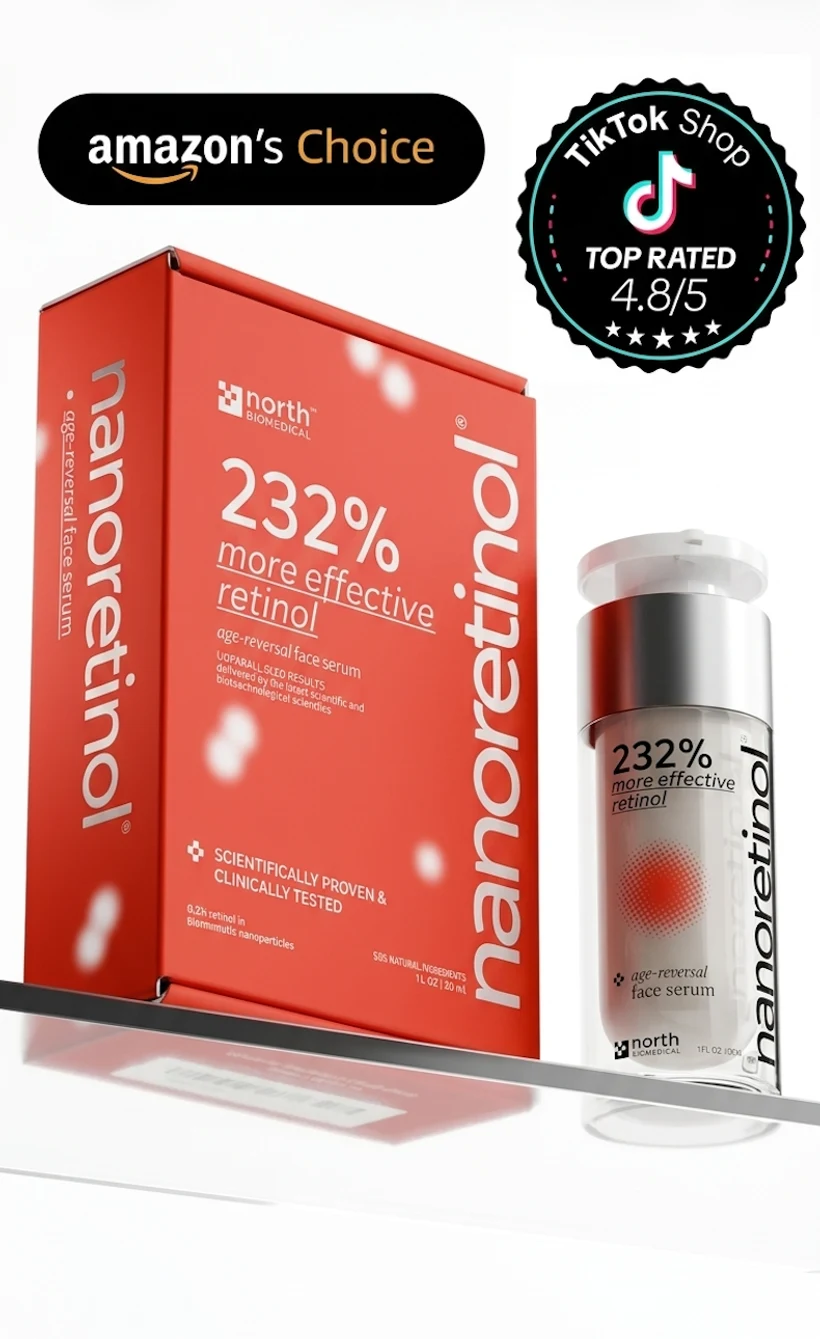
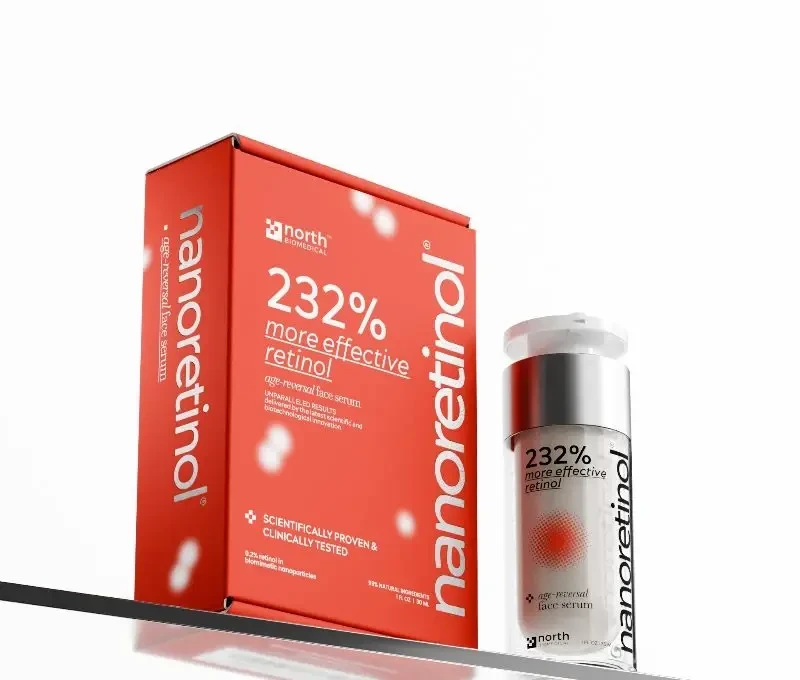
That is where Nanoretinol fits. It delivers 0.2% retinol inside biomimetic lipid nanoparticles, a water-based gel designed to get retinol into the skin without breaking down the barrier, which is the main cause of the redness and peeling people associate with retinol. In clinical testing over 56 days, users saw a 61 percent increase in skin firmness and a 56 percent increase in elasticity, and in laboratory testing Nanoretinol was 232 percent more effective in collagen recovery than conventional retinol [7]. Ginseng in the morning, Nanoretinol at night and sunscreen every day is a simple routine that puts each ingredient where it does the most good.
References
- Kim JH, Lee R, Hwang SH, et al. “Ginseng and ginseng byproducts for skincare and skin health.” Journal of Ginseng Research. 2024;48(6):525-534. doi:10.1016/j.jgr.2024.09.006
- Kim K. “Effect of ginseng and ginsenosides on melanogenesis and their mechanism of action.” Journal of Ginseng Research. 2015;39(1):1-6. doi:10.1016/j.jgr.2014.10.006
- Hwang E, Park SY, Jo H, et al. “Efficacy and Safety of Enzyme-Modified Panax ginseng for Anti-Wrinkle Therapy in Healthy Skin: A Single-Center, Randomized, Double-Blind, Placebo-Controlled Study.” Rejuvenation Research. 2015;18(5):449-457. doi:10.1089/rej.2015.1660
- Quay ER, Chang YC, Graber E. “Evidence for Anti-Aging South Korean Cosmeceuticals.” Journal of Drugs in Dermatology. 2017;16(4):358-363. PubMed 28403270
- Zhang J, Li Z, Song X, et al. “Ginsenoside CK and retinol on UVA-induced photoaging exert the synergistic effect through antioxidant and antiapoptotic mechanisms.” Scientific Reports. 2025;15(1):16664. doi:10.1038/s41598-025-99304-1
- Kafi R, Kwak HS, Schumacher WE, et al. “Improvement of naturally aged skin with vitamin A (retinol).” Archives of Dermatology. 2007;143(5):606-612. doi:10.1001/archderm.143.5.606
- North Biomedical LLC. “Nanoretinol vs. Conventional Retinol: Efficacy in Collagen and Elastin Recovery.” Clinical Study Summary, 2024. Study summary