Sallow Skin: What Causes That Dull Yellow Tone and How to Fix It
Two separate aging mechanisms turn skin waxy and yellow—and treating only one won't fix the other
What “Sallow” Actually Means
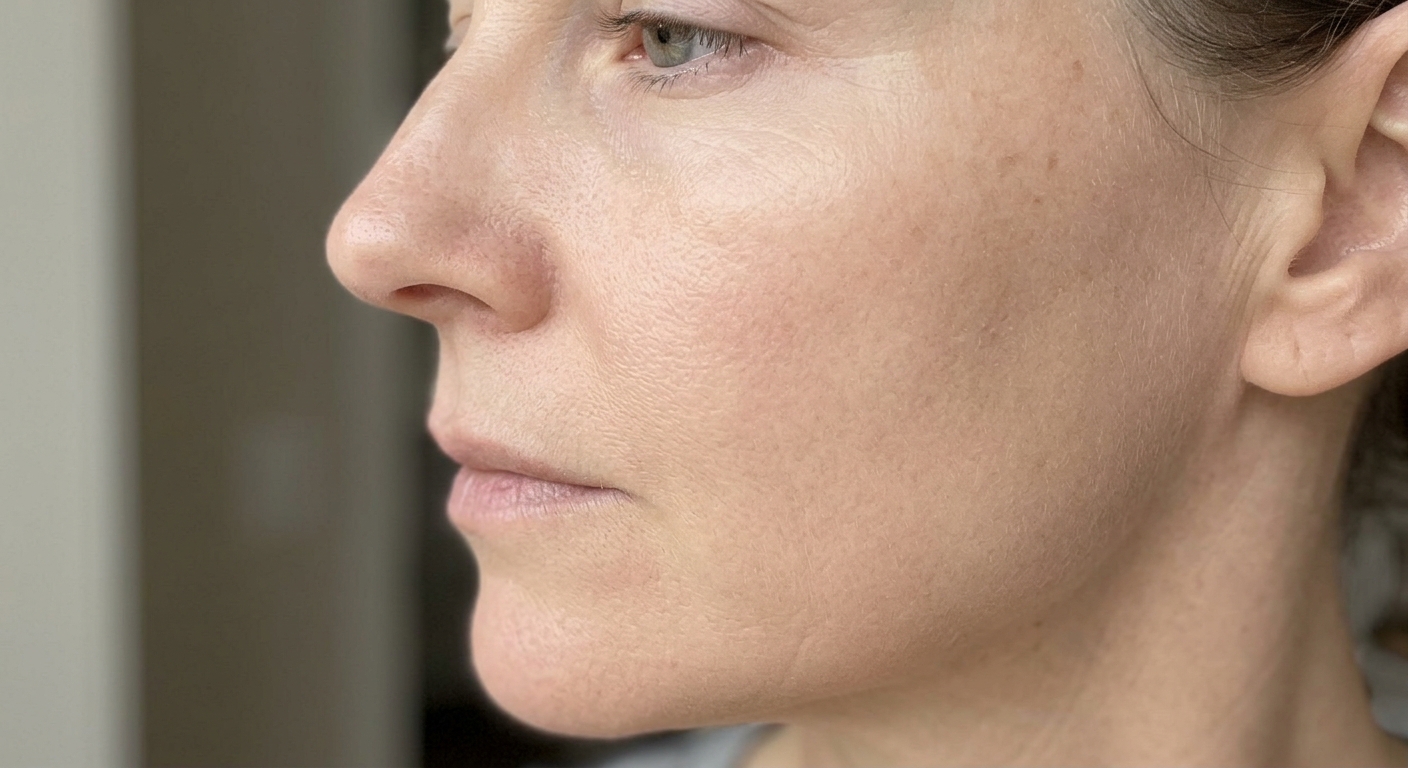
If you’ve looked in the mirror recently and noticed your face looks slightly yellow, washed-out, or waxy—not quite your color—you’re describing what dermatologists call sallow skin. It’s not dryness. It’s not tiredness. It’s a shift in the actual chromatic quality of skin: the undertone turns from bright and rosy to dull, flat, and slightly yellowed.
Sallowness is one of the clinical hallmarks of photoaged skin [1]. Dermatologists use it alongside wrinkles, laxity, and lentigines when assessing sun damage. But unlike wrinkles—which most people understand and actively treat—sallowness is often ignored, misunderstood, or wrongly attributed to fatigue or poor diet alone.
Understanding what actually causes it is the first step toward changing it.
Two Separate Mechanisms Drive Skin Yellowing
Sallow skin isn’t a single problem with a single solution. Research has identified two independent contributors to age-related yellowing, and they don’t correlate with each other—meaning both can happen simultaneously, by different pathways, requiring different treatment angles [1].
Mechanism 1: Irregular melanin accumulation
UV exposure triggers melanocyte activity—the cells responsible for producing melanin, skin’s natural pigment. Under chronic sun exposure over decades, melanin distribution becomes irregular. Instead of the even, translucent tone of younger skin, melanin clusters in patches and shifts the overall skin color toward darker, less luminous territory.
This type of yellowing correlates strongly with cumulative lifetime UV exposure. Those who spent their twenties and thirties outdoors without adequate protection often notice the effects beginning to consolidate in their forties.
Mechanism 2: Advanced glycation end products (AGEs)
The second driver is less intuitive but arguably more significant. A study using optical skin measurement found that advanced glycation end products—fluorescent compounds that accumulate when proteins are damaged by sugar and UV exposure—showed the strongest correlation with age-related skin yellowing, higher even than melanin levels (r=0.68 vs r=0.63) [1].
AGEs form when glucose molecules bind irreversibly to structural proteins like collagen. Over time, this cross-links and stiffens collagen fibers, reduces skin flexibility, and gives skin a yellowish, “caramelized” tint. The two mechanisms operate independently—no significant correlation existed between melanin levels and AGE accumulation, meaning they each contribute to yellowing through entirely separate chemistry. You can read more about glycation’s broader impact on skin in our article on how sugar damages collagen.
How Collagen Loss Compounds the Problem
When skin has abundant, well-structured collagen, it has a natural translucency that reflects light and contributes to a fresh, luminous appearance. As collagen declines—at roughly 1% per year from the mid-twenties onward—skin loses this internal scaffolding and its light-reflecting quality.
As collagen declines—at roughly 1% per year from the mid-twenties onward—skin loses this internal scaffolding and its light-reflecting quality.
The result is skin that absorbs light rather than reflecting it. The waxy, flat quality of sallow skin becomes more pronounced as collagen degrades, not because collagen itself is yellow, but because the structural quality that allows healthy skin to look luminous is diminished. Rebuilding collagen isn’t a quick fix, but it’s an essential part of reversing the visual effect of sallowness.
What Makes Sallowness Worse
Several lifestyle and environmental factors accelerate both mechanisms simultaneously:
- Unprotected UV exposure drives both melanin irregularity and AGE formation through UV-induced oxidative damage to skin proteins
- Smoking generates reactive oxygen species that accelerate collagen degradation and cross-linking
- High dietary sugar intake directly increases the glucose available for glycation reactions in dermal tissue
- Poor epidermal cell turnover means melanin-laden surface cells aren’t shed efficiently, and dull, discolored skin persists longer at the surface
That last point—cell turnover—is where topical treatment intervenes most directly and most effectively. While that is under way, our guide to the best bronzer for mature skin covers how to put warmth back without the muddy cast cool-toned formulas leave on yellowed skin.
Retinol’s Role in Reversing Sallowness
Retinol is the most evidence-backed topical ingredient for reversing the visible signs of photoaging, including sallowness [2]. It works through several mechanisms simultaneously.
First, retinol activates epidermal stem cells and accelerates keratinocyte proliferation—the foundational process of skin renewal. As skin sheds its outermost layers more rapidly, melanin-laden cells are exfoliated faster, preventing the accumulation that contributes to dullness and yellowed tone [2]. Second, retinol stimulates fibroblasts to produce new collagen, which restores the structural transparency that younger skin has—addressing the light-absorbing quality that amplifies sallow appearance.
In a 52-week double-blind vehicle-controlled trial, topical stabilized retinol produced an 84% improvement in mottled pigmentation and significant improvements in overall photodamage scores compared to vehicle [3].
A systematic review of seven randomized controlled trials found that topical tretinoin was efficacious in improving clinical appearance of photoaging in terms of wrinkling, mottled hyperpigmentation, sallowness, and lentigines—with improvements appearing as early as one month and sustained beyond 24 months of treatment [4].
The Supporting Cast: What to Layer With Retinol
Retinol doesn’t work alone in addressing sallowness. A well-designed routine layers complementary ingredients that target both mechanisms:
Without it, UV exposure continues to generate new AGEs and trigger melanin irregularity faster than any topical treatment can reverse them.
Vitamin C inhibits tyrosinase—the enzyme that triggers melanin production—and neutralizes free radicals that would otherwise drive AGE formation. It’s particularly effective at brightening visible skin tone when used consistently in the morning. Detailed ingredient guidance is available in our overview of choosing a vitamin C serum for skin.
Niacinamide inhibits the transfer of melanosomes from melanocytes to keratinocytes, reducing the amount of melanin that ends up in the skin’s surface layers. It also supports the skin barrier, which matters when retinol is used regularly.
Broad-spectrum SPF, worn daily, is non-negotiable. Without it, UV exposure continues to generate new AGEs and trigger melanin irregularity faster than any topical treatment can reverse them. Sallowness will not improve in anyone who remains unprotected from UV.
For those also dealing with dull, flat skin texture, addressing surface roughness as part of the same routine helps—rough surface texture diffuses light in ways that make sallowness appear more pronounced, even after tone improves.
Why Delivery Matters as Much as Concentration
Retinol’s biggest historical limitation is tolerability. Conventional retinol formulations use penetration-enhancing chemicals that disrupt the skin barrier to push the molecule through. The resulting irritation, peeling, and redness cause many people to stop treatment before it produces results—losing the benefits before they accumulate.
Nanoretinol—a form of retinol encapsulated in biomimetic lipid nanoparticles—bypasses this problem. The nanoparticles are structurally similar to skin cell membranes, allowing them to pass through the epithelial barrier without requiring any barrier disruption [5]. The retinol is delivered intact to where it produces its effects, without the compensatory inflammatory response that makes conventional retinol so difficult to use consistently.
In clinical testing, Nanoretinol produced a +61% increase in skin firmness and +56% increase in elasticity within 56 days—alongside substantially lower cytotoxicity than conventional retinol [5]. For skin that’s already showing visible sallowness, dullness, and early collagen loss, the ability to use retinol consistently—every night, without interruption from irritation—is what produces meaningful, cumulative change.
A Practical Routine for Sallow Skin
Morning: Cleanser → Vitamin C serum (L-ascorbic acid 10-20%) → Lightweight moisturizer → SPF 30-50
Evening: Cleanser → Nanoretinol or stabilized retinol → Moisturizer
2-3 times weekly (evening, on non-retinol nights): Gentle AHA exfoliant (lactic acid or glycolic acid 5-10%) to accelerate surface cell shedding between retinol applications
Consistency matters more than concentration. A nightly retinol routine maintained for three to six months produces substantially more change in skin tone than intermittent use of a stronger product.
What to Expect
Sallow skin doesn’t reverse in two weeks. The 84% pigmentation improvement in the year-long retinol trial came after consistent daily application for 52 weeks [3]. The systematic review found measurable sallowness improvement at one month, but meaningful visual change in most people takes two to three months of consistent use [4].
This timeline reflects the biology: each generation of new skin cells takes roughly 28–40 days to complete its journey from the basal layer to the surface. Retinol speeds that cycle—but multiple full cycles are needed before the overall skin tone shifts measurably. There’s no shortcut to that accumulation, only consistency.
References
-
Ohshima H, Oyobikawa M, Tada A, et al. “Melanin and facial skin fluorescence as markers of yellowish discoloration with aging.” Skin Res Technol. 2009;15(4):496-502. doi:10.1111/j.1600-0846.2009.00396.x
-
Quan T. “Human Skin Aging and the Anti-Aging Properties of Retinol.” Biomolecules. 2023;13(11):1614. doi:10.3390/biom13111614
-
Randhawa M, Rossetti D, Leyden JJ, et al. “One-year topical stabilized retinol treatment improves photodamaged skin in a double-blind, vehicle-controlled trial.” J Drugs Dermatol. 2015;14(3):271-80. PMID:25738849
-
Sitohang IBS, Makes WI, Sandora N, Suryanegara J. “Topical tretinoin for treating photoaging: A systematic review of randomized controlled trials.” Int J Womens Dermatol. 2022;8(1):e003. doi:10.1097/JW9.0000000000000003
-
North Biomedical LLC. “Nanoretinol vs. Conventional Retinol: Efficacy in Collagen and Elastin Recovery.” Clinical Study Summary, 2024. northbiomedical.com/documents/Nanoretinol-Study_Summary.pdf