Silk Sleep Mask: What It Can and Can't Do for Your Skin and Sleep
The research on eye masks, light and melatonin, what poor sleep does to the skin around your eyes, and how to choose a mask that is worth wearing
Silk sleep masks have moved from first-class airline kits to bedside tables everywhere. They are sold as a sleep aid, a luxury gift and, increasingly, an anti-aging tool that protects the delicate skin around your eyes while you sleep.
Some of those claims rest on solid research. Others are marketing stretched over a reasonable idea. This guide separates the two: what blocking light does for your sleep, what better sleep does for your skin, what silk adds over cotton, and what no mask can do.
Why Darkness Matters More Than You Think
Your body clock reads light through your eyes, and even ordinary indoor light has a strong effect. In a carefully controlled study of 116 healthy volunteers, exposure to normal room light in the hours before bed delayed the release of melatonin, the hormone that signals night, in 99% of participants and shortened its nightly duration by about 90 minutes [1]. Room light during the usual hours of sleep suppressed melatonin by more than half in most trials [1].
Very few bedrooms are truly dark. Streetlights, standby lights, early summer sunrise and a partner’s phone all reach the eyes, because eyelids are thin and let light through.
That is the job a sleep mask does well. In a sleep-lab study, healthy volunteers were exposed to recorded intensive-care noise and light. Wearing earplugs and eye masks gave them more dream sleep, fewer arousals and higher melatonin levels than sleeping without them [2].
Do Masks Help in Ordinary Bedrooms?
The best everyday evidence comes from a Cardiff University study. Ninety-four young adults wore an eye mask every night for a week and spent another week without one. With the mask, they performed better on a memory test and on an alertness task, and a second experiment linked the memory benefit to more time in deep, slow-wave sleep [3].
Your skin loses measurable moisture and bounce after just 2 nights of 3 hours’ sleep, according to a study in women aged 30 to 55.
It is worth knowing that a later reanalysis of the same data argued the improvements were small and inconsistent [4]. The fair reading is that a mask is a cheap, low-risk way to improve sleep in a room that is not fully dark, rather than a dramatic intervention.
What Poor Sleep Does to Your Face
Here is where sleep masks connect to skin. The effects of short sleep on your appearance are measurable.
When researchers at the Karolinska Institute photographed volunteers after normal sleep and after a night of sleep deprivation, observers rated the sleep-deprived faces as having more hanging eyelids, more swollen eyes, darker circles under the eyes, paler skin and more wrinkles and fine lines [5]. The eye area changed more than anywhere else, which is why tired eyes are the first thing people notice. Our guides to puffy eyes and dark circles under the eyes explain the mechanisms behind both.
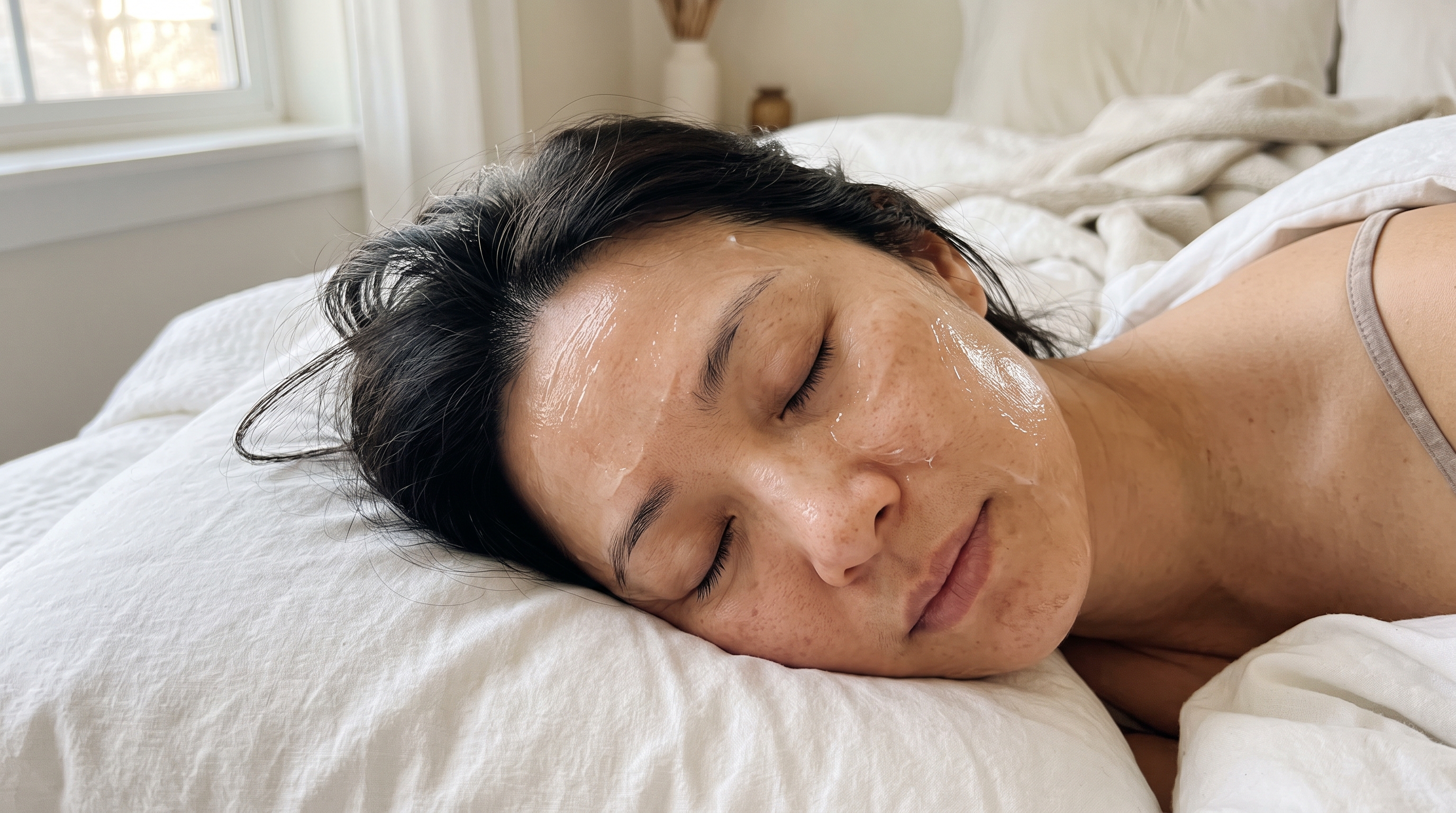
Your skin loses measurable moisture and bounce after just 2 nights of 3 hours’ sleep, according to a study in women aged 30 to 55.
In that study, two nights of restricted sleep lowered skin hydration, raised water loss through the skin and reduced its extensibility, and facial photographs lost brightness [6]. Longer term, a study of 60 women found that chronic poor sleepers had higher scores for intrinsic skin aging, and their skin barrier recovered 30% less in 72 hours after a controlled tape-stripping injury than that of good sleepers [7].
Your skin around the eyes can carry more creases and puffiness after 8 hours under a tight mask than any silk could ever prevent.
So if a mask genuinely helps you sleep longer and more deeply, your skin benefits. That is the real anti-aging case for a sleep mask, and it does not depend on the fabric.
Silk Versus Cotton: What Silk Adds
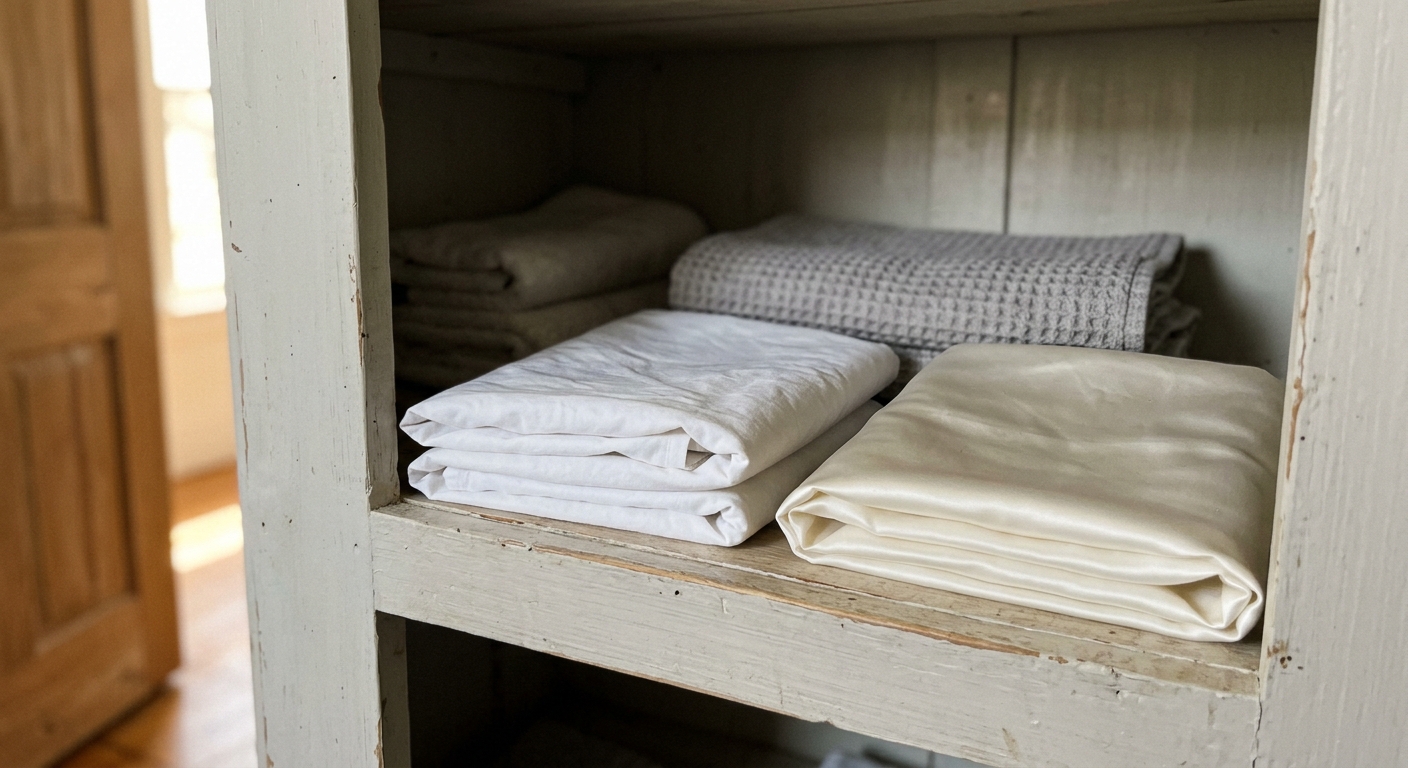
Silk’s appeal is texture. It is smooth, light and less absorbent than cotton, so it drags less against the skin and is less likely to soak up the eye cream you applied before bed. It also feels cooler against the face, which some people find more comfortable.
What silk cannot claim is proof. There are no clinical trials showing that a silk mask prevents wrinkles, and the same is true for silk pillowcases, as we discuss in our guide to silk pillowcases for wrinkles. The friction argument is plausible, because repeated pressure and creasing do leave temporary lines on sleeping skin, but a mask covers only a small area and sits fairly still once you are asleep.
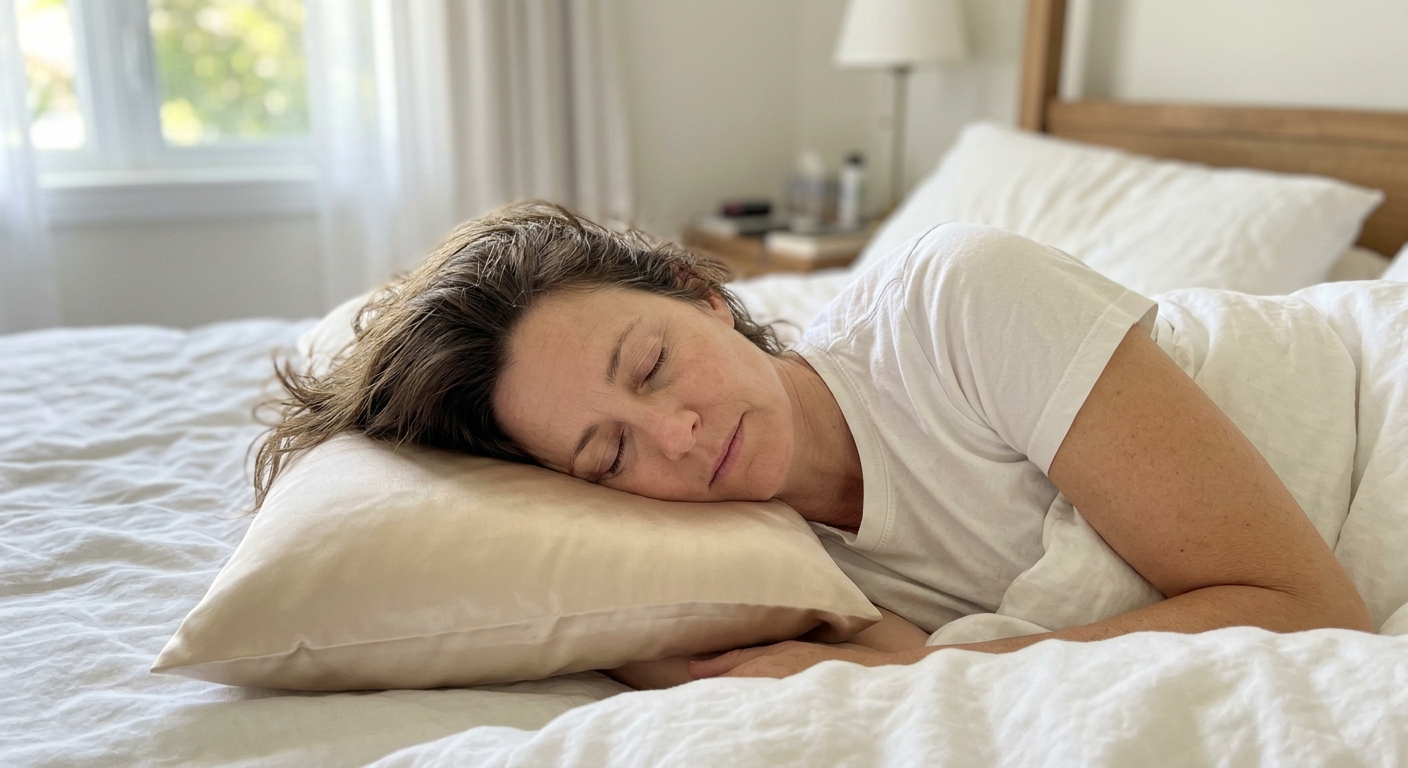
The bigger factor for the skin around your eyes is pressure, not fabric. Your skin around the eyes can carry more creases and puffiness after 8 hours under a tight mask than any silk could ever prevent. A tight strap or a flat mask pressing on the eyelids all night does that whatever it is made of.
How to Choose a Sleep Mask Worth Wearing
- Blocks light completely. Check the edges around the nose bridge, where most masks leak.
- No pressure on the eyes. Contoured or cupped masks leave space for your eyelids and lashes to move, which is more comfortable for side sleepers and anyone wearing lash extensions.
- Soft, adjustable strap. It should stay in place without leaving a groove in your hair or a red line on your temples.
- Washable. A mask sits on your skin every night and collects oil, skincare and sweat. Wash silk by hand in cool water with a gentle detergent about once a week, and keep a second one in rotation.
- Mulberry silk, if you choose silk. It is the smoothest and most durable grade, and a higher momme weight means denser fabric that lasts longer.
Make Your Eye Skincare and Your Mask Work Together
If you use eye cream or a night treatment, give it about 20 minutes to absorb before you put the mask on. That keeps product on your skin rather than on the fabric, and it reduces the chance of a mask rubbing a treatment toward your eyes. Our article on sleep wrinkles covers sleeping positions that reduce creasing too.
A mask protects your sleep. It does not rebuild collagen. Fine lines and crepiness around the eyes come from collagen and elastin loss, and the ingredient with the strongest evidence for reversing that is retinol, applied at night when skin repair is most active.
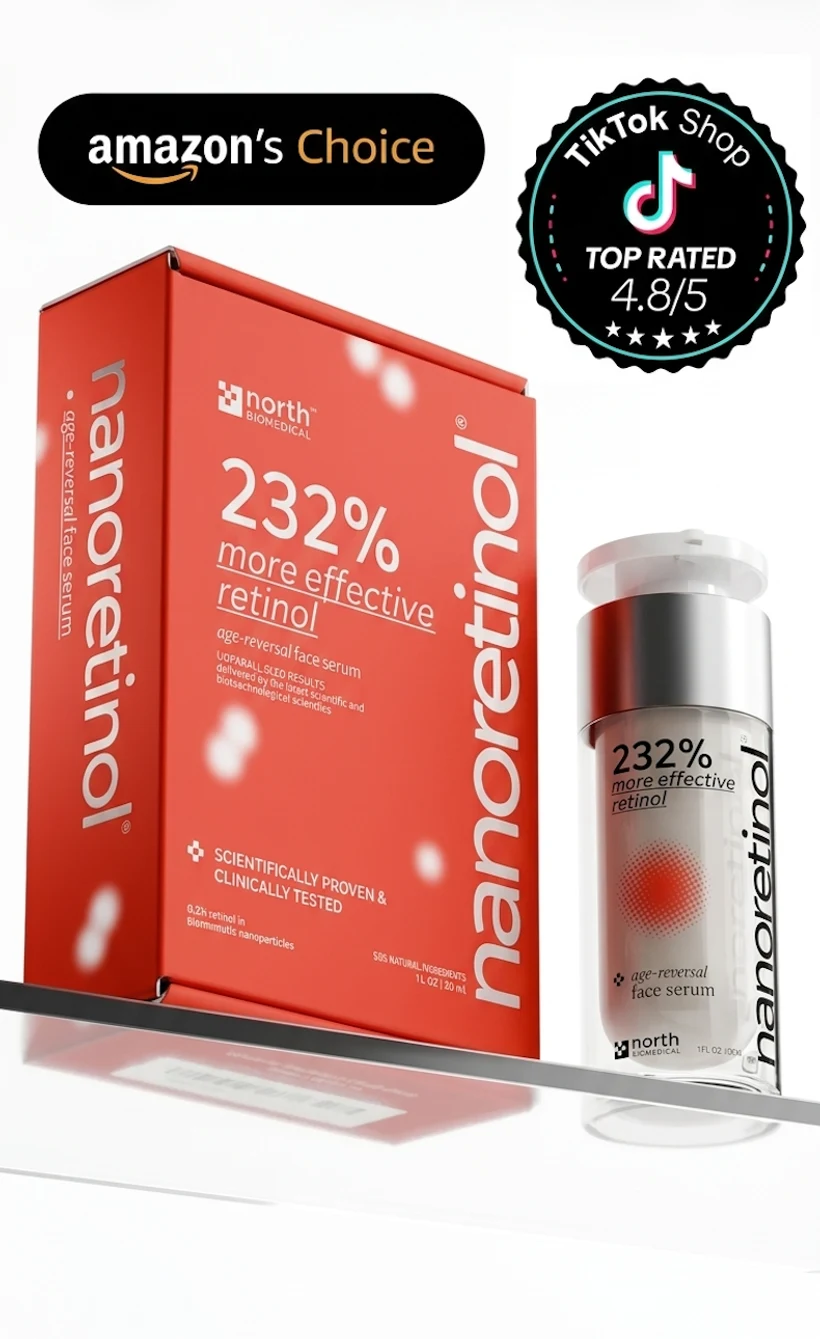
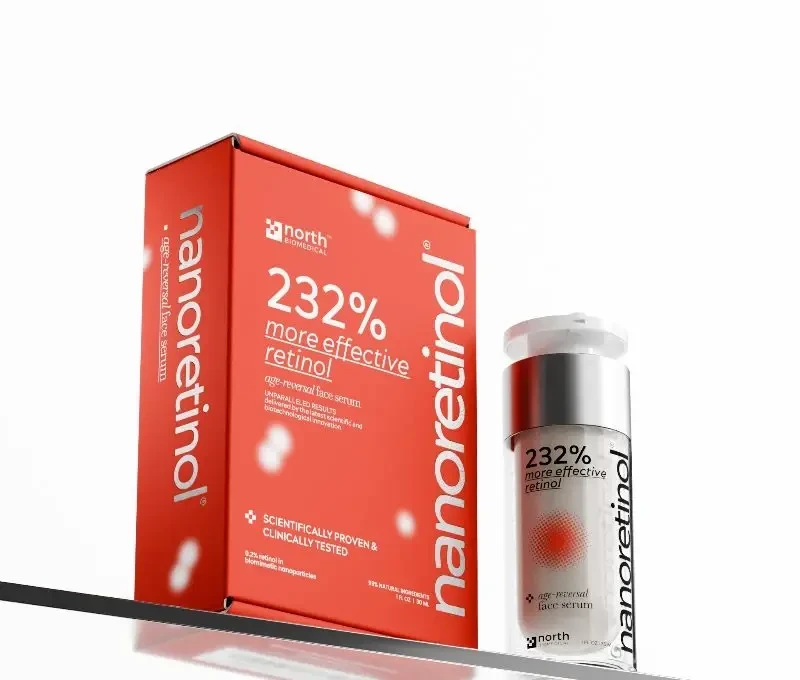
The catch is that eye-area skin is thin and reactive, and conventional retinol formulas often irritate it. Nanoretinol, from North Biomedical, was designed for exactly this kind of skin. Its 0.2% retinol is encapsulated in biomimetic lipid nanoparticles in a light, water-based gel that is suitable for sensitive skin and safe for the eye contour. In laboratory testing it was 232% more effective than conventional retinol in collagen recovery and 73% more effective in elastin recovery, and in clinical use it raised skin firmness by 61% in 56 days. Apply it at night, let it absorb, then put on your mask, and wear sunscreen the next day.
Worth Buying?
A silk sleep mask is a good buy if your bedroom is not fully dark, if you travel or nap during the day, or if you wake early with the sunrise. It can help you sleep better, and better sleep shows on your face. Choose one that blocks light without pressing on your eyes and keep it clean. Just don’t expect the fabric to do the work of a night treatment.
References
- Gooley JJ, Chamberlain K, Smith KA, et al. “Exposure to room light before bedtime suppresses melatonin onset and shortens melatonin duration in humans.” Journal of Clinical Endocrinology and Metabolism. 2011;96(3):E463-E472. doi:10.1210/jc.2010-2098
- Hu RF, Jiang XY, Zeng YM, Chen XY, Zhang YH. “Effects of earplugs and eye masks on nocturnal sleep, melatonin and cortisol in a simulated intensive care unit environment.” Critical Care. 2010;14(2):R66. doi:10.1186/cc8965
- Greco V, Bergamo D, Cuoccio P, et al. “Wearing an eye mask during overnight sleep improves episodic learning and alertness.” Sleep. 2023;46(3):zsac305. doi:10.1093/sleep/zsac305
- Rhodes S. “No clear or consistent evidence that wearing an eye mask leads to meaningful improvement in learning and alertness: a reanalysis of Greco et al. (2023).” Sleep. 2023;46(8):zsad105. doi:10.1093/sleep/zsad105
- Sundelin T, Lekander M, Kecklund G, et al. “Cues of fatigue: effects of sleep deprivation on facial appearance.” Sleep. 2013;36(9):1355-1360. doi:10.5665/sleep.2964
- Léger D, Gauriau C, Etzi C, et al. “‘You look sleepy…’ The impact of sleep restriction on skin parameters and facial appearance of 24 women.” Sleep Medicine. 2022;89:97-103. doi:10.1016/j.sleep.2021.11.011
- Oyetakin-White P, Suggs A, Koo B, et al. “Does poor sleep quality affect skin ageing?” Clinical and Experimental Dermatology. 2015;40(1):17-22. doi:10.1111/ced.12455