Sleep Wrinkles: How Your Pillow Is Aging Your Face (And What Actually Helps)
Every night, hours of pressure and shear force compress your face—and over years, this mechanical stress leaves a permanent record
The Wrinkles Nobody Talks About
Dermatology conversations about wrinkles overwhelmingly focus on UV damage, collagen loss, and expression lines. These are the right things to focus on—they drive most visible facial aging. But there is a third category that receives far less attention, despite being directly under your control every night: sleep wrinkles.
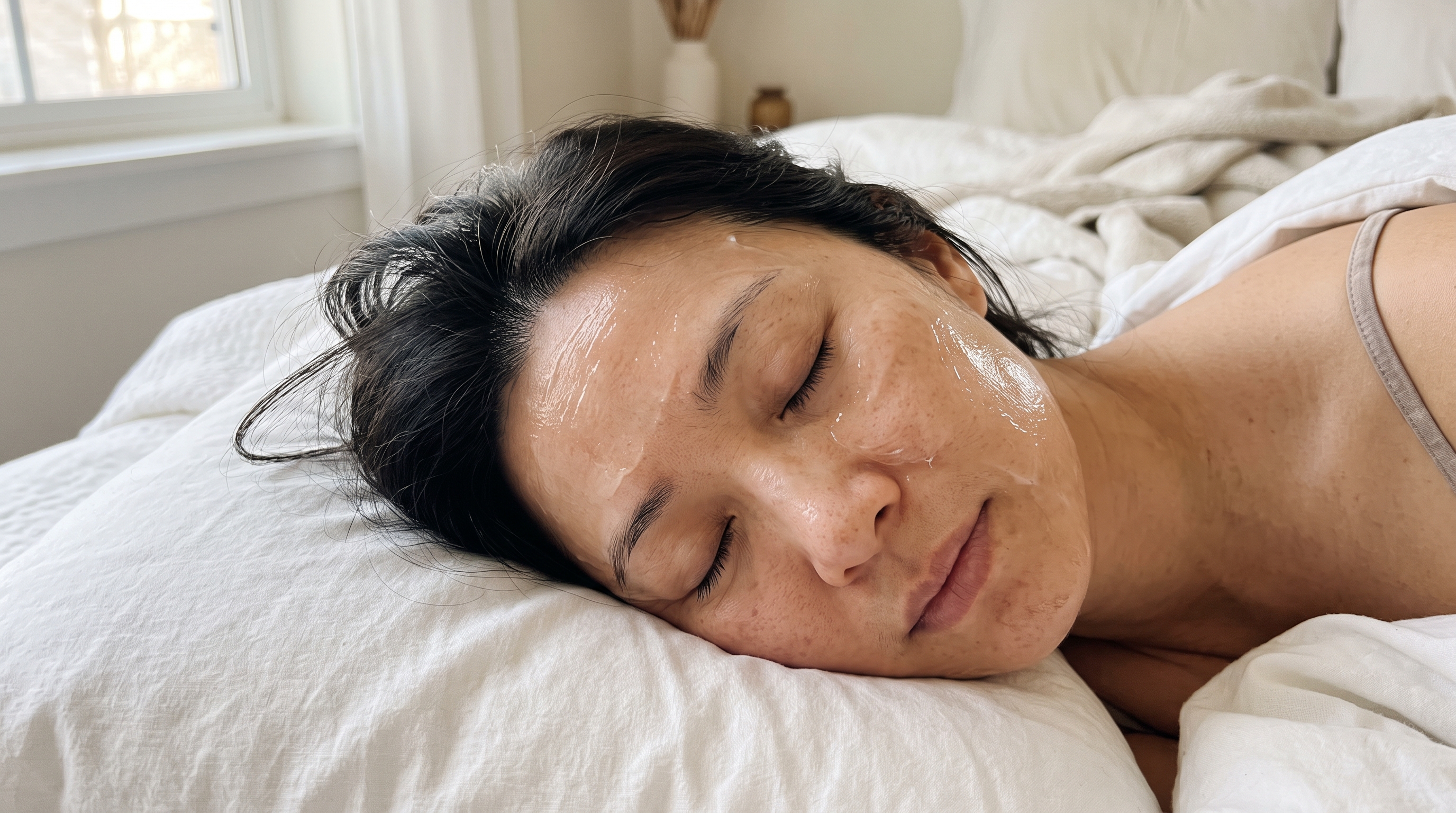
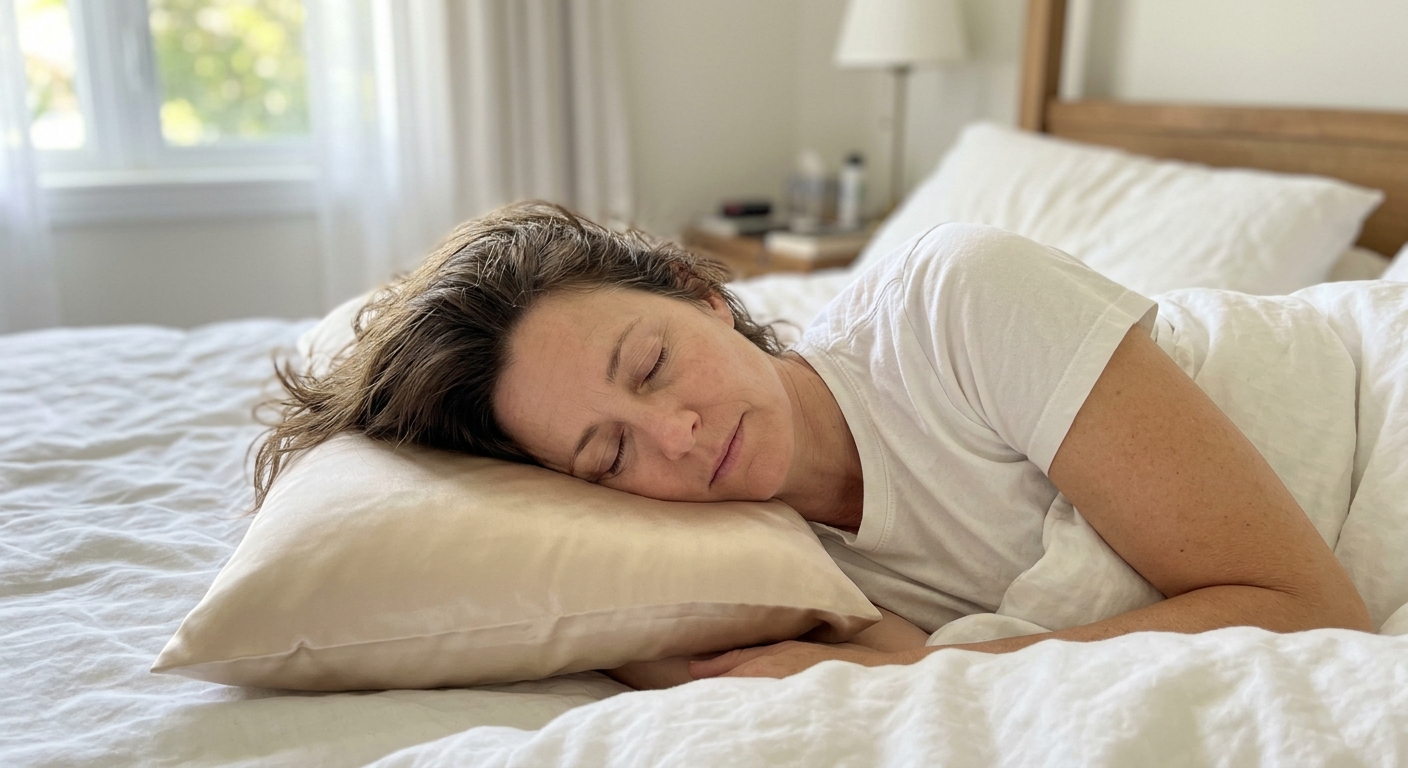
Sleep wrinkles are mechanically different from the expression lines that form from smiling, squinting, and frowning. They form through compression, shear, and stress forces applied to facial skin during the hours you’re unconscious—and for side sleepers and stomach sleepers, that means six to eight hours of sustained facial compression, hundreds of nights a year.
Over years, this accumulates. The skin records it.
How Sleep Wrinkles Form
The mechanism was mapped in detail in a landmark 2016 paper published in the Aesthetic Surgery Journal [1]. The authors—a team of plastic surgeons and anatomists—used three-dimensional facial photography to document how side and prone sleeping positions distort the face during sleep. They found that compression, shear, and tensile forces all act simultaneously on facial skin in lateral positions, creating deformation patterns distinctly different from dynamic expression wrinkles.
Expression wrinkles form perpendicular to the muscle pulling the skin. Sleep wrinkles form obliquely or horizontally, in patterns that don’t correspond to any facial muscle movement. This distinction matters clinically: a wrinkle running diagonally across the cheek from forehead to chin is a sleep wrinkle. The vertical ‘11’ lines between the brows are an expression pattern.
A 2012 study in the Journal of Cosmetic Laser Therapy examined the specific sleep positions that cause different wrinkle patterns [2]. Patients who slept prone with their faces buried in pillows developed the most extensive wrinkling over time. Side sleepers developed characteristic patterns asymmetrically, on the preferred-side cheek, temple, and lower jaw. The accumulation was progressive—each night’s compression adding slightly to the record of previous nights.
Sleep Quality Beyond Position
The sleep-aging connection goes deeper than pillow compression. A 2015 clinical study published in Clinical and Experimental Dermatology examined 60 healthy women categorized as good or poor sleepers, assessing skin health through multiple validated measures [3].
The results were striking. Good sleepers had significantly lower intrinsic skin aging scores—fewer wrinkles, better skin texture, higher elasticity. They also showed meaningfully better skin barrier function, with a 30% advantage in recovery speed after standardized barrier disruption. And they recovered from UV-induced erythema 24 hours faster than poor sleepers.
Poor sleep doesn’t just mean less physical rest; it means compressing the biological window when skin actively repairs and rebuilds.
Sleep is when growth hormone is released at its highest levels—and growth hormone drives skin cell renewal and collagen synthesis. Skin permeability also increases at night, which is one reason topical retinoids and other active ingredients penetrate more effectively when applied in the evening. Poor sleep doesn’t just mean less physical rest; it means compressing the biological window when skin actively repairs and rebuilds.
What Actually Reduces Sleep Wrinkles
The most obvious intervention is changing sleep position. Back sleeping eliminates facial compression entirely—the face rests against nothing, no forces applied. Dermatologists who study sleep aging consistently recommend this. The barrier, of course, is that most people cannot simply decide to sleep on their back and maintain that through the night. Positioning pillows or specialized back-sleeping bolsters help some people retrain their sleep habits; others never adapt.
For committed side sleepers, pillow design has been studied. Research published in the Journal of Cosmetic Dermatology evaluated a randomized double-blind clinical trial in which participants slept on copper oxide-infused pillowcases for eight weeks [4]. Subjects showed measurable reduction in wrinkle depth alongside improvements in overall skin appearance. The mechanism involves both the mechanical properties of the pillowcase fabric (reduced friction) and the documented ability of copper to support skin remodeling enzymes including lysyl oxidase, which contributes to collagen cross-linking.
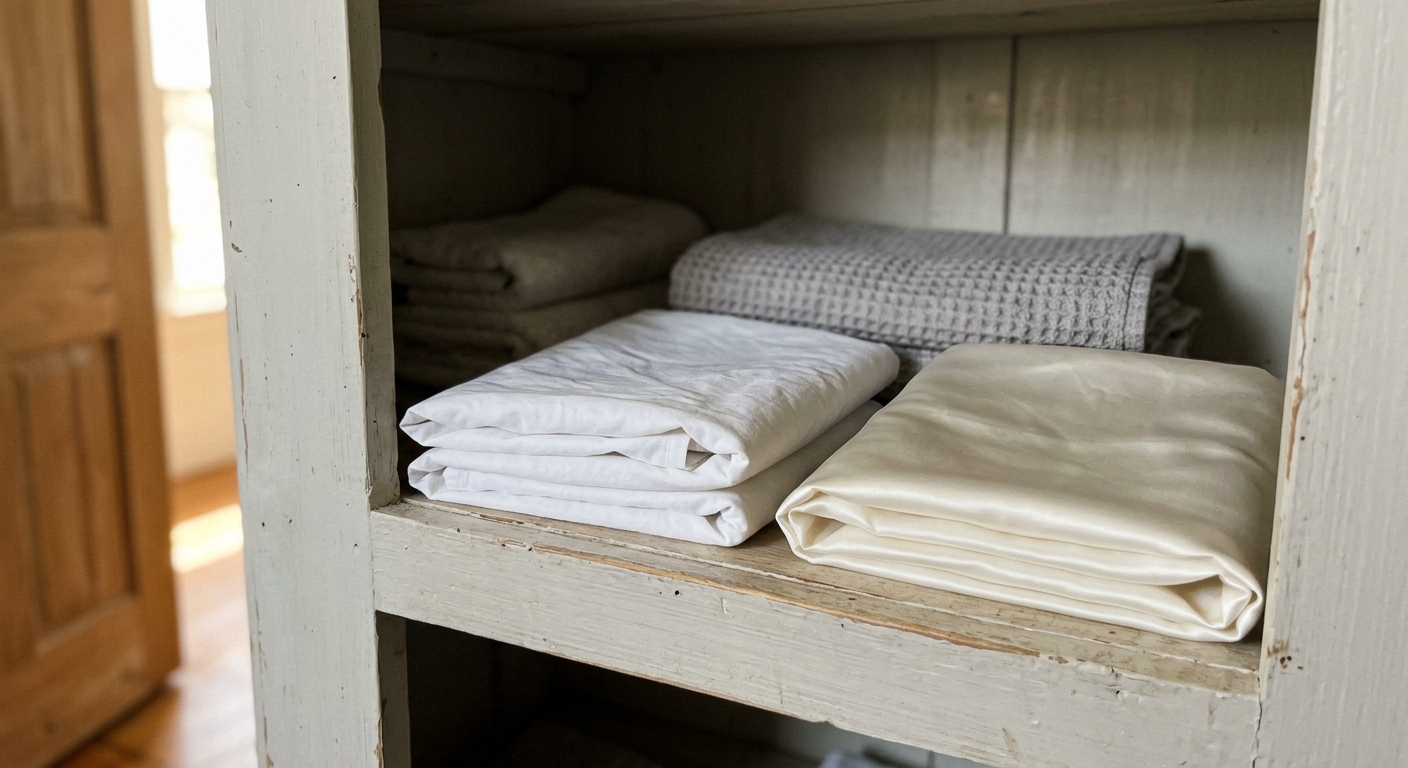
Silk pillowcases are the more widely available version of the low-friction approach. Unlike cotton, which has a rough texture that creates friction and compression patterns, silk allows skin to slide rather than drag during position changes throughout the night. This doesn’t eliminate compression—the face is still against a surface—but it reduces the shear forces that compound mechanical damage. The friction case is weaker than it is usually presented, though: measured skin-to-fabric coefficients do not cleanly favor silk over cotton, which is examined in our guide to silk pillowcases for wrinkles.
The Skincare Side of the Equation
Neither pillow choice nor sleep position change is the complete answer. The structural variable that determines whether sleep compression leaves a lasting record is skin resilience—how quickly and completely the skin recovers from mechanical stress.
Young skin bounces back. Collagen and elastin networks in young dermis are dense and elastic; compression deforms them temporarily, and they spring back. Aged skin has fewer intact collagen fibers, degraded elastin, and a thinner dermis—compression deforms these structures more severely, and the recovery is slower and incomplete. Each night’s compression leaves a slightly larger permanent imprint in skin that’s already structurally compromised.
This is where retinoids become directly relevant to sleep wrinkles. Retinoids stimulate fibroblast activity and collagen synthesis—rebuilding exactly the dermal architecture that makes skin resilient to mechanical stress. Skin that maintains higher collagen density recovers faster from nightly compression, meaning the accumulation of permanent sleep wrinkles slows even without position changes. Does retinol really reduce wrinkles? The answer includes this structural resilience dimension that is rarely discussed.
This doesn’t eliminate compression—the face is still against a surface—but it reduces the shear forces that compound mechanical damage.
The timing matters too. Skin is more permeable at night, and most retinoids are applied in the evening. This means retinol is working during the same hours that sleep-related compression and repair processes are both occurring—a natural alignment between ingredient timing and biological opportunity.
Nanoretinol’s Advantage for Overnight Repair
Standard retinol formulations often cause the irritation and peeling associated with barrier disruption—which is counterproductive when the goal is building structural resilience. A disrupted barrier is a weaker barrier, less capable of the overnight repair that counteracts sleep compression.
Nanoretinol takes a different approach: its lipid nanoparticles deliver retinol through the skin’s barrier without disrupting it, recognized by skin cells as native lipids. In clinical trials, Nanoretinol produced a 61% increase in skin firmness and a 56% increase in skin elasticity over 56 days, with +232% greater collagen recovery compared to conventional retinol. Better firmness and elasticity mean the dermis that faces compression every night is structurally equipped to recover from it.
The water-based, non-greasy formulation is also practical for overnight use: it absorbs fully without residue on pillowcases, meaning it works on the skin rather than transferring to the fabric.
A Complete Approach
Sleep wrinkles have two dimensions: the mechanical force applied each night, and the skin’s structural capacity to recover from it. Addressing just one produces partial results.
The full protocol: low-friction pillowcase (silk or similar) + retinoid applied nightly (ideally in a biomimetic delivery system) + consistent SPF in the morning (UV damage is still the primary accelerant of the collagen loss that reduces resilience). If sleep position can be adjusted toward back sleeping, that eliminates the primary compression source entirely.
For skin that’s already showing evidence of sleep-related wrinkling—the diagonal cheek crease, the jaw line that creases on one side—see how to get rid of smile lines and crepey skin on face for additional context on treating existing structural change.
Sleep-related aging is one of the few categories of skin aging that can be meaningfully addressed every single night. The biology operates on a reliable schedule. The intervention can too.
References
-
Anson G, Kane MAC, Lambros V. “Sleep Wrinkles: Facial Aging and Facial Distortion During Sleep.” Aesthetic Surgery Journal. 2016;36(8):931–940. doi:10.1093/asj/sjw074
-
Poljsak B, Godic A, Lampe T, Dahmane R. “The influence of the sleeping on the formation of facial wrinkles.” Journal of Cosmetic Laser Therapy. 2012;14(3):133–138. doi:10.3109/14764172.2012.685563
-
Oyetakin-White P, Suggs A, Koo B, Matsui MS, Yarosh D, Cooper KD, Baron ED. “Does poor sleep quality affect skin ageing?” Clinical and Experimental Dermatology. 2015;40(1):17–22. doi:10.1111/ced.12455
-
Baek JH, Yoo MA, Koh JS, Borkow G. “Reduction of facial wrinkles depth by sleeping on copper oxide-containing pillowcases: a double blind, placebo controlled, parallel, randomized clinical study.” Journal of Cosmetic Dermatology. 2012;11(3):193–200. doi:10.1111/j.1473-2165.2012.00624.x