Beeswax for Skin: Benefits, Allergy Risks and How It Compares
Beeswax has protected skin for thousands of years. What it is made of, how its film compares with petrolatum and lanolin, what the studies show, and who should avoid it
Long before anyone sold a moisturizer, people rubbed beeswax into chapped hands and cracked lips. The ancient Greeks mixed it with oil to make cerate, the forerunner of today’s cold cream, and it still turns up in lip balms, hand salves, baby balms and solid lotion bars on almost every pharmacy shelf.
Beeswax has a reputation as a “clean” alternative to petroleum jelly. Some of that is fair and some is marketing. This guide explains what beeswax actually does on your skin, how well the evidence supports it, how it compares with the other classic protectants, and the one group of people who should be careful with it.
What beeswax is
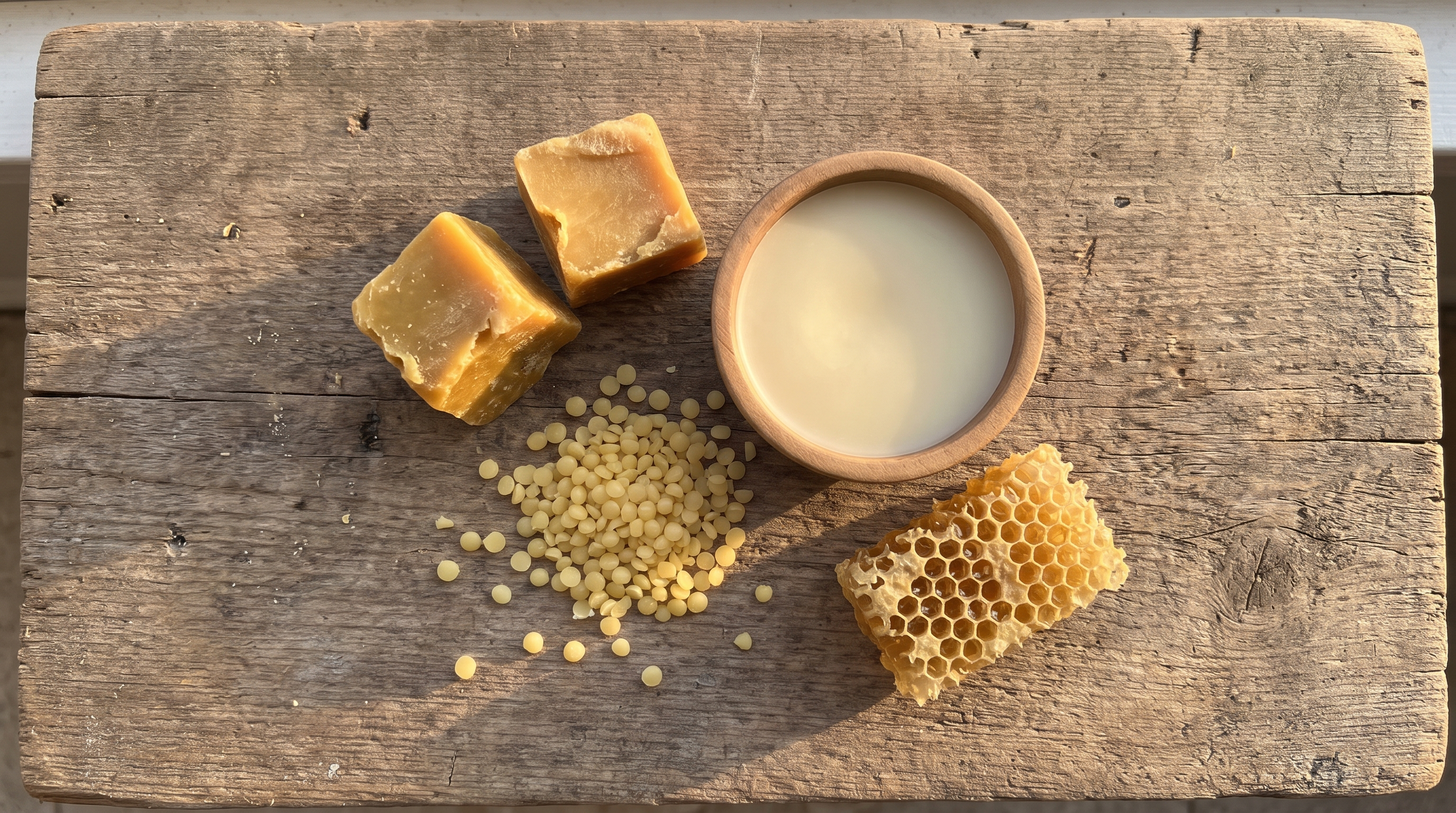
Worker bees secrete wax from glands on their abdomens and shape it into the honeycomb where they store honey and raise young [1]. Chemically, it is a mixture of long-chain wax esters, free fatty acids, fatty alcohols and hydrocarbons. That combination is what makes it useful: it melts at around 62 to 64°C, so it stays solid on skin, but softens enough with body heat to spread.
Cosmetic beeswax comes in two forms. Yellow beeswax is filtered but otherwise natural and keeps a faint honey scent. White beeswax has been bleached, usually by sun or filtration, to remove color and odor. Both appear on ingredient lists as Cera alba or Cera flava.
What beeswax does on skin
A recent review of beeswax in skincare describes three roles [2]:
- Occlusive. It forms a semi-occlusive film that slows the water evaporating from the skin’s surface.
- Emollient. It softens rough, flaking skin and fills in the tiny cracks between surface cells.
- Thickener and stabilizer. In creams and balms it gives body and helps oils and water stay mixed, which is why it is the backbone of cold cream.
Your skin keeps more of its water under a beeswax balm than under nothing at all, yet the film still lets it breathe more than a coat of petroleum jelly does.
The key word is semi-occlusive. Petroleum jelly forms a near-complete seal, while a beeswax film is more breathable. Your skin keeps more of its water under a beeswax balm than under nothing at all, yet the film still lets it breathe more than a coat of petroleum jelly does. That makes beeswax pleasant on the face and lips, but it also means it locks in a little less water than pure petrolatum on badly cracked skin.
What the research shows
The honest answer is that beeswax has fewer human trials than its long history suggests. The 2023 review found only five clinical studies on topical beeswax, three of them in animals [2]. Still, what exists is encouraging:
Barrier support. In a 28-day study, a gel-cream containing beeswax-based nanoparticles reduced water loss through the skin and raised the water content of the outer layer [3].
Dermatitis and psoriasis. In a small, partly controlled study, a 1:1:1 mixture of honey, beeswax and olive oil improved atopic dermatitis in 8 of 10 patients within two weeks, and helped some patients cut their steroid cream dose by 75% without flaring [4]. Because the mixture had three ingredients, the study cannot tell how much credit goes to beeswax itself.
Antimicrobial activity. Lab studies show beeswax can slow the growth of Staphylococcus aureus, Candida albicans and other microbes, especially when combined with honey or olive oil [1]. That is a lab finding, not proof that a beeswax balm prevents infection on your skin.
Beeswax vs petrolatum vs lanolin
All three are classic skin protectants, and each has a different strength:
If you break out easily, keep beeswax products to the lips, hands and dry patches.
- Petrolatum is the most occlusive and has the strongest clinical evidence. It is very unlikely to cause allergy and suits cracked or broken skin best.
- Lanolin, the wax from sheep’s wool, is closest to the skin’s own lipids and very soothing for lips and nipples, but it is a known allergen for a minority of people.
- Beeswax sits in between. It is less occlusive than petrolatum, feels lighter, and is a good choice for people who prefer to avoid petroleum products. It also gives balms their firm, glide-on texture.
Many of the best balms use more than one. You will see beeswax paired with plant oils in our guides to face balm and cold cream, where the wax holds the oils in place.
Does beeswax clog pores?
Beeswax is often listed as mildly pore-clogging, but those ratings come from old rabbit-ear tests that do not predict much about human faces. In practice, the bigger risk is the formula around it. A beeswax lip balm or hand salve is unlikely to cause breakouts. A rich beeswax-and-coconut-oil face balm on oily, acne-prone skin might. If you break out easily, keep beeswax products to the lips, hands and dry patches.
The real risk: beeswax and propolis allergy
The one group who should be careful are people allergic to propolis, the sticky resin bees use to seal the hive. Raw beeswax can contain traces of it.
A Swedish study patch-tested 95 people with inflamed lips or facial eczema. Seventeen reacted to beeswax, and 14 of those also reacted to propolis [5]. The study focused on people with inflamed lips, and lip balm is a common source of exposure: lips are thin, and balm is reapplied many times a day.
A 2026 review puts that risk in perspective. Reactions to beeswax in people sensitized to propolis appear uncommon and mainly involve the lips, and the authors concluded that most people with a propolis allergy do not need to avoid every beeswax product [6]. Still, if your lips stay red, scaly and sore despite constant balm, the balm itself may be the problem. A dermatologist can patch test you.
How to choose and use a beeswax product
- For lips: a simple balm of beeswax and plant oil is hard to beat. Apply before going outside in wind and cold. Our guide to lip lines explains why keeping lips hydrated matters for aging too.
- For hands: a beeswax hand salve at night under cotton gloves.
- For the face: a thin layer of a beeswax-containing balm on dry patches, over your usual moisturizer.
- Skip heavy fragrance, essential oils and added propolis if your skin is sensitive.
- Check for white or yellow beeswax near the middle of the ingredient list, not the very end.
Beeswax, retinol and aging skin
Beeswax protects. It does not rebuild. It can keep dry, wind-chapped or retinol-sensitized skin comfortable, but it does nothing for the slow loss of collagen and elastin that causes lines and sagging.
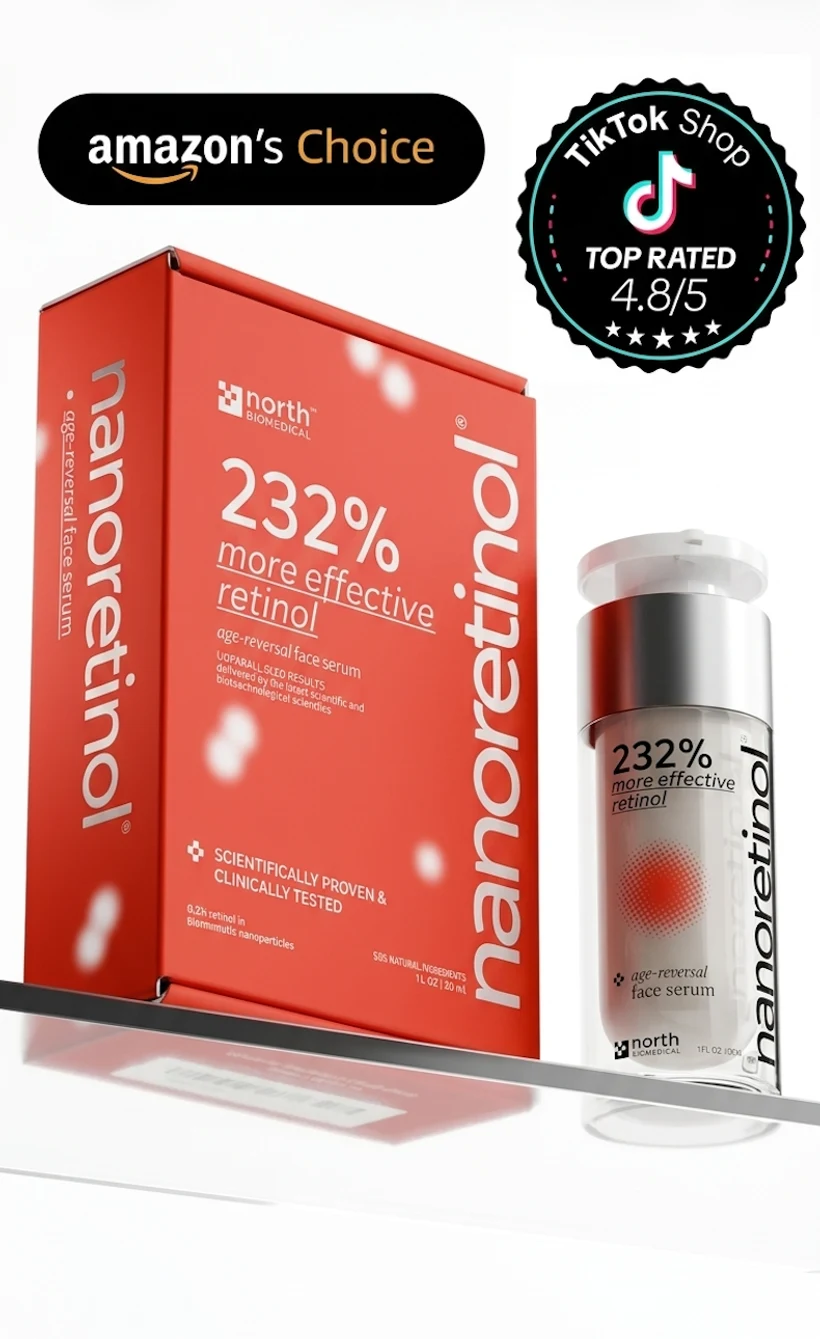
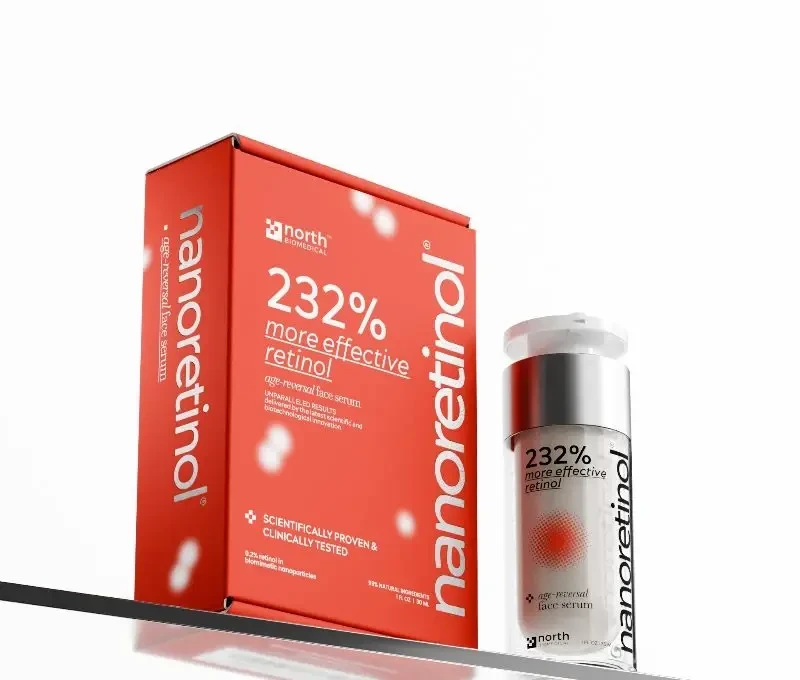
That is the job of retinol, and it is where Nanoretinol fits. Its 0.2% retinol is encapsulated in biomimetic lipid nanoparticles inside a water-based gel, so it passes the skin barrier without the harsh solvents that cause burning and peeling. In North Biomedical’s study it was 232% more effective in collagen recovery and 73% more effective in elastin recovery than conventional retinol, and users saw a 61% increase in firmness after 56 days [7]. Apply it at night to clean skin, let it absorb, then press a little beeswax balm onto your lips and driest patches.
References
- Fratini F, Cilia G, Turchi B, Felicioli A. “Beeswax: A minireview of its antimicrobial activity and its application in medicine.” Asian Pacific Journal of Tropical Medicine. 2016;9(9):839-843. doi:10.1016/j.apjtm.2016.07.003
- Nong Y, Maloh J, Natarelli N, et al. “A review of the use of beeswax in skincare.” Journal of Cosmetic Dermatology. 2023;22(8):2166-2173. doi:10.1111/jocd.15718
- Souza C, de Freitas LAP, Maia Campos PMBG. “Topical Formulation Containing Beeswax-Based Nanoparticles Improved In Vivo Skin Barrier Function.” AAPS PharmSciTech. 2017;18(7):2505-2516. doi:10.1208/s12249-017-0737-x
- Al-Waili NS. “Topical application of natural honey, beeswax and olive oil mixture for atopic dermatitis or psoriasis: partially controlled, single-blinded study.” Complementary Therapies in Medicine. 2003;11(4):226-234. PubMed 15022655
- Nyman GSA, Tang M, Inerot A, et al. “Contact allergy to beeswax and propolis among patients with cheilitis or facial dermatitis.” Contact Dermatitis. 2019;81(2):110-116. doi:10.1111/cod.13306
- de Groot AC, Ipenburg NA, Rustemeyer T. “Propolis and Beeswax in Cosmetics: A Market Survey and Literature Review on Their Relationship and Role in Allergic Contact Dermatitis.” Contact Dermatitis. 2026;94(5):494-503. doi:10.1111/cod.70108
- North Biomedical LLC. “Nanoretinol vs. Conventional Retinol: Efficacy in Collagen and Elastin Recovery.” Clinical Study Summary, 2024. Study summary