Castor Oil for Skin: Dryness, Barrier Benefits, and Risks
Where this thick plant oil fits for dry body skin — and where a moisturizer or treatment works better
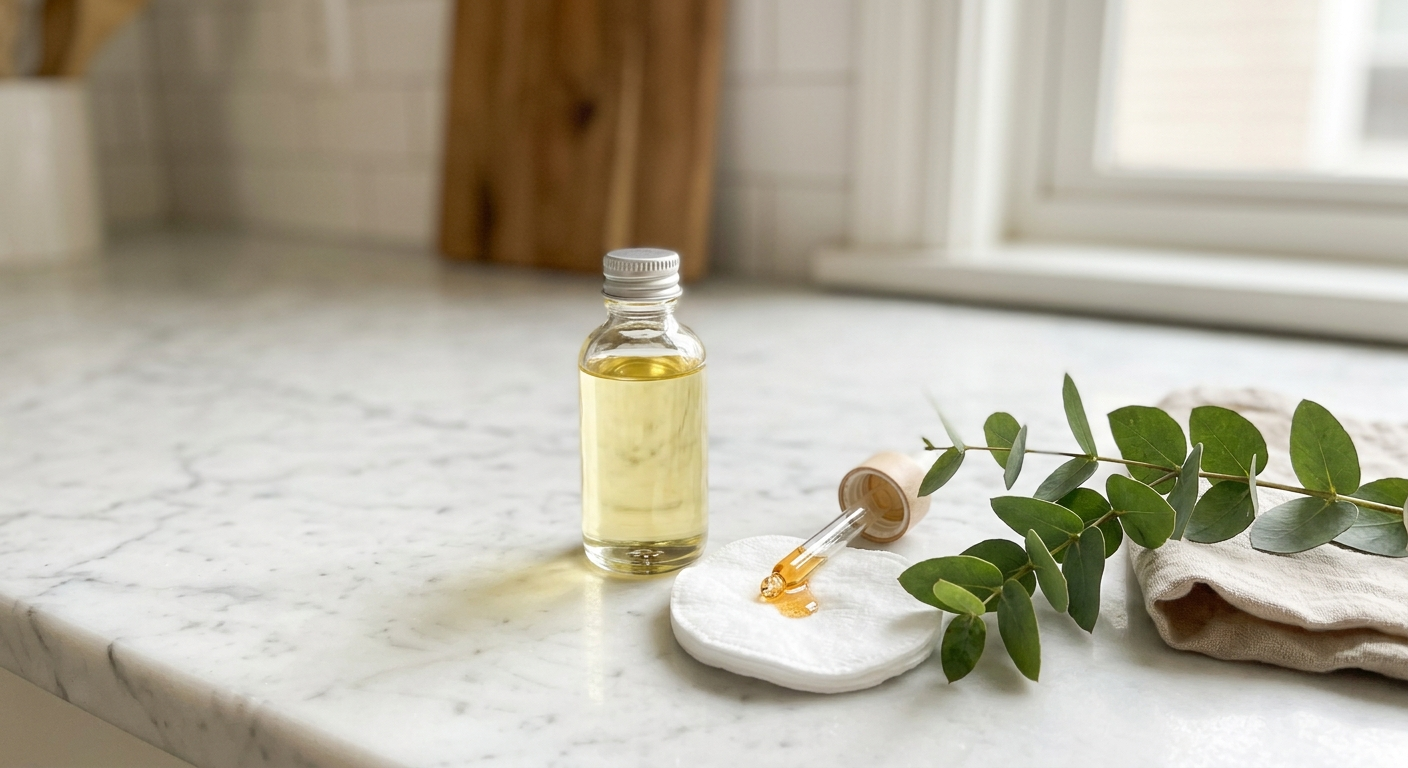
Castor oil can be useful on dry body skin because its thick film softens rough areas and slows water loss. It does not rebuild collagen, dissolve fat, or treat a skin disease. Its best role is narrow: a final occlusive layer for small, very dry areas when the texture and allergy risk suit your skin.
This guide focuses on hands, feet, elbows, knees, lips, and other body-skin uses. If your question is about pores, under-eyes, or wrinkles, use the dedicated guide to castor oil for the face, where the risk-benefit calculation is different.
What Castor Oil Actually Is
Castor oil is unusual among plant oils. Most are a mix of common fatty acids, but castor oil is roughly 90% ricinoleic acid — a rare hydroxy fatty acid found in almost no other commercial source [1]. That single hydroxyl group is what gives the oil its signature properties: a high viscosity, a slightly tacky feel, and a strong ability to cling to skin and form a film. The remaining fraction is a small amount of linoleic, oleic, and stearic acids [1].
Understanding that chemistry matters, because it explains exactly what castor oil can and cannot do. It is a fatty oil. It behaves like a fatty oil. It is not a biologically active anti-aging compound, however it is marketed.
What It Genuinely Does for Skin
It is a real and effective emollient
The most honest claim for castor oil is also the least exciting: it is an emollient and occlusive. It softens the skin surface and slows water loss by forming a protective film [2]. Its thick texture can suit very dry patches, lips, heels, and rough elbows, although petrolatum has a longer clinical history as an occlusive and a fragrance-free cream is usually easier to spread over a large area.
Castor oil sends no signal to your skin to build new collagen, because nothing in its chemistry can.
It can be soothing
There is also real science behind castor oil’s calming reputation. The ricinoleic acid that dominates its composition has documented anti-inflammatory and analgesic activity. In experimental models of inflammation, topically applied ricinoleic acid reduced swelling and inflammatory response, behaving as a non-irritating anti-inflammatory agent [3]. For irritated, reddened skin, a thin layer of castor oil may genuinely feel comforting.
For everyday moisturizing duty, castor oil sits alongside plant-derived emollients such as jojoba and squalane. Castor oil is much tackier; preference and tolerance matter more than any claim that one oil is universally superior.
What It Doesn’t Do
Here is where the viral claims and the evidence part ways.
Castor oil does not get rid of wrinkles. Search the peer-reviewed literature for a clinical trial showing castor oil reduces wrinkles or stimulates collagen production, and you will find nothing — because no such trial exists. This absence is not an oversight; it reflects how the oil works. Wrinkles form when the collagen scaffolding deep in the dermis thins and weakens. An emollient sits on and just within the outermost layers of skin. It can temporarily plump the look of fine lines by hydrating them — any moisturizer does this — but the effect washes off with your cleanser. Castor oil sends no signal to your skin to build new collagen, because nothing in its chemistry can.
The same logic applies to claims about scars, stretch marks, cellulite, or loose skin: a surface oil cannot replace lost dermal tissue or mechanically tighten laxity. It may make a dry surface look smoother while it remains on the skin. That is a cosmetic, temporary effect — not a structural change.
It is the opposite philosophy to castor oil: not a passive film on the surface, but a proven active delivered where collagen is actually made.
The Catch: It Is Not Risk-Free
“Natural” is often read as “gentle,” but castor oil is not automatically safe for everyone. It is an emerging cosmetic contact allergen. Dermatology researchers have documented genuine allergic contact dermatitis to castor oil, frequently traced to lip products, while the processed castor wax did not trigger the same reactions [4]. A separate case report confirmed patch-test-verified allergic contact cheilitis — an itchy, inflamed reaction on the lips — caused by castor oil in a lip balm [5].
The practical takeaway: patch-test castor oil on your inner arm for a few days before using it over a larger area, and stop if you see redness or itching. Its thick, occlusive texture can also trap debris and aggravate follicle congestion in some people.
How to Use Castor Oil on Body Skin
- Patch-test a small area for several days before wider use.
- Apply a very thin layer over a fragrance-free moisturizer while skin is slightly damp; a few drops are usually enough for a rough patch.
- Use it on intact skin, not on an unexplained rash, infected area, or open wound.
- Avoid covering a large area under tight clothing until you know it does not cause follicle irritation.
- Stop if itching, swelling, persistent redness, or darkening develops. Those signs need more than “pushing through.”
For widespread dryness, a complete moisturizer containing water, humectants, and barrier lipids is usually more practical than a pure oil. Castor oil can seal that routine; it cannot supply every component the barrier needs.
What Actually Builds Collagen
If your real goal is fewer wrinkles rather than just softer body skin, the science points firmly toward a different ingredient class: retinoids. Unlike an emollient, a retinoid is biologically active. A classic study published in the New England Journal of Medicine showed histologically that topical tretinoin restored collagen formation in photodamaged skin [6]. A systematic review of randomized controlled trials also found that topical retinoids improve photoaging [7]. That is the level of proof castor oil does not have. Our guide to how retinoids work explains the mechanism in detail.
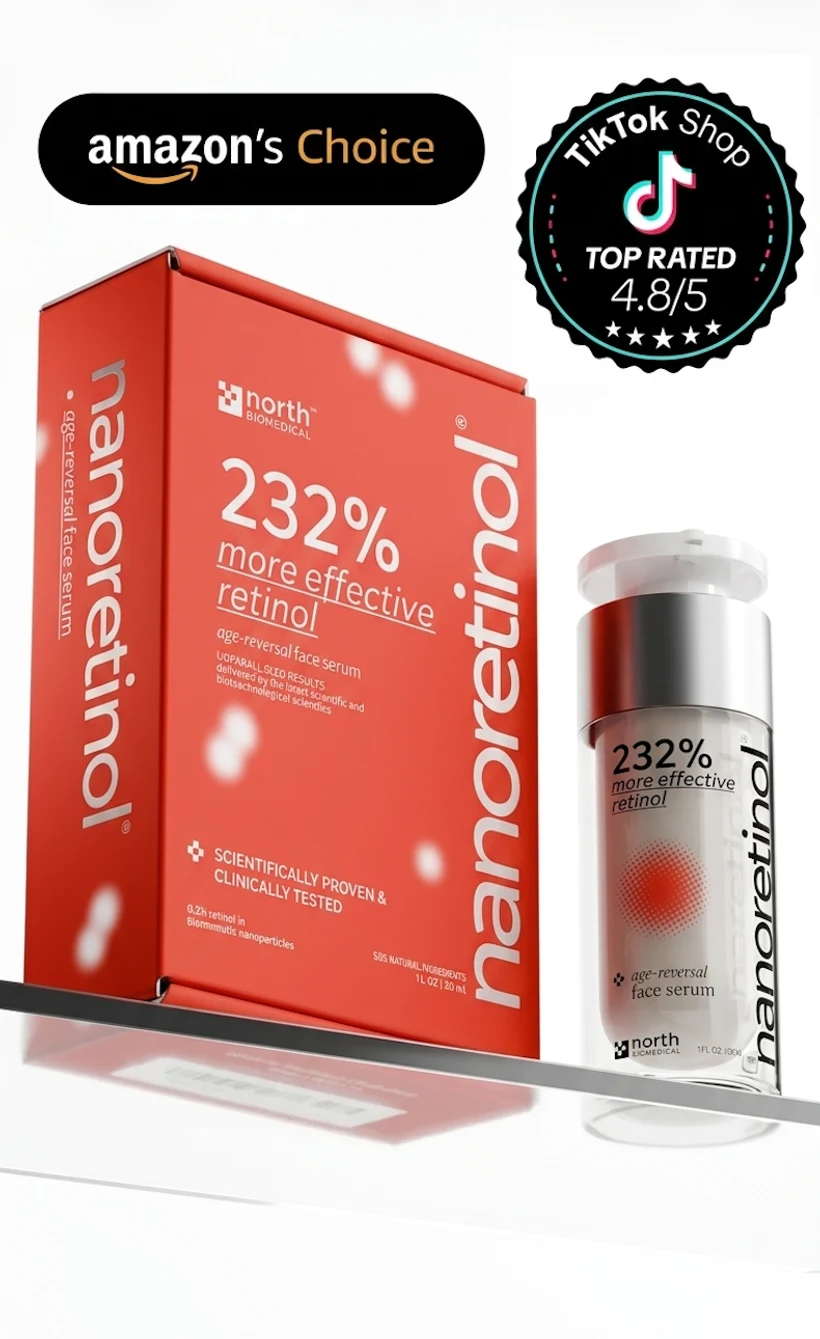
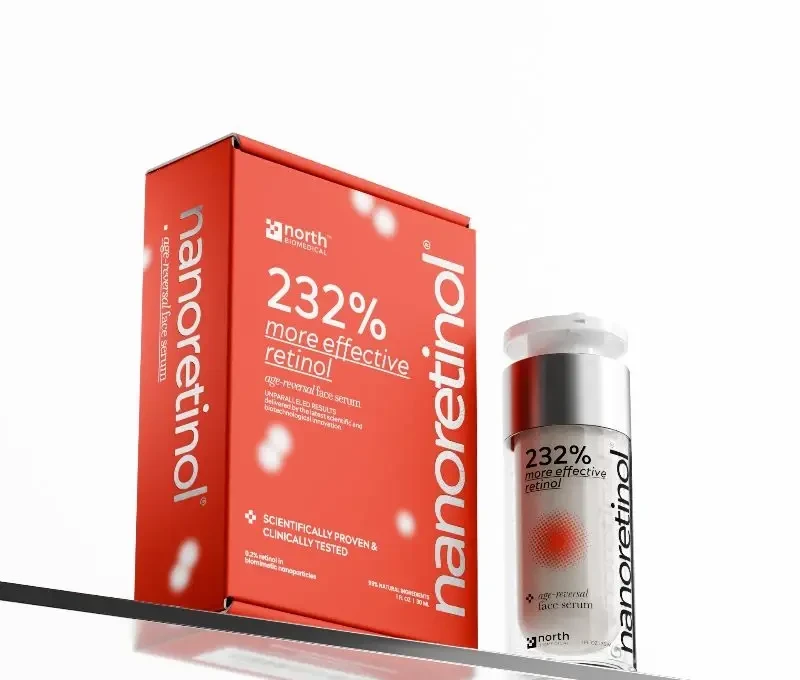
The historical knock on retinoids is irritation — and ironically, that is one reason people reach for “gentle” oils instead. North Biomedical designed Nanoretinol to remove that trade-off. It encapsulates retinol in biomimetic lipid nanoparticles that carry the active across the skin barrier efficiently and without the barrier disruption that causes flaking and stinging, so a mild 0.2% concentration is enough. In North Biomedical’s clinical study against conventional retinol, users saw a 61% increase in skin firmness and a 56% increase in elasticity over 56 days, with side effects that were milder and less frequent. It is the opposite philosophy to castor oil: not a passive film on the surface, but a proven active delivered where collagen is actually made.
Use It for What It Is Good At
Castor oil is an affordable emollient for small, dry body areas when your skin tolerates it. Use it to seal in moisture, not to self-treat a persistent rash or replace an evidence-based active. The honest summary is simple: castor oil can support a moisturizing routine, but it is not a stand-alone barrier repair formula or an anti-aging treatment.
References
- Patel VR, Dumancas GG, Kasi Viswanath LC, Maples R, Subong BJJ. “Castor Oil: Properties, Uses, and Optimization of Processing Parameters in Commercial Production.” Lipid Insights. 2016;9:1-12. doi:10.4137/LPI.S40233
- Lin TK, Zhong L, Santiago JL. “Anti-Inflammatory and Skin Barrier Repair Effects of Topical Application of Some Plant Oils.” International Journal of Molecular Sciences. 2018;19(1):70. doi:10.3390/ijms19010070
- Vieira C, Evangelista S, Cirillo R, Lippi A, Maggi CA, Manzini S. “Effect of ricinoleic acid in acute and subchronic experimental models of inflammation.” Mediators of Inflammation. 2000;9(5):223-228. doi:10.1080/09629350020025737
- Verheyden M, Rombouts S, Lambert J, Aerts O. “Contact Allergy to Castor Oil, but Not to Castor Wax.” Cosmetics. 2017;4(1):5. doi:10.3390/cosmetics4010005
- Sánchez-Herrero A, Mateos-Mayo A, Rodríguez-Lomba E, Molina-López I, Campos-Domínguez M, Suárez Fernández R. “Allergic contact cheilitis in an adolescent to Ricinus communis seed oil (castor oil) in a lip balm.” Contact Dermatitis. 2018;79(3):176-178. doi:10.1111/cod.13016
- Griffiths CEM, Russman AN, Majmudar G, Singer RS, Hamilton TA, Voorhees JJ. “Restoration of Collagen Formation in Photodamaged Human Skin by Tretinoin (Retinoic Acid).” New England Journal of Medicine. 1993;329(8):530-535. doi:10.1056/NEJM199308193290803
- Sitohang IBS, Makes WI, Sandora N, Suryanegara J. “Topical tretinoin for treating photoaging: A systematic review of randomized controlled trials.” International Journal of Women’s Dermatology. 2022;8(1):e003. doi:10.1097/JW9.0000000000000003