Best Eye Cream for Puffy Eyes: What a Cream Can and Cannot Move
Three different problems share one name, and only two of them answer to anything you apply
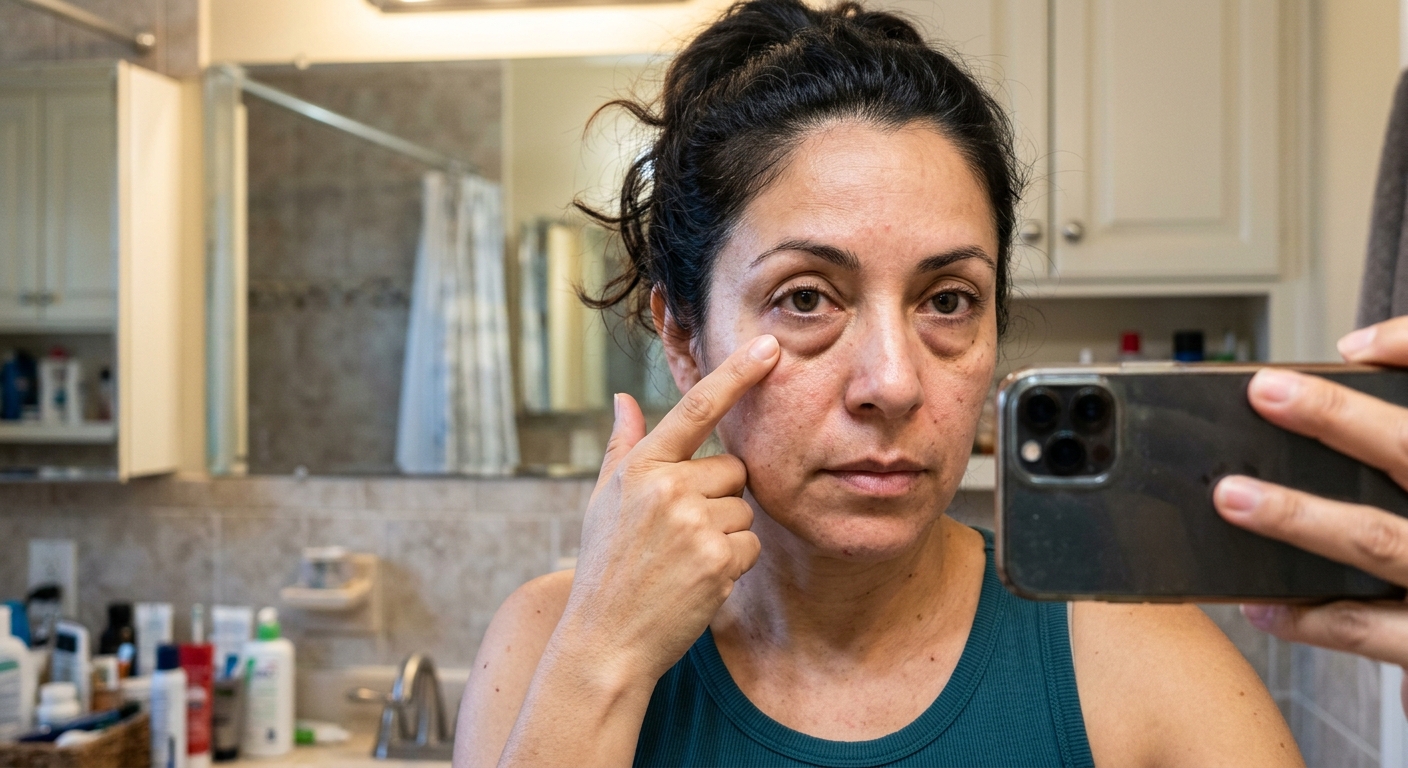
Anyone who has looked in the mirror at seven in the morning and found a stranger’s eyes looking back knows the specific frustration this article is about. The rest of the face is recognisable. The eyes are swollen, heavier than they were, and the shadow underneath has deepened into something that reads as exhaustion whether or not you slept.
The instinct is to buy an eye cream. It is not a bad instinct. It works far better once you know which of three completely different problems you are actually treating, because they share a name and almost nothing else.
Three Problems, One Word
Under-eye puffiness is a catch-all term sitting on top of three distinct mechanisms.
The first is fluid. Lying flat overnight, interstitial fluid pools in the loose tissue around the orbit and drains slowly once you are upright again. This is the puffiness that has resolved by ten in the morning. A systematic review of malar oedema, malar mounds, and festoons treats these fluid-driven presentations as their own category, with mechanisms rooted in lymphatic drainage and tissue laxity rather than in fat [1].
The second is structural. The orbital septum, the sheet of connective tissue that holds the eye’s fat pads in place, loosens with age and lets those pads press forward. A recent three-dimensional anatomical study found that the septum’s architecture is what determines how a lower-lid bulge presents in the first place [2]. That bulge is fat, sitting behind a membrane, several millimetres below the surface.
The third is the skin itself. Collagen and elastin in the lid thin out, the surface loses its snap, and tissue that once held a smooth contour begins to drape. Fibroblasts in chronologically aged skin produce measurably less collagen, partly through senescence and partly because a collapsing matrix no longer supplies the mechanical tension they need to keep synthesising it [3].
Only the first and third are on the table for a topical. The second is a surgical question, and bags that never change through the day, or festoons that sit lower on the cheek, deserve a conversation with a dermatologist rather than another jar.
A recent three-dimensional anatomical study found that the septum’s architecture is what determines how a lower-lid bulge presents in the first place.
The Skin You Are Asking to Do This
Eyelid skin is the thinnest on the face, and it is not a close contest. When researchers measured skin thickness across 39 facial subunits, the eyelid came in at the bottom of the range [4]. That single fact drives most of what follows.
Thin skin shows the vasculature underneath, which is why puffiness and dark circles so often arrive together and get sold for as though they were one problem. Thin skin also has proportionally less dermis to lose before laxity becomes visible, which is why the eye area ages first and most obviously. And thin skin absorbs more of whatever you put on it, which cuts both ways: actives work at lower concentrations, and so do irritants.
What Caffeine Is Actually Doing Up There
Caffeine appears in nearly every product sold for puffiness, and the reasoning behind it is sound. It is a vasoconstrictor, it penetrates skin reasonably well for a small molecule, and a pharmacology review of its cosmetic use describes real effects on local microcirculation alongside its better-known antioxidant activity [5].
What matters is which compartment that acts on. Constricting vessels and encouraging fluid out of the tissue is a fluid-compartment intervention. It improves the morning puffiness that was going to resolve anyway, somewhat faster, and it does nothing at all to a herniated fat pad or to a lid that has lost its collagen.
That is not an argument against caffeine. It is an argument for knowing what you bought: a same-morning cosmetic effect, not a change in the tissue.
Peptides, and the Difference Between a Line and a Bulge
Peptides occupy a similar position. Acetyl hexapeptide-3, sold as Argireline, was characterised in work showing reduced wrinkle depth through interference with the muscle micro-contractions that crease the surface [6]. That is a genuine, measured effect on a line.
A line is not a bulge. The mechanism has no purchase on fluid volume and none whatsoever on fat position. A review of the evidence behind popular eye-cream actives makes the broader point plainly: most ingredients in this category were trialled on facial skin generally, and periorbital-specific trials remain thin on the ground [7].
It encapsulates 0.2% retinol in biomimetic lipid nanoparticles that the skin recognises as self and admits through the epithelial barrier without damaging it.
The Ingredient With the Strongest Dermal Evidence
If the part of the problem you can genuinely move is the skin, the question becomes which ingredient has actually been shown to change the dermis.
That has been settled for three decades. Biopsies from photodamaged skin treated with topical tretinoin showed restored formation of type I collagen relative to vehicle, in the study that established retinoids as the reference standard for structural change [8]. Retinoids do not drain fluid and they do not reposition fat. They address the third mechanism, the one that turns an occasional swollen morning into a permanent slackness.
Which is precisely the ingredient the eye area has always had the hardest time tolerating.
Buying Criteria That Follow From the Mechanism
Work backwards from the problem you actually have.
If your puffiness resolves by mid-morning, it is fluid. Caffeine is reasonable, a cool applicator is reasonable, and sleeping with your head slightly raised costs nothing. Spend accordingly.
If it is present all day and unchanged, it is structural, and no cream is the answer. Get it looked at before spending more.
If the lid skin itself looks crepey, loose, or finely creased, you have the mechanism topicals can genuinely improve, and the ingredient list should be led by a retinoid rather than by whatever the front of the box is advertising.
Then read the label for what is missing. Fragrance is a poor idea on the thinnest skin on the face. High alcohol content is a poor idea. An open jar you dig into with a finger each morning is a hygiene compromise on tissue that shows every trace of irritation. And be sceptical of price: nothing in the evidence above scales with cost. Under-eye wrinkles respond to the same actives that work everywhere else on the face, sold in a smaller container at a higher price.
Where Nanoretinol Changes the Arithmetic
The reason retinoids have historically been awkward around the eye is delivery, not the molecule. Conventional retinol formulations rely on chemicals and petroleum derivatives that increase lipid mobility in the barrier, effectively prising it open to push the molecule through. On the thinnest skin on the face, that mechanism is the stinging, redness, and flaking that make people abandon eye retinoids inside a fortnight.
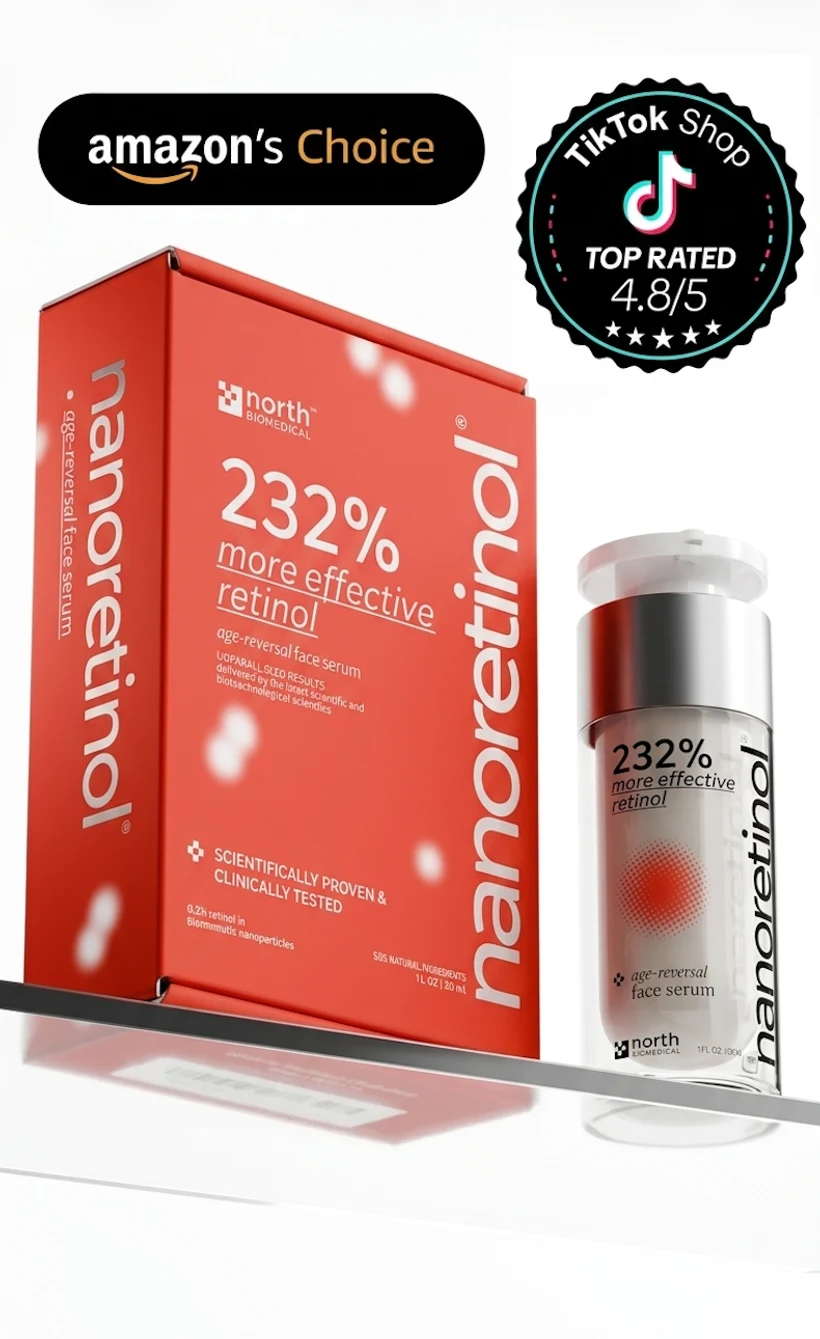
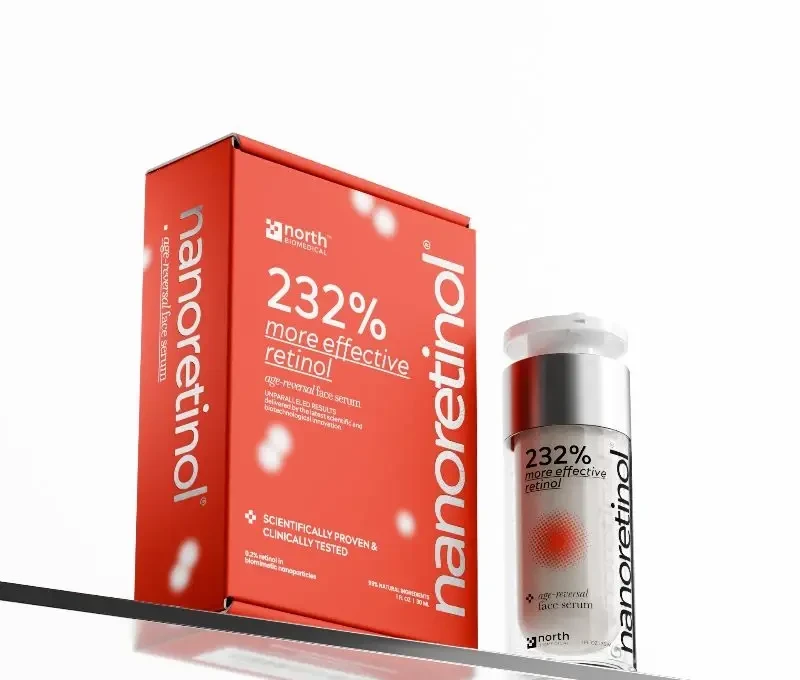
Nanoretinol takes the other route entirely. It encapsulates 0.2% retinol in biomimetic lipid nanoparticles that the skin recognises as self and admits through the epithelial barrier without damaging it. Because the delivery does the work rather than the concentration, it achieves 232% more effective collagen recovery and 73% more effective elastin recovery than conventional retinol while remaining significantly gentler on skin cells, and the water-based formulation is safe for the eye contour rather than something to be kept carefully away from it.
Apply it at night, and use sunscreen within twenty-four hours. Retinoid products are not layered with one another, so it replaces any other retinol in a routine rather than joining it.
Buying for the Right Problem
The best eye cream for puffy eyes is the one aimed at the mechanism you actually have. For a fluid morning, that is an inexpensive caffeine product and a second pillow. For eye bags that never move, it is a consultation. For lid skin that has quietly lost its structure, it is a well-delivered retinoid used consistently over months.
Most people buy the third problem’s product for the first problem’s symptom, then conclude that eye cream does not work. It works. It is simply very specific about what it works on, and the cheapest way to find out which you are dealing with is to watch what your face does between waking and lunchtime.
References
- Newberry CI, McCrary H, Thomas JR, Cerrati EW. “Updated Management of Malar Edema, Mounds, and Festoons: A Systematic Review.” Aesthetic Surgery Journal. 2020;40(3):246-258. doi:10.1093/asj/sjz137
- Davis JM, Choo J, Brooks R, Gossman D. “The Lower Orbital Septum Revisited: A 3-Dimensional Structure Determines Aesthetic Presentation and Impacts Operative Rejuvenation.” Aesthetic Surgery Journal Open Forum. 2025;7:ojaf050. doi:10.1093/asjof/ojaf050
- Varani J, Dame MK, Rittie L, Fligiel SEG, Kang S, Fisher GJ, Voorhees JJ. “Decreased Collagen Production in Chronologically Aged Skin: Roles of Age-Dependent Alteration in Fibroblast Function and Defective Mechanical Stimulation.” American Journal of Pathology. 2006;168(6):1861-1868. doi:10.2353/ajpath.2006.051302
- Chopra K, Calva D, Sosin M, et al. “A Comprehensive Examination of Topographic Thickness of Skin in the Human Face.” Aesthetic Surgery Journal. 2015;35(8):1007-1013. doi:10.1093/asj/sjv079
- Herman A, Herman AP. “Caffeine’s Mechanisms of Action and Its Cosmetic Use.” Skin Pharmacology and Physiology. 2013;26(1):8-14. doi:10.1159/000343174
- Blanes-Mira C, Clemente J, Jodas G, et al. “A Synthetic Hexapeptide (Argireline) with Antiwrinkle Activity.” International Journal of Cosmetic Science. 2002;24(5):303-310. doi:10.1046/j.1467-2494.2002.00153.x
- Hamie H, Yassine R, Shoukfeh R, Turk D, Huq F, Moossavi M. “A Review of the Efficacy of Popular Eye Cream Ingredients.” International Journal of Women’s Dermatology. 2024;10(2):e156. doi:10.1097/JW9.0000000000000156
- Griffiths CEM, Russman AN, Majmudar G, Singer RS, Hamilton TA, Voorhees JJ. “Restoration of Collagen Formation in Photodamaged Human Skin by Tretinoin (Retinoic Acid).” New England Journal of Medicine. 1993;329(8):530-535. doi:10.1056/NEJM199308193290803