Best Lip Balm for Dry Lips: The Chemistry That Decides Whether It Works
Lips lose water almost three times faster than cheeks, and most balms are built for the wrong half of that problem
Almost everyone with chronically dry lips owns several lip balms. One in a coat pocket, one on the nightstand, one that has been through the wash. They get applied constantly, sometimes hourly, and the lips stay dry anyway.
That pattern is common enough to be worth explaining, because it usually comes down to two things: lip skin is genuinely built worse for holding water than the skin an inch away from it, and most balms address only half of what that requires.
Lip Skin Is a Different Tissue
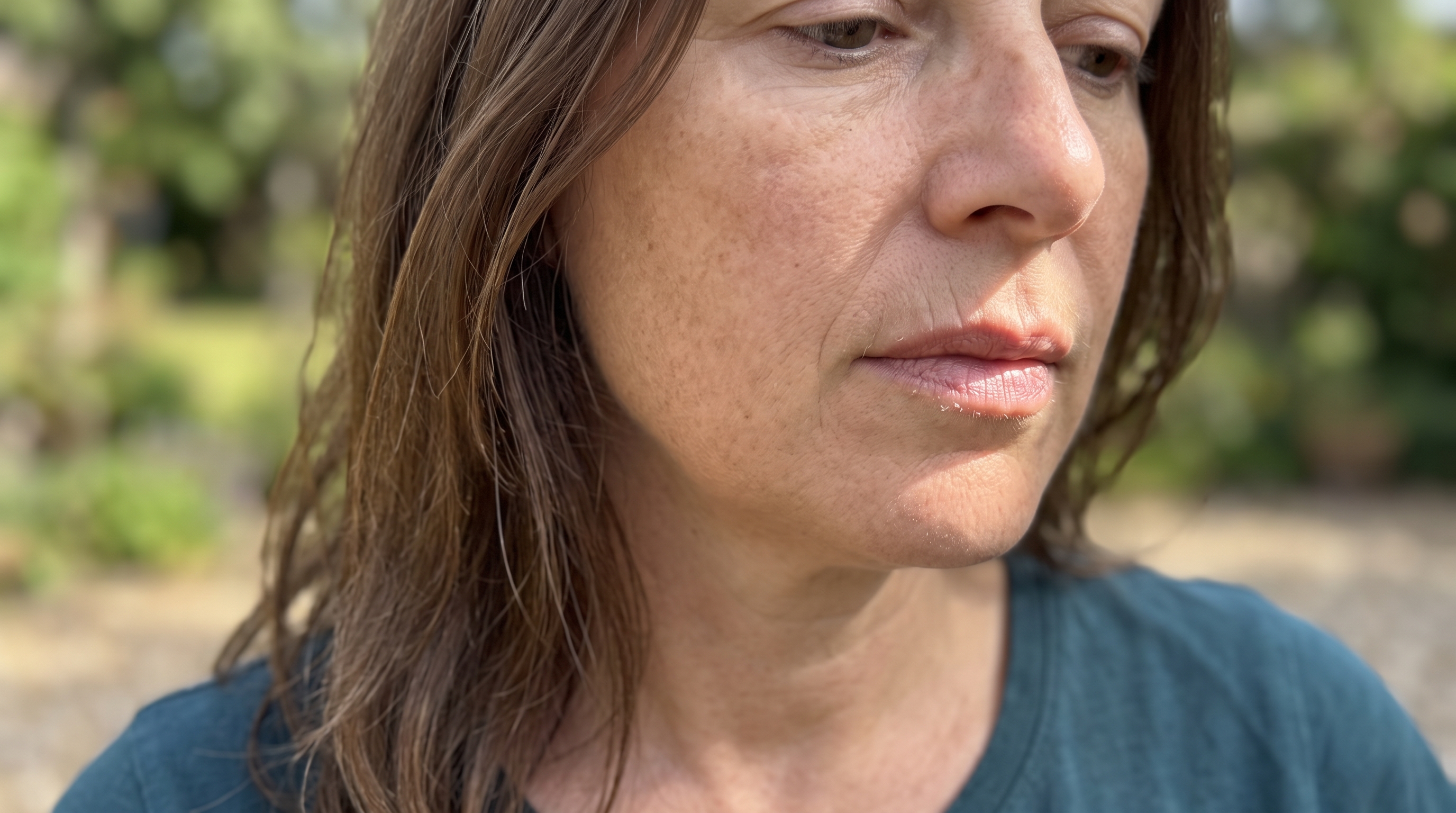
The vermilion, the pink part of the lip, is not a scaled-down version of facial skin. It has a much thinner and only partially cornified surface layer, essentially no sebaceous glands of its own, and none of the sweat glands that contribute to the surface hydration film everywhere else.
The measurements are stark. Comparing the vermilion border with adjacent facial skin, Kobayashi and Tagami found transepidermal water loss on the lip running close to three times that of cheek skin, with the gap widening further in older subjects [1]. Your lips are leaking water at triple the rate of the skin beside them, all day, and they have no oil supply of their own to slow it down.
That is the baseline in healthy lips. In people with chronically dry, scaling lips, lip water loss measured an average of 66.8 g/m²/h, far above healthy comparison values [2]. Persistent lip dryness is a measurable barrier failure rather than a weather complaint.
Occlusives and Humectants Do Opposite Jobs
Almost every lip balm is built from two categories of ingredient, and knowing which one you are holding explains most balm failures. The same two categories decide which overnight lip mask is worth buying, where the balance tips further toward occlusion.
The vermilion, the pink part of the lip, is not a scaled-down version of facial skin.
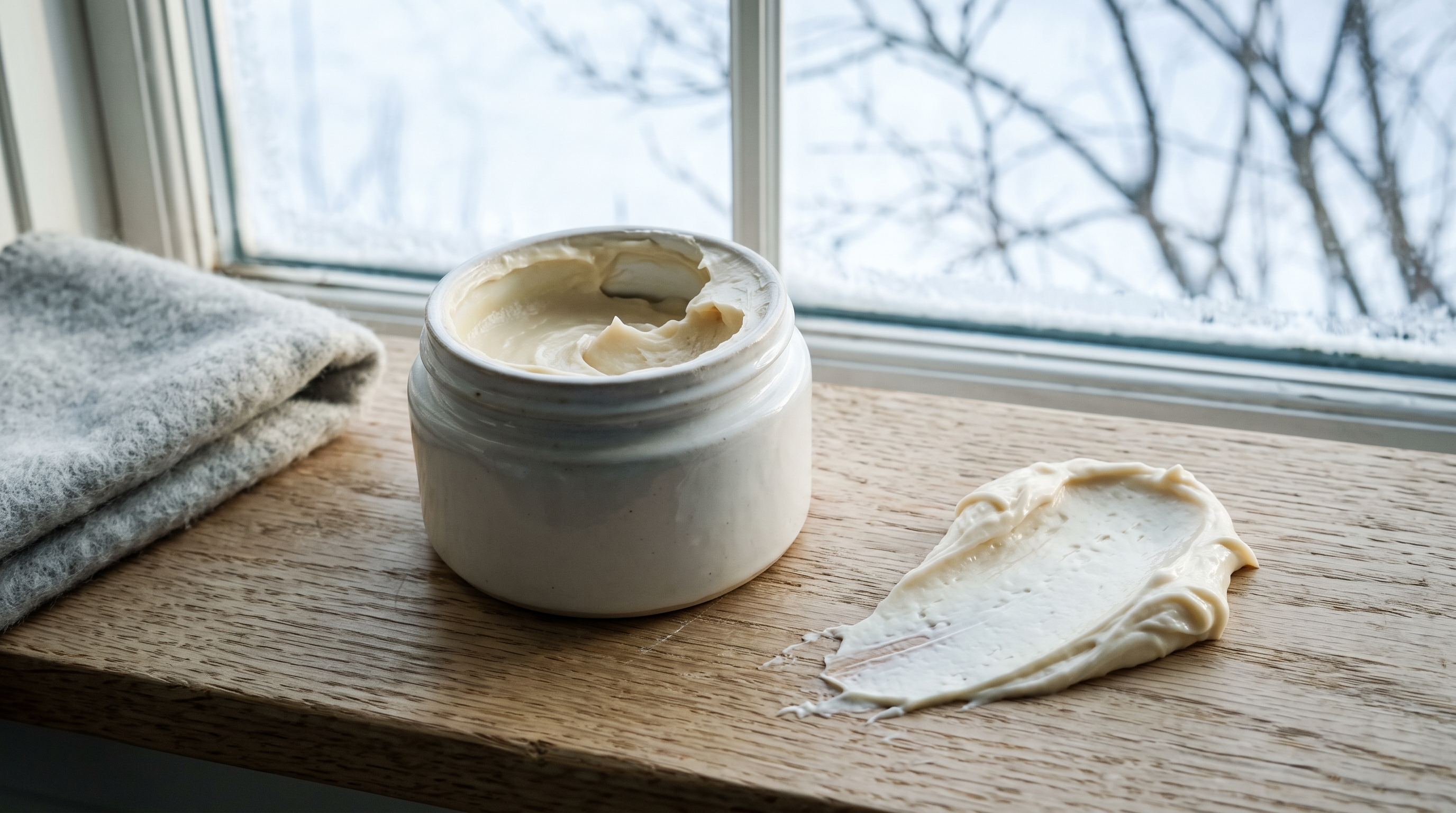
Occlusives sit on the surface and physically slow water escaping. Petrolatum is the reference standard, and the evidence for it is better than its dull reputation suggests. Occluding skin with petrolatum significantly reduced transepidermal water loss while also upregulating filaggrin and loricrin and increasing stratum corneum thickness [3]. It does not merely sit there. It measurably drives barrier repair underneath itself.
Humectants pull and hold water within the surface layer. Glycerin is the workhorse. In a double-blind trial, a cream containing 20 percent glycerin produced significantly better barrier and hydration measurements than the identical vehicle without it [4]. Hyaluronic acid works on the same principle at the surface.
The failure mode is a balm that is almost entirely humectant. In dry indoor air or cold wind, a humectant film with nothing sealing it draws water toward the surface where it evaporates, and lips end up drier than before. That is the mechanism behind the balm that seems to demand reapplication every twenty minutes.
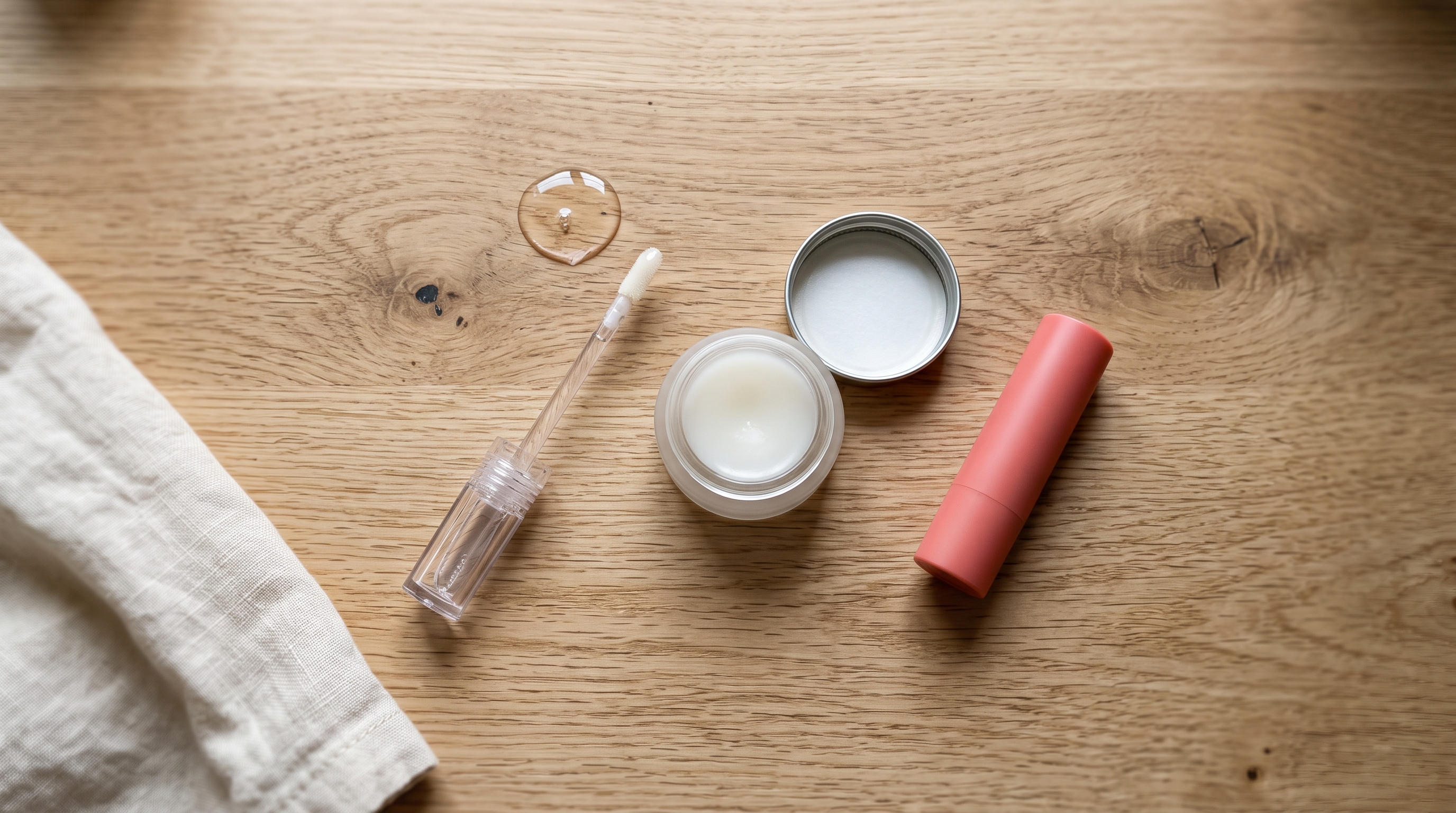
The reverse arrangement works. A humectant layer underneath, an occlusive layer on top of it, is the combination with actual evidence behind it. In practice that means a balm listing both, or a hydrating lip serum followed by an ointment at night.
The Balm That Makes It Worse
There is a second failure mode, and it is not about texture.
Patch-tested case series have identified lanolin, propolis, gallate preservatives, and flavoring and fragrance compounds as confirmed triggers of allergic contact reactions on the lips [6]. These are extremely common lip balm ingredients. A menthol, camphor, or cinnamon balm that tingles is signalling irritation, and the resulting dryness prompts more application of the same product.
Despite that, in a study of patients with sun-damaged lower lips, only about 10 percent had ever used any form of lip photoprotection.
If your lips are worse the more diligently you use a balm, the shortest useful experiment is two weeks on plain petrolatum with no fragrance, no flavor, no tingle, and no salicylic acid. If that resolves it, the previous product was the cause. Lip inflammation that persists past a few weeks of bland care is worth a doctor’s look rather than another purchase.
The Lower Lip Has a Sun Problem
The lower lip catches disproportionate direct sun because of its angle, and it has almost no melanin protection. Despite that, in a study of patients with sun-damaged lower lips, only about 10 percent had ever used any form of lip photoprotection [5].
A daytime balm with SPF 30 or higher is the single highest-value change most people can make to this routine, and it is the one almost nobody makes. Keep the untinted, unflavored occlusive for nights and reserve the SPF version for daylight.
The Lines Are a Separate Problem
Here is where balm reaches its limit. The vertical lines running up from the lip border are frequently blamed on dryness, and they do look worse when lips are dehydrated, but hydration is not what created them.
Those lines sit in the skin around the mouth rather than on the vermilion itself, and they are collagen loss driven by sun exposure, repeated muscle folding, and time. No occlusive reaches that. A meta-analysis of eight randomized controlled trials covering 1,361 patients found topical tretinoin significantly improved signs of photodamage against vehicle, working by inhibiting collagen-degrading enzymes and increasing type I procollagen synthesis [7]. Retinoids are the intervention with evidence in that layer, applied to the perioral skin rather than to the lip surface.
Our guides to lip lines and to smokers lines go through that distinction in more detail. If the skin around your mouth is already flaking or stinging, repairing a damaged skin barrier comes before any active goes on it.
Why Retinol Is Hard to Use Around the Mouth
The perioral area is the most retinol-intolerant region of the face for most people. The skin is thin, it folds constantly with speech and eating, and it sits directly beside a lip border where nothing stings-free belongs. Conventional retinol formulations make that worse by design, because they rely on chemistries and petroleum derivatives that break down the epithelial barrier in order to drive the molecule through it. Around the mouth, that produces exactly the flaking and rawness that makes people abandon the product.
Nanoretinol approaches delivery from the other direction. It encapsulates 0.2 percent retinol in biomimetic lipid nanoparticles that the skin recognizes as self and admits through the barrier rather than having it forced open, and the phospholipids in those membranes are absorbed as nourishment as the retinol releases. North Biomedical’s clinical study summary reports 232 percent greater collagen recovery than conventional retinol along with drastically reduced cytotoxicity [8]. For the skin bordering the lips, a retinol that does not require a compromised barrier to function is the version worth trying.
Buying One That Works
Read the first five ingredients. You want an occlusive doing the sealing, petrolatum, lanolin-free waxes, or shea, and a humectant doing the hydrating, glycerin or hyaluronic acid. You want no fragrance, no flavor, no menthol, no camphor, and no salicylic acid. You want SPF 30 for the daytime version and a heavier fragrance-free ointment for overnight.
That specification costs very little, which is inconvenient for an industry built on flavored tubes. The expensive part of fixing dry lips was never the balm.
References
- Kobayashi H, Tagami H. “Functional properties of the surface of the vermilion border of the lips are distinct from those of the facial skin.” British Journal of Dermatology. 2004;150(3):563-567. doi:10.1046/j.1365-2133.2003.05741.x
- Wang Y, Lin L, Wang Y, Wei M, Wei J, Cui Y, Ren Y, Wang X. “Analysis of clinical presentations, lip transepidermal water loss and associated dermatological conditions in patients with chronic cheilitis.” Scientific Reports. 2022;12(1):22497. PMID: 36577807
- Czarnowicki T, Malajian D, Khattri S, et al. “Petrolatum: Barrier repair and antimicrobial responses underlying this ‘inert’ moisturizer.” Journal of Allergy and Clinical Immunology. 2016;137(4):1091-1102.e7. PMID: 26431582
- Lodén M, Wessman W. “The influence of a cream containing 20% glycerin and its vehicle on skin barrier properties.” International Journal of Cosmetic Science. 2001;23(2):115-119. PMID: 18498456
- Rodriguez-Blanco I, Florez Á, Paredes-Suárez C, Rodríguez-Lojo R, González-Vilas D, Ramírez-Santos A, Paradela S, Suárez Conde I, Pereiro-Ferreirós M. “Use of lip photoprotection in patients suffering from actinic cheilitis.” European Journal of Dermatology. 2019;29(4):383-386. PMID: 31475909
- Zhou LL, Pratt M. “Allergic Contact Cheilitis From a Variety of Lip Balm Ingredients.” Journal of Cutaneous Medicine and Surgery. 2018;22(3):333-335. PMID: 29039219
- Huang HY, Lee LT. “Tretinoin for Photodamaged Facial Skin: Systematic Review and Meta-Analysis of Randomized Controlled Trials.” Dermatology Practical & Conceptual. 2025;15(4):a5172. doi:10.5826/dpc.1504a5172
- North Biomedical LLC. “Nanoretinol vs. Conventional Retinol: Efficacy in Collagen and Elastin Recovery.” Clinical Study Summary, 2024. Study summary