Best Lip Plumper: What Actually Works on Thinning Lips
The three mechanisms sold as plumping, how long each one really lasts, and what changes lip structure instead
Walk down any beauty aisle and the lip plumper category makes a single promise in a dozen fonts: fuller lips, right now, no needles. What almost none of the packaging explains is that the products making that promise work in three completely different ways, and only one of them does anything your lips retain past dinner.
That distinction matters more as you get older, because the thing you are trying to fix has changed. A twenty-five-year-old buying a plumper wants a temporary effect for a night out. A fifty-five-year-old buying one is usually responding to something structural, and structural problems do not respond to gloss.
What Actually Happens to Lips as You Age
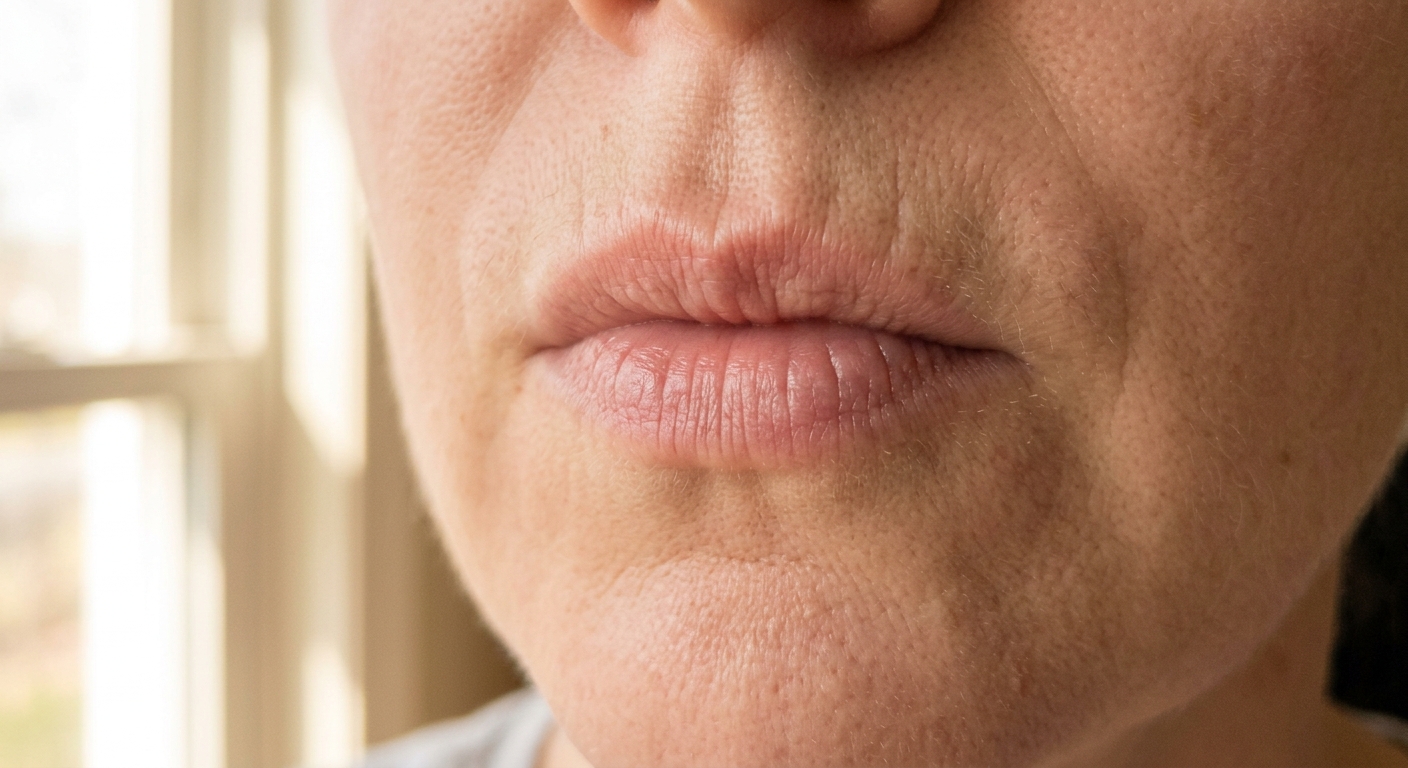
The upper lip is not simply deflating. Histological work comparing young and older lip tissue found a specific pattern of change: the vermilion thins, the connective tissue underneath reorganizes, and the muscular support of the lip complex shifts, so the lip rolls inward and the visible red surface shrinks even when total volume changes less than you would expect [1].
A more detailed analysis of the upper lip vermilion tracked what happens in the extracellular matrix itself. Collagen density falls, elastic fibers fragment, and the papillary layer that gives young lips their crisp border flattens out [2]. That flattening is why lipstick starts to bleed at the edges in your fifties. The wall that used to hold it in place has softened.
Running alongside that is the perioral skin, which ages on its own schedule. A study developing a photonumeric scale for perioral wrinkles found they are significantly more pronounced in women, worsen steadily with age, and are made considerably worse by smoking [3]. Those vertical lines above the lip are a separate problem from lip volume, and no plumper addresses them. If that is your main concern, lip lines is the more useful place to start.
The Three Mechanisms Sold as “Plumping”
1. Irritant vasodilators
This is the category that tingles, and it is the largest one on the market. The active ingredients are capsaicin, menthol, ginger, nicotinate esters, or cinnamon derivatives. They work by triggering sensory ion channels in the skin, which drives local vasodilation and a small amount of fluid movement into the tissue.
Controlled human research on cinnamaldehyde, the compound responsible for cinnamon’s heat, showed it produces genuine cutaneous vasodilation through a nitric oxide dependent pathway after TRPA1 activation [4]. The mechanism is real. The problem is what it is: a transient, inflammation-adjacent vascular response. Blood flow increases, the tissue swells slightly, and then it resolves. Depending on the concentration you are looking at somewhere between forty minutes and three hours.
If that is your main concern, lip lines is the more useful place to start.
Used occasionally, that is a reasonable trade. Used twice daily for years on lip skin that is already compromised, it is worth thinking about, because lip skin has unusually little margin.
2. Hyaluronic acid and humectants
The second category makes a quieter claim and delivers a quieter result. Topical hyaluronic acid draws water into the outer layers, which slightly swells the tissue and softens the appearance of fine lines.
Molecular weight is the variable that decides whether this does anything. A study comparing cream formulations of hyaluronic acid across different molecular weights found measurable anti-wrinkle effects, with the lower molecular weight fractions performing best on skin hydration and wrinkle depth [5]. High molecular weight hyaluronic acid mostly sits on the surface as a film. It feels pleasant and it holds gloss in place, but it is not moving into tissue.
Look for products that name the molecular weight or list sodium hyaluronate alongside a second humectant such as glycerin. A formula listing “hyaluronic acid” as the ninth ingredient behind three waxes is a marketing decision.
3. Optical plumping
The third mechanism is the most honest one, and nobody advertises it. Light-scattering pigments, high-refractive-index oils, and a wet-looking finish make a lip read as rounder because of how the highlight sits across its curve. Nothing about the lip changes. The photograph does.
This is why a clear high-shine gloss often looks more effective than a stinging formula. It is also why the effect vanishes the moment the gloss wears off.
If you want the tingle, treat it as an occasional tool rather than a routine.
Why Lip Skin Deserves More Caution Than Face Skin
The lip is not a smaller version of your cheek. Confocal Raman spectroscopy work characterizing the lip barrier found that the vermilion has a markedly thinner stratum corneum, lower natural moisturizing factor, and substantially higher water loss than adjacent facial skin [6].
That is the case for treating chronic irritant use with some skepticism. A barrier that already leaks water faster than the skin next to it does not benefit from being provoked every morning. If your plumper leaves your lips feeling tight and dry an hour later, the tightness is not the product working. It is dehydration, and it will make thinning lips look worse over time, not better.
How to Actually Choose One
If you want the effect for an evening, buy an optical plumper. High shine, a light-scattering finish, no active irritant. It photographs well, it does not damage anything, and it is repeatable.
If you want daily use, buy a humectant-led formula with a low molecular weight hyaluronic acid, a real occlusive such as shea or lanolin, and no capsaicin or menthol in the first eight ingredients. You get modest smoothing without a barrier cost.
If you want the tingle, treat it as an occasional tool rather than a routine. Check the ingredient position of the irritant, and stop if you get persistent dryness or flaking.
Ignore entirely: anything claiming to build collagen in the lip itself over two weeks, anything promising a “filler-like” result, and any before-and-after shot taken with different lighting and a different gloss.
The Part a Plumper Cannot Reach
Every mechanism above is temporary by design, because all three act on the surface. The changes described in that histology work happen in the dermal matrix underneath, and the perioral lines that frame the lip come from the same collagen loss affecting the rest of your face.
Retinoids are the most rigorously documented intervention for that specific problem. The controlled work on tretinoin in photodamaged skin demonstrated genuine restoration of collagen formation in the dermis, measured on biopsy rather than by questionnaire [7]. Applied to the skin around the mouth, that is what firms the border, softens vertical lines, and gives lipstick somewhere to stay. It is a slow change measured across months, and it is the only one on this page that is not reversed by a washcloth.
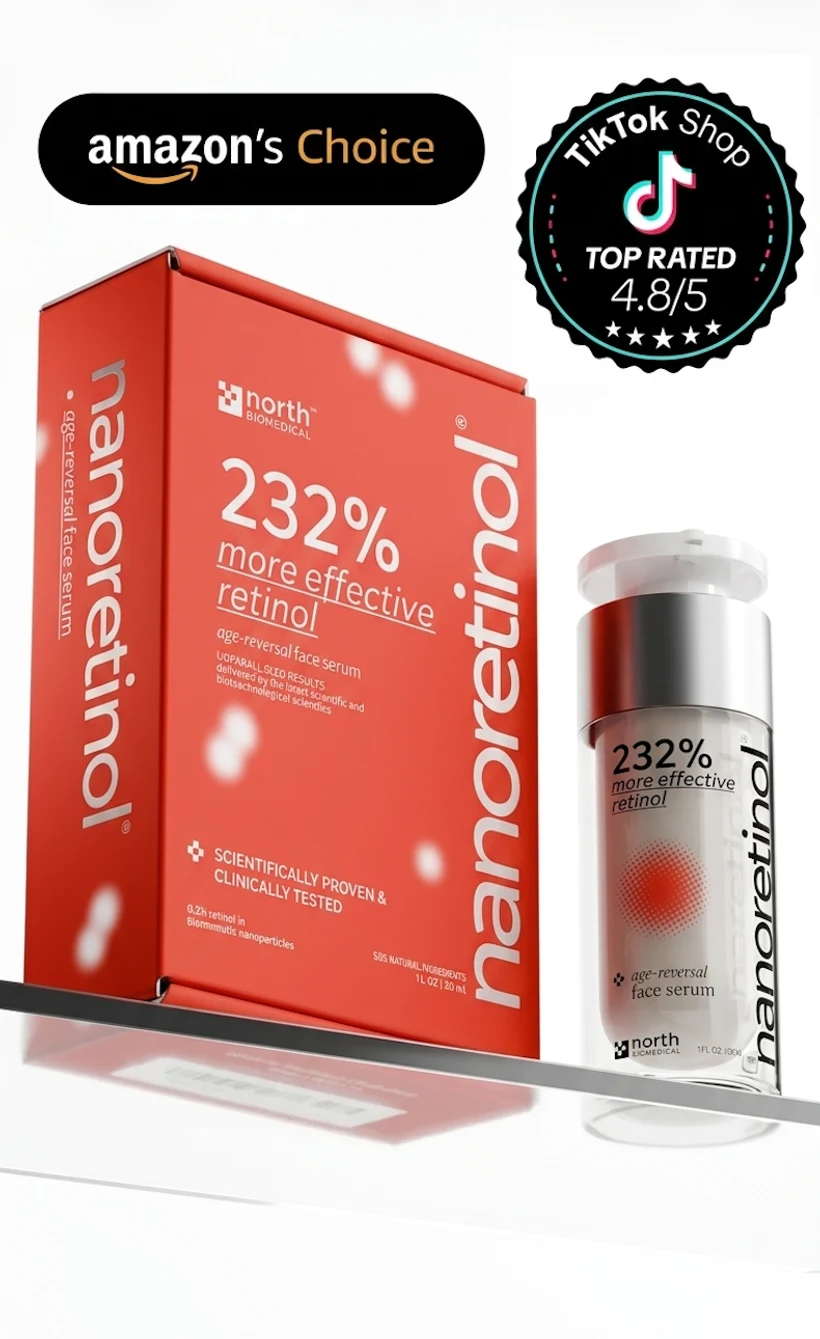
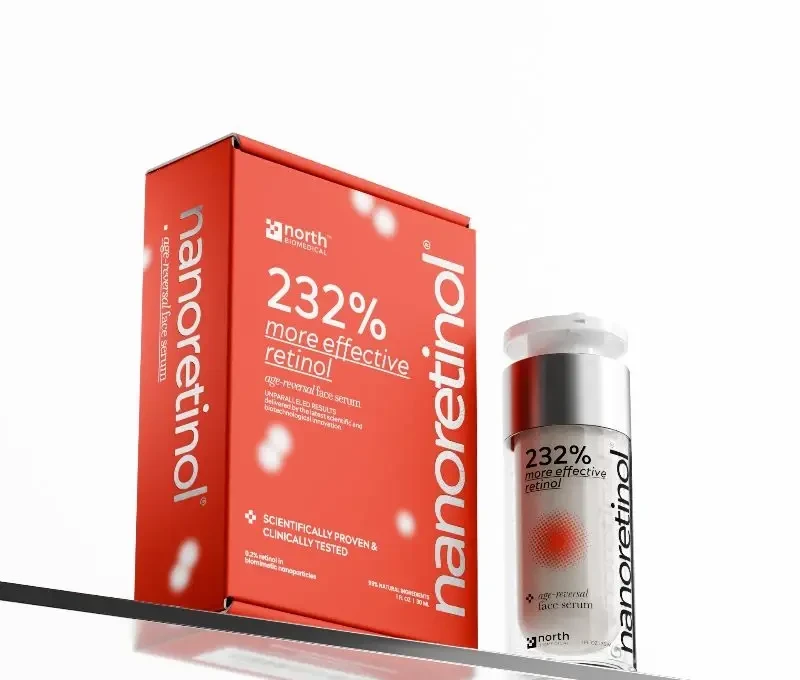
Nanoretinol is built for exactly this kind of delicate territory. It delivers 0.2% retinol inside biomimetic lipid nanoparticles that pass through the skin barrier rather than disrupting it, which is how it reaches 232% greater collagen recovery than conventional retinol while being significantly gentler on skin cells. For perioral skin that is thin and easily irritated, the gentleness is not a bonus feature, it is the whole reason the routine survives past week three. Apply it to the skin around the mouth at night rather than to the lips themselves, and pair it with a plain occlusive balm on the vermilion. If the lines above your lip are the real complaint, how to get rid of lip wrinkles covers that routine in more detail.
Buying With Your Eyes Open
A lip plumper is a cosmetic, and a good one is worth owning. The mistake is expecting a category built on vasodilation, humectancy, and light physics to solve a problem built on collagen. Buy the gloss for the evening. Treat the skin around it for the decade.
References
- Penna V, Stark GB, Eisenhardt SU, Bannasch H, Iblher N. “The Aging Lip: A Comparative Histological Analysis of Age-Related Changes in the Upper Lip Complex.” Plastic and Reconstructive Surgery. 2009;124(2):624-628. PMID: 19644283
- Gomi T, Imamura T. “Comprehensive Histological Investigation of Age-Related Changes in Dermal Extracellular Matrix and Muscle Fibers in the Upper Lip Vermilion.” International Journal of Cosmetic Science. 2020;42(4):359-368. doi:10.1111/ics.12622
- Chien AL, Qi J, Cheng N, Do TT, Mesfin M, Egbers R, Xie W, Chow C, Chubb H, Sachs D, Voorhees JJ, Kang S. “Perioral Wrinkles Are Associated With Female Gender, Aging, and Smoking: Development of a Gender-Specific Photonumeric Scale.” Journal of the American Academy of Dermatology. 2016;74(5):924-930. PMID: 26803346
- Kataoka Y, Kenny GP, Nishiyasu T, Amano T, Mündel T, Zheng H, Lei TH, Watanabe K, Fujii N. “TRPA1 Channel Activation With Cinnamaldehyde Induces Cutaneous Vasodilation Through NOS, but Not COX and KCa Channel, Mechanisms in Humans.” Journal of Cardiovascular Pharmacology. 2022;79(3):375-382. PMID: 34983913
- Pavicic T, Gauglitz GG, Lersch P, Schwach-Abdellaoui K, Malle B, Korting HC, Farwick M. “Efficacy of Cream-Based Novel Formulations of Hyaluronic Acid of Different Molecular Weights in Anti-Wrinkle Treatment.” Journal of Drugs in Dermatology. 2011;10(9):990-1000. PMID: 22052267
- Bielfeldt S, Laing S, Sadowski T, Gunt H, Wilhelm KP. “Characterization and Validation of an In Vivo Confocal Raman Spectroscopy Led Tri-Method Approach in the Evaluation of the Lip Barrier.” Skin Research and Technology. 2020;26(3):390-397. doi:10.1111/srt.12814
- Griffiths CEM, Russman AN, Majmudar G, Singer RS, Hamilton TA, Voorhees JJ. “Restoration of Collagen Formation in Photodamaged Human Skin by Tretinoin (Retinoic Acid).” New England Journal of Medicine. 1993;329(8):530-535. PMID: 8336752